Where Is the Date Code on Tires?

The date code on a tire is located on the outer or inner sidewall inside a raised rubber box containing the Department of Transportation code. The final four digits of this DOT string represent the exact manufacturing week and year, with the first two digits showing the production week and the last two digits indicating […]
When Should Tires Be Replaced Based on Tread Depth
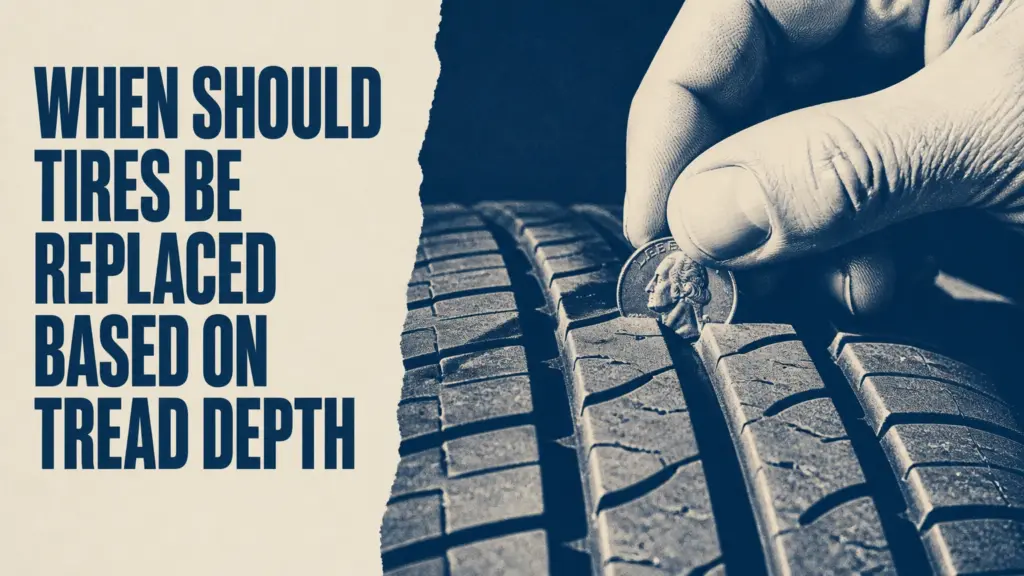
Tires must be replaced when the tread depth wears down to 2/32 of an inch, which serves as the legal minimum standard in most jurisdictions. However, drivers should replace tires at 4/32 of an inch for safe wet-weather performance and at 5/32 of an inch for navigating heavy snow and winter slush. At a Glance […]
Can You Rotate Directional Tires? Safe Methods Explained

Yes, you can rotate directional tires, but a complete wheel-and-tire assembly normally moves only from front to back on the same side of the vehicle. Moving a directional tire to the opposite side reverses its rolling direction unless a tire technician dismounts and remounts it correctly. The vehicle’s tire sizes, wheel positions, and manufacturer instructions […]
Are Pirelli Tires Better Than Michelin?

Michelin is generally the better tire brand for everyday driving because its touring and all-season products usually emphasize wet braking, predictable wear, comfort, and long tread life. Pirelli is often better for drivers who value immediate steering response, dry-road feedback, high-speed stability, or an original-equipment fitment developed for a performance car. Key Facts Michelin usually […]
When to Change Tires Based on Tread Depth

Vehicle tires must be replaced when the tread depth reaches the legal minimum limit of 2/32 of an inch or 1.6 millimeters, or earlier when specialized safety thresholds for wet roads and snow are breached. Drivers should utilize dedicated manual depth gauges, coin tests, or built-in wear indicators to inspect tires across all grooves regularly. […]