A bad wheel bearing primarily produces a metallic humming, roaring, or growling noise that intensifies as your vehicle accelerates. This auditory warning often combines with physical steering wheel vibration and becomes louder when you shift the vehicle’s weight by turning slightly. Ignoring wheel bearing noise symptoms can lead to complete wheel lockup and severe safety hazards.
Key Facts / At a Glance
- Failed wheel bearings create a pitch-changing noise tied directly to wheel speed rather than engine speed.
- The sway test safely confirms which side of the vehicle has the failing component by shifting vehicle weight.
- Misdiagnosing uneven tire wear as a bearing failure is the most common diagnostic error made by both amateurs and professionals.
- Professional replacement typically takes 1 to 2 hours per wheel.
- Total replacement costs range from $150 to $400 per wheel depending on the vehicle make and part quality.
- Modern vehicles utilize pre-assembled hub units that require strict torque specifications during installation.
What Are the Most Common Wheel Bearing Noise Symptoms?
Wheel bearing noise symptoms present as a combination of distinct auditory sounds and physical handling changes that scale with vehicle speed. The symptoms occur because the smooth steel balls or rollers inside the bearing have developed pits, lost lubrication, or suffered mechanical damage.
Auditory Warning Signs
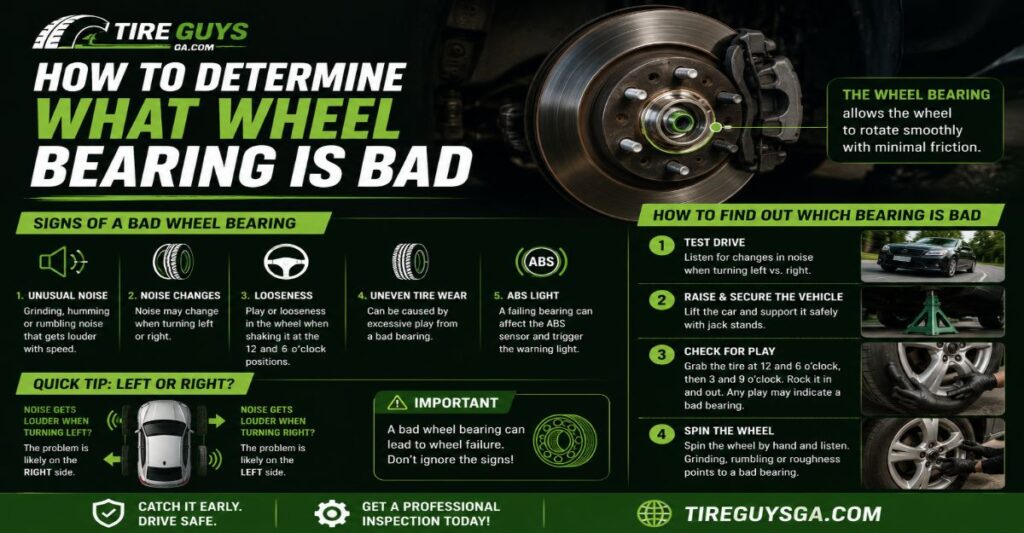
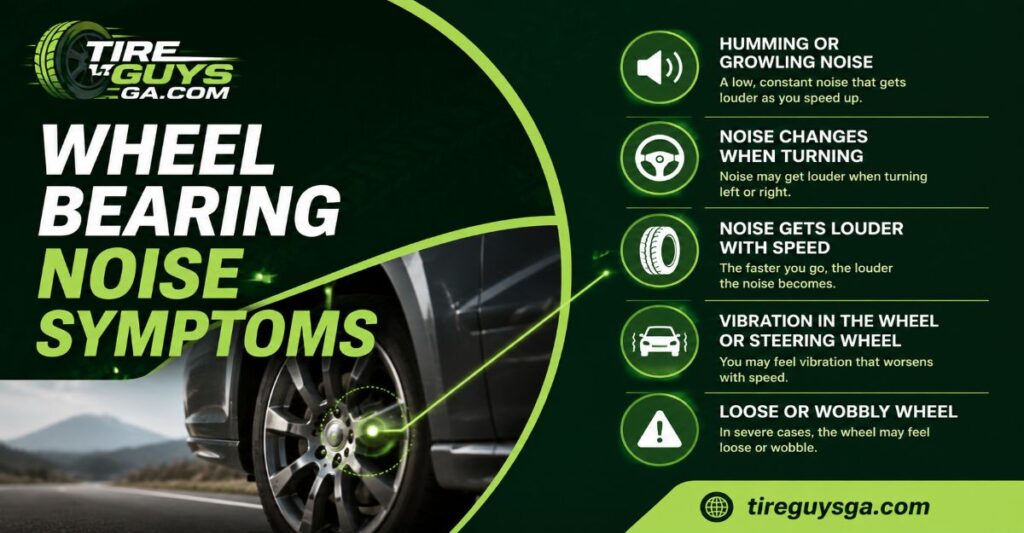
The sound of a failing bearing is distinct and cyclical. Drivers typically notice a humming, growling, or roaring noise that sounds remarkably similar to driving over a slotted bridge or a highway rumble strip. This sound increases in pitch and volume linearly with vehicle acceleration. Unlike exhaust or engine noises, a wheel bearing noise remains constant even if you shift the transmission into neutral while coasting.
A chirp, squeak, or squeal indicates a different stage of failure. High-pitched, cyclical squeaking that changes with wheel speed usually points to severe internal friction or a completely destroyed grease seal. Clunking or popping sounds heard when negotiating sharp turns signal extreme mechanical play in the hub assembly.
Physical and Handling Symptoms
Mechanical failure inside the bearing translates directly into the steering geometry. Steering wheel vibration is a primary physical symptom. Drivers feel roughness or shaking through the steering column that alters in intensity relative to vehicle speed. Vague or loose steering occurs when the bearing assembly physically deteriorates, creating a feeling of delayed response when turning the wheel.
Vehicle pulling happens because the damaged bearing creates increased rolling resistance, forcing the car to drift toward the damaged side under braking or acceleration. Severe looseness also causes the magnetic wheel speed ring to misalign with the sensor, instantly triggering an Anti-lock Braking System (ABS) dashboard warning light.
How Does a Wheel Bearing Work?
A wheel bearing minimizes friction to ensure smooth wheel rotation while simultaneously supporting the entire weight of the vehicle. The component consists of a set of steel balls or tapered rollers held together by a metal ring called a race. The bearing sits tightly inside the wheel hub and rides on a machined steel axle shaft.
This assembly handles two distinct types of physical forces. Radial loads represent the up-and-down weight of the vehicle pressing down on the wheels. Axial loads represent the side-to-side forces generated during cornering. Factory-sealed grease lubricates these moving components for the life of the part. If the external seal fails, moisture and road debris enter the housing, causing rapid grease degradation, localized heat buildup, and inevitable mechanical failure.
How Can You Test for a Failing Wheel Bearing?
You can test for a failing wheel bearing using a combination of road-testing weight transfer and stationary physical manipulation of the suspension components. Accurate diagnosis prevents spending money on unnecessary replacement parts.
Step 1: The Sway Test (On-Road)
The sway test uses vehicle weight transfer to isolate the damaged side. Drive the vehicle safely on an empty road at roughly 50 to 60 kilometers per hour. Gently sway the steering wheel left and right within your lane. When you steer left, the vehicle’s weight shifts heavily to the right side. If the roaring noise increases during a left turn, the right-side bearing is failing. Conversely, if the noise gets louder when steering right, the left bearing is the culprit.
Step 2: The 12-and-6 Shake (Stationary)
The 12-and-6 shake physically checks for dangerous mechanical play. Safely lift the vehicle using a hydraulic jack and secure it on heavy-duty jack stands. Grab the suspected tire firmly at the 12 o’clock and 6 o’clock positions. Push the top in while pulling the bottom out, alternating rapidly. A healthy bearing has absolutely zero mechanical play. Any noticeable rocking, clicking, or shifting confirms a failed bearing unit.
Step 3: The Manual Spin Test
The manual spin test uses tactile feedback to detect internal metal degradation. Place your bare hand firmly on the vehicle’s suspension coil spring. Use your other hand to spin the elevated wheel rapidly. If the bearing is damaged, you will feel a rough, grinding vibration pulsing directly through the metal coil spring. Compare this feeling to the opposite side of the vehicle to confirm the anomaly.
What Are the Main Types of Wheel Bearings?
Wheel bearings fall into three main categories based on vehicle application and manufacturing era. Understanding your specific bearing type dictates the diagnostic process and replacement cost.
Hub Assembly Units (Gen 3)
Hub assembly units are fully sealed, non-serviceable components containing the bearing, wheel hub, and ABS sensor in a single bolt-on package. These units are standard on nearly all modern passenger cars and SUVs. They offer maximum reliability and simplify the repair process, but they cannot be repacked with grease or adjusted once manufactured.
Tapered Roller Bearings
Tapered roller bearings feature separate cone and roller assemblies designed specifically to handle heavy axial loads. These are incredibly common on rear-wheel-drive solid axle trucks, heavy-duty trailers, and older passenger vehicles. Tapered bearings require manual packing with heavy-duty grease and exact tightening procedures to establish the correct internal clearance.
Ball Bearings
Traditional ball bearings utilize spherical metal balls rolling within inner and outer races. Automotive engineers optimize ball bearings for high-speed, light-duty applications. While highly efficient at reducing rolling resistance, they handle side-to-side lateral loads poorly compared to tapered designs.
How Much Does Wheel Bearing Replacement Cost?
Replacing a wheel bearing costs between $150 and $400 per wheel depending on the vehicle make, part quality, and local labor rates. Modern bolt-on hub assemblies require less labor time but cost more to purchase, while older press-in bearings cost less to buy but require extensive labor to install.
Average Component and Labor Costs
| Component or Service Metric | Typical Value or Cost Range | Technical Details |
| Bearing Clearance Play | 0.00 to 0.05 millimeters | Factory tolerance features virtually zero perceptible mechanical play. |
| Average Component Lifespan | 130,000 to 160,000 kilometers | Potholes, curbs, or deep water submersion cause premature failure. |
| DIY Replacement Time | 1.5 to 3.0 hours per wheel | Varies heavily based on chassis rust conditions and tool availability. |
| Professional Shop Time | 1.0 to 2.0 hours per wheel | Standard book time for modern bolt-on Gen 3 hub assemblies. |
| Part Cost (Hub Assembly) | $50 to $200 USD | Dependent on vehicle make and premium versus economy brands. |
| Total Professional Cost | $150 to $400 USD per wheel | Total cost includes local workshop labor rates and standard parts markup. |
Replacement Part Options Compared
| Part Tier | Pros | Cons |
| Premium Hub Assemblies (Timken, SKF) | Maximum durability, exact OEM fit, includes high-quality calibrated ABS sensors. | Higher upfront retail cost compared to generic auto parts store brands. |
| Economy or Budget Brands | Highly affordable, ideal for older vehicles nearing the end of their usable life. | Lower quality seals permit water entry, prone to premature ABS sensor failure. |
| Press-In Only Bearings | Very inexpensive raw part cost, retains your factory structural steering knuckle. | Requires a heavy hydraulic shop press, significantly increasing labor time and danger. |
What Are the Most Common Diagnostic Mistakes?
Mechanics and vehicle owners frequently misdiagnose wheel bearing noise symptoms due to acoustic trickery and similar mechanical issues. Avoiding these errors saves both time and money.
Misdiagnosing Tire Chopping as a Bearing Failure
Unevenly worn, “cupped,” or chopped tires produce an identical rhythmic humming noise to a bad bearing. To correct this, swap the front tires with the rear tires. If the noise moves to the rear of the vehicle or alters drastically in tone, the issue is tire wear. If the noise remains stationary, the bearing is the culprit.
Replacing the Wrong Side
Acoustic noise reflects off underbody panels and easily misleads human ears from inside the cabin. A sound that appears to originate from the front left may actually come from the front right. Always perform the physical suspension spring vibration test before ordering parts to confirm the exact location of the failure.
Over-tightening Axle Nuts
Using a pneumatic impact gun to blindly tighten an axle nut instantly crushes the internal bearing clearances. This error destroys the new part before the vehicle ever leaves the garage. Always use a calibrated torque wrench to hit the exact manufacturer specifications, which typically range from 150 to 250 foot-pounds depending on the vehicle.
Expert Recommendations for Vehicle Owners
Different driving habits require different approaches to wheel bearing maintenance and replacement.
For the Daily Commuter
Daily commuters driving stock passenger vehicles should order premium, pre-assembled hub units from reputable brands like SKF or Timken. Never ignore a faint hum. A failing bearing can transition from a light auditory annoyance to a total wheel lockup within a few hundred kilometers, stranding you on the highway.
For the Heavy Towing and Off-Road Enthusiast
Truck and SUV owners must prioritize heavy-duty tapered roller bearings packed with premium marine-grade synthetic grease. Inspect your wheel bearings immediately if you submerge your axles in deep mud or water crossings. Rapid water entry degrades standard grease instantly, accelerating metal-on-metal friction and causing catastrophic failure under heavy towing loads.
For the DIY Mechanic
Home mechanics must invest in a quality torque wrench before beginning this repair. Thoroughly clean the mounting bore on the steering knuckle with a wire brush. Apply a thin layer of anti-seize compound to the mating surfaces to prevent the aluminum and steel components from rusting together, ensuring much easier service in the future.
Frequently Asked Questions
Can I continue driving on a bad wheel bearing?
You should not drive on a bad wheel bearing once the noise becomes prominent. Continued driving risks catastrophic mechanical failure where the wheel can completely detach from the vehicle or lock up at highway speeds, causing a severe accident.
How long does a wheel bearing usually last?
A factory-installed wheel bearing typically lasts between 130,000 and 160,000 kilometers under normal driving conditions. However, repeated impacts with deep potholes, sliding into curbs, or driving through flooded streets will drastically shorten this lifespan.
Does an alignment fix a bad wheel bearing?
A wheel alignment cannot fix a bad wheel bearing. An alignment adjusts the steering and suspension angles of the vehicle. A bearing is a physical, sealed mechanical part that requires total replacement once its internal components begin to degrade.
Why does my wheel bearing noise stop when I turn?
The noise stops when you turn because the vehicle’s weight shifts away from the damaged bearing. When the load decreases on the failing internal rollers, the metal-on-metal grinding temporarily subsides until the vehicle returns to a straight path and the load equalizes.
Is it necessary to replace both wheel bearings at the same time?
It is not strictly necessary to replace wheel bearings in pairs if only one has failed due to a localized impact like a pothole. However, if one bearing fails due to high mileage and natural wear, the opposite bearing is likely nearing the end of its life and replacing both saves future labor time.
The Bottom Line
Identifying wheel bearing noise symptoms early prevents dangerous mechanical failures on the road. By listening for speed-dependent humming, utilizing the sway test to pinpoint the location, and verifying with a stationary shake test, you can confidently diagnose the issue. Always prioritize premium replacement parts and exact torque specifications to ensure a safe, long-lasting repair.