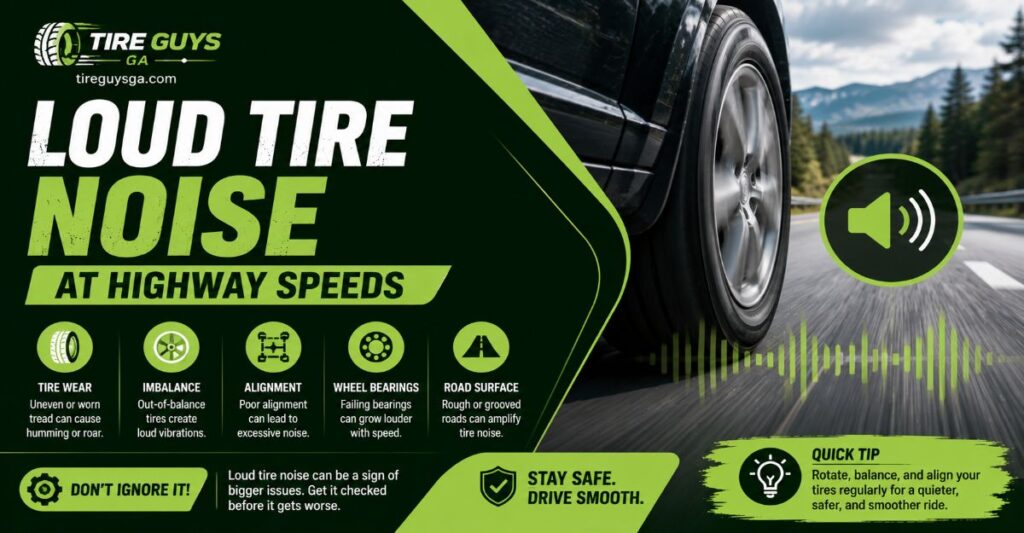
Loud tire noise at highway speeds is an acoustic resonance caused by tread blocks striking the pavement, trapped air compressing in tread grooves, and uneven rubber wear patterns amplifying the sound. This auditory disruption intensifies at velocities above 55 miles per hour due to increased rotational force and maximum air volume displacement inside the wheel well.
Key Facts at a Glance
- Average interior cabin noise from tires on a highway ranges between 60 and 72 decibels.
- Tire cavity resonance (the air vibrating inside the tire) consistently operates at frequencies between 200 and 250 Hz.
- A continuous roaring sound that changes pitch during lane changes usually indicates a failing wheel bearing, not a defective tire.
- Maintaining a standard cold tire inflation pressure of 32 to 35 PSI is the most effective preventative measure against uneven tread wear.
- Premium acoustic tires utilize internal polyurethane foam to reduce perceived interior cabin noise by up to 3 decibels.
What Causes Loud Tire Noise at Highway Speeds?
Loud tire noise at highway speeds results from four specific physical interactions between the rubber compound, the asphalt surface, and the surrounding air. As a vehicle accelerates, the rotational velocity of the wheel multiplies these microscopic impacts into a constant, audible drone.
How Does Tread Block Impact Generate Sound?
Tread block impact creates sound through repetitive percussion against the road surface. Every individual block of rubber on the tire circumference strikes the pavement as the wheel rotates. Heavy, aggressive tread blocks found on off-road or winter tires hit the pavement with higher kinetic energy, generating a louder, lower-frequency drumbeat compared to the smaller, tighter blocks found on grand-touring highway tires.
Why Does Air Compression Create High-Frequency Noise?
Air compression creates high-frequency whining when air becomes trapped in the tread grooves and rapidly explodes outward as the tire rolls flat against the asphalt. Modern tire engineers utilize variable pitch tread designs to combat this. By slightly altering the size and spacing of the tread blocks, manufacturers disrupt the sound waves, preventing the air compression pops from overlapping and multiplying in volume.
What is Tire Cavity Resonance?
Tire cavity resonance is the acoustic vibration of the compressed air trapped inside the tire casing itself. When the tire rolls over a bump or rough aggregate, the impact sends a shockwave through the rubber, causing the internal air to vibrate rapidly at 200 to 250 Hz. This low-frequency hum transmits directly through the suspension components and into the passenger cabin.
What Are the Main Types of Highway Tire Noise?
Different mechanical failures and wear patterns produce highly specific audio signatures. Identifying the exact pitch and rhythm of the sound is the first step in diagnosing a suspension or rubber defect.
Low-Frequency Humming or Roaring
A continuous drone resembling a twin-engine propeller plane usually stems from coarse road surfaces, severe alignment issues, or naturally heavy tread blocks. This low-frequency roar remains steady as long as the vehicle speed remains constant. If the noise disappears entirely when transitioning from old asphalt to freshly paved blacktop, the cause is the road texture rather than a mechanical defect.
High-Frequency Squealing or Whining
High-frequency whining increases in pitch directly alongside vehicle acceleration. This noise profile is common in vehicles equipped with high-performance summer compounds driving on smooth, non-porous concrete. The soft, sticky rubber acts like a suction cup against the smooth surface, creating a peeling sound as the tread lifts away from the road at high rotational speeds.
Rhythmic Slapping or Clicking
Intermittent slapping or rhythmic thumping that matches the exact rotational speed of the wheel indicates physical damage to the tire. Common culprits include broken internal steel belts, a localized flat spot from emergency braking, or a large stone embedded deep within a tread void.
Cupping Noise and Growling
A rhythmic growling sound is the hallmark of tire cupping, also known as scalloping. Cupping occurs when wavy, scooped dips wear into the outer or inner borders of the tire tread. This wear pattern is almost always caused by blown shock absorbers or severely out-of-spec suspension geometry that allows the tire to bounce microscopically down the highway.
How Can You Tell if the Noise is a Tire or a Wheel Bearing?
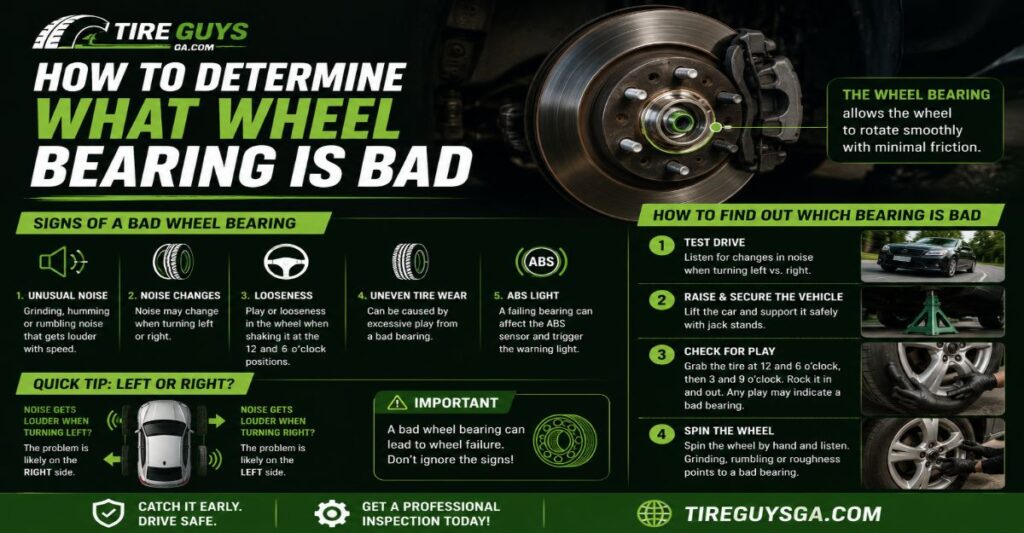
You can differentiate a noisy tire from a failing wheel bearing by listening closely to how the sound reacts to lateral weight transfer during a highway drive. Both issues produce a low-frequency roar, but wheel bearings respond uniquely to steering inputs.
When driving safely at highway speeds, gently sway the vehicle into the left lane. This steering action transfers the weight of the vehicle onto the right-side wheels. If the roaring noise gets significantly louder during a left sway, the right wheel bearing is likely failing under the increased load. If the noise remains entirely unchanged regardless of steering input or road surface changes, the issue is almost certainly uneven tire wear.
Expert Insight: Many mechanics mistakenly replace perfectly good tires because a failing wheel bearing sound mimics tread cupping perfectly. Always perform a dynamic sway test before purchasing replacement rubber.
Step-by-Step Diagnostic Process for Tire Noise
Diagnosing the exact source of highway noise requires a combination of visual inspection and tactile feedback. This process takes approximately 10 minutes and requires only a tread depth gauge.
Before You Start:
- Time Required: 10 to 15 minutes.
- Difficulty: Beginner.
- Tools Needed: Flashlight, tread depth gauge, heavy-duty gloves.
- Prerequisite: Park the vehicle on a flat, level surface and turn the steering wheel all the way to the left to expose the tread face of the front tires.
Step 1: Perform a Visual Inspection
Scan the entire visible tread face using a flashlight. Look for shiny spots indicating localized friction, exposed steel cords, or embedded debris. Uneven wear on the extreme inside or outside edge indicates an immediate need for a four-wheel alignment.
Success Checkpoint: You will know the tire structure is intact if the color and texture of the rubber look uniform across the entire width.
Step 2: Measure the Tread Depth
Insert the tread depth gauge into the primary grooves at the outer edge, the dead center, and the inner edge of the tire. A healthy tire will show identical depths across all three zones.
Common Mistake: Measuring only the center of the tire. Over-inflated tires wear rapidly in the center while maintaining deep tread on the shoulders, hiding dangerous degradation.
Step 3: Execute the Hand-Rub Test
Put on a heavy-duty glove and run your hand completely flat along the circumference of the tread face, first clockwise, then counter-clockwise. You are feeling for “feathering.” If the tread blocks feel completely smooth in one direction but catch your glove like sharp saw teeth in the other direction, the tire is severely feathered due to improper toe alignment.
How Much Does It Cost to Fix Highway Tire Noise?
Repair costs vary drastically based on whether the solution involves simple maintenance, suspension repair, or complete tire replacement. Below is a breakdown of typical industry pricing for noise mitigation.
| Solution Type | Typical Price (USD) | Timeframe Required | Ideal Use Case |
| Professional Wheel Balancing | $50 to $120 (Set of 4) | 30 to 45 Minutes | Fixing vibration and rhythmic thumping at exact speeds (e.g., 65 mph). |
| Four-Wheel Alignment | $80 to $150 | 45 to 60 Minutes | Correcting camber or toe geometry to stop feathering and cupping. |
| Soundproofing Insulation | $150 to $400 (DIY or Shop) | 2 to 5 Hours | Reducing resonance from aggressive tread patterns without buying new tires. |
| Premium Acoustic Tires | $600 to $1,200 (Installed) | 1 to 1.5 Hours | Eliminating compound noise and cavity resonance entirely. |
Best Solutions for Mitigating Highway Tire Noise
Selecting the correct mitigation strategy depends on whether you are willing to replace functional hardware or if you prefer to alter the vehicle itself.
Upgrade to Grand-Touring Quiet Tires
Installing premium grand-touring tires is the most effective way to eliminate highway drone. These specialized tires feature continuous center ribs for stable road contact and asymmetrical tread patterns engineered with advanced acoustic pitch sequencing. Modern iterations also include a thick layer of polyurethane sound-absorbing foam glued directly to the inner liner, which absorbs cavity resonance before it reaches the suspension. The drawback is a slightly softer steering response and reduced aggressive cornering grip.
Install Sound-Dampening Fender Liners
Applying butyl-rubber sound dampening mats to the interior metal of the wheel wells stops noise propagation. This heavy, dense material adds mass to the sheet metal, preventing it from vibrating in sympathy with the tire impacts. This solution is highly effective at blocking high-frequency whistling and the sound of rocks hitting the undercarriage, though it adds overall weight to the vehicle and requires tedious interior panel removal.
Adhere to Strict Rotation and Alignment Schedules
Rotating tires every 8,000 to 11,000 kilometers prevents minor wear anomalies from developing into loud, permanent cupping patterns. Keeping the suspension geometry perfectly aligned ensures the tire strikes the pavement flat and true. While this strategy costs virtually nothing over the life of the vehicle, it cannot silence tires that feature naturally aggressive, off-road biased tread designs.
Common Diagnostic Mistakes to Avoid
Vehicle owners frequently waste hundreds of dollars misdiagnosing highway acoustics. Avoiding these common pitfalls prevents unnecessary mechanic bills.
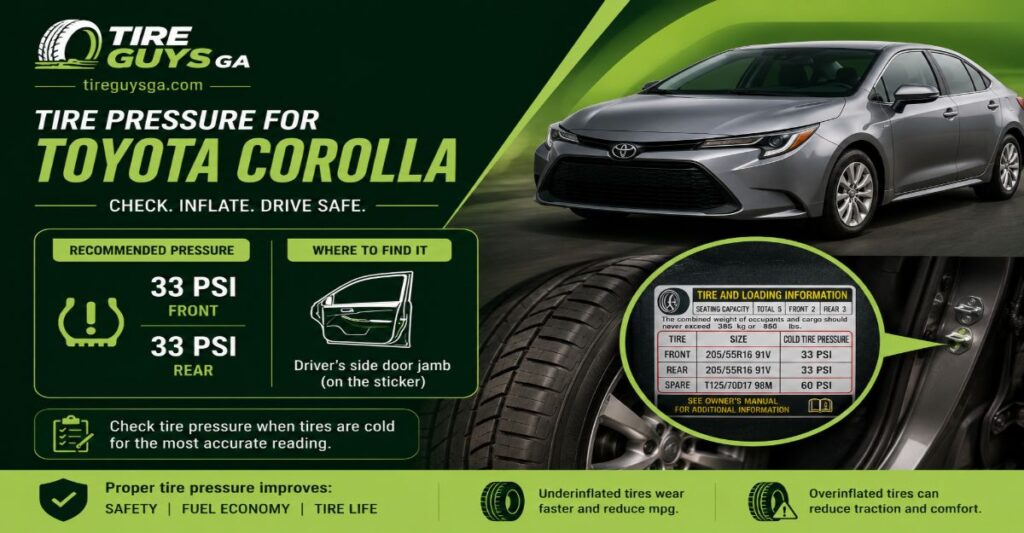
- Ignoring Mismatched Inflation: Running uneven tire pressures across the same drive axle forces the differential to work constantly, creating a mechanical hum that sounds identical to tire failure. Always set cold pressures to the exact specification found on the driver-side door placard.
- Mounting New Tires on Bad Suspension: Installing expensive, quiet tires without performing an alignment ensures the new tires will develop the exact same noisy wear patterns as the old set within 5,000 miles.
- Purchasing Cheap Off-Brand Rubber: Budget tires utilize hard, durable rubber compounds to boast long treadwear warranties. However, these hard compounds lack the pliability needed to absorb road impacts, resulting in a significantly louder highway ride compared to premium tier-one brands.
Expert Recommendations Based on Driver Profiles
Different driving habits require different noise mitigation strategies.
The Daily Commuter
- Action: Choose premium Grand Touring All-Season tires featuring variable pitch tread technology.
- Maintenance: Inflate strictly to factory placard specifications and enforce a strict 10,000-kilometer rotation schedule to maximize acoustic lifespan.
The Performance Driver
- Action: Select ultra-high-performance summer tires equipped with specialized acoustic foam inner liners to balance grip with livability.
- Maintenance: Execute frequent cross-rotation schedules to combat the aggressive camber wear patterns generated by aggressive cornering and stiff suspension setups.
The EV Owner
- Action: Purchase EV-specific tire models. Electric vehicles lack engine noise, making tire hum highly prominent. Furthermore, EV batteries add extreme weight to the chassis, requiring tires with reinforced sidewalls that are explicitly engineered not to drone under heavy loads.
Frequently Asked Questions
Does tire noise go away as tires wear down?
Tire noise typically increases as tires wear down. As the tread depth decreases, there is less rubber to absorb the impact against the road surface. Furthermore, any uneven wear patterns, such as cupping or feathering, will become more pronounced and exponentially louder as the miles accumulate.
Are electric vehicle tires louder on the highway?
Electric vehicle tires are not inherently louder, but the interior cabin noise is more noticeable. Because EVs do not have a combustible engine to mask background acoustics, wind and tire noise become the dominant sounds. EVs are also significantly heavier, which compresses the tire harder against the pavement and generates louder impact percussion.
Can low tire pressure cause roaring noises?
Yes, running a tire at lower than recommended pressure causes the sidewall to flex excessively and the tread face to cup in the center. This creates a larger, flatter contact patch that slaps against the highway, resulting in a low-frequency roaring sound that decreases fuel economy and creates dangerous heat buildup.
What is the standard decibel level for highway driving?
The average interior noise level in a modern passenger vehicle traveling at 70 miles per hour ranges between 60 and 72 decibels. Luxury vehicles with double-pane acoustic glass and foam-lined tires usually sit at the lower end of that spectrum, while older economy cars or trucks with off-road tires easily exceed 70 decibels.
How often should I rotate tires to prevent noise?
You should rotate your tires every 5,000 to 7,000 miles, or roughly every six months. Consistent rotation forces the tires to wear evenly across different positions on the vehicle chassis, preventing the localized feathering and cupping patterns that generate harmonic vibrations at highway speeds.