Yes, Michelin CrossClimate 2 tires are good for drivers who want strong dry, wet, and light-to-moderate snow performance from one year-round set. Their 3PMSF severe-snow certification gives them an advantage over ordinary all-season tires, but they remain inferior to dedicated winter tires on polished ice, deep snow, and prolonged subzero roads.
Key Facts at a Glance
- Michelin CrossClimate 2 is a directional all-weather grand-touring tire with the Three-Peak Mountain Snowflake, or 3PMSF, certification.
- Michelin backs many CrossClimate 2 sizes with a 60,000-mile treadwear warranty, although warranty terms and eligible sizes vary by market.
- The tire normally costs about $170-$320 per tire in the United States, before installation, depending on size and retailer.
- CrossClimate 2 usually provides stronger snow traction than a conventional all-season tire, while a dedicated winter tire remains better on ice.
- Directional CrossClimate 2 tires should normally rotate front-to-back on the same side, not cross from left to right.
- The tire’s strongest use case is mixed weather, including rain, warm summers, and occasional or regular plowed-road snow.
What Kind of Tire Is the CrossClimate 2?
Michelin CrossClimate 2 is an all-weather tire, not a conventional all-season tire and not a dedicated winter tire. The 3PMSF symbol on its sidewall means the tire passed a standardized snow-traction test required for severe-snow service, which is a higher winter-performance threshold than the basic M+S marking.
The distinction matters because “all-season” covers a wide range of designs. A typical touring all-season tire prioritizes quietness, fuel economy, and warm-weather mileage, while the CrossClimate 2 gives more design attention to snow evacuation and cold-weather flexibility.
The common claim that all-season rubber automatically hardens below 45°F is too simplistic. Tire compounds change gradually with temperature, and grip depends on compound chemistry, tread design, road temperature, moisture, speed, and surface texture. The practical point remains valid: a 3PMSF all-weather tire generally retains more cold-weather capability than a standard all-season tire.
Michelin markets the CrossClimate 2 around year-round mobility rather than racing performance. That positioning is accurate. The tire is a compromise optimized for drivers who would otherwise choose between one all-season set and two seasonal sets.
How Does CrossClimate 2 Tread Technology Work?
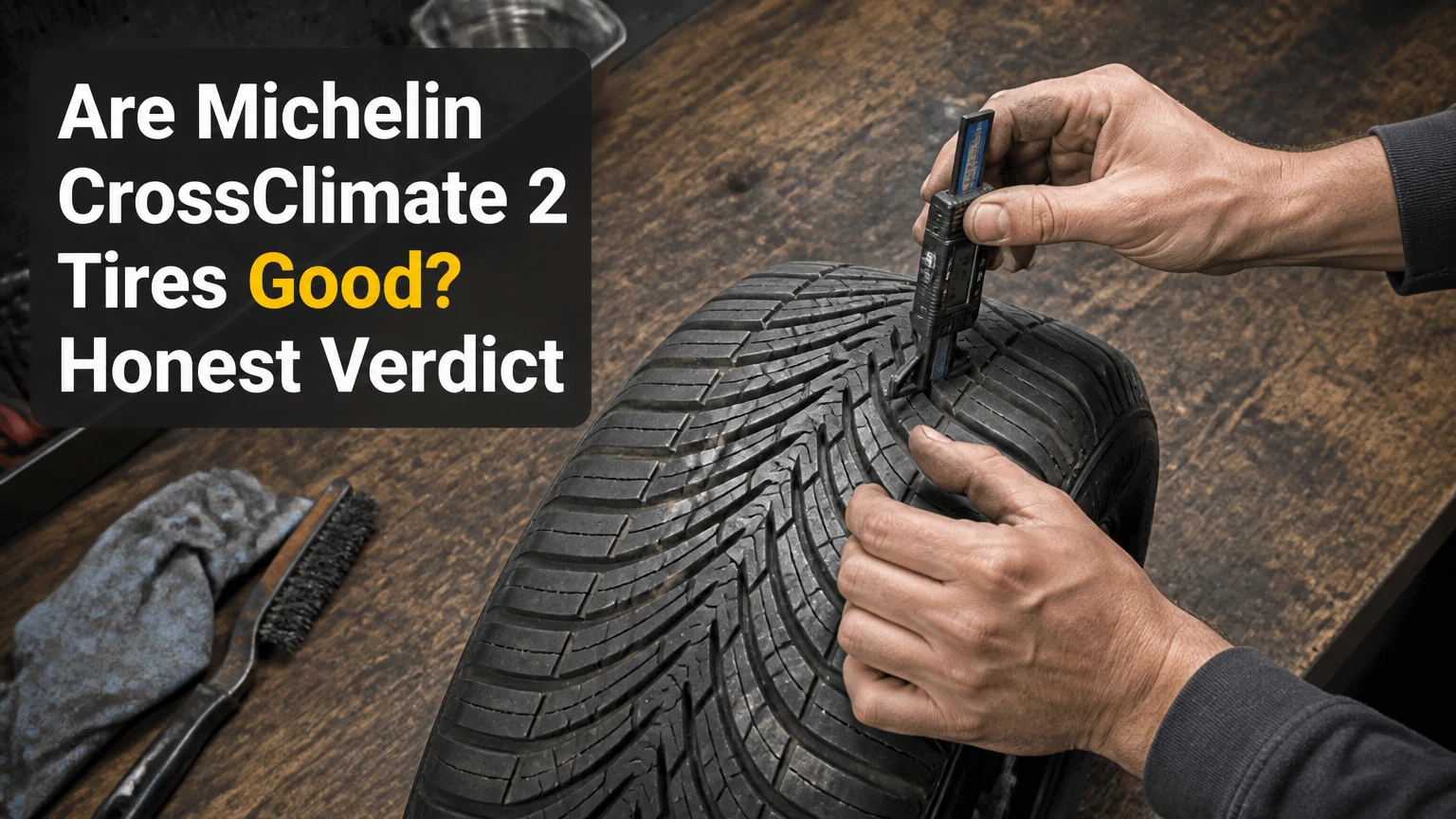
Michelin CrossClimate 2 combines a temperature-oriented compound, a V-shaped directional pattern, and interlocking sipes to balance warm-road stability with winter traction. The tire does not create dedicated-winter levels of ice grip; instead, it broadens the usable temperature and weather range of a touring tire.
The directional V pattern creates large channels that move water, slush, and loose snow away from the contact area. Large tread blocks can give the tire a firm feel during braking, while the angled geometry helps maintain forward traction in snow.
The tread blocks contain 3D locking sipes. Sipes open to create biting edges on snow, then limit block movement under braking and cornering. That trade-off helps explain why CrossClimate 2 can feel more stable than a soft winter tire on dry pavement, but also firmer over potholes.
Michelin’s product engineers describe the tread concept with the phrase “V-formation tread pattern” in the company’s product material. That is a product description, not proof that the pattern always delivers the shortest stopping distance. Independent testing remains necessary because performance changes with tire size, vehicle, temperature, and test surface.
What are the main specifications?
| Specification | Typical CrossClimate 2 value | Why it matters |
|---|---|---|
| Tire category | All-weather grand touring | One-set use across multiple seasons |
| Severe-snow marking | 3PMSF | Standardized severe-snow qualification |
| Treadwear warranty | Up to 60,000 miles | Limited protection against premature wear |
| Diameter coverage | Approximately 16-22 inches | Fits many cars, minivans, CUVs, and SUVs |
| Construction options | Standard and XL sizes | Load capacity must match the vehicle placard |
| Tread direction | Directional V pattern | Rotation is usually front-to-back only |
| UTQG | Varies by size | Verify the exact sidewall marking |
UTQG ratings should not be treated as universal model scores. The treadwear number, traction letter, and temperature letter can vary by size and specification, so check the exact tire offered for the vehicle. A typical listing may show a rating such as 640 B A, but that figure is not guaranteed across every CrossClimate 2 fitment.
How Good Are CrossClimate 2 Tires in Rain?
CrossClimate 2 tires are very good in heavy rain and standing water because their directional grooves provide substantial water evacuation. They are particularly suitable for highway commuters who encounter sudden downpours, deep lane grooves, and wet interstate surfaces.
Hydroplaning resistance is not the same as maximum wet cornering grip. A tire can clear water effectively in a straight line while another tire generates more lateral grip on a cold, wet curve. Published tests, including European all-season comparisons such as ADAC evaluations, have shown that all-weather tires can trade some low-temperature wet handling for stronger snow capability.
Drivers should also remember that tread depth controls wet performance. A CrossClimate 2 with 5/32 inch remaining tread will not clear water as effectively as a new tire, even if the compound remains serviceable. Replace a tire when it reaches the legal limit in your jurisdiction, and consider earlier replacement when wet-weather braking has visibly deteriorated.
Are CrossClimate 2 Tires Good in Snow and Ice?
CrossClimate 2 tires are good in light and moderate snow, including roads that receive prompt plowing, but they are not a substitute for dedicated winter tires on ice or severe mountain roads. The 3PMSF rating confirms meaningful snow capability, not equal performance in every winter condition.
The CrossClimate 2 is a sensible choice for cities such as Chicago, Denver, Toronto, or Minneapolis when the vehicle spends most of its time on treated roads and the driver wants to avoid seasonal tire storage. It is less suitable for a rural driveway, unplowed mountain route, or region where hard-packed ice persists for weeks.
Dedicated winter tires use compounds and tread structures designed specifically for low temperatures. They generally provide more braking and cornering control on ice and packed snow, while CrossClimate 2 offers better warm-weather convenience and usually more stable dry-road behavior.
| Driving condition | CrossClimate 2 suitability | Better choice when conditions persist |
|---|---|---|
| 1-3 inches of plowed snow | Strong | CrossClimate 2 is usually sufficient |
| 4-8 inches of fresh snow | Moderate to strong | Winter tire for frequent exposure |
| Packed residential snow | Moderate | Dedicated winter tire |
| Glazed black ice | Limited | Studless or studded winter tire |
| Dry roads at 70°F | Strong | Summer tire for sports driving |
| Deep slush at highway speed | Strong if tread is healthy | Reduce speed regardless of tire |
| Unplowed mountain roads | Limited | Dedicated winter tire and suitable vehicle |
A practical rule is simple: if losing traction would strand you, close a mountain pass, or create a serious safety problem, choose dedicated winter tires rather than relying on an all-weather compromise.
Are CrossClimate 2 Tires Good in Hot Weather?
CrossClimate 2 tires are safe for normal hot-weather highway driving when they have the correct speed rating, load index, and inflation pressure. They are not the best choice for drivers who prioritize steering precision, track use, or maximum dry-road cornering.
The tread’s large blocks and winter-oriented features create a firmer, more deliberate steering response than many touring all-season tires. In hot climates, the compound remains usable, but the tire can produce more road noise and rolling resistance than a low-resistance touring design.
CrossClimate 2 is therefore appropriate for a sedan traveling from a hot summer region into occasional snow, but it is excessive for a vehicle that never encounters cold weather. A premium touring tire may deliver quieter operation and slightly better efficiency in places such as Phoenix, Miami, or southern California.
How Long Do Michelin CrossClimate 2 Tires Last?
Michelin CrossClimate 2 tires carry a treadwear warranty of up to 60,000 miles in applicable North American fitments, while real service life commonly depends on alignment, inflation, vehicle weight, climate, and rotation discipline. A warranty is a coverage limit, not a promise that every tire will safely reach that mileage.
Front-wheel-drive vehicles can wear the front axle substantially faster because the front tires steer, brake, and transmit engine torque. Heavy SUVs, electric vehicles, aggressive drivers, and vehicles with worn suspension components can also reduce mileage.
Inspect the tread every 5,000-7,500 miles. Measure depth across the inner, center, and outer ribs rather than checking one convenient groove. Uneven readings often identify an alignment or inflation problem before the tire becomes visibly unsafe.
| Use pattern | Typical inspection concern | Action |
|---|---|---|
| Front-wheel-drive sedan | Front shoulders wear first | Rotate at 5,000-7,500 miles |
| AWD crossover | Mismatched tread depth | Follow manufacturer replacement limits |
| Heavy EV | Fast shoulder and center wear | Check pressure monthly |
| Highway commuter | Center tread aging | Inspect at least twice yearly |
| Short-trip urban use | Low annual mileage, aging rubber | Check tire age and cracking |
Michelin’s warranty is useful, but tread depth, damage, and age determine replacement. A tire with adequate tread can still require removal for sidewall cracking, impact damage, repeated air loss, or severe irregular wear.
How Much Do CrossClimate 2 Tires Cost?
A typical CrossClimate 2 tire costs about $170-$220 in 16-17-inch sizes and approximately $230-$320 or more in 18-22-inch sizes. A complete installed set commonly costs $800-$1,450 after mounting, balancing, disposal fees, taxes, and optional TPMS service.
Prices change by vehicle application, speed rating, XL construction, retailer promotions, and location. SUV and EV fitments often cost more because they use larger diameters or higher load indexes.
| Tire size category | Typical tire price | Typical installed set |
|---|---|---|
| 16-inch sedan | $170-$195 each | $760-$950 |
| 17-inch sedan or CUV | $185-$220 each | $820-$1,050 |
| 18-inch CUV or SUV | $230-$280 each | $1,000-$1,300 |
| 19-20-inch SUV or EV | $260-$320 each | $1,150-$1,500 |
| 21-22-inch application | $300-$380 each | $1,300-$1,750 |
The economic comparison should include avoided seasonal mounting and storage. If a driver otherwise pays $100-$180 twice yearly for tire changes, one all-weather set can reduce ownership hassle, even when its purchase price exceeds a basic all-season tire.
Which CrossClimate 2 Version Fits Your Vehicle?
The correct CrossClimate 2 is the size, load index, speed rating, and construction listed by the vehicle manufacturer, not simply the tire with the matching wheel diameter. XL marking can support a heavier load, but it does not automatically make an incorrect fitment safe.
Read the driver-door placard and owner’s manual. A Toyota RAV4, Mazda CX-5, Ford Escape, or electric crossover may require an XL tire in one wheel size and a standard-load tire in another. EVs can require higher load capacity because of battery mass, but load requirements still come from the vehicle maker.
Never reduce the recommended load index to improve ride comfort. Do not increase pressure to the maximum sidewall value unless a qualified tire professional or vehicle manufacturer specifies it; use the placard pressure for normal operation.
Do CrossClimate 2 Tires Ride Comfortably?
CrossClimate 2 tires provide a controlled ride, but many drivers find them firmer and louder than conventional touring all-season tires. The directional tread, large blocks, and reinforced constructions can transmit sharper impacts through expansion joints and potholes.
Noise also depends heavily on the road surface. Grooved concrete can create a low-frequency hum that sounds like a wheel bearing, while smooth asphalt may produce little objectionable noise. A new tire can become noisier when uneven wear develops.
The best comfort result comes from correct pressure, proper alignment, and timely rotation. Replacing a noisy tire without diagnosing cupping or feathering often repeats the problem on the next set.
How Should Directional CrossClimate 2 Tires Be Rotated?
Directional CrossClimate 2 tires should normally rotate front-to-back on the same side of the vehicle. Crossing a directional tire from left to right reverses the V-shaped tread direction, which can reduce the intended water and slush evacuation behavior.
Technicians should confirm the arrows on the sidewall before moving the tires. A front-wheel-drive car commonly moves the left-front tire to the left-rear and the right-front tire to the right-rear, with the rear tires moving forward on the same side.
Some shops can dismount and remount tires to reverse their position, but that adds labor and is unnecessary for normal rotation. Follow the vehicle manufacturer’s interval, commonly 5,000-7,500 miles, rather than waiting for visible wear.
What causes CrossClimate 2 humming?
CrossClimate 2 humming usually comes from tread-pattern interaction or uneven wear, not automatically from a failed wheel bearing. Cupping, heel-and-toe wear, feathering, incorrect pressure, worn dampers, and alignment errors can all create a repeating drone after several thousand miles.
Use this diagnostic sequence:
- Check all four pressures against the door placard.
- Run a hand over the tread in both directions.
- Look for scalloped depressions or alternating high and low blocks.
- Inspect toe and camber alignment.
- Have the shop test the wheel bearing before replacing parts.
A tire can generate a bearing-like sound even when the bearing is healthy. The repair is usually correction of the wear cause, followed by rotation or replacement when the tread damage is advanced.
Do CrossClimate 2 Tires Reduce Fuel Economy?
CrossClimate 2 tires can reduce fuel economy or EV range compared with low-rolling-resistance touring tires, but a fixed 1-3% penalty is not universal. Vehicle weight, tire size, temperature, pressure, speed, battery state, and driving style usually have a larger effect than the tire model alone.
The aggressive tread and all-weather construction can require more energy than an efficiency-focused tire. The difference may be difficult to measure in ordinary driving because wind, temperature, and route variation can exceed the tire effect.
EV owners should compare the exact approved size and load rating. A tire that gains range but fails the vehicle’s load or traction requirements is not an acceptable substitute.
How Does CrossClimate 2 Compare With Alternatives?
CrossClimate 2 is the strongest choice among these categories for drivers who need one set across real winter and summer conditions. A dedicated winter tire wins on ice, a premium touring all-season tire usually wins on quietness and efficiency, and an ultra-high-performance summer tire wins on dry-road response.
| Alternative | Snow and ice | Warm-weather behavior | Best reason to choose it |
|---|---|---|---|
| Michelin CrossClimate 2 | Strong snow, limited ice | Stable, moderately firm | One set for mixed seasons |
| Michelin Defender 2 | Fair snow, weak severe-winter use | Quiet, efficient touring | Long-distance warm-climate driving |
| Bridgestone Blizzak WS90 | Excellent snow and ice | Poor summer suitability | Serious winter conditions |
| Michelin Pilot Sport 4S | Poor snow, unsuitable ice | Excellent dry handling | Performance and track driving |
| Pirelli Scorpion WeatherActive | Strong snow and rain | SUV-oriented balance | CUV and SUV all-weather use |
| Premium low-resistance all-season | Limited to moderate snow | Quiet and efficient | Mild climates and high MPG priority |
The CrossClimate 2 versus Defender 2 decision is mainly a climate decision. Choose CrossClimate 2 when snow capability matters; choose Defender 2 or a similar touring tire when snow is rare and quiet mileage is more important.
The CrossClimate 2 versus Blizzak decision is a severity decision. Choose CrossClimate 2 for convenience on mostly cleared roads; choose Blizzak or another dedicated winter tire when ice and unplowed snow are routine.
Who Should Buy Michelin CrossClimate 2 Tires?
The four-season commuter
A four-season commuter should buy CrossClimate 2 when the route includes hot summers, heavy rain, and recurring but manageable snow. The tire eliminates a second wheel-and-tire set and provides more winter margin than a basic all-season design.
The suburban SUV owner
A compact SUV owner should consider CrossClimate 2 when the vehicle manufacturer approves the size and load index. The tire suits crossovers such as the RAV4 or CX-5 when roads are generally plowed and the driver values wet braking and year-round convenience.
The mountain or rural driver
A mountain driver should skip CrossClimate 2 if roads remain icy, steep, or unplowed for long periods. Dedicated winter tires provide a larger safety reserve where traction loss can prevent the vehicle from reaching home or emergency services.
The performance driver
A performance driver should skip CrossClimate 2 for track days or maximum dry-road cornering. The tire’s snow-oriented tread and firm touring construction cannot match a summer performance tire’s steering precision, heat tolerance, and lateral grip.
The EV efficiency-focused owner
An EV owner should choose CrossClimate 2 when all-weather traction outweighs maximum range. Drivers who measure every mile of range and rarely see snow should compare approved low-rolling-resistance EV tires first.
Common Buying and Maintenance Mistakes
CrossClimate 2 performance often declines because of installation and maintenance errors rather than a defective design. These mistakes are especially common with directional tires:
- Buying by diameter only: Match size, load index, speed rating, and XL status to the placard.
- Crossing directional tires: Keep each tire on the same vehicle side unless a shop remounts it.
- Ignoring cold pressure: Check pressure monthly and before long trips, when the tires are cold.
- Skipping alignment: Correct pulling, steering-wheel offset, and rapid inner-edge wear before installing new tires.
- Mixing tread designs carelessly: Replace tires according to the vehicle maker’s AWD and tread-depth requirements.
- Treating 3PMSF as an ice guarantee: Severe-snow certification does not equal studless winter-tire performance on glare ice.
One practitioner rule is worth remembering: diagnose the vehicle before blaming the tire. A worn control-arm bushing can destroy an expensive tire in 10,000 miles, while a correct alignment can preserve a much cheaper tire’s full service life.
FAQ
Are CrossClimate 2 tires suitable for all-wheel-drive vehicles?
CrossClimate 2 tires can suit AWD vehicles when Michelin offers the correct approved size and the vehicle manufacturer permits the fitment. AWD does not improve braking on ice, and many AWD systems require closely matched tire circumference. Follow the owner’s manual before replacing only one or two tires.
Can you repair a puncture in a CrossClimate 2 tire?
A qualified tire shop can often repair a CrossClimate 2 puncture when the damage is in the central tread area, the hole is small, and the tire was not driven while flat. Sidewall, shoulder, large, or run-flat-related damage usually requires replacement rather than a plug-only repair.
Are CrossClimate 2 tires worth the price?
CrossClimate 2 tires are worth the price when they replace two seasonal sets or provide needed snow capability without sacrificing summer usability. They are less compelling in warm climates where a quieter touring tire costs less and delivers better efficiency.
How old can CrossClimate 2 tires be?
Tire age depends on condition, storage, climate, and manufacturer guidance, not tread depth alone. Check the DOT date code, inspect for cracking, and have an experienced technician evaluate older tires. Heat, ultraviolet exposure, and long periods of underinflation accelerate aging.
Are CrossClimate 2 tires good for highway driving?
CrossClimate 2 tires are well suited to highway driving because they offer stable dry-road behavior, strong wet-weather water evacuation, and useful snow traction. Drivers who want the quietest ride or lowest fuel consumption may prefer a conventional grand-touring tire.
Is CrossClimate 3 better than CrossClimate 2?
CrossClimate 3 availability and specifications vary by market, so it is not universally a direct replacement for CrossClimate 2. Compare the exact size, 3PMSF status, warranty, wet and snow testing, price, and vehicle approval rather than assuming the newer name guarantees better results.
The Bottom Line
Michelin CrossClimate 2 tires are good, and they are especially compelling for drivers who face rain, cold weather, and recurring light-to-moderate snow but do not want two tire sets. The 3PMSF rating, directional V tread, and interlocking sipes give Michelin CrossClimate 2 stronger winter usefulness than ordinary all-season tires.
They are not the best solution for persistent ice, deep unplowed snow, track driving, or maximum EV range. Choose the exact approved size and load rating, maintain inflation and alignment, rotate directionally, and buy CrossClimate 2 when balanced year-round capability matters more than specialization.