Yes, tire alignments, more accurately called wheel alignments, are necessary when suspension geometry is out of specification, tires wear unevenly, the vehicle pulls, or steering no longer centers correctly. They are not mandatory at a fixed yearly interval for every vehicle. A proper alignment protects handling and tire life, but only after a technician repairs worn or damaged suspension components.
Key Facts at a Glance
- Wheel alignment adjusts suspension geometry, not the rubber tire or wheel balance.
- Toe misalignment commonly causes feathered tread and can damage tires quickly.
- A steering-wheel vibration usually requires wheel balancing, tire inspection, or wheel repair before alignment.
- A pothole, curb impact, collision, suspension repair, lift, or lowering spring installation justifies an alignment check.
- Typical US alignment pricing is about $75-$200, and most appointments take 45-90 minutes.
- Vehicle manufacturers, not a universal annual rule, determine the correct camber, caster, and toe specifications.
Why Does Wheel Alignment Matter?
Wheel alignment matters because camber, caster, and toe determine how each tire contacts the road and how the vehicle responds to steering inputs. When those angles move outside the manufacturer’s range, the tire may scrub sideways, carry load on one edge, or point away from the intended travel path.
Correct geometry supports straight-line stability, predictable cornering, even tread wear, and normal rolling resistance. Misalignment does not always create an immediate safety emergency, but a severe condition can reduce control during braking or evasive steering while consuming usable tread.
A useful distinction is necessary. A factory alignment check at every service visit is not automatically justified if the vehicle drives straight, the steering wheel is centered, and tread wear is even. Alignment is a condition-based repair for most passenger vehicles, although a measurement during tire or suspension work can identify a problem before symptoms become obvious.
What Does a Tire Alignment Actually Adjust?
A tire alignment adjusts the relationship among the steering axis, wheel hubs, suspension arms, and vehicle centerline. The technician changes adjustable components such as tie rods, eccentric bolts, shims, or control-arm hardware until measured angles approach the vehicle manufacturer’s specifications.
The technician does not reshape a tire, correct an imbalance, or inflate a tire through alignment service. If a suspension component is bent or loose, the correct repair may be replacement rather than adjustment.
What Are Camber, Caster, and Toe?
Camber, caster, and toe are the three primary alignment angles, although some vehicles also use thrust angle, steering-axis inclination, and included angle during diagnosis. Each angle describes a different view of wheel position and creates a different wear or handling pattern.
| Angle | Viewing direction | What the angle controls | Common problem |
|---|---|---|---|
| Camber | Front of vehicle | Inward or outward wheel tilt | Inside or outside shoulder wear |
| Caster | Side of vehicle | Steering-axis forward or rearward tilt | Pulling, poor return-to-center |
| Toe | Above vehicle | Wheel direction toward or away from centerline | Feathering and rapid tread scrub |
| Thrust angle | Above vehicle | Rear axle direction relative to centerline | Crooked steering wheel and dog-tracking |
How Does Camber Affect Tire Wear?
Camber affects how much tread load reaches the inner and outer shoulders. Negative camber tilts the top of the wheel inward, while positive camber tilts it outward. A small amount may be intentional, especially on performance vehicles, but excessive camber concentrates wear on one edge.
Camber is not judged by a universal target such as exactly zero degrees. The correct value depends on the vehicle, suspension design, ride height, load, and manufacturer specification. A car with a bent control arm may show a large camber difference between left and right sides even when total toe appears acceptable.
What Does Caster Change?
Caster is the forward or rearward tilt of the steering axis when viewed from the side. More positive caster generally improves straight-line stability and steering-wheel return, but a side-to-side caster difference can make a vehicle pull toward one side.
Caster often is not directly adjustable on a standard passenger car. A technician may use it as diagnostic evidence of a bent component, shifted subframe, or collision damage rather than “correct” it with a simple adjustment.
Why Is Toe Often the Fastest Tire Killer?
Toe describes whether the fronts of the tires point inward, called toe-in, or outward, called toe-out. A toe error forces the tires to scrub across the road while the vehicle moves forward, making it one of the most common causes of feathered tread and rapid wear.
Toe specifications are usually small and vehicle-specific, expressed in degrees, inches, or millimeters. A generic tolerance cannot safely replace the manufacturer’s alignment data. Even a visibly modest toe error can produce a rough tread texture within a relatively short mileage interval.
What Symptoms Indicate Misalignment?
The clearest symptoms of wheel misalignment are persistent pulling on a reasonably flat road, an off-center steering wheel while traveling straight, and uneven or feathered tread wear. No single symptom proves alignment is at fault because tire pressure, road slope, tire construction, wheel damage, and suspension wear can create similar complaints.
A road naturally crowns toward the shoulder for drainage, so a vehicle may drift slightly right on many roads without having a defective alignment. A controlled check on a flat road, followed by tire-pressure verification, is more informative than briefly releasing the steering wheel in traffic.
| Symptom | More likely alignment cause | Other likely cause | First check |
|---|---|---|---|
| Feathered tread blocks | Toe error | Loose tie rod or worn bushing | Run a hand across tread, then inspect suspension |
| One shoulder worn | Camber or toe error | Underinflation, overload, worn spring | Check pressure and tread depth |
| Pulls left or right | Caster or camber difference | Road crown, tire conicity, brake drag | Swap front tires side to side if permitted |
| Crooked steering wheel | Thrust or toe problem | Steering work performed off-center | Verify steering centering and rear axle data |
| Steering-wheel vibration | Rarely alignment alone | Imbalance, bent rim, tire defect | Balance and inspect wheel first |
| Squeal during ordinary turns | Excessive scrub or tire issue | Low pressure, tire compound, worn joint | Check pressure, tread, and steering components |
Can Uneven Tire Wear Prove an Alignment Problem?
Uneven tire wear strongly suggests a geometry, pressure, load, or suspension issue, but it does not identify the exact failed part. Inner-edge wear may result from negative camber, toe, a sagging spring, or a bent control arm; outside-edge wear can result from underinflation or cornering forces.
Tread depth should be measured across the inner, center, and outer portions of each tire with a tread-depth gauge. The US legal benchmark commonly used for replacement is 2/32 inch, but wet-weather performance declines before that point, and a tire with one shoulder near the limit should not be treated as healthy because the center still has tread.
Do New Tires Require Alignment?
New tires do not automatically require an alignment, but installing them is an efficient time to check alignment because uneven geometry can damage expensive fresh tread. Alignment becomes especially sensible when the old tires show shoulder wear, feathering, a steering pull, or when the tire shop has removed suspension or steering parts.
A new tire cannot correct a bent wheel, worn tie rod, or incorrect toe. Conversely, a vehicle with even wear and no handling symptoms does not necessarily need alignment simply because four tires were mounted.
Tire rotation also does not cause alignment changes by itself. However, rotating tires can reveal wear patterns that were previously hidden on an axle, so the inspection should include all four positions.
How Often Should Alignment Be Checked?
Most passenger vehicles should receive an alignment check after an impact, suspension repair, abnormal tread wear, or a new handling symptom rather than at a rigid mileage interval. Many manufacturers and repair facilities suggest checking geometry during annual maintenance or roughly every 10,000-12,000 miles, but that is an inspection interval, not proof that adjustment is needed.
Harsh roads justify more frequent checks. A driver who regularly encounters potholes, frost heaves, unpaved roads, heavy loads, or curb impacts has more opportunities to move suspension geometry out of range.
| Driving situation | Check timing | Alignment decision |
|---|---|---|
| Normal commuting, even wear | Annual inspection or 10,000-12,000 miles | Adjust only if measurements require it |
| Pothole or curb impact | Immediately or at next safe appointment | Inspect wheel, tire, and suspension first |
| New tie rod, control arm, strut, or subframe work | Immediately after repair | Alignment normally required |
| Lift or lowering installation | After installation and settling | Use modified-vehicle specifications |
| Heavy towing or commercial use | Every 6 months or during scheduled service | Include ball joints and bushings |
| Track or autocross use | Before and after events | Use a performance setup, not always factory settings |
What Happens During an Alignment?
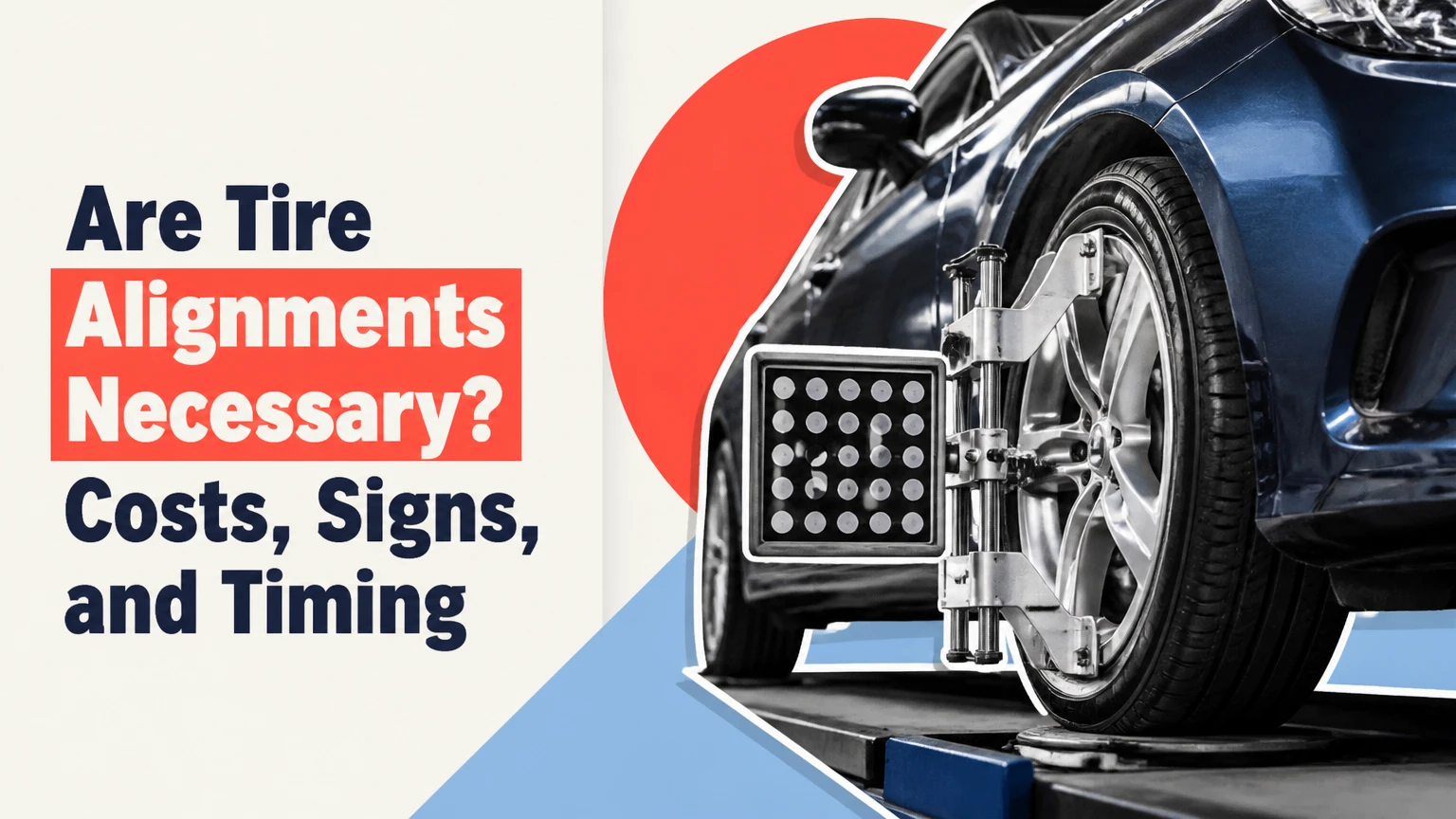
A professional alignment normally takes 45-90 minutes and begins with tire-pressure verification, ride-height observation, and inspection for looseness or damage. The vehicle then receives wheel-mounted targets or sensors, the equipment measures current geometry, and the technician adjusts eligible angles before producing a final report.
A sound process includes the following steps:
- Inspect the vehicle. The technician checks tire condition, wheel runout, steering linkage, ball joints, control-arm bushings, springs, and ride height.
- Set basic conditions. Tire pressures should match the door-jamb label, and unusual cargo should be removed unless the manufacturer specifies a loaded measurement.
- Mount sensors or targets. Clamps must sit securely on all wheels, and the equipment must be compensated for runout when required.
- Measure initial angles. The machine records camber, caster, toe, thrust angle, and steering position against vehicle-specific data.
- Center and lock the steering wheel. Adjustments made with the wheel off-center can leave the vehicle tracking straight while the steering wheel remains crooked.
- Adjust permitted geometry. Tie rods commonly correct toe; shims, eccentric bolts, or control arms may correct other angles when the design allows it.
- Inspect the final printout. Before-and-after readings should show whether each adjustable angle is within the correct specification.
An alignment cannot repair a loose ball joint or bent suspension arm. Those parts must be replaced or corrected first, then the vehicle must be measured again.
What Should an Alignment Printout Show?
An alignment printout should identify the vehicle, show before-and-after readings, list manufacturer specifications, and distinguish adjustable from non-adjustable angles. The final toe, camber, caster, and thrust-angle values should be within the stated range or accompanied by a written explanation.
A green result does not guarantee a good repair if the steering wheel was not centered, tire pressures were wrong, or a worn component remained in service. Ask the technician to explain any red value and to identify whether the value reflects damage rather than a missing adjustment.
Which Type of Alignment Does Your Vehicle Need?
The correct alignment type depends on the vehicle’s rear suspension and the angles its design permits the technician to adjust. Four-wheel measurement is generally preferable for vehicles with independent rear suspension, front-wheel-drive platforms, AWD systems, and most modern SUVs, even when only the front axle has adjustable hardware.
| Alignment type | Wheels measured | Typical vehicle application | Main limitation |
|---|---|---|---|
| Front-end | Front axle only | Older vehicles with solid rear axle | Ignores rear thrust direction |
| Thrust-angle | Front wheels plus rear thrust line | Non-adjustable rear suspension | Does not independently correct rear angles |
| Four-wheel | All four wheels | FWD, AWD, independent rear suspension | Costs more when rear adjustment is available |
| Performance custom | All four, chosen target values | Track cars and modified vehicles | May increase road-tire wear |
A four-wheel alignment does not mean every wheel has multiple adjustment points. It means the technician measures the rear axle and uses that geometry to establish the vehicle centerline.
Is Alignment Different From Balancing?
Alignment and balancing are different services: alignment corrects suspension and wheel angles, while balancing corrects uneven mass distribution in the tire-and-wheel assembly. A vibration that appears at a particular speed, commonly around 50-75 mph, is more often associated with balance, tire uniformity, a bent rim, or a damaged tire than with alignment.
| Service | Corrects | Typical symptom | Equipment or action |
|---|---|---|---|
| Wheel alignment | Camber, caster, toe, thrust angle | Pulling, crooked wheel, uneven wear | Alignment rack and vehicle data |
| Wheel balancing | Tire-and-wheel mass imbalance | Speed-related vibration | Spin balancer and wheel weights |
| Tire rotation | Position of tires on vehicle | Wear distribution over time | Wheel removal and repositioning |
| Tire inflation | Air pressure | Heat, wear, handling, economy | TPMS gauge and compressor |
A vehicle can need both services. For example, a pothole may bend a rim, disturb balance, and alter toe simultaneously. Balancing will not correct a crooked steering wheel, and alignment will not remove a high-speed shake caused by an imbalance.
When Is an Alignment Necessary Immediately?
An alignment is necessary immediately after a collision, severe pothole or curb strike, replacement of steering or suspension components, or installation of a lift or lowering kit. Immediate inspection also applies when a tire loses tread rapidly on one edge or the vehicle suddenly changes direction under braking.
The priority is higher when the vehicle pulls strongly, the steering wheel no longer centers, a tire has exposed cords, or a suspension component is visibly bent. Do not assume an alignment is the first repair after a major impact; a bent wheel, damaged tire, shifted subframe, or broken steering part requires diagnosis before adjustment.
Can You Keep Driving With Misalignment?
Short, cautious driving to a repair facility may be reasonable when the pull is mild, tires retain safe tread, and no component is loose or damaged. Continued everyday driving with severe misalignment can destroy tread, increase stopping risk, and make the vehicle less predictable.
Stop driving and arrange towing if a tire has a bulge or exposed cords, the steering changes abruptly, the vehicle wanders severely, a wheel is visibly damaged, or clunking accompanies steering. Alignment cannot make a structurally unsafe tire safe.
Can You Check Alignment at Home?
Home checks can identify warning signs, but they cannot replace a professional alignment measurement. A level surface, accurate tire-pressure gauge, tread-depth gauge, and careful visual inspection can reveal pressure differences, shoulder wear, and obvious steering-wheel displacement.
A string or tape method can estimate toe on a race car or help with an emergency field repair, but it is sensitive to floor level, wheel runout, tire sidewall shape, steering centering, and measurement error. It also cannot reliably diagnose caster or confirm that a suspension part is straight.
Useful home checks include:
- Compare cold pressures with the door-jamb specification.
- Measure tread depth across three points on every tire.
- Look for feathering by sliding a hand lightly across tread blocks.
- Check whether the steering wheel is centered on a flat road.
- Inspect for bent rims, bulges, leaking shocks, or loose-looking components.
- Record the mileage and location of each wear pattern.
Do not place hands under a vehicle supported only by a jack. A home inspection is a screening tool, not a safety certification.
How Much Does a Wheel Alignment Cost?
A typical US wheel alignment costs about $75-$200, with four-wheel service commonly near the upper part of that range. The final price depends on local labor rates, vehicle access, seized adjusters, required replacement parts, specialty specifications, and whether steering or ADAS calibration is included.
| Service or situation | Typical US price | Typical time | Main price variable |
|---|---|---|---|
| Front-end alignment | $75-$125 | 45-60 minutes | Vehicle design and labor rate |
| Four-wheel alignment | $100-$200 | 60-90 minutes | Rear adjustment access |
| Lifetime plan | $200-$300 | Multiple visits | Chain policy and vehicle ownership |
| Alignment with seized hardware | $150-$400+ | 1.5-3 hours | Penetrating, heating, or replacing parts |
| Alignment after suspension repair | $100-$250 plus parts | 1-3 hours | Replacement component and recheck |
| Alignment with ADAS service | $250-$600+ total | 2-4 hours | Calibration equipment and manufacturer procedure |
These are typical planning ranges, not a universal quote. Ask whether the price includes a pre-inspection, four-wheel measurement, adjustments, printout, and a road test.
Is a Lifetime Alignment Plan Worth It?
A lifetime alignment plan can make financial sense after two or three paid visits, provided the plan covers the vehicle, remains valid at the same location, and includes the adjustments you actually need. A $250 plan that replaces three $125 visits reaches its break-even point after the second visit, before taxes and exclusions.
The plan is less attractive if you expect to sell the vehicle, move away, drive on smooth roads, or need alignments only after repairs. Many plans exclude bent parts, accident damage, lowered vehicles, commercial use, or alignments performed at another location. Read the transfer, inspection, and cancellation terms before buying.
What Mistakes Make Alignment Service Ineffective?
The most expensive alignment mistakes are adjusting geometry before repairing worn parts, accepting a centered machine result with an off-center steering wheel, and blaming every vibration on alignment. These errors create a plausible printout without solving the vehicle’s actual fault.
Common failures include:
- Skipping suspension inspection: A loose tie rod changes toe while driving, so the new setting will not remain stable.
- Ignoring tire pressure: Different pressures alter rolling radius and pull, producing a false alignment diagnosis.
- Using generic specifications: Factory values differ by year, trim, engine, load condition, and suspension package.
- Replacing only the worst tire: A new tire beside a heavily worn tire can create handling differences that alignment cannot remove.
- Forgetting rear geometry: Correct front toe cannot compensate for a rear axle that points away from the centerline.
- Skipping steering or ADAS procedures: Some vehicles require steering-angle reset or camera calibration after geometry changes.
One practitioner rule is especially useful: if a shop recommends alignment without showing measured values or inspecting suspension play, ask for the diagnosis before authorizing adjustment.
What Changes for Trucks, AWD Vehicles, and Modified Cars?
Trucks, AWD vehicles, and modified cars need the same geometric principles but more careful specification and load control. Towing, payload, lifted ride height, oversized tires, altered control arms, and off-road impacts can change ride height and suspension travel, making a standard passenger-car setup unsuitable.
A lifted truck may require adjustable track bars, control arms, or eccentric hardware before alignment can reach a sensible target. A performance car may intentionally use negative camber for cornering grip, accepting faster inner-edge wear on street tires. The correct setting is therefore a documented use-case decision, not simply “all green.”
After off-road rock impacts, inspect the wheel, tire, tie rod, steering box, axle housing, and track bar before alignment. After a track event, measure tread temperatures and wear rather than copying a street vehicle’s factory targets.
The Bottom Line: Are Tire Alignments Necessary?
Are tire alignments necessary? Yes, when wheel geometry is out of specification or the vehicle shows pulling, an off-center steering wheel, abnormal tread wear, or recent impact or suspension work. No, a symptom-free vehicle with even wear does not automatically need adjustment on a fixed annual schedule.
Start with tire pressure and tread inspection, then obtain a complete alignment measurement if symptoms or service history justify it. Choose four-wheel measurement for most modern independent-suspension vehicles, repair worn components before adjustment, and request the before-and-after report. That approach protects safety and tire life without paying for unnecessary work.
Frequently Asked Questions
Do tire rotations prevent alignment problems?
Tire rotations redistribute wear but do not change camber, caster, or toe. Rotation can expose an existing geometry problem by moving a worn tire to a different axle, so inspect tread during each rotation. Follow the vehicle manufacturer’s rotation pattern, especially on directional, staggered, or different-size front and rear tire setups.
Does alignment improve fuel economy?
Correct alignment can reduce tire scrub and rolling resistance, but no universal fuel-economy percentage applies to every vehicle. Tire pressure, temperature, speed, cargo, weather, and driving style usually have larger effects. Treat improved fuel economy as a possible secondary benefit, not the main reason to authorize an alignment.
Does a new steering rack require alignment?
Yes, steering-rack replacement normally requires an alignment because tie-rod lengths and steering centering affect front toe. The technician should center the rack and steering wheel before setting toe. A steering-angle sensor reset may also be required on vehicles that use electronic stability control or lane-centering systems.
Is a four-wheel alignment necessary for front-wheel drive?
Usually, a front-wheel-drive vehicle with independent rear suspension should receive four-wheel measurement, even if the rear angles are not adjustable. Rear readings establish the thrust line and help prevent a crooked steering wheel. A front-only service may be appropriate for an older vehicle with a fixed solid rear axle.
How long can new tires last with bad alignment?
Severe toe or camber misalignment can visibly damage new tires in a few thousand miles, and a dangerous shoulder can develop sooner under heavy loads or aggressive driving. No fixed lifespan is safe to promise. Inspect tread frequently after an impact or alignment symptom, and replace a tire when structural damage or unsafe tread loss appears.
Should alignment be done before or after new tires?
Alignment can be measured before or after tire installation, but the final adjustment should use correctly inflated tires in good condition. Installing new tires first makes the wear consequence easier to avoid, while checking the old tires first can reveal the exact geometry problem. Tire replacement does not eliminate the need to repair bent or loose suspension parts.