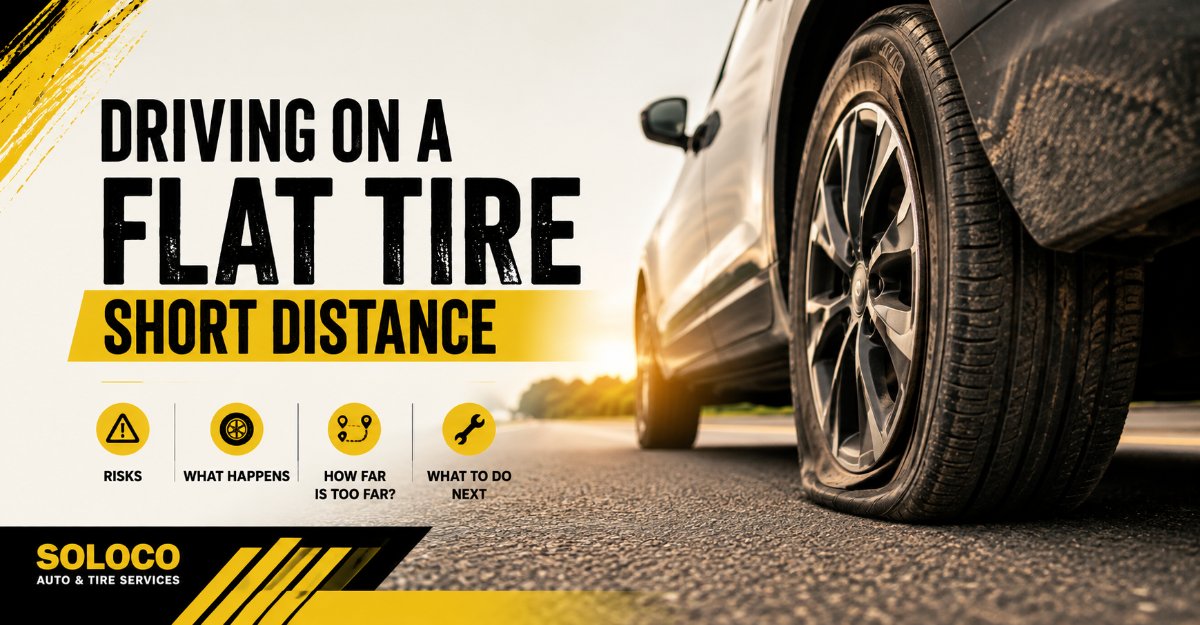
Driving on a flat tire means operating a motor vehicle when a pneumatic tire has lost its internal air pressure due to punctures, valve stem failures, bead unseating, or structural sidewall tears. Under standard operational physics, a traditional pneumatic tire requires complete inflation pressure to support the gross vehicle weight rating, maintain correct contact patch geometry, and isolate the wheel rim from direct contact with the road surface. When pressure drops to zero psi, the physics of vehicle weight distribution change immediately, initiating rapid structural degradation of both the tire assembly and the underlying wheel rim within hundreds of feet.
Key Facts at a Glance
- Standard pneumatic tires possess a strict maximum distance limit of 0.1 miles (150 to 200 yards) when completely deflated, solely intended to clear active traffic lanes.
- Run-flat tires feature reinforced internal sidewalls or support rings, allowing a maximum travel distance of 50 miles at speeds not exceeding 50 mph.
- Space-saver donut spares are restricted to a maximum speed of 50 mph and a total structural lifespan of 50 to 70 miles.
- Continuing to drive on a completely flat standard tire generates friction temperatures exceeding 250°F, instantly melting rubber compounds and destroying internal steel belts.
- Replacing a destroyed alloy wheel rim costs between $500 and $1,800, vastly exceeding the cost of immediate roadside assistance or towing.
The Physics and Mechanics of a Flat Tire
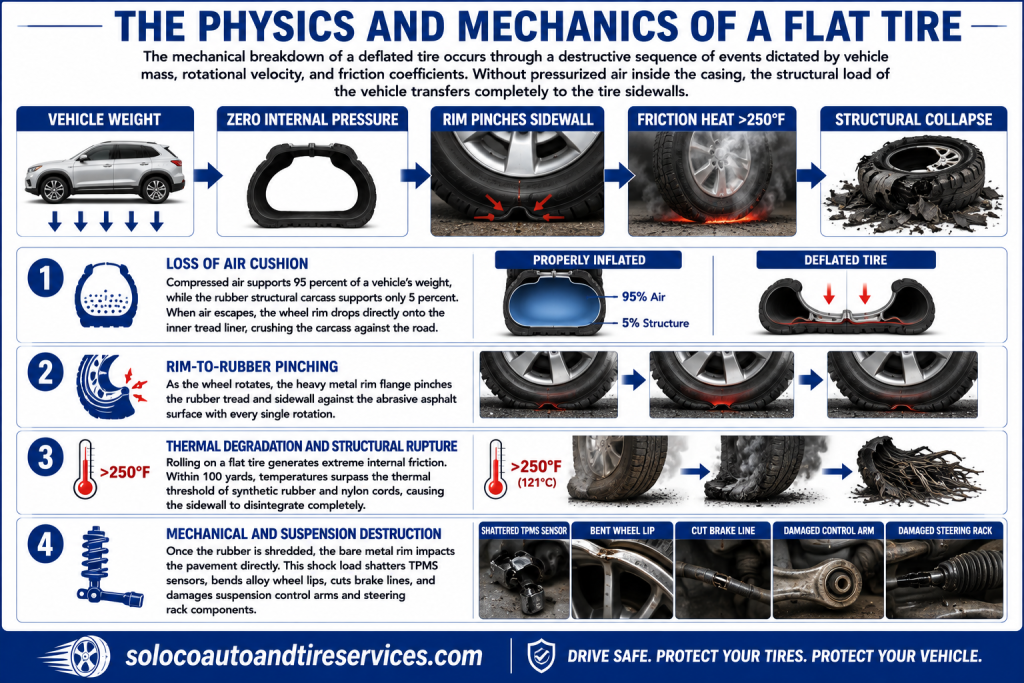
The mechanical breakdown of a deflated tire occurs through a destructive sequence of events dictated by vehicle mass, rotational velocity, and friction coefficients. Without pressurized air inside the casing, the structural load of the vehicle transfers completely to the tire sidewalls.
[ Vehicle Weight ] ──> [ Zero Internal Pressure ] ──> [ Rim Pinches Sidewall ] ──> [ Friction Heat >250°F ] ──> [ Structural Collapse ]
- Loss of Air Cushion: Compressed air supports 95 percent of a vehicle’s weight, while the rubber structural carcass supports only 5 percent. When air escapes, the wheel rim drops directly onto the inner tread liner, crushing the carcass against the road.
- Rim-to-Rubber Pinching: As the wheel rotates, the heavy metal rim flange pinches the rubber tread and sidewall against the abrasive asphalt surface with every single rotation.
- Thermal Degradation and Structural Rupture: Rolling on a flat tire generates extreme internal friction. Within 100 yards, temperatures surpass the thermal threshold of synthetic rubber and nylon cords, causing the sidewall to disintegrate completely.
- Mechanical and Suspension Destruction: Once the rubber is shredded, the bare metal rim impacts the pavement directly. This shock load shatters TPMS sensors, bends alloy wheel lips, cuts brake lines, and damages suspension control arms and steering rack components.
Equipment-Specific Distance and Speed Limits
The safe distance a vehicle can travel on a flat tire depends entirely on the specific type of tire installed on the axle. Treating all tires with the same operational rules guarantees catastrophic mechanical failure.
Standard Pneumatic Tires
Standard pneumatic tires are constructed from flexible rubber and fabric layers designed exclusively for pressurized operation. When punctured and depressurized, a standard tire has a maximum survival distance of 0.1 miles (150 to 200 yards) at speeds restricted to 5 mph. Attempting to drive several miles to a repair shop on a standard flat tire destroys the casing entirely, ruins the wheel rim, and creates dangerous handling instabilities.
Run-Flat Tires (RFT)
Run-flat tires are engineered with self-supporting structures or internal support rings. Self-supporting run-flats use extra-thick, heat-resistant sidewall inserts that prevent the tire from collapsing completely when deflated. Support-ring systems utilize a hard rubber or composite ring mounted to the wheel well to carry the vehicle weight. Run-flat tires permit a maximum travel distance of 50 miles at a restricted top speed of 50 mph, providing enough range to reach a service center safely.
Space-Saver and Donut Spares
Space-saver or donut spare tires are temporary replacement wheels stored in the trunk to save weight and cargo space. These tires require high inflation pressures, typically 60 psi, and feature a narrow tread width. Space-saver spares carry a strict operational limit of 50 to 70 miles of total use at speeds not exceeding 50 mph. Exceeding these limits risks tread separation due to the tire’s lightweight construction and minimal rubber depth.
Step-by-Step Emergency Process for a Sudden Blowout
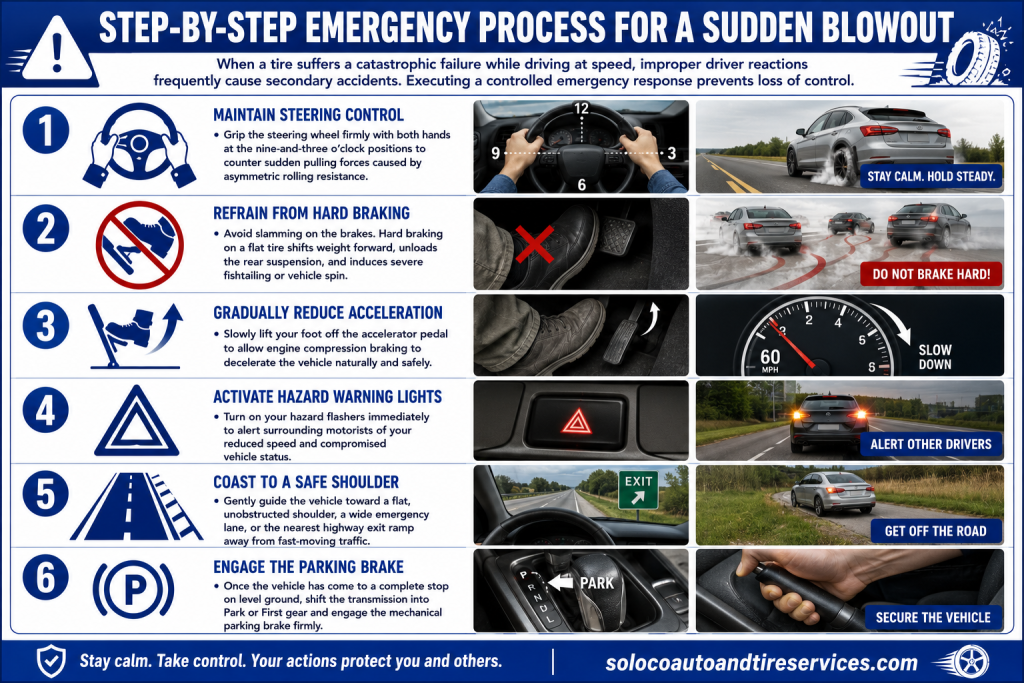
When a tire suffers a catastrophic failure while driving at speed, improper driver reactions frequently cause secondary accidents. Executing a controlled emergency response prevents loss of control.
- Maintain Steering Control: Grip the steering wheel firmly with both hands at the nine-and-three o’clock positions to counter sudden pulling forces caused by asymmetric rolling resistance.
- Refrain From Hard Braking: Avoid slamming on the brakes. Hard braking on a flat tire shifts weight forward, unloads the rear suspension, and induces severe fishtailing or vehicle spin.
- Gradually Reduce Acceleration: Slowly lift your foot off the accelerator pedal to allow engine compression braking to decelerate the vehicle naturally and safely.
- Activate Hazard Warning Lights: Turn on your hazard flashers immediately to alert surrounding motorists of your reduced speed and compromised vehicle status.
- Coast to a Safe Shoulder: Gently guide the vehicle toward a flat, unobstructed shoulder, a wide emergency lane, or the nearest highway exit ramp away from fast-moving traffic.
- Engage the Parking Brake: Once the vehicle has come to a complete stop on level ground, shift the transmission into Park or First gear and engage the mechanical parking brake firmly.
Diagnostic Troubleshooting Scenarios Based on Vehicle Behavior
The physical sensations experienced inside the cabin provide immediate diagnostic indicators regarding which tire has failed and the severity of the structural damage.
- The Steering Wheel Pulls Violently to One Side: A front tire has lost all air pressure. The increased rolling resistance of the deflated front corner acts as an anchor. Keep both hands locked on the steering wheel to maintain a straight path while decelerating.
- The Rear of the Vehicle Sways or Fishtails: A rear tire is flat. Rear-axle deflation reduces lateral stability, causing the back end to drift. Do not apply the brakes abruptly; instead, make tiny steering corrections and let the car slow down organically.
- A Loud Flapping or Thumping Sound Occurs: The rubber tread has separated from the carcass and is striking the inner wheel well. Slow down immediately to under 5 mph and navigate off the active roadway to prevent body panel and suspension damage.
Common Mistakes to Avoid When Dealing With a Flat Tire
Avoiding critical tactical errors prevents minor roadside inconveniences from escalating into expensive mechanical failures and safety hazards.
- Driving to a Distant Repair Shop: Attempting to drive two or three miles to a preferred mechanic on a standard flat tire guarantees total destruction of the tire carcass, ruins the wheel rim, and shreds the inner wheel well liners.
- Slamming on the Brakes During a Blowout: Panicking and hitting the brake pedal hard transfers vehicle weight violently to the front axle, destabilizing the steering geometry and increasing the risk of rolling over.
- Ignoring the TPMS Warning Light: Continuing to operate a vehicle at highway speeds after the Tire Pressure Monitoring System illuminates an orange warning symbol invites a sudden, violent high-speed blowout.
- Rolling on Exposed Metal Rims: Continuing to drive after the rubber tire has completely disintegrated bends the wheel rim flanges, destroys brake calipers, and severs anti-lock braking system sensor wiring.
Expert Recommendations for Different Driver Profiles
Different driving environments require tailored strategies for managing tire failures and roadside safety equipment.
The Daily Commuter
Daily urban and suburban commuters should maintain an active roadside assistance membership, such as AAA, and ensure their mobile phone remains charged. Never attempt to drive a standard flat tire through city traffic to reach a gas station; pull into a safe commercial parking lot or business driveway immediately, even if the tire is completely ruined in the process.
The Long-Distance Highway Traveler
Highway travelers must inspect the pressure of their spare tire or space-saver donut every six months. Temporary spares lose air naturally over time and require a high pressure of 60 psi to function properly. If a blowout occurs at 70 mph, focus entirely on holding the steering wheel straight, coasting to the right shoulder without braking, and setting up emergency triangles at least 50 feet behind the vehicle.
The Luxury and Performance Vehicle Owner
Drivers operating vehicles equipped exclusively with run-flat tires must verify whether their wheels feature TPMS sensors that require recalibration after tire replacement. Rely on the run-flat capability to reach a tire service center, but strictly respect the 50-mile and 50-mph operational thresholds to avoid internal sidewall crystallization and permanent casing failure.
Frequently Asked Questions
Can you patch a standard tire after driving on it flat?
No, driving on a standard tire with zero psi for even a short distance destroys the inner liner and crushes the sidewall cords. Once the rubber is pinched between the rim and the road, the internal structure is compromised beyond repair, requiring a complete tire replacement for safety compliance.
How far can you drive on a flat run-flat tire?
Run-flat tires are engineered to travel a maximum distance of 50 miles at speeds not exceeding 50 mph after a total loss of air pressure. Exceeding these manufacturer-specified limits causes the reinforced sidewalls to overheat, melt, and separate from the wheel rim.
Why does a flat tire cause the car to pull to one side?
A deflated tire has a significantly smaller rolling radius and a much larger contact patch footprint than an inflated tire. This creates massive rolling resistance on the side of the flat, pulling the steering assembly forcefully toward the compromised corner.
Is it safe to drive on a donut spare on the highway?
Space-saver donut spares are designed for temporary emergency use at speeds up to 50 mph. While highway driving is acceptable for short distances to reach a repair shop, you should avoid sustained high-speed travel because the narrow tread limits braking performance and traction in wet weather.