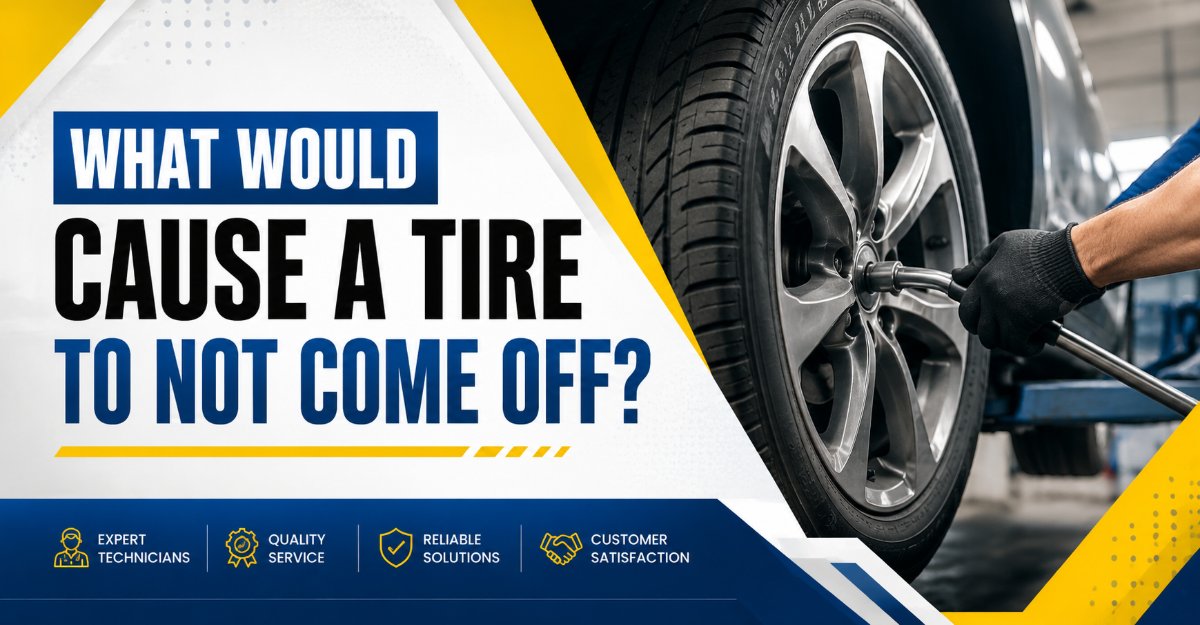
A tire that refuses to come off after all lug nuts are completely removed is typically held in place by mechanical binding, chemical bonding, or thermal expansion. The most frequent culprit is galvanic corrosion between an aluminum alloy wheel center bore and a steel hub pilot. This creates an extremely tight high-pressure interference fit that defies basic roadside kicking.
At a Glance
- Galvanic corrosion between dissimilar metals creates a high-pressure aluminum oxide bond at the hub center bore.
- Thermal expansion from intense braking can force wheel components to expand and mechanically bind against studs or hub lips.
- General roadside advice like kicking the rubber tire fails because elastomeric tire rubber absorbs seventy to eighty percent of impact energy.
- The loosened lug roll method uses vehicle weight and braking torque to break stubborn galvanic welds safely.
- Applying a microscopic film of anti-seize lubricant exclusively to the hub pilot lip prevents future seizing.
Why Does Galvanic Corrosion Lock Aluminum Wheels to Steel Hubs?
Galvanic corrosion locks aluminum wheels to steel hubs through an electrochemical reaction that occurs when moisture and road salt bridge two dissimilar metals. Most modern vehicles utilize hub-centric wheels where the center bore of the wheel fits tightly over the steel hub pilot with a clearance of only 0.05 mm to 0.15 mm.
When aluminum acts as an anode in contact with steel in the presence of an electrolyte, it corrodes rapidly and produces aluminum oxide. This byproduct expands to roughly 2.5 to 3 times the volume of the original aluminum metal. The expanding molecular volume obliterates the factory clearance gap and creates an interference fit requiring over 400 to 500 Newton-meters of force to break.
How Does Thermal Expansion From Braking Freeze a Wheel in Place?
Thermal expansion freezes a wheel in place when severe braking creates intense thermal energy that pushes rotor and hub temperatures past 300°C to 400°C. Aluminum possesses a coefficient of thermal expansion of approximately 23 multiplied by 10 to the power of negative six per Kelvin, which is nearly double that of steel and iron at roughly 12 multiplied by 10 to the power of negative six per Kelvin.
Because the aluminum wheel expands at a much faster rate than the steel components underneath it, the center bore tightens dramatically against the hub pilot. The wheel mechanically locks itself in place until the entire assembly cools down completely to room temperature.
What Is Cross-Threading and Stud Binding During Wheel Removal?
Cross-threading and stud binding occur when a lug nut is improperly threaded onto a wheel stud during a previous installation, typically via an impact gun. This physical misalignment deforms the matching threads under high torque.
This deformation leads to galling, a severe form of adhesive wear where microscopic pieces of metal weld themselves together under extreme friction. Even if you manage to back the lug nut off halfway, the galling can completely lock the nut onto the stud or cause the stud to spin freely within the hub assembly, trapping the wheel against the vehicle.
Why Do Aftermarket Hubcentric Rings and ET Lug Nuts Cause Wheels to Stick?
Aftermarket hubcentric rings and extended thread lug nuts cause wheels to stick by introducing secondary materials and geometries that corrode or deform under stress. Drivers switching from original equipment manufacturer wheels to aftermarket options often use plastic or aluminum centering rings.
If an aluminum ring is used, it adds a third layer of active galvanic corrosion. If a plastic ring melts due to high brake heat, it acts as a structural adhesive, gluing the wheel center bore directly to the steel hub. Furthermore, custom extended thread lug nuts feature shanks that extend deep into the wheel face holes. If this internal shank rusts or distorts, the wheel remains locked even after the outer hex head is fully removed.
Why Does Kicking a Stuck Tire or Using a Rubber Mallet Usually Fail?
Kicking a stuck tire or striking it with a standard sixteen-ounce rubber mallet fails because a human kick or light mallet delivers only 50 to 100 Joules of energy. Rubber is highly elastomeric and absorbs 70% to 80% of that impact energy, dampening the force before it ever reaches the corroded hub interface.
If galvanic corrosion has created a high-pressure interference fit, kicking the rubber sidewall is mathematically insufficient to break the bond. The energy is simply dissipated into the flexibility of the tire tread and sidewall construction.
How Do You Safely Use the Loosened Lug Roll Method to Break a Stuck Wheel?
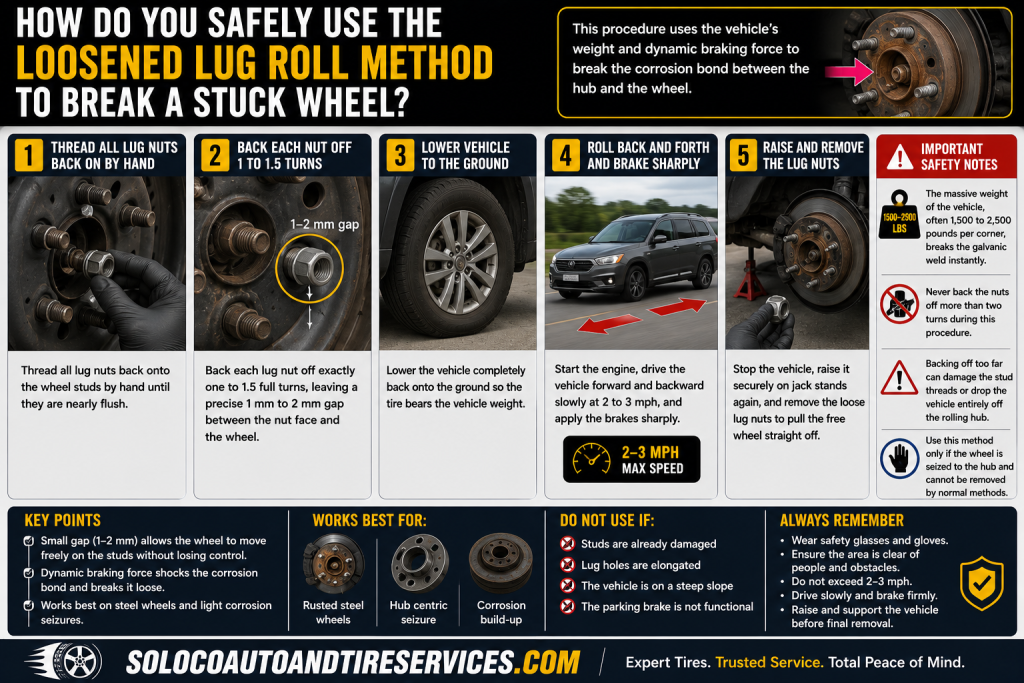
- Thread all lug nuts back onto the wheel studs by hand until they are nearly flush.
- Back each lug nut off exactly one to 1.5 full turns, leaving a precise 1 mm to 2 mm gap between the nut face and the wheel.
- Lower the vehicle completely back onto the ground so the tire bears the vehicle weight.
- Start the engine, drive the vehicle forward and backward slowly at 2 to 3 mph, and apply the brakes sharply.
- Stop the vehicle, raise it securely on jack stands again, and remove the loose lug nuts to pull the free wheel straight off.
The massive weight of the vehicle, often 1,500 to 2,500 pounds per corner, combined with dynamic braking torque, breaks the galvanic weld instantly. Never back the nuts off more than two turns during this procedure, as doing so risks damaging the stud threads or dropping the vehicle entirely off the rolling hub.
How Do You Use a Timber Block and Sledgehammer to Remove a Stuck Wheel?
- Raise the vehicle securely on heavy-duty jack stands and chock the remaining wheels.
- Place a heavy wooden block, such as a 4×4 piece of timber, directly against the inner edge of the metallic wheel rim.
- Carefully position the wood to avoid making contact with the tire rubber, brake components, or suspension arms.
- Strike the wooden block firmly with a 4 pound to 8 pound sledgehammer.
- Rotate the wheel ninety degrees and repeat the strike if the hub does not break loose on the first blow.
The wood protects the aluminum rim from cracking or denting while transmitting nearly 100 percent of the kinetic energy directly into the wheel structure to shock the corrosion loose.
Can You Use a Propane Torch to Thermal Shock a Stuck Wheel?
Yes, you can use a propane torch to thermal shock a stuck wheel when mechanical leverage fails, provided you execute the process carefully. Hold a propane torch flame against the center face of the aluminum wheel surrounding the hub pilot for 60 to 90 seconds.
Because aluminum expands twice as fast as the steel hub underneath it, targeted heating will temporarily widen the center bore clearance and break the brittle aluminum oxide bond. Avoid directing the flame at the tire sidewall, rubber valve stems, or wheel weights to prevent dangerous blowouts or fires.
How Long Do Penetrating Oils Take to Loosen a Stuck Wheel Hub?
Penetrating oils require 15 to 30 minutes to effectively loosen a stuck wheel hub. High-performance penetrating fluids like AeroKroil or PB Blaster perform significantly better than standard multi-purpose water displacement sprays.
Spray the fluid directly into the tight gap between the center hub pilot and the wheel center bore, as well as down the base of each exposed lug stud. You must wait for the capillary action of the fluid to creep into the 50-micron clearance gap. Always clean all residual oil off your brake rotors and pads with non-chlorinated brake cleaner before driving the vehicle.
What Tools Can Damage Your Wheel Rim When Trying to Remove It?
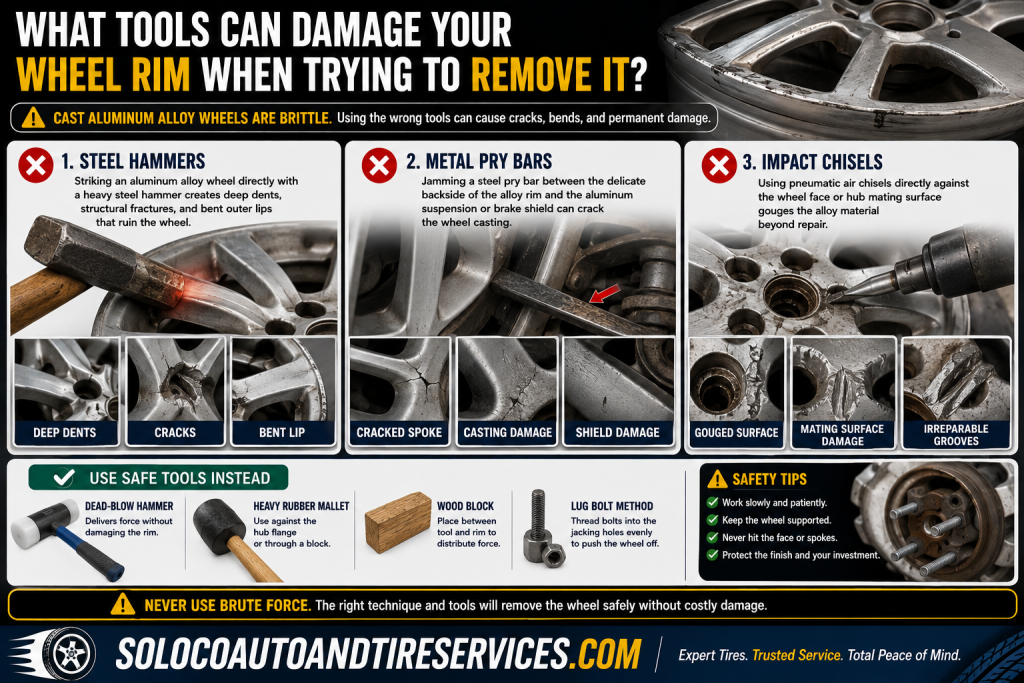
- Steel hammers: Striking an aluminum alloy wheel directly with a heavy steel hammer creates deep dents, structural fractures, and bent outer lips that ruin the wheel.
- Metal pry bars: Jamming a steel pry bar between the delicate backside of the alloy rim and the aluminum suspension or brake shield can crack the wheel casting.
- Impact chisels: Using pneumatic air chisels directly against the wheel face or hub mating surface gouges the alloy material beyond repair.
Cast aluminum alloy wheels are brittle. Always use a dead-blow hammer, a heavy rubber mallet against the metal lip, or insert a block of wood as a protective shock absorber between your sledgehammer and the wheel.
How Do You Prevent a Wheel From Seizing to the Hub Next Time?
Prevent future wheel seizing by cleaning the hub pilot and the wheel center bore thoroughly using a stainless steel wire brush or fine emery cloth until you expose shiny, bare metal. Apply a very thin film of anti-seize lubricant, such as nickel or marine-grade copper paste, exclusively to the outer cylindrical lip of the steel hub pilot.
Wipe away any excess lubricant so it does not migrate toward the braking surfaces. Keeping these mating surfaces clean stops moisture intrusion and halts the galvanic cell reaction before it starts.
Should You Apply Anti-Seize Lubricant to Lug Stud Threads?
No, you should never apply anti-seize lubricant to lug stud threads or the conical mating seats of the lug nuts. Lubricating stud threads drastically alters the friction coefficient and clamping torque physics.
Applying anti-seize to threads causes professional technicians to inadvertently over-stretch the wheel studs when tightening them to factory specifications. This over-stretching weakens the structural integrity of the studs and can lead to catastrophic wheel detachment while driving down the highway.
When Should You Stop Trying to Remove a Stuck Wheel and Call a Professional?
Stop attempting DIY wheel removal and call a professional mobile tire service or tow truck if you have exhausted the timber block method and loosened lug roll without success, or if you notice structural damage forming on the wheel face. Continuing to hammer aggressively on a severely seized wheel can bend suspension control arms, damage wheel bearings, or crack the wheel rim, turning a simple tire change into an expensive mechanical repair. Professionals possess hydraulic wheel pullers and specialized lifting equipment designed to handle extreme industrial corrosion safely.
The Bottom Line
A stuck wheel is almost always the result of galvanic corrosion, thermal expansion, or mechanical binding between close-tolerance metal surfaces. While standard roadside kicking usually fails due to rubber dampening, utilizing structured mechanical force multipliers like the loosened lug roll or a protected timber block safely breaks the bond. Always maintain clean mating surfaces and apply anti-seize strictly to the hub pilot to prevent future roadside headaches.