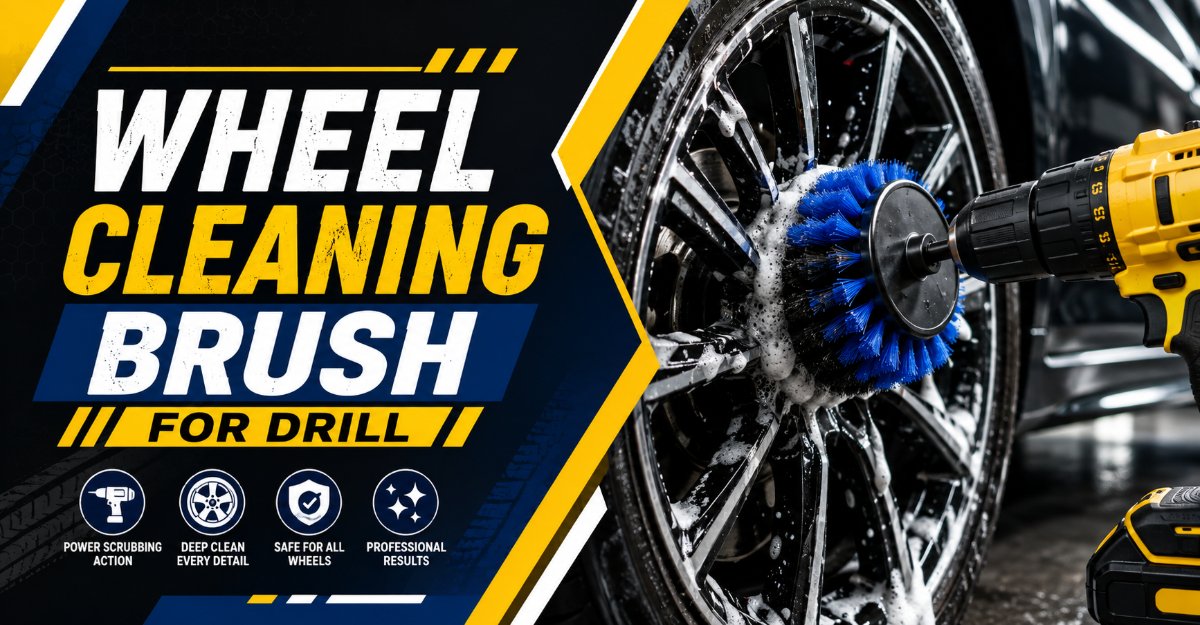
A wheel cleaning brush for a drill is a motorized rotary detailing attachment with a standard 1/4-inch steel hex shank that mounts directly into a power drill chuck to mechanically scrub automotive rims, barrels, and tires. It harnesses high-speed rotational energy to break down stubborn brake dust, road tar, and iron deposits with minimal manual fatigue.
Key Facts at a Glance
- Shank Standard: Universal 1/4-inch quick-change hexagonal steel.
- Optimal Speed Range: 1,200 to 1,800 RPM under load.
- Maximum Safety Limit: 2,500 RPM to prevent bristle friction melting.
- Time Savings: Reduces wheel cleaning time from 15-20 minutes down to 3-5 minutes per wheel.
- Lifespan: 30 to 50 complete detailing cycles per brush head.
What Is a Wheel Cleaning Brush for a Drill?
A wheel cleaning brush for a drill is a specialized automotive detailing accessory designed to bridge the gap between manual scrubbing and heavy industrial cleaning equipment. By connecting a synthetic or natural fiber brush head to a standard cordless power drill, detailers convert rotational torque into high-speed mechanical agitation.
The primary components of this tool include a hardened steel hex shank, a central core wire or rigid molded plastic backing plate, and high-density filament bristles. Unlike manual hand brushes that rely entirely on human arm stamina, a drill-mounted brush operates at sustained velocities, ensuring consistent surface contact across complex wheel geometries like multi-spoke rims, deep wheel barrels, and textured tire sidewalls.
How a Drill Wheel Brush Works Mechanically
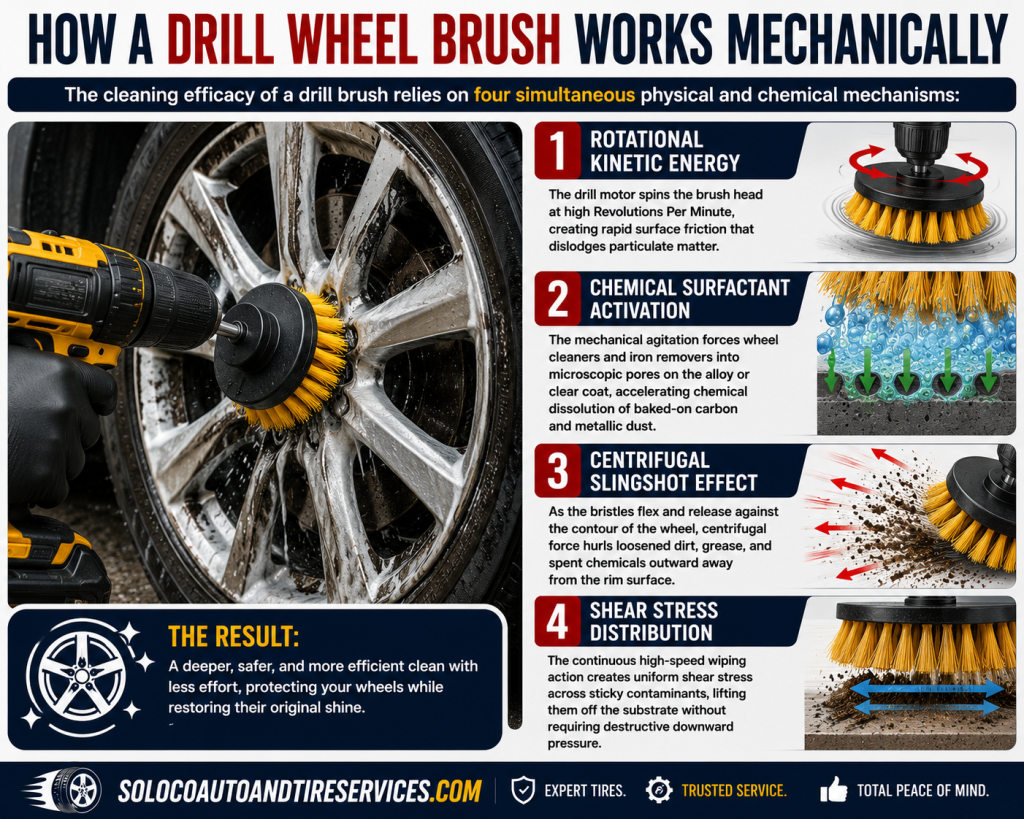
The cleaning efficacy of a drill brush relies on four simultaneous physical and chemical mechanisms:
- Rotational Kinetic Energy: The drill motor spins the brush head at high Revolutions Per Minute, creating rapid surface friction that dislodges particulate matter.
- Chemical Surfactant Activation: The mechanical agitation forces wheel cleaners and iron removers into microscopic pores on the alloy or clear coat, accelerating chemical dissolution of baked-on carbon and metallic dust.
- Centrifugal Slingshot Effect: As the bristles flex and release against the contour of the wheel, centrifugal force hurls loosened dirt, grease, and spent chemicals outward away from the rim surface.
- Shear Stress Distribution: The continuous high-speed wiping action creates uniform shear stress across sticky contaminants, lifting them off the substrate without requiring destructive downward pressure.
Technical Specifications and Operational Parameters
Operating a drill brush requires strict adherence to equipment specifications to protect both the vehicle finish and the power tool itself.
| Technical Parameter | Standard Specification | Operational Consequence |
| Shank Diameter | 1/4-inch (6.35mm) hex | Fits standard keyless drill chucks and quick-release adapters securely without slippage. |
| Operating RPM | 1,200 – 1,800 RPM | Maximizes scrubbing efficiency while preventing chemical slinging and clear-coat friction burns. |
| Maximum RPM Limit | 2,500 RPM | Exceeding this threshold melts synthetic nylon bristles and damages sensitive alloy coatings. |
| Bristle Gauge | 0.015 to 0.035 inches | Determines stiffness level, ranging from ultra-soft paint-safe fibers to heavy-duty rubber scrubbers. |
| Core Construction | Vinyl-coated galvanized steel | Prevents scratching inner wheel barrels if the side of the brush shaft makes incidental contact. |
Taxonomy of Drill Brush Configurations
Different wheel designs require specialized brush geometries. Selecting the correct shape ensures complete surface coverage without collateral damage to delicate components.
Cone and Cylinder Brushes
Cone and cylinder brushes feature an elongated, tapered profile built around a flexible central wire core wrapped in memory-thread nylon or microfiber loops. They are engineered to reach deep into narrow wheel barrels, behind intricate brake calipers, and between tightly spaced spokes. The tapered tip allows the operator to clean restricted gaps where standard flat brushes cannot fit.
Flat and Disc Brushes
Flat brushes resemble a circular puck ranging from 2 to 5 inches in diameter with a dense face of medium-stiffness polypropylene bristles. They are designed for flat outer spoke faces, large lip surfaces, and wide tire sidewalls. Their broad surface area allows rapid cleaning of wide alloy faces during high-volume maintenance washes.
Detail and Toothbrush-Style Attachments
Detail brushes feature small, tightly packed clusters of bristles mounted on a narrow extension rod. They target highly restricted areas such as lug nut recesses, valve stem bases, and multi-piece rim assembly hardware. Operators must verify that the central extension rod features protective rubber or plastic coating to prevent accidental contact damage to painted wheel wells.
Comprehensive Application Protocol
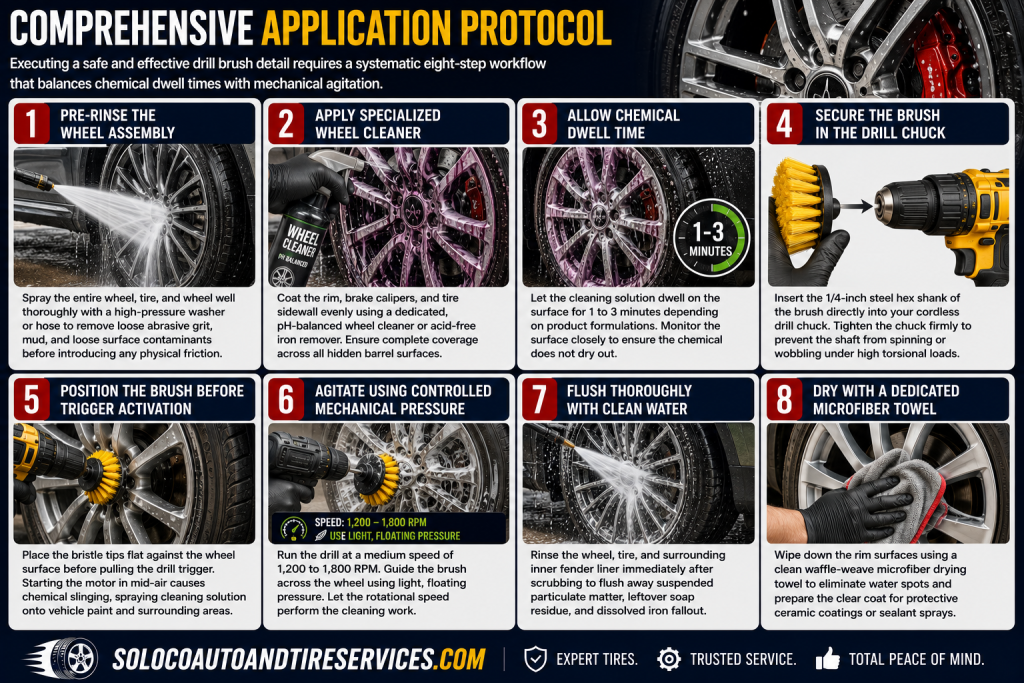
Executing a safe and effective drill brush detail requires a systematic eight-step workflow that balances chemical dwell times with mechanical agitation.
Step 1: Pre-Rinse the Wheel Assembly
Spray the entire wheel, tire, and wheel well thoroughly with a high-pressure pressure washer or hose to remove loose abrasive grit, mud, and loose surface contaminants before introducing any physical friction.
Step 2: Apply Specialized Wheel Cleaner
Coat the rim, brake calipers, and tire sidewall evenly using a dedicated, pH-balanced wheel cleaner or acid-free iron remover. Ensure complete coverage across all hidden barrel surfaces.
Step 3: Allow Chemical Dwell Time
Let the cleaning solution dwell on the surface for 1 to 3 minutes depending on product formulations. Monitor the surface closely to ensure the chemical does not dry out, which can cause permanent staining on polished aluminum or custom clear coats.
Step 4: Secure the Brush in the Drill Chuck
Insert the 1/4-inch steel hex shank of the brush directly into your cordless drill chuck. Tighten the chuck firmly to prevent the shaft from spinning or wobbling under high torsional loads.
Step 5: Position the Brush Before Trigger Activation
Place the bristle tips flat against the wheel surface before pulling the drill trigger. Starting the motor in mid-air causes chemical slinging, spraying cleaning solution onto vehicle paint and surrounding work areas.
Step 6: Agitate Using Controlled Mechanical Pressure
Run the drill at a medium speed of 1,200 to 1,800 RPM. Guide the brush across the wheel using light, floating pressure. Let the rotational speed perform the cleaning work rather than forcing the bristles down with heavy arm pressure.
Step 7: Flush Thoroughly with Clean Water
Rinse the wheel, tire, and surrounding inner fender liner immediately after scrubbing to flush away suspended particulate matter, leftover soap residue, and dissolved iron fallout.
Step 8: Dry with a Dedicated Microfiber Towel
Wipe down the rim surfaces using a clean waffle-weave microfiber drying towel to eliminate water spots and prepare the clear coat for protective ceramic coatings or sealant sprays.
Comprehensive Material Performance Matrix
| Brush Material | Primary Application | Surface Compatibility | Key Advantages | Significant Limitations |
| White Nylon (Soft) | Painted, chrome, and clear-coated alloy rims | Extremely High | Zero scratch risk; highly flexible filaments conform to complex curves. | Wears out faster; struggles to penetrate heavy embedded iron fallout. |
| Yellow/Green Poly (Medium) | Factory OEM alloy wheels and standard clear-coats | Moderate | Excellent balance of durability and cleaning power for general maintenance. | Can micro-scratch ultra-soft aftermarket plastics if pushed with excessive force. |
| Microfiber Loops | High-end custom wheels and matte finishes | Maximum Safety | Holds massive amounts of soapy water; completely non-abrasive. | Cannot scrub heavy baked-on grime; fibers tangle easily under high-speed friction. |
| Stiff Red/Black Nylon | Tire sidewalls and heavy-duty steel truck rims | Low (Strictly non-alloy) | Destroys heavy mud, old tire dressings, and rubber oxidation rapidly. | Will permanently scratch aluminum and painted surfaces; too rigid for tight gaps. |
Professional Error Mitigation Protocol
Avoiding common operational mistakes preserves the integrity of vehicle finishes and extends the lifespan of your detailing tools.
- Never Spin the Brush Dry: Running a synthetic brush without water or liquid lubricant generates extreme frictional heat, instantly melting bristles and embedding plastic residue into the wheel clear coat.
- Avoid Trigger Activation in Open Air: Pulling the drill throttle before the bristles touch the rim hurls harsh alkaline or acidic chemicals across vehicle paint and glass, creating stubborn etching stains.
- Eliminate Excessive Downward Force: Pushing down hard on the drill bends the internal hex shank and deforms bristle tips, reducing cleaning efficiency and causing premature wear.
- Protect Drill Motor Ventilation Ports: Keep the drill body angled away from splashing water. Letting liquids run down the brush shaft directly into the drill motor causes electrical short circuits and bearing corrosion.
- Match Brush Stiffness to Surface Type: Using stiff red or black nylon brushes on gloss black or chrome wheels ruins the finish within seconds. Reserve stiff brushes strictly for rubber tires.
Advanced Troubleshooting Matrix
| Symptom / Failure Mode | Root Mechanical Cause | Corrective Action |
| Brush wobbles violently during operation | Bent hex shank or off-center seating in the drill chuck | Stop immediately, loosen the chuck, re-center the hexagonal shaft, and retighten securely. |
| Bristles are permanently flattening out | Excessive downward operator pressure or chemical degradation | Reduce hand pressure immediately; soak flattened bristles in hot water to restore memory shape. |
| Drill motor keeps stopping or stalling | Clutch setting is too low or motor thermal overload protection triggered | Switch the drill clutch ring to “drill bit” mode or reduce applied downward pressure. |
| Cleaning chemicals slinging everywhere | Drill RPM is set too high or excessive liquid is pooling on the rim | Lower drill speed to medium setting and wipe away excess puddling before starting agitation. |
Practitioner Recommendations and Persona Mapping
Selecting the right setup depends entirely on your specific vehicle collection and detailing frequency.
The Weekend Warrior and DIY Car Owner
Choose a standard 3-piece medium stiffness yellow nylon kit containing an elongated cone brush, a 4-inch flat disc brush, and a 2-inch detail spot brush. This combination covers 90 percent of standard factory OEM wheel configurations without requiring specialized inventory. Pair these with an 18V cordless drill set to medium speed.
The Luxury and Custom Wheel Owner
Invest exclusively in microfiber loop rotary attachments and ultra-soft white nylon brushes. Avoid all colored polypropylene options to protect delicate polished aluminum lips, anodized barrels, and custom painted forged finishes from micro-marring.
The Off-Road and Truck Enthusiast
Deploy a two-step kit combining a heavy-duty stiff black brush strictly for scrubbing rubber sidewalls and stripping old tire dressings, paired with a medium-stiffness cone brush for large, rugged steel or utility alloy wheels.