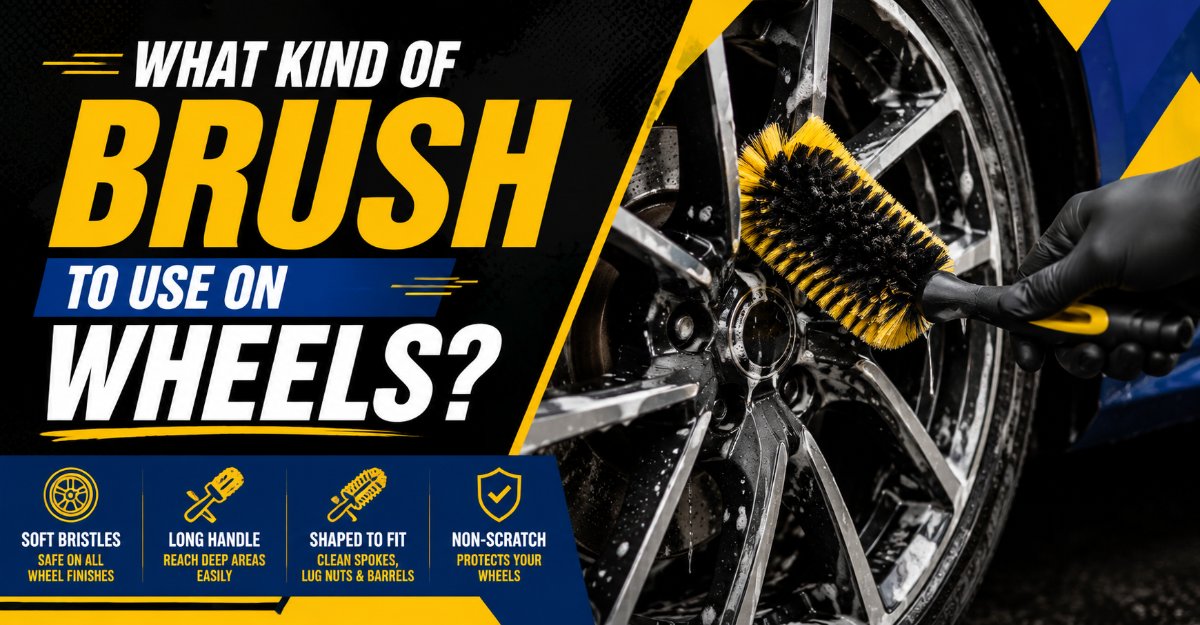
Choosing the correct wheel brush requires matching bristle softness to your rim finish to prevent permanent scratching while safely releasing baked-on brake dust. Painted and clear-coated wheels demand 100% boar’s hair or soft synthetic fibers, polished aluminum requires wool or microfiber wands, and heavy-duty nylon is strictly reserved for inner barrels and rubber tires.
At a Glance: Essential Wheel Brush Facts
- Clear-coated and painted wheels scratch as easily as automotive body paint and require ultra-soft 100% boar’s hair or flagged synthetic bristles.
- Polished aluminum and chrome lack protective clear coats, demanding microfiber-wrapped wands or synthetic wool brushes like Wheel Woolies.
- Inner barrel brushes must feature a vinyl-tipped core wire under 0.5 inches thick to safely clear tight high-performance brake caliper gaps.
- Tire cleaning requires stiff, heavy-duty nylon brushes that will instantly ruin delicate wheel faces if cross-contaminated.
- Color-coded brush systems prevent microscopic iron filings from transferring from inner barrels onto sensitive exterior rim clear coats.
Which Wheel Brush Is Best for Painted and Clear-Coated Rims?
Painted and clear-coated wheels require 100% boar’s hair brushes or ultra-soft synthetic flagged-bristle alternatives. Because automotive clear coat on modern wheels is just as thin and fragile as the paint on your car doors, stiff nylon bristles will inflict micro-marring and swirl marks that dull the gloss over time.
Boar’s hair fibers possess natural split ends that hold soapy water and float abrasive dirt particles away from the surface. If you are operating on a strict budget, soft synthetic flagged-bristle brushes serve as an acceptable alternative, provided the tips of the synthetic fibers have been mechanically frayed to mimic natural hair softness. Always ensure your face brush features an exposed bristle length of 2.5 to 3.5 inches, allowing the fibers to flex deeply into tight lug nut recesses and intricate spoke corners without the plastic handle striking the rim.
What Brush Should Be Used on Matte, Satin, and Powder-Coated Wheels?
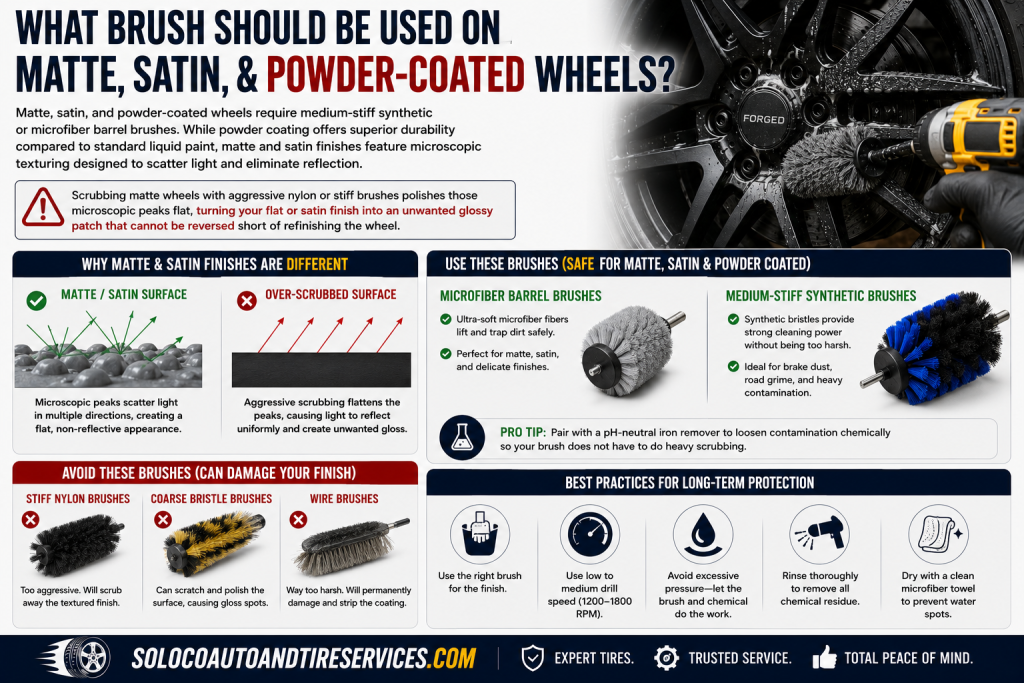
Matte, satin, and powder-coated wheels require medium-stiff synthetic or microfiber barrel brushes. While powder coating offers superior durability compared to standard liquid paint, matte and satin finishes feature microscopic texturing designed to scatter light and eliminate reflection.
Scrubbing matte wheels with aggressive nylon or stiff brushes polishes those microscopic peaks flat, turning your flat or satin finish into an unwanted glossy patch that cannot be reversed short of refinishing the wheel. Microfiber barrel wands or medium-stiff synthetic bristles provide enough mechanical agitation to lift road grime without altering the surface sheen. Pair these with a pH-neutral iron remover to loosen contamination chemically so your brush does not have to do heavy scrubbing.
How Do I Clean Chrome and Polished Aluminum Wheels Without Scratching?
Chrome and polished aluminum wheels must be cleaned using microfiber-wrapped wands or genuine wool brushes like Wheel Woolies. Polished aluminum features zero protective clear coat; it is raw, soft metal exposed directly to the elements. Standard stiff synthetic bristles will scratch polished aluminum instantly, leaving permanent hairlines that require heavy metal polishing compounds to correct.
Wool and dense microfiber barrels absorb massive amounts of soapy solution and slide effortlessly across raw metal surfaces. When selecting a barrel brush for deep-dish or multi-spoke wheels, choose a shaft length between 12 and 18 inches to safely reach the back of 10-inch wide modern sports car wheels without scraping your knuckles against the brake rotors or outer lips.
Can I Use a Standard Wheel Brush on Tight Brake Calipers and Big Brake Kits?
Standard twisted-wire wheel brushes fail when dealing with modern big brake kits because tight clearances leave less than 0.25 inches of space between the brake caliper and the inner wheel barrel. Shoving a standard thick-core twisted-wire brush into this narrow gap will jam it instantly, strip off the protective rubber safety tip, and gouge deep metal trenches into your expensive alloy wheels.
For tight caliper clearances, you must switch to low-profile flat microfiber wands or thin-core synthetic spoke brushes where the central spine is encased in flexible rubber or heavy-duty vinyl tubing. Always test the clearance with your fingers before pushing any metallic-cored tool behind a performance brake setup.
Why Does Pulling a Stiff Nylon Brush Out of a Wheel Cause Splat Back?
Pulling a stiff, springy nylon brush out of a tight wheel spoke creates a dangerous slingshot effect that sprays acidic wheel cleaner and toxic brake dust directly into your face and clothing. When you compress dense bristles through a narrow gap, potential energy builds up within the polymer fibers. The moment the brush clears the pinch point, it snaps back to its original shape, launching chemical droplets at high velocity.
To prevent splat back, pull brushes out slowly and deliberately while keeping the bristles pointed downward and away from your body. Wearing chemical-resistant safety glasses and nitrile gloves is mandatory whenever you are agitating caustic wheel cleaning formulations.
Can I Use the Same Brush for Both Tires and Wheels?
You must never use the same brush for both your tires and your wheels. Tire cleaning requires heavy-duty, stiff nylon brushes designed to scrub stubborn rubber blooming, old tire dressings, and embedded road grime out of textured rubber sidewalls.
Using a stiff tire brush on delicate wheel rims will instantly ruin the finish by scratching clear coats and gouging polished surfaces. Conversely, using a soft wheel brush on tires is ineffective because the soft fibers cannot penetrate rubber pores. Keep your tire brushes and wheel brushes in completely separate buckets and clearly mark them to avoid accidental cross-contamination.
How Do I Properly Clean and Store Wheel Brushes After Detailing?
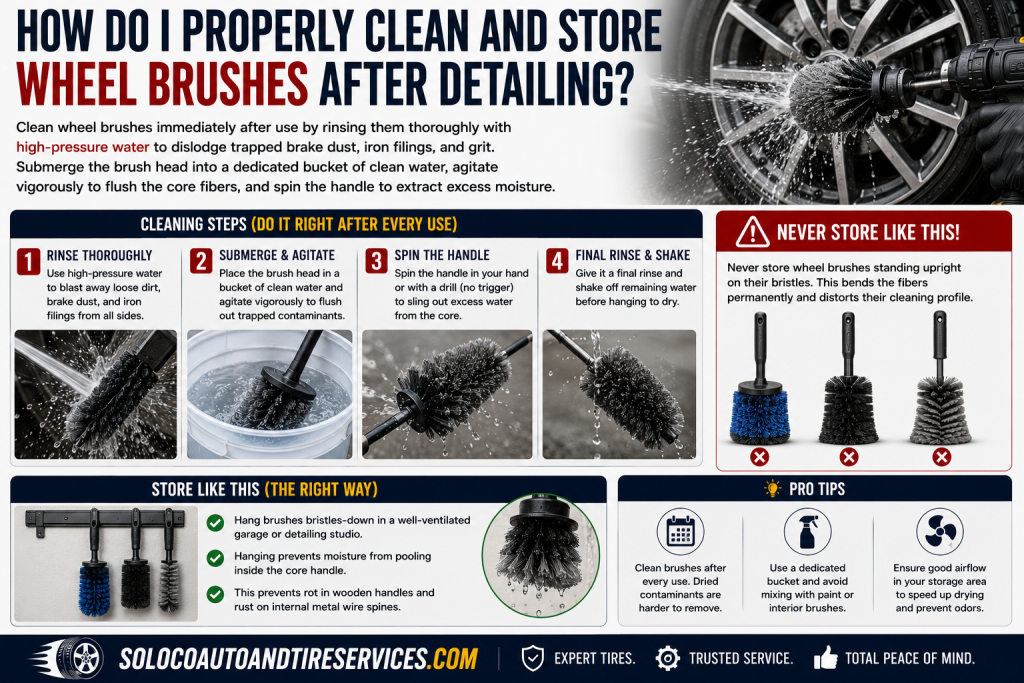
Clean wheel brushes immediately after use by rinsing them thoroughly with high-pressure water to dislodge trapped brake dust, iron filings, and grit. Submerge the brush head into a dedicated bucket of clean water, agitate vigorously to flush the core fibers, and spin the handle to extract excess moisture.
Never store wheel brushes standing upright on their bristles, as this bends the fibers permanently and distorts their cleaning profile. Hang them bristles-down in a well-ventilated garage or detailing studio. Hanging prevents moisture from pooling inside the core handle, which can rot wooden handles or rust internal metal wire spines.
Are Color-Coded Wheel Brushes Actually Necessary?
Color-coded wheel brushes are essential for preventing cross-contamination between heavily contaminated components and pristine exterior body panels. Dedicating specific colors—such as red for inner wheel barrels and blue for paint detailing—ensures you never accidentally pick up razor-sharp metallic brake dust from a dirty wheel and transfer it onto a soft automotive clear coat during a wash.
Microscopic iron particles embedded in wheel brushes will act like sandpaper if rubbed across body paint. A simple color-coding system eliminates human error during fast-paced wash routines and protects your vehicle’s finish from catastrophic scratching.
How Does Chemical Wheel Cleaner Degrade Different Brush Bristles?
Harsh chemical wheel cleaners—specifically acid-based formulations containing hydrofluoric or sulfuric acid—accelerate the degradation of natural animal fibers and low-grade synthetic plastics. Natural boar’s hair becomes brittle and sheds rapidly when repeatedly exposed to highly acidic or strongly alkaline wheel acids.
Cheap synthetic bristles can melt, stiffen, or lose their feathered tips when exposed to strong chemical dwell times. If you regularly use aggressive iron removers or heavy-duty wheel acids, invest in chemical-resistant synthetic bristles (such as high-grade Nylex or chemical-grade polypropylene) and always rinse your brushes out with clean water immediately after finishing each wheel.
When Is It Safe to Use an Aggressive Nylon Brush on Wheel Brushes?
It is safe to use an aggressive nylon brush exclusively on the inner wheel barrels of heavily contaminated vehicles, provided the exterior face is made of durable finish and you avoid touching polished or matte surfaces. High-performance ceramic and metallic brake pads bake hot iron filings deep into the inner barrel paint during hard track driving.
Soft microfiber or boar’s hair brushes lack the mechanical stiffness required to shear these bonded metallic deposits away. Switching to a stiff nylon brush is acceptable only inside the hidden inner barrel where minor mechanical abrasion remains invisible from a standing perspective.
How Often Should Professional-Grade Wheel Brushes Be Replaced?
Professional-grade wheel brushes should be replaced every 6 to 12 months, depending on usage frequency and chemical exposure. Indicators that a brush has reached the end of its lifespan include permanent matting of the bristles, fraying or cracking of the central core wire, exposed metal poking through rubber safety tips, or persistent odor and mold buildup within synthetic cores.
Continuing to use a degraded brush increases the risk of the internal wire snapping against your wheel rim or trapped microscopic grit embedding deep inside worn-out split ends, turning your maintenance wash into a scratch hazard.
The Bottom Line
Choosing the right wheel brush comes down to matching bristle composition to your specific rim finish, reserving ultra-soft boar’s hair and wool for delicate clear coats and raw aluminum while keeping stiff nylon strictly for dirty inner barrels and rubber tires. Respecting tight caliper clearances, maintaining proper brush hygiene, and separating tools with color codes will safeguard your wheels against permanent aesthetic damage.