The tire pressure light turning on after a tire rotation occurs because the vehicle Tire Pressure Monitoring System no longer recognizes the physical position of each wheel, or an individual tire pressure dropped below the programmed threshold during the service interval. When wheels are moved from the front axle to the rear axle, direct sensors transmit radio signals from unmapped locations, or indirect sensors detect modified wheel speed rolling radiuses that require a system recalibration.
+-------------------------------------------------------+
|              KEY FACTS AT A GLANCE                    |
|                                                       |
| • Threshold: Triggers when pressure drops >= 25%.     |
| • Direct TPMS: Uses RF sensors on each valve stem.    |
| • Indirect TPMS: Uses ABS wheel speed differentials.  |
| • Drive Cycle: Usually requires 15 mins above 30 mph. |
| • Source of Truth: Door jamb placard, not sidewall.   |
+-------------------------------------------------------+
Understanding Why Your TPMS Light Illuminates After Service
The Tire Pressure Monitoring System is a mandated safety feature integrated into modern automobiles to prevent structural tire failure from underinflation. Understanding the underlying technology determines how you approach clearing the warning light.
How Direct and Indirect Systems Respond to Rotations
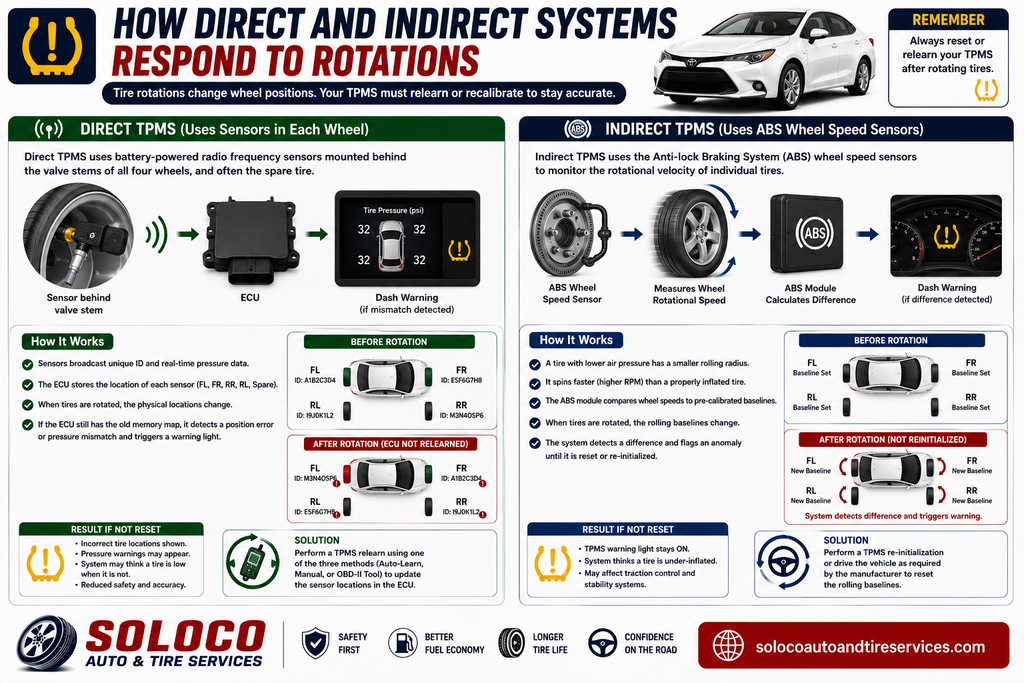
Direct TPMS utilizes battery-powered radio frequency sensors mounted directly behind the valve stems of all four wheels, and frequently the spare tire. These sensors broadcast unique identification numbers and real-time pressure data to the Electronic Control Unit. When a technician rotates tires, the physical locations of the wheels change, but the ECU often retains the old memory map, triggering a position error or a persistent dashboard warning.
Indirect TPMS utilizes the Anti-lock Braking System wheel speed sensors to monitor the rotational velocity of individual tires. A tire with lower air pressure possesses a slightly smaller rolling radius, causing it to spin at a higher RPM than a properly inflated tire. When tires are rotated, the rolling baselines change, disrupting the pre-calibrated baseline and forcing the system to flag an anomaly until a manual reset or re-initialization cycle is completed.
Why Air Pressure Fluctuates During Service
Shops frequently adjust tire pressures inside climate-controlled service bays where ambient temperatures are higher than outdoor conditions. According to the ideal gas law, tire pressure drops roughly one PSI for every ten-degree Fahrenheit decrease in ambient temperature. A tire set to correct pressure inside a warm shop can drop below the safety threshold once driven outside into cold weather, triggering the warning light independently of the rotation process.
Step-by-Step Diagnostic and Troubleshooting Workflow
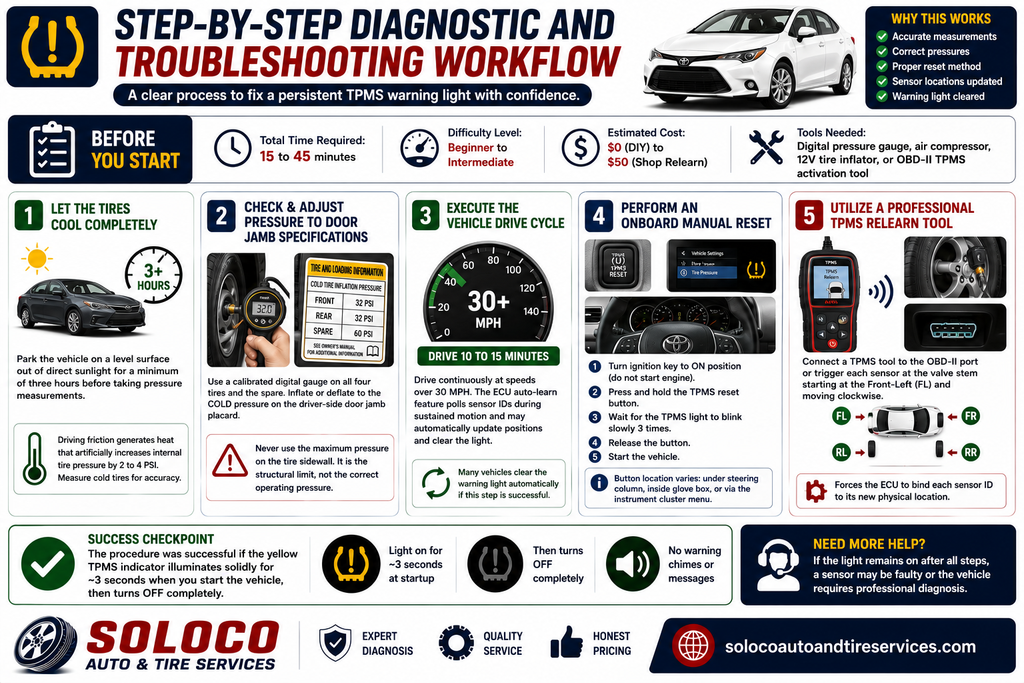
Resolving a persistent dashboard warning requires a strict sequential process to isolate whether the issue stems from a sensor position mismatch, a low air pressure condition, or a hardware failure.
+-------------------------------------------------------------+
|                     BEFORE YOU START                        |
|                                                             |
| • Total Time Required: 15 to 45 minutes                     |
| • Difficulty Level: Beginner to Intermediate                |
| • Estimated Cost: $0 (DIY) to $50 (Shop Relearn)            |
| • Tools Needed: Digital pressure gauge, air compressor,     |
|   12V tire inflator, or OBD-II TPMS activation tool         |
+-------------------------------------------------------------+
Step 1: Let the Tires Cool Completely
Park the vehicle on a level surface out of direct sunlight for a minimum of three hours before taking pressure measurements. Driving friction generates heat that artificially increases internal tire pressure by two to four PSI. Measuring warm tires leads to under-inflation once the rubber cools, maintaining the condition that keeps the dashboard warning active.
Step 2: Check and Adjust Pressure to Door Jamb Specifications
Attach a calibrated digital pressure gauge to the valve stem of all four primary tires and the spare tire. Inflate or deflate each tire strictly to the cold pressure values printed on the safety placard located on the driver-side door jamb. Never reference the maximum pressure rating stamped on the tire sidewall, as that value represents the structural burst limit rather than the optimal vehicle operating parameter.
Step 3: Execute the Vehicle Drive Cycle
Drive the vehicle continuously for 10 to 15 minutes at speeds exceeding 30 miles per hour. Many modern passenger vehicles feature auto-learn firmware within the ECU that polls direct sensor IDs during sustained motion, automatically updating wheel positions and clearing the dashboard light without requiring manual intervention.
Step 4: Perform an Onboard Manual Reset
If the warning light remains illuminated after completing the drive cycle, locate the manual reset switch. This physical button is typically positioned underneath the steering column, inside the glove compartment, or accessed through the digital instrument cluster multi-information display. Turn the ignition key to the ON position without starting the engine, press and hold the reset button until the TPMS indicator blinks slowly three times, then release the button and start the vehicle.
Step 5: Utilize a Professional TPMS Relearn Tool
If onboard resets fail, the vehicle requires an electronic relearn procedure. Connect a dedicated TPMS activation and diagnostic tool to the OBD-II port under the dashboard, or trigger individual sensors sequentially at each valve stem starting from the front-left wheel and moving clockwise. This forces the ECU to bind the unique sensor identification codes to their new physical locations on the chassis.
Success Checkpoint: You will know the procedure succeeded when the yellow TPMS indicator illuminates solidly for approximately three seconds upon vehicle startup and then extinguishes completely, accompanied by an absence of warning chimes or text messages on the driver display.
Common Mistakes and How to Fix Them
Avoiding procedural errors saves time and prevents unnecessary component replacements during TPMS troubleshooting.
- Resetting the System While Tires Are Low: Pressing the reset button or completing a calibration cycle while a tire is under-inflated forces the ECU to accept the dangerous pressure level as the new baseline standard. Always set correct pressures prior to initiating any reset sequence.
- Ignoring the Spare Tire Assembly: Many SUVs, light trucks, and crossover vehicles integrate an active TPMS sensor inside the spare tire mounted underneath the chassis or on the rear tailgate. If the spare loses pressure over time, the dashboard light stays on regardless of the pressure levels in the four road wheels.
- Confusing Sensor Placement Order: When performing a manual scan-tool relearn, failing to follow the manufacturer-specified wheel sequence results in a reversed or scrambled dashboard display layout where a left-front leak registers as a right-rear warning.
- Damaging Valve Stems During Service: Technicians using automated tire mounting machines can accidentally shear direct TPMS sensor stems if the bead breaker arm strikes the sensor body. If the warning light flashes for 60 seconds upon startup before turning solid, it indicates an electronic fault or dead internal sensor battery rather than a pressure issue.
Advanced Reset Procedures by Vehicle Architecture
Different automotive manufacturers utilize distinct protocols for resetting tire monitoring systems following tire rotations.
Asian Import Vehicles (Toyota, Honda, Subaru)
Most modern Toyota and Honda platforms utilize indirect TPMS or simple direct auto-learn systems accessed via the multi-information display. Navigate to the vehicle settings menu using the steering wheel directional pad, select Vehicle Settings, choose TPMS or Initialize, and press and hold the enter button until the system registers the new baseline values.
Domestic and European Vehicles (Ford, Chevrolet, BMW)
American and European models frequently demand direct OBD-II relearn tool integration or specific ignition-key cycling sequences. For example, many General Motors vehicles require placing the car into Relearn Mode via the dashboard DIC menu, then using a low-frequency RF activation tool held against the sidewall near the valve stem of each wheel until the horn chirps to confirm registration.
Frequently Asked Questions
Why does my tire pressure light flash for 60 seconds before staying solid?
A flashing TPMS indicator that remains solid after one minute signifies a system malfunction rather than low tire pressure. This typically points to a dead internal sensor battery, a broken radio frequency transmitter inside a wheel, or a disconnected TPMS receiver module within the vehicle chassis wiring harness.
Can I drive safely with the TPMS light on after a rotation?
You can drive safely only after manually verifying with a physical pressure gauge that all four tires are inflated to the exact PSI specified on the door jamb placard. If the tires are physically sound and properly inflated, the light indicates a calibration or sensor mapping error rather than an active blowout risk.
Do winter tire sets require manual reprogramming after rotation?
Dedicated winter wheel sets installed seasonally often lack TPMS sensors entirely, or feature unprogrammed sensors that do not match the stored ECU identification codes. Installing unprogrammed wheels will trigger a permanent warning light unless the vehicle computer is programmed with the new sensor IDs or switched to a secondary wheel profile via a diagnostic scan tool.
Why did the tire pressure light turn on immediately after leaving the shop?
Shops frequently adjust pressures inside a warm service bay, or fail to perform the required electronic relearn procedure before returning the keys to the customer. Temperature drops or unmapped sensor locations instantly trigger the dashboard warning the moment the vehicle begins moving outside.
How much does a professional TPMS reset cost?
Independent tire shops and dealerships typically charge between twenty and fifty dollars to perform an electronic OBD-II sensor relearn. Many service centers will perform this procedure free of charge as a courtesy if they completed the initial tire rotation service.