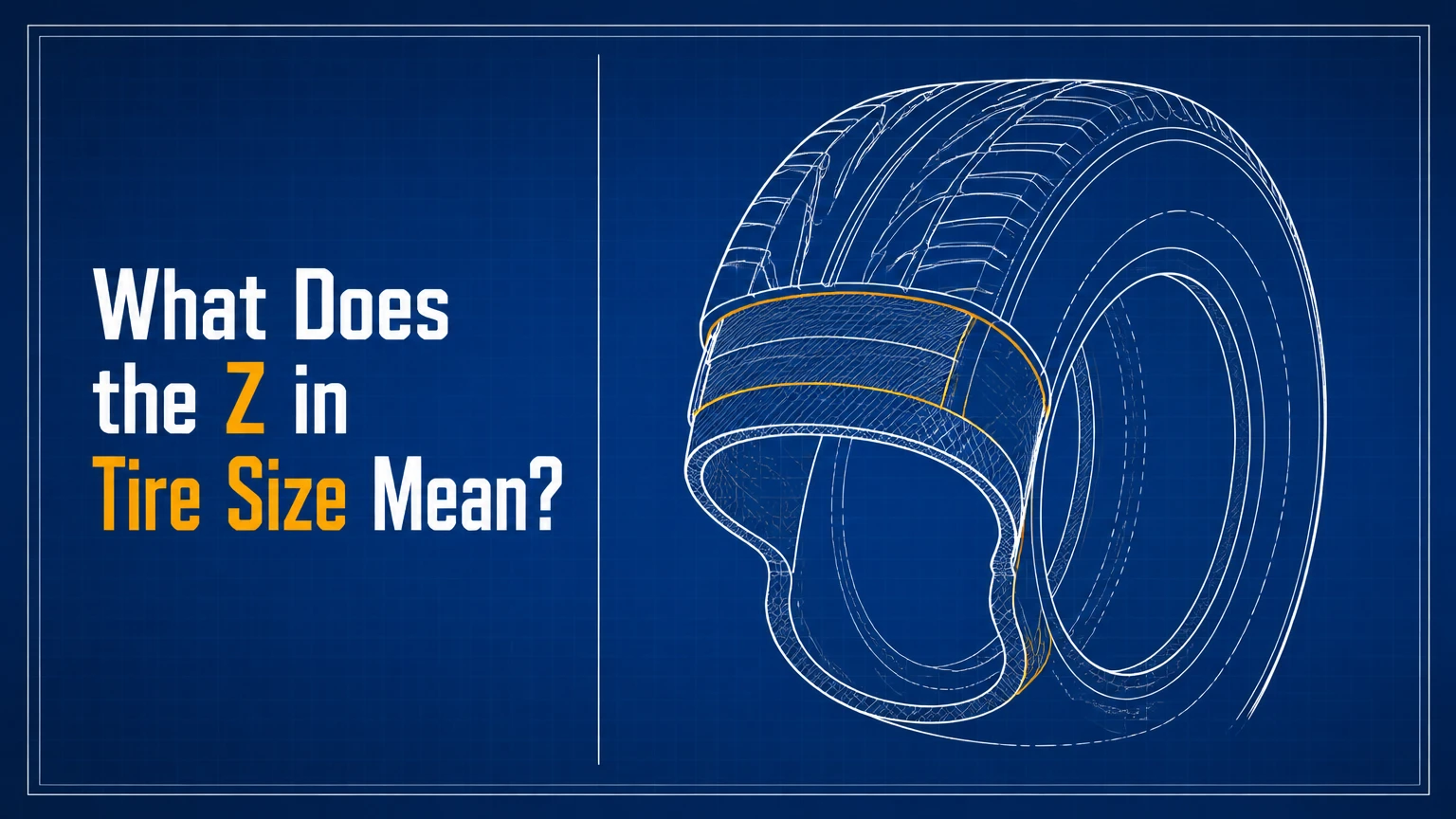
The Z in a tire size indicates that the tire is engineered for maximum speed capabilities exceeding 149 mph (240 km/h). Originally introduced as the top tier of tire speed ratings, modern engineering pairs the Z designator with a service description to define exact upper speed limits up to and beyond 186 mph.
At a Glance: Key Facts About Z Tire Ratings
- The Z character inside a tire size code, such as 245/40ZR18, signifies a high-performance radial tire capable of speeds above 149 mph.
- Absolute maximum speed cannot be determined by the ZR mark alone; it requires reading the service description that follows, such as 97Y.
- A parenthetical speed rating, such as (Y), indicates testing for extreme hypercar speeds exceeding 186 mph.
- Operating high-speed tires at maximum load capacity can trigger safety-related speed penalties that reduce safe operating speed thresholds.
- Winter tires frequently use lower speed ratings like H or V because soft cold-weather rubber compounds cannot safely sustain sustained high speeds.
- Mixing Z-rated tires with lower-rated tires creates severe handling imbalances and dangerous understeer or oversteer during emergency maneuvers.
Where Does the Z Appear in Tire Markings?
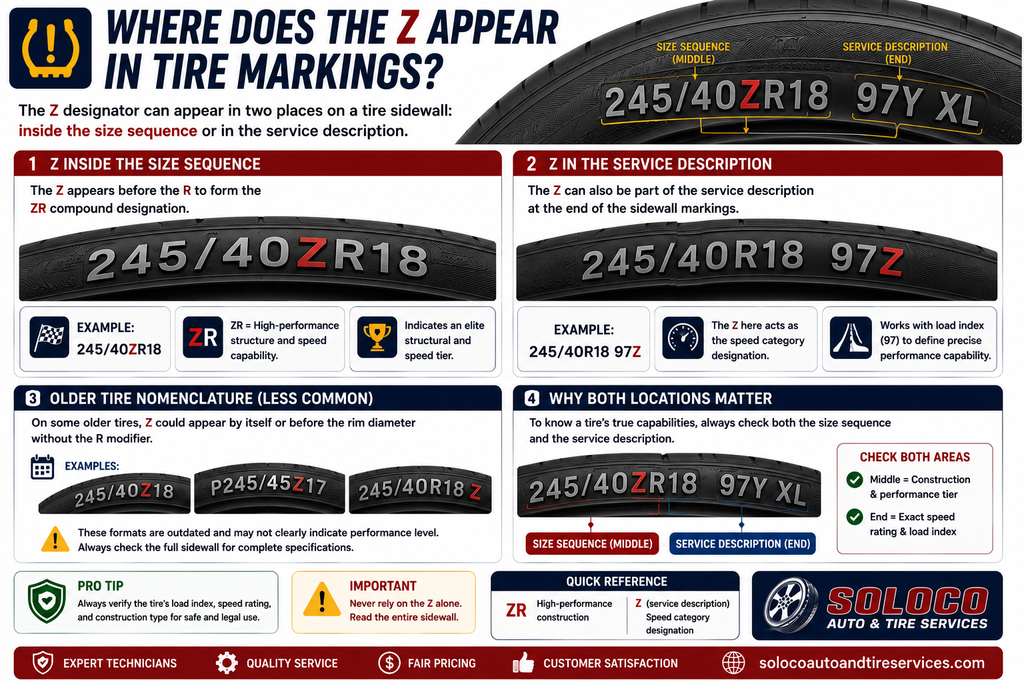
The Z designator appears either directly inside the dimensional size sequence or integrated into the service description at the end of the sidewall text. The placement of the Z dictates whether it functions as a general category indicator or part of a precise performance classification.
When observing a sidewall stamp formatted like 245/40ZR18, the Z sits immediately before the R, creating the compound designation ZR. This placement signals that the tire belongs to an elite structural and speed tier. However, older tire nomenclature sometimes placed the Z entirely on its own or directly before the rim diameter without the R modifier. Modern manufacturing standards require the ZR sequence to maintain backward compatibility while allowing newer service descriptions to carry the precise burden of speed categorization. Technicians and drivers must inspect both the middle sizing block and the trailing service code to get an accurate reading of tire capabilities.
What Is the Maximum Speed of a ZR Tire?
A standard ZR tire is rated for maximum speeds above 149 mph (240 km/h). Because the letter Z historically represented the ceiling of tire engineering before standardized letter brackets were established, it does not specify an exact upper boundary on its own.
Modern tire manufacturers resolve this ambiguity by appending a service description directly after the tire size code, such as 245/40ZR18 97W. In this structure, the W suffix denotes a precise limit of 168 mph, while a Y suffix extends that limit to 186 mph. If a tire features a pure ZR marking without a companion service description in its modern load index block, industry standards dictate contacting the specific tire manufacturer to confirm maximum structural velocity. Drivers should never assume an unindexed ZR tire can safely sustain velocities matching dedicated track or hypercar compounds without verifying the internal carcass construction.
How Do You Read the Service Description Following a ZR Code?
The service description follows the sizing code and consists of a load index number paired with a letter symbol that indicates the precise maximum speed rating. Reading this sequence correctly is essential for matching replacement tires to vehicle manufacturer specifications.
For example, in the full specification 245/40ZR18 97Y, the number 97 represents the maximum load index capacity, while the letter Y represents the speed rating. The Y rating certifies the tire for safe operations up to 186 mph (300 km/h). If the letter appears inside parentheses as (97Y), the tire is rated for sustained speeds exceeding 186 mph. Mechanics rely on this trailing service description rather than the general ZR prefix when determining if a tire meets the high-speed safety thresholds required for track days or unrestricted highway driving.
What Is the Difference Between ZR and R Tire Construction?
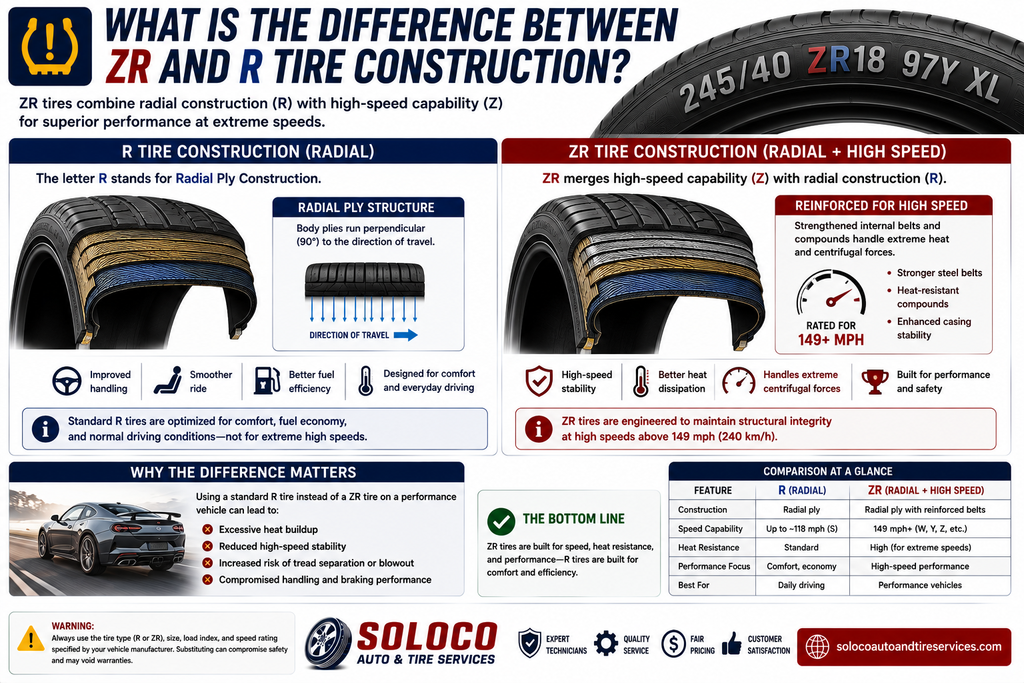
The letter R stands for radial ply construction, while the combination ZR merges the high-speed capability indicator with that same radial internal ply design. This structural distinction governs how the tire distributes heat and centrifugal forces at high velocities.
Radial construction means the internal body plies run cord cords perpendicular to the tread centerline, providing a flexible sidewall and a stable footprint. When a manufacturer stamps ZR onto the sidewall, it indicates that the internal polyester, steel, and nylon belts are reinforced to handle the extreme thermal and centrifugal stress generated above 149 mph. Standard R tires without the Z prefix may feature radial construction optimized for comfort and fuel economy rather than high-speed structural integrity. Consequently, substituting a standard R tire for a ZR tire on a performance vehicle compromises high-speed stability and increases tread separation risks.
What Is the Parentheses Paradox in Tire Speed Ratings?
The parentheses paradox occurs when a tire’s speed rating is enclosed in parentheses, such as 97(Y), indicating that the tire has been tested to safely exceed the standard 186 mph ceiling. This specialized designation separates ultra-high-performance track tires from standard street-legal performance tires.
While a standard Y rating caps safety compliance at exactly 186 mph, placing parentheses around the letter Y signifies that the tire can sustain continuous speeds higher than 186 mph under controlled conditions. Hypercars like the Bugatti Chiron or Koenigsegg Jesko require this exact classification because standard street tires would suffer catastrophic tread separation under sustained extreme velocity. Drivers purchasing replacement tires for ultra-high-performance vehicles must ensure their replacement rubber carries matching parenthetical markings to maintain structural safety at top speeds.
How Do Load-Induced Speed Penalties Affect High-Speed Tires?
Load-induced speed penalties reduce a tire’s maximum safe operating speed when the vehicle carries heavy cargo loads or operates near its maximum gross vehicle weight rating. High-performance tires lose structural stability faster when subjected to combined high loads and high velocities.
For W and Y speed-rated tires, operating a vehicle at its absolute top speed bracket requires derating the maximum load capacity by 5% to 15%. Conversely, operating a tire at maximum cargo weight requires drivers to reduce their maximum driving speed to prevent internal heat buildup and sidewall degradation. Tire engineers calculate these thresholds using rigorous laboratory dynamometer tests that simulate extreme centrifugal deflection. Ignoring load-induced speed penalties can cause catastrophic tread chunking or sudden blowout events during high-speed highway travel or track sessions.
Can You Install Lower Speed-Rated Winter Tires on a Car That Came With ZR Tires?
You can legally and mechanically install lower speed-rated winter tires, such as H or V ratings, on a vehicle that came stock with ZR tires. Winter tire compounds utilize soft, pliable rubber mixes designed for snow and ice traction that cannot structurally withstand sustained hyper-speeds.
Regulatory bodies and tire manufacturers permit this temporary downgrade during winter months because cold-weather driving environments naturally discourage high-speed operation. However, drivers must apply a visible speed warning sticker inside the vehicle cabin matching the lower limit of the winter tires, typically 130 mph for H-rated tires or 149 mph for V-rated tires. Drivers must also adjust their driving habits to ensure they never exceed the lower maximum speed capability of the winter rubber.
Why Do Some Commuter Cars Come With Overspecified ZR Tires?
Many modern commuter sedans and sporty trim packages come stock with ZR-rated tires primarily for marketing appeal and crisp steering response. Vehicle manufacturers know consumers associate low-profile ZR tires with premium handling and athletic performance.
From a mechanical perspective, a family sedan electronically governed to a top speed of 112 mph gains zero functional top-speed benefit from an expensive 186 mph Y-rated tire. However, the stiffer sidewalls and wider contact patches associated with ZR construction enhance cornering agility and steering feedback at normal legal speeds. The trade-off is a stiffer ride quality, reduced treadwear life, and significantly higher replacement costs when the tires eventually wear out.
Can You Mix Z-Rated Tires With H- Or V-Rated Tires on the Same Vehicle?
You cannot mix Z-rated tires with H- or V-rated tires on the same vehicle. Mixing different speed ratings creates dangerous imbalances in traction, sidewall stiffness, and handling responsiveness across different axles.
Z-rated tires feature significantly stiffer sidewalls and specialized tread compounds designed to resist high-speed cornering forces. Combining them with softer, lower-rated tires disrupts the vehicle’s dynamic balance, leading to unpredictable understeer, sudden oversteer, or loss of control during emergency braking and evasive maneuvers. Professional automotive technicians strictly recommend replacing all four tires simultaneously with matching speed and load ratings to preserve the engineered handling characteristics of the vehicle.
Do Z-Rated Tires Wear Out Faster Than Standard Touring Tires?
Z-rated tires wear out significantly faster than standard touring tires due to the softer, stickier rubber compounds used in their construction. High-performance tires prioritize maximum dry and wet grip over longevity.
The compounds required to achieve high friction coefficients at speeds above 149 mph have higher hysteresis, meaning they generate more heat and wear away more quickly under normal friction. While a standard touring tire may deliver 60,000 to 80,000 miles of tread life, a dedicated ultra-high-performance summer ZR tire frequently achieves a tread life between 20,000 and 30,000 miles. Drivers selecting high-performance replacement tires must factor in this accelerated replacement cycle and maintain strict monthly tire rotation schedules to maximize tread life.
Is a ZR Tire the Same Thing as a Run-Flat Tire?
A ZR tire is not the same thing as a run-flat tire. The ZR designator refers exclusively to speed capability and structural high-speed endurance, whereas run-flat technology relates to sidewall reinforcement designed to support vehicle weight after a total loss of air pressure.
Run-flat capabilities are designated by manufacturer-specific sidewall acronyms such as ROF for RunOnFlat, EMT for Extended Mobility Technology, or ZP for Zero Pressure. A tire can be a ZR-rated high-performance tire without being a run-flat tire, and conversely, a standard touring tire can feature run-flat capabilities without possessing a high-speed Z rating. Consumers must check for dedicated run-flat symbols if they want a tire that can travel safely after a puncture.
How Do You Check a Tire’s Exact Production Date and Speed Compliance?
You check a tire’s exact production date and compliance data by inspecting the Department of Transportation code stamped into the sidewall alongside the full size and service description string. The DOT code concludes with a four-digit manufacturing date stamp.
The final four digits of the DOT serial number indicate the production week and year, such as 2425, meaning the tire was manufactured during the 24th week of 2025. Automotive safety experts advise replacing high-performance ZR tires after six years regardless of remaining tread depth, as rubber compounds degrade and harden over time when exposed to UV light, ozone, and temperature fluctuations. Verifying both the speed rating and the age stamp ensures that high-speed replacements remain structurally sound and legally compliant.
What Happens If You Exceed the Speed Rating of a Z-Class Tire?
Exceeding the speed rating of a Z-class tire triggers excessive centrifugal growth, extreme internal heat generation, and rapid structural degradation. When internal temperatures exceed the threshold of the rubber and belt bonding agents, catastrophic tread separation or structural blowout typically occurs.
As a tire spins at extreme velocities, centrifugal force pulls the tread outward away from the carcass. Tires engineered with Z and W/Y ratings utilize extra nylon cap plies to suppress this growth, but operating beyond the certified velocity limit overwhelms these safety margins. Professional racing organizations and track day operators enforce strict tech inspections to ensure vehicles never operate on tires rated below the maximum velocity potential of the track configuration.
Are Z-Rated Tires More Prone to Hydroplaning Than Standard Tires?
Z-rated tires are often more prone to hydroplaning than standard touring tires because they feature wider tread blocks and lower void ratios designed to maximize dry pavement contact patch area. Hydroplaning occurs when a wedge of water builds up beneath the tire contact patch, lifting the rubber off the road surface.
While high-performance wet-weather ZR tires incorporate advanced directional tread patterns and high-silica compounds to evacuate water efficiently, ultra-wide rear tires on sports cars naturally act as water wedges at highway speeds. Drivers operating vehicles equipped with wide high-performance tires must reduce their speed significantly during heavy downpours to prevent hydroplaning and loss of steering control. Maintaining proper tire inflation pressure is vital, as under-inflated tires collapse the tread channels and drastically increase hydroplaning risk.
How Does Tire Pressure Affect the Safe Operating Speed of a ZR Tire?
Tire pressure directly dictates the internal structural stability and load-carrying capacity of a ZR tire during high-speed operation. Under-inflation is the leading cause of high-speed tire failure.
When a tire operates with insufficient air pressure, the sidewalls flex excessively under load, generating massive internal heat buildup known as standing wave distortion. This thermal stress degrades the internal steel belts and rubber bonding agents, rapidly neutralizing the safety margins provided by the Z speed rating. Drivers must verify cold inflation pressures against the vehicle manufacturer placard inside the driver’s door jamb before undertaking high-speed driving or track events.
The Bottom Line
Understanding what the Z in tire size means requires looking beyond the general 149 mph threshold to examine trailing service descriptions, load indices, and specific vehicle operational limits. While ZR signifies elite high-speed capability, matching replacement tires to manufacturer specifications and respecting environmental limitations prevents structural failure. Maintaining correct tire pressure and accounting for seasonal rubber limitations ensures maximum safety across all driving conditions.