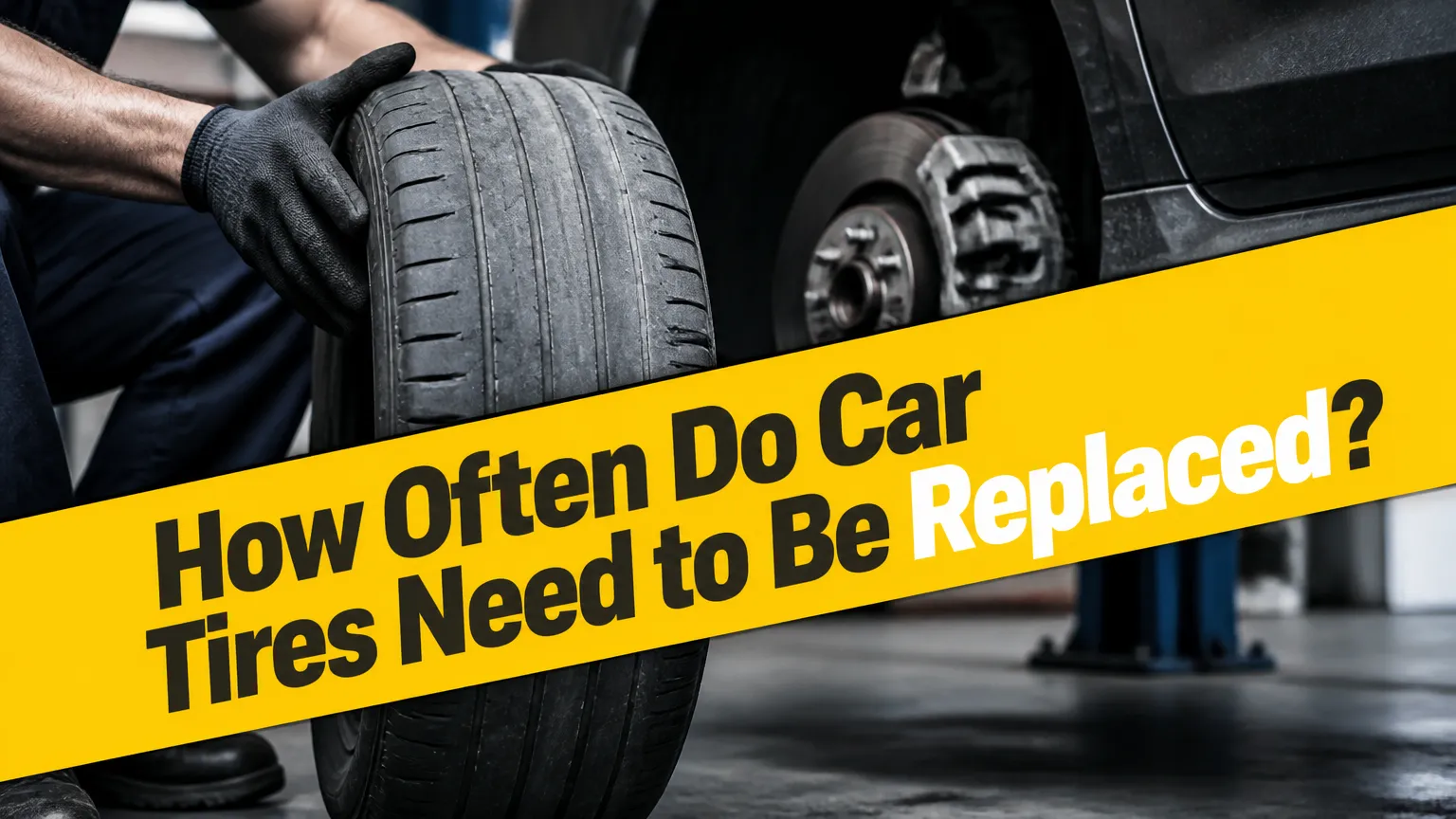
Car tires generally need to be replaced every 6 to 10 years, or every 65,000 to 130,000 kilometers (40,000 to 80,000 miles), depending on which milestone occurs first. Environmental conditions, driving habits, vehicle weight, and rubber compound chemistry heavily influence these baseline figures, often forcing premature replacement long before the tread wears down.
At a Glance
- Car tires possess an absolute maximum structural lifespan of 10 years from their manufacturing date.
- The universal legal minimum tread depth for standard passenger tires is 1.6 mm or 2/32 of an inch.
- Electric vehicles wear through tires 20% to 40% faster due to increased vehicle weight and instant torque delivery.
- Hot climates accelerate rubber oxidation and dry rot, reducing tire lifespans to 3 to 5 years.
- Front and rear-wheel-drive vehicles allow axle pair replacements, while all-wheel-drive systems require all four tires replaced simultaneously.
What is the maximum safe age limit for car tires regardless of tread?
Car tires have a maximum safe structural lifespan of 10 years from their manufacturing date, even if the tread appears deep and uncompromised. Internal steel belts and chemical anti-ozonants degrade over time due to ambient air exposure and thermal cycling.
Major vehicle manufacturers and tire producers such as Michelin and Bridgestone mandate professional annual inspections starting at the 5-year mark. Rubber compounds slowly lose their elasticity and structural integrity as volatile oils evaporate. Driving on tires older than a decade introduces a severe risk of sudden tread separation and catastrophic structural failure at highway speeds.
What is the legal minimum tread depth for car tires?
The universal legal minimum tread depth for passenger car tires is 1.6 mm, which equals 2/32 of an inch. Once tread blocks wear down to this threshold, tires lose their ability to channel water away from the contact patch, leading directly to dangerous hydroplaning conditions on wet asphalt.
Law enforcement agencies and vehicle inspection stations use built-in tread wear indicators, known as wear bars, molded across the main grooves of the tire. When these bars become flush with the surrounding rubber surface, the tire is legally bald and must be replaced immediately to maintain road safety compliance.
How can I check my tire age using the DOT code?
Drivers can determine the exact age of any tire by locating the Department of Transportation or DOT code printed on the tire sidewall. This alphanumeric sequence begins with the letters DOT and concludes with a four-digit manufacturing date stamp.
The final four digits indicate the production timeline, where the first two digits represent the manufacturing week and the final two digits denote the production year. For example, a DOT code ending in “2425” indicates that the tire was manufactured during the 24th week of the year 2025. Tires lacking a four-digit date stamp were manufactured prior to the year 2000 and must be discarded immediately.
How do I perform the penny test and coin checks for tread depth?
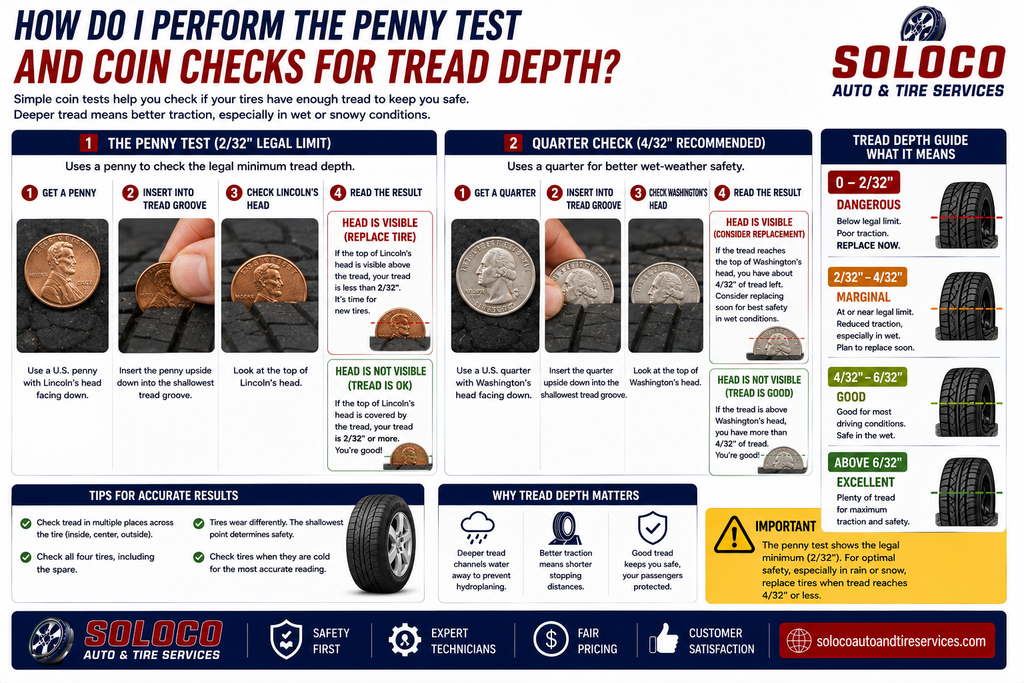
Vehicle owners can check tire tread depth using a standard penny by inserting the coin upside down into the shallowest tread groove with Lincoln’s head facing downward. If the top of President Lincoln’s head remains completely visible above the rubber line, the tread depth has dropped below 2/32 of an inch and requires immediate replacement.
For enhanced precision in wet weather climates, drivers can utilize a quarter. If the tread reaches the top of Washington’s head, the remaining depth is approximately 4/32 of an inch, which serves as a recommended threshold for wet-weather safety before absolute legal limits are reached.
When does a tire puncture require replacement instead of repair?
A tire puncture requires total replacement when the damage occurs within the sidewall, the shoulder area, or when the puncture hole exceeds 6 millimeters or a quarter-inch in diameter. Professional repair shops can only safely patch punctures located strictly within the central tread flat.
Punctures near the structural shoulder or sidewall cannot hold a patch securely because those areas flex continuously during vehicle operation. Furthermore, driving on a tire with zero pressure for even a short distance destroys the inner liner, rendering the entire tire structurally unrepairable.
Why do tires in hot climates degrade faster than cold ones?
Tires located in hot, high-UV climates degrade via aggressive rubber oxidation and dry rot within 3 to 5 years, frequently wearing out long before the physical tread is depleted. Ultraviolet radiation breaks down polymer chains in the rubber compound, causing microscopic surface cracking along the sidewalls and tread blocks.
Regions such as Arizona, the Middle East, and parts of Australia subject rubber to intense solar exposure and high pavement temperatures that accelerate chemical aging. Vehicle owners in these geographic zones must monitor surface cracking closely and prioritize age-based replacement over mileage milestones.
How does low mileage and parked storage destroy tires?
Vehicles parked in garages for years can suffer from severe internal structural failure caused by anti-ozonant depletion, even if the tread looks brand new. Tires require rolling motion to knead the rubber compound, which forces internal anti-cracking agents to the surface to protect against environmental degradation.
When a vehicle sits stationary for extended periods, the constant weight resting on a single patch point creates flat spots and localized stress. Over time, the rubber loses flexibility, leaving stored vehicles susceptible to sudden sidewall failure once they return to active service.
How do electric vehicles affect tire replacement intervals?
Electric vehicles cause tires to wear out 20% to 40% faster than internal combustion engine vehicles of comparable size. This accelerated wear stems directly from the heavy weight of large battery packs combined with the instant torque delivery characteristic of electric motors.
The sudden high-torque force transferred to the contact patch increases microscopic slip and friction during acceleration. Drivers transitioning to an electric vehicle should budget for more frequent tire rotations and earlier replacement cycles than they experienced with traditional gasoline automobiles.
At what tread depth do winter tires lose their effectiveness?
Winter tires become ineffective for snow and ice traction long before reaching the 1.6 mm legal limit, losing their functional performance at approximately 4 mm or 5/32 of an inch. Specialized winter rubber compounds and intricate micro-sipes lose their biting edges once the tread wears past this midpoint depth.
Below 4 mm, winter tires can no longer pack snow effectively into the tread grooves to generate the snow-on-snow friction necessary for stopping and turning on slippery surfaces. Drivers utilizing winter tires should treat 4 mm as their true operational replacement threshold.
Do I need to replace all 4 tires at once on my vehicle?
All-wheel-drive vehicles require all four tires to be replaced simultaneously to prevent catastrophic damage to the center differential caused by rotational speed discrepancies. Varying tire diameters create constant gear friction that overheats and destroys sensitive drivetrain components.
Front-wheel-drive and rear-wheel-drive vehicles permit replacing tires in axle pairs. When installing only two new tires, technicians must mount them on the rear axle to prevent dangerous oversteer skidding and loss of vehicle control on wet or slippery road surfaces.
How does incorrect tire pressure accelerate replacement cycles?
Incorrect tire pressure accelerates replacement cycles by causing uneven, premature wear across specific sections of the tire tread. Underinflated tires experience excessive flexing, generating extreme internal heat that leads to tread separation and edge wear.
Overinflated tires concentrate all vehicle weight onto the narrow center strip of the tread, causing rapid center wear and reducing overall traction braking performance. Maintaining factory-recommended air pressure preserves the intended contact patch and extends overall tire longevity.
What causes tire cupping and feathering wear patterns?
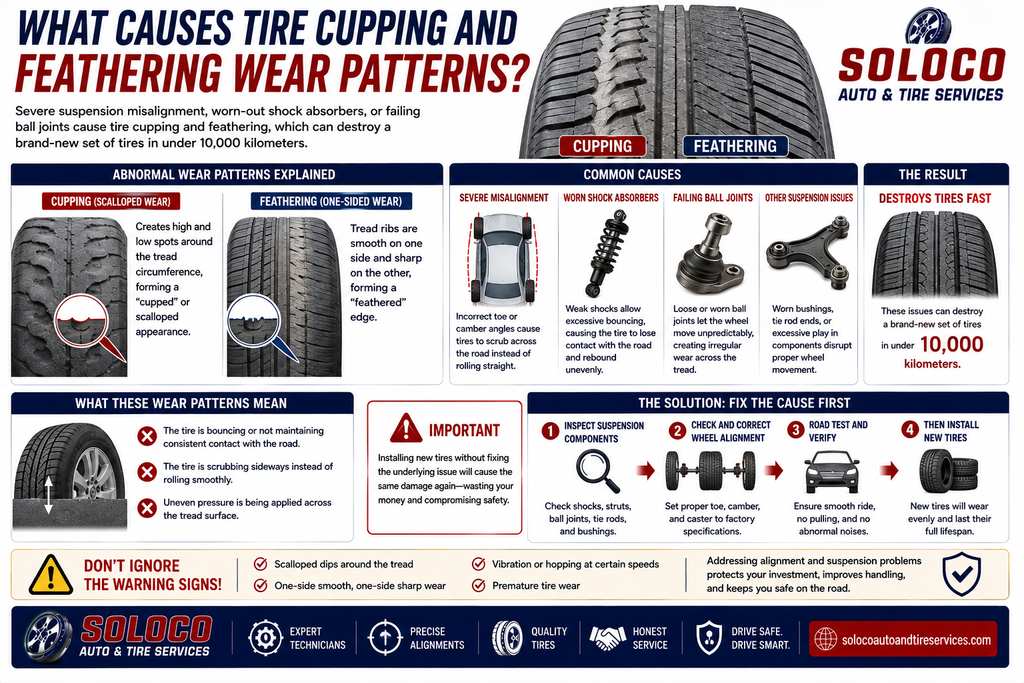
Severe suspension misalignment, worn-out shock absorbers, or failing ball joints cause tire cupping and feathering, which can destroy a brand-new set of tires in under 10,000 kilometers. Cupping creates scalloped dips around the tread circumference, while feathering leaves tread ribs smooth on one side and sharp on the other.
These abnormal wear signatures indicate that the tire is bouncing or scrubbing unevenly against the pavement rather than rolling smoothly. Resolving the underlying mechanical or alignment issue is mandatory before installing replacement tires to prevent identical damage.
Is an old spare tire in the trunk safe to use in an emergency?
A spare tire sitting unblemished in a dark trunk for 12 years is structurally compromised and poses a high risk of sudden blowout if placed into active service. While shielded from UV light, the rubber still undergoes thermal aging and loss of volatile oils over time.
Drivers should inspect their spare tire during routine maintenance intervals and replace emergency doughnuts or full-size spares that exceed the 10-year age limit. Relying on an expired spare during a roadside emergency introduces unnecessary danger.
How does improper vehicle storage impact tire lifespan?
Storing loose tires near electric motors, battery chargers, or hot water pipes rapidly accelerates chemical breakdown due to ozone exposure and heat. Electric motors generate ozone gas, which actively attacks rubber polymers and causes deep cracking.
Tires placed in storage should be cleaned thoroughly, sealed inside airtight plastic bags to trap remaining oils, and kept in a cool, dry, dark environment away from direct sunlight and electrical equipment. Proper indoor storage significantly slows down natural rubber degradation.
The Bottom Line
Car tires must be replaced every 6 to 10 years or within 65,000 to 130,000 kilometers, utilizing the 1.6 mm tread depth limit and the 10-year structural rule as hard safety boundaries. Environmental stressors such as hot climates, low mileage storage, and heavy electric vehicle applications shorten these windows dramatically. Evaluating tread health via coin tests, checking DOT manufacturing codes, and maintaining proper inflation pressure ensure maximum vehicle safety on the road.