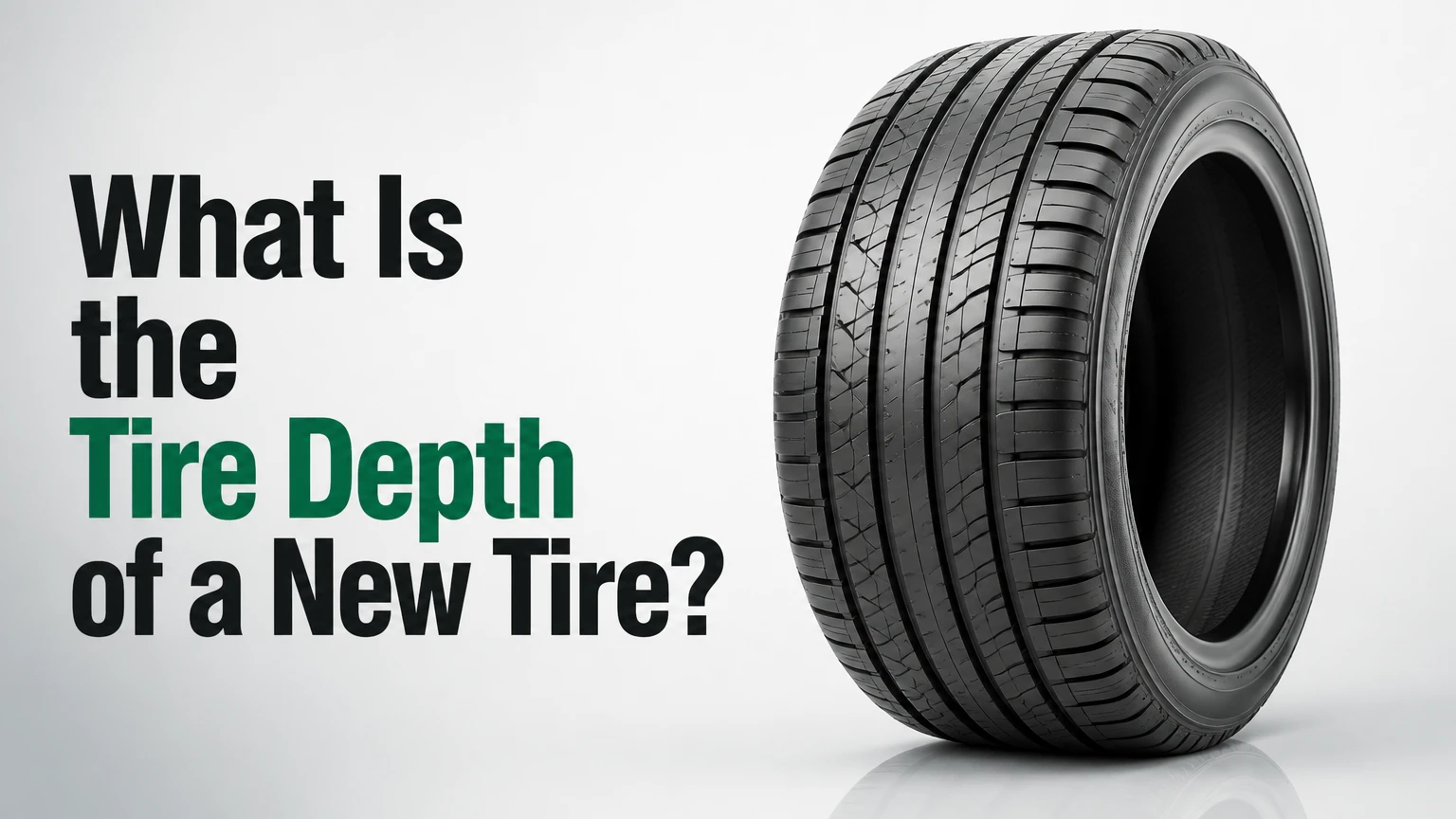
New passenger car tires typically start with a tread depth of 10/32 to 11/32 of an inch, which is approximately 8.0 to 8.7 millimeters. This initial measurement varies widely depending on the vehicle class, tire construction, and intended driving environment, ensuring adequate traction from day one.
At a Glance: New Tire Tread Depth Facts
- Standard passenger car tires begin life between 10/32 and 11/32 of an inch.
- Winter and snow tires feature deeper tread blocks, ranging from 11/32 to 13/32 of an inch.
- Off-road and mud-terrain tires start highest, measuring between 15/32 and 19/32 of an inch.
- High-performance track tires deliberately start shallow at 6/32 to 8/32 of an inch to minimize squirm.
- The legal replacement threshold in most regions is 2/32 of an inch, though safety experts recommend replacing wet-weather tires at 4/32 of an inch.
How Does Initial Tread Depth Vary by Vehicle and Tire Type?
Initial tire tread depth is engineered specifically to match the weight, torque, and operating environment of the vehicle it supports. Passenger cars require moderate depth for balanced dry and wet braking, whereas heavier commercial applications demand much thicker rubber blocks to endure high load stress.
- Passenger Cars: 10/32 to 11/32 of an inch (8.0mm to 8.7mm) for balanced daily commuting.
- Winter and Snow Tires: 11/32 to 13/32 of an inch (8.7mm to 10.3mm) to pack snow for snow-on-snow traction.
- SUVs and Light Trucks: 11/32 to 14/32 of an inch (8.7mm to 11.1mm) to handle higher vehicle weight and towing loads.
- Off-Road and Mud-Terrain Tires: 15/32 to 19/32 of an inch (11.9mm to 15.0mm) for aggressive void ratios and maximum grip in soft soil.
- Commercial Heavy-Duty Tires: 19/32 to over 26/32 of an inch for multi-season commercial fleet durability.
Why Do High-Performance Track Tires Start with Shallower Tread?
High-performance track tires and street-legal R-compound tires come brand new with a shallow tread depth of only 6/32 to 8/32 of an inch. This reduced depth is intentional to prevent excessive heat buildup and structural squirm during extreme cornering loads.
When a tire has deep rubber blocks, high lateral G-forces cause those tall blocks to flex and distort. This distortion generates internal heat, reduces steering precision, and accelerates tread tearing. Shorter tread blocks provide a stable contact patch, yielding sharper steering response and higher dry grip on a race circuit. The trade-off is drastically reduced wet-weather performance and shorter overall tire lifespan.
How Do Electric Vehicles Change Initial Tire Wear Expectations?
Electric vehicles accelerate tire wear significantly faster than internal combustion engine vehicles due to instantaneous torque delivery and heavy battery weight. While an electric vehicle comes with the same standard 10/32 to 11/32 of an inch tread depth as a gas-powered passenger car, those tires often wear out thirty to fifty percent faster.
Drivers must monitor tire pressures monthly and perform professional rotations every 5,000 miles to offset heavy front or rear axle scrubbing. Selecting electric vehicle specific replacement tires with reinforced sidewalls and specialized rubber compounds helps manage this accelerated wear rate without sacrificing driving range.
What Is the Break-In Period for a Brand-New Tire?
Brand-new tires require a break-in period of approximately 500 miles before delivering maximum traction and precise handling responsiveness. During the manufacturing process, mold release lubricants are applied to tire molds to prevent rubber from sticking, leaving a slick microscopic residue on fresh tread surfaces.
Drivers should avoid aggressive cornering, hard acceleration, and emergency braking during the first few hundred miles while this surface layer wears away naturally. Once this thin outer film is abraded by the road surface, the underlying rubber compound achieves its fully rated coefficient of friction.
How Does Tire Tread Depth Affect Fuel Economy?
Tire tread depth directly influences rolling resistance, which accounts for up to twenty percent of a vehicle total fuel consumption. A brand-new tire with deep 11/32 grooves experiences slight tread block flexing, which marginally increases rolling resistance compared to a half-worn tire.
As a tire wears down and loses tread depth, its overall rolling resistance decreases because the stiffer, shallower rubber flexes less. While a worn tire yields a fractional improvement in fuel economy, this minor financial saving is heavily offset by the severe loss of wet traction and hydroplaning resistance. Modern low rolling resistance tires balance this equation using advanced silica compounds rather than altering initial tread depth.
When Should You Replace Tires Before Reaching the Legal Limit?
The standard legal replacement limit for tire tread depth is 2/32 of an inch, but relying strictly on this legal minimum creates severe safety hazards in adverse weather. Different environmental conditions demand earlier replacement thresholds to prevent loss of vehicle control.
- Heavy Rain and Standing Water: At 2/32 of an inch, a tire cannot channel water effectively, leading to dangerous highway hydroplaning. Safety experts recommend replacing tires at 4/32 of an inch if you frequently drive in heavy rain.
- Deep Winter Snow: Winter tires lose their core effectiveness in deep snow once their tread wears down to 6/32 of an inch, because the snow-trapping pockets become too shallow to create adequate friction.
- Uneven Alignment Wear: If inner or outer shoulders wear down prematurely due to bad suspension alignment, the entire tire must be replaced even if the center grooves show acceptable depth.
How Does Tire Aging Override Remaining Tread Depth?
A tire can retain its full initial tread depth of 10/32 of an inch and still be dangerously unsafe if the rubber has degraded due to age. Environmental exposure to ultraviolet light, ozone, and extreme temperature fluctuations causes chemical bonds within the rubber compound to break down.
Most tire manufacturers and automotive safety authorities recommend replacing all tires that exceed six to ten years from their Department of Transportation manufacturing date stamp, regardless of remaining tread depth. Visual signs of aging include fine cracking or dry rot in the sidewall grooves, shoulder splitting, and hardening of the rubber tread blocks, which ruins grip and increases blowout risks.
How Do You Accurately Measure Tread Depth at Home?
Accurately measuring tire tread depth at home can be accomplished using either a dedicated mechanical depth gauge or the traditional United States coin method. A professional digital or plunger-style tread gauge provides precise millimeter or thirty-second inch readings across multiple points of the tire.
- Insert the Tool: Place the probe tip of the tread gauge into the deepest central groove of the tire tread.
- Press the Base: Push the flat base of the gauge firmly down against the rubber surface surrounding the groove.
- Read the Measurement: Check the scale on the stem to determine the exact remaining depth.
- Inspect Multiple Spots: Measure the inner, center, and outer grooves across several locations around the circumference to detect uneven wear patterns.
If a gauge is unavailable, insert a US penny into the central tread groove with President Lincoln head pointing downward and facing you. If the top of Lincoln head is entirely visible above the tread rubber, your tread depth is less than 2/32 of an inch and requires immediate replacement.
What Are Tread Wear Indicator Bars and How Do They Work?
Tread wear indicator bars are narrow, raised strips of solid rubber molded directly across the bottom of the main circumferential tire grooves. These bars are intentionally positioned at a height of 2/32 of an inch, matching the legal minimum safety standard in most jurisdictions.
When new, these indicator bars remain hidden deep within the tread channels, leaving a smooth bridge between tread blocks. As the tire wears down over thousands of miles, these bars gradually become flush with the surrounding tread surface. When the rubber bridges connect across the tread pattern, it signals visually that the tire has reached the legal wear limit and must be replaced immediately.
Do New Tires on the Same Axle Need to Match Completely?
New tires mounted on the same axle must match in size, construction type, speed rating, and tread design to ensure predictable vehicle handling. Installing a single new tire alongside a heavily worn tire on a drive axle creates an immediate tire circumference mismatch.
This circumference discrepancy forces the differential gears to rotate continuously, even when driving straight, generating extreme friction and overheating. On front-wheel drive and rear-wheel drive vehicles, this damages the differential assembly. On All-Wheel Drive vehicles, a mismatched tire circumference can destroy the transfer case and drivetrain components within a few thousand miles.
Can You Shave a New Tire to Match Worn Tires on an AWD Vehicle?
All-Wheel Drive vehicles require all four tires to have nearly identical rolling diameters to prevent catastrophic transfer case failure. When a single tire suffers irreparable damage and must be replaced while the other three tires are partially worn, shaving a brand-new tire down is often necessary.
Professional tire service shops use specialized shaving machines to mechanically trim the tread of a brand-new tire down to match the exact remaining tread depth of the existing tires, typically within a 2/32-inch tolerance. This specialized procedure saves the vehicle owner from being forced to buy a complete set of four new tires prematurely while protecting sensitive drivetrain components from uneven rotational stress.
How Does Proper Tire Storage Affect New Tread Longevity?
Proper storage of unused new tires directly preserves the integrity of the rubber compounds and prevents premature degradation before installation. Tires stored improperly in direct sunlight, high heat environments, or near electric motors experience accelerated ozone cracking and rubber hardening.
Store unmounted or mounted new tires indoors in a cool, dry, dark climate-controlled environment away from direct sunlight, heating vents, and chemical solvents. Placing tires inside airtight black plastic bags helps minimize exposure to circulating air and ozone, ensuring the rubber maintains its optimal flexibility and performance characteristics until it is finally mounted on a vehicle.
The Bottom Line
Understanding that new passenger car tires start at 10/32 to 11/32 of an inch provides the vital baseline for monitoring long-term tire health. Because environmental factors like heavy rain, winter snow, and aging reduce safety long before the legal 2/32 limit is reached, proactive inspection is essential. Maintaining matched tread depths across axles prevents costly drivetrain damage and ensures predictable vehicle control in every driving condition.