Tire measurements are standardized alphanumeric codes stamped onto a tire’s sidewall that dictate its physical dimensions, load capabilities, and vehicle fitment. These codes provide a universal language for manufacturers and drivers to ensure structural compatibility, safe weight distribution, and correct handling characteristics for any passenger or commercial vehicle.
At a Glance
- Tire codes combine letters and numbers representing width, aspect ratio, construction, diameter, load index, and speed rating.
- Section width is measured in millimeters from sidewall to sidewall, while wheel rim diameter is measured in inches.
- The aspect ratio expresses sidewall height as a percentage of the total section width.
- Off-road flotation sizing uses total outer diameter and section width expressed entirely in inches rather than millimeters.
- Tire age is determined by the four-digit DOT manufacturing code, indicating the production week and year.
How do you read a standard tire measurement code?
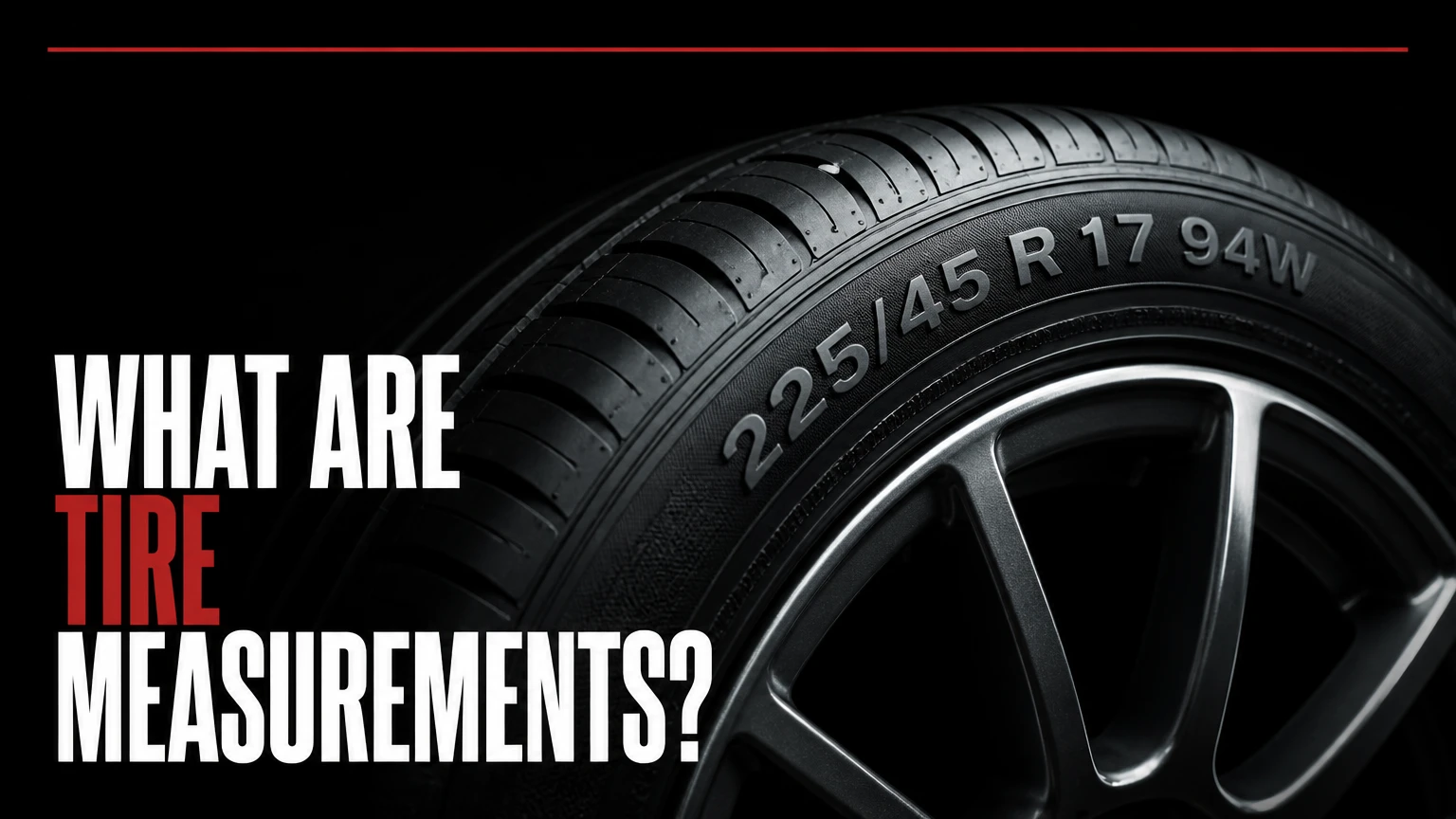
A standard metric tire measurement code uses a structured sequence of letters and numbers, such as P215/65R15 95H, where each segment defines a distinct physical attribute. The initial letter indicates the vehicle category, followed by a three-digit section width in millimeters, a slash, and a two-digit aspect ratio percentage. Next comes the construction type letter, the wheel rim diameter in inches, a numeric load index, and a final letter designating the maximum speed rating.
Professionals look at this complete string to assess total load capacity and physical clearance before mounting a tire to a vehicle hub. Recognizing each isolated token prevents costly ordering errors and ensures the rubber meets factory safety margins.
How do you calculate overall tire diameter from metric measurements?
Calculating a tire’s overall outer diameter requires converting millimeter section widths into inches, multiplying by the aspect ratio, doubling that sidewall height, and adding the wheel rim diameter. For a standard 215/65R15 tire, the math multiplies 215 millimeters by 0.65 to get a sidewall height of 139.75 millimeters, which converts to 5.5 inches. Multiplying that sidewall by two yields 11.0 inches of total vertical rubber depth, and adding the 15-inch wheel rim produces a total outer diameter of 26.0 inches.
Vehicle technicians use this exact calculation when altering wheel sizes to verify that the replacement tire matches the factory rolling circumference within a safe three percent tolerance. Failing to calculate this total diameter leads to transmission shift delays, ABS calibration errors, and inaccurate speedometer readings.
What is the difference between P-metric and Euro-metric tire sizing?
P-metric and Euro-metric tire sizing systems use identical numerical formats, such as 225/60R16, but follow different load inflation tables governed by distinct engineering standards. P-metric tires incorporate a statutory load safety margin designed by the Tire and Rim Association, whereas Euro-metric tires follow European Tyre and Rim Technical Organisation standards, which often assign different load capacities to the exact same physical dimensions.
Installing a P-metric tire onto heavy SUVs or light trucks requires understanding that vehicle applications can trigger a load-carrying capacity derating. Mechanics recommend matching the exact structural designation stamped on the vehicle placard rather than assuming identical numbers mean interchangeable weight limits.
How do off-road flotation tire measurements work?
Off-road flotation tire measurements abandon metric ratios in favor of imperial sizing, using an overall diameter and section width format such as 33×12.50R15LT. The first number represents the total outer diameter of the inflated tire in inches, the second number denotes the section width in inches, the letter R signifies radial construction, the following number gives the wheel diameter in inches, and the final suffix indicates light truck service.
Off-road enthusiasts rely on flotation sizing because it communicates total ground clearance and footprint breadth at a single glance. These tires are engineered to run at lower pressures to spread vehicle weight over a broader surface area across soft sand, mud, or rock terrain.
What do temporary spare tire (T-sizing) codes mean?
Temporary spare tires use a specialized alphanumeric format starting with the letter T, such as T125/70D15, indicating restricted usage parameters and specialized internal construction. The letter T stands for temporary, the 125 represents a narrow section width in millimeters, the 70 is the aspect ratio, the letter D signifies diagonal bias-ply construction, and the 15 designates the wheel diameter in inches.
Bias-ply construction features crisscrossing fabric cords that create stiffer sidewalls but result in a shorter operating lifespan and harsh ride quality. Drivers must treat these compact spares as emergency measures, limiting travel speeds to a maximum of 50 miles per hour until a standard full-size tire can be repaired or replaced.
How do you read a tire manufacturing date code?
Tire age is determined by reading the Department of Transportation serial number stamped into the lower sidewall near the wheel bead, ending in a four-digit production stamp. The first two digits of this final sequence indicate the exact week of manufacture, while the last two digits specify the calendar year, such as code 2425 indicating the 24th week of 2025.
Industry safety standards dictate that tires should be inspected annually after five years of service and physically replaced after six to ten years, regardless of remaining tread depth. Rubber compounds degrade through oxidation and thermal cycling over time, causing structural separation even when the tread appears deep and healthy.
What does the load index and XL rating mean on a tire?
The load index is a numeric code appearing near the end of the tire size sequence that corresponds to a maximum weight-carrying capacity under optimal inflation conditions. For instance, a load index of 95 translates to a maximum capacity of 690 kilograms or 1,521 pounds per tire when inflated correctly.
When an XL suffix appears on the sidewall, it designates Extra Load construction, meaning the tire features reinforced internal plies designed to handle higher internal air pressures and heavier loads than a standard load tire of identical dimensions. Failing to match or exceed the original factory load index risks structural sidewall failure under heavy payloads or high-speed cornering maneuvers.
How are speed ratings designated and why do they matter?
Speed ratings are indicated by a terminal letter code, such as H, V, or W, denoting the maximum safe velocity a tire can sustain under a recommended weight load. An H rating certifies safe operation up to 210 kilometers per hour or 130 mph, while a V rating certifies capability up to 240 kilometers per hour or 149 mph.
Installing tires with lower speed ratings than original manufacturer specifications compromises cornering stability, tread rigidity, and high-speed steering response. Many professional installation facilities will legally refuse to mount lower-rated tires due to liability risks associated with tread separation during sustained highway driving.
Can I put a wider tire on my factory rims?
Drivers can typically increase a tire’s section width by 10 to 20 millimeters beyond factory specifications on existing rims, provided there is adequate physical clearance inside the fender wells. However, the new width must remain strictly within the tire manufacturer’s approved rim width range to prevent the bead from unseating during hard cornering.
Exceeding safe width limits on narrow factory rims forces the sidewalls inward, creating a bulging tread profile that accelerates center tread wear and introduces sloppy handling dynamics. Consulting a professional rim-to-tire compatibility chart prevents premature rubber destruction and maintains predictable steering feedback.
What happens when plus-sizing alters your odometer and speedometer?
Plus-sizing involves installing larger diameter wheel rims while using lower profile tires to maintain a similar overall outer diameter, but failing to match proportions causes electronic miscalculations. If the replacement tire’s overall diameter is significantly larger than the factory specification, the wheels rotate slower per mile, causing your speedometer and odometer to read slower than your actual vehicle speed.
This dimensional mismatch introduces invisible errors into modern transmission shift schedules, traction control thresholds, and anti-lock braking calibrations. Experienced technicians always calculate total rolling circumference percentages before executing any plus-sizing rim upgrade.
How does rim width affect tire tread wear and handling?
Rim width dictates how flat the tire’s contact patch rests against the pavement, directly influencing cornering stability, grip levels, and wear distribution across the tread. If a tire is mounted on a rim that is too narrow, the tread crowns in the middle, concentrating friction on the center ribs and accelerating center wear.
Conversely, stretching a narrow tire onto an excessively wide rim pulls the sidewalls outward, forcing the shoulders to bear the entire load and causing rapid edge degradation. Maintaining the exact median rim width recommended by the tire manufacturer ensures an even pressure distribution and maximum contact patch adhesion.
How does tire pressure affect actual load-carrying capacity?
Tire pressure dictates the internal air volume available to support vertical vehicle weight, meaning under-inflation directly reduces a tire’s actual load-carrying capacity. When tire pressure drops below the vehicle manufacturer’s recommended placard specification, the internal carcass flexes excessively, generating extreme internal heat that can lead to sudden tread separation.
Fleet operators and experienced drivers rely on load and inflation tables to adjust pressures when carrying heavy cargo or towing trailers. Maintaining proper cold inflation pressure ensures that the structural load index stamped on the sidewall matches real-world weight-bearing safety limits.
What are the safety risks of mixing radial and bias-ply tires?
Mixing radial and bias-ply tire constructions on the same vehicle creates dangerously unpredictable handling behaviors due to their vastly different sidewall stiffness and cornering slip angles. Radial tires flex independently on the sidewall while keeping the tread flat, whereas bias-ply tires flex their entire carcass, causing the vehicle to pull or oversteer sharply during emergency maneuvers.
Safety regulations strictly prohibit mixing these two construction types on the same axle, and professional mechanics recommend installing matching constructions across all four wheel positions. Failing to maintain uniform construction types destroys vehicle stability in wet weather or emergency braking situations.
What is the difference between M+S and 3PMSF winter ratings?
The M+S designation stands for Mud and Snow, indicating a basic tread pattern void ratio designed to clear debris, but it involves no mandatory cold-weather traction testing. In contrast, the Three-Peak Mountain Snowflake (3PMSF) symbol certifies that a tire has passed rigorous ASTM standardized braking tests, proving it delivers at least 110 percent of the traction performance of a reference test tire on packed snow.
Drivers traversing regions with severe winter weather must look specifically for the 3PMSF emblem rather than relying on legacy M+S labels to guarantee safe stopping distances in sub-freezing temperatures. Rubber compounds in certified winter tires also utilize specialized silica formulas that remain pliable in freezing conditions.
How do asymmetrical tread patterns alter tire rotation rules?
Asymmetrical tread patterns feature distinct inner and outer tread designs engineered to optimize water evacuation on one side and dry cornering grip on the other, restricting how tires can be rotated. Because the outer sidewall must always face outward away from the vehicle chassis, these tires cannot be crossed from the left side of the vehicle to the right side without dismounting and remounting the rubber from the rims.
Standard rotation patterns for asymmetrical tires are restricted to front-to-rear movements on the same side of the car, unless the tires feature a directional tread design that dictates a strict forward rolling direction. Adhering to these mounting rules prevents hydroplaning risks and uneven shoulder wear over the lifespan of the tire.
The Bottom Line
Understanding tire measurements requires looking past simple width numbers to evaluate aspect ratios, load indexes, speed ratings, and manufacturing age codes as an integrated safety system. Making informed decisions regarding rim compatibility, seasonal ratings, and correct pressure maintenance prevents premature wear and catastrophic failure. Always consult your vehicle’s door placard and professional fitment guidelines before altering factory tire dimensions.