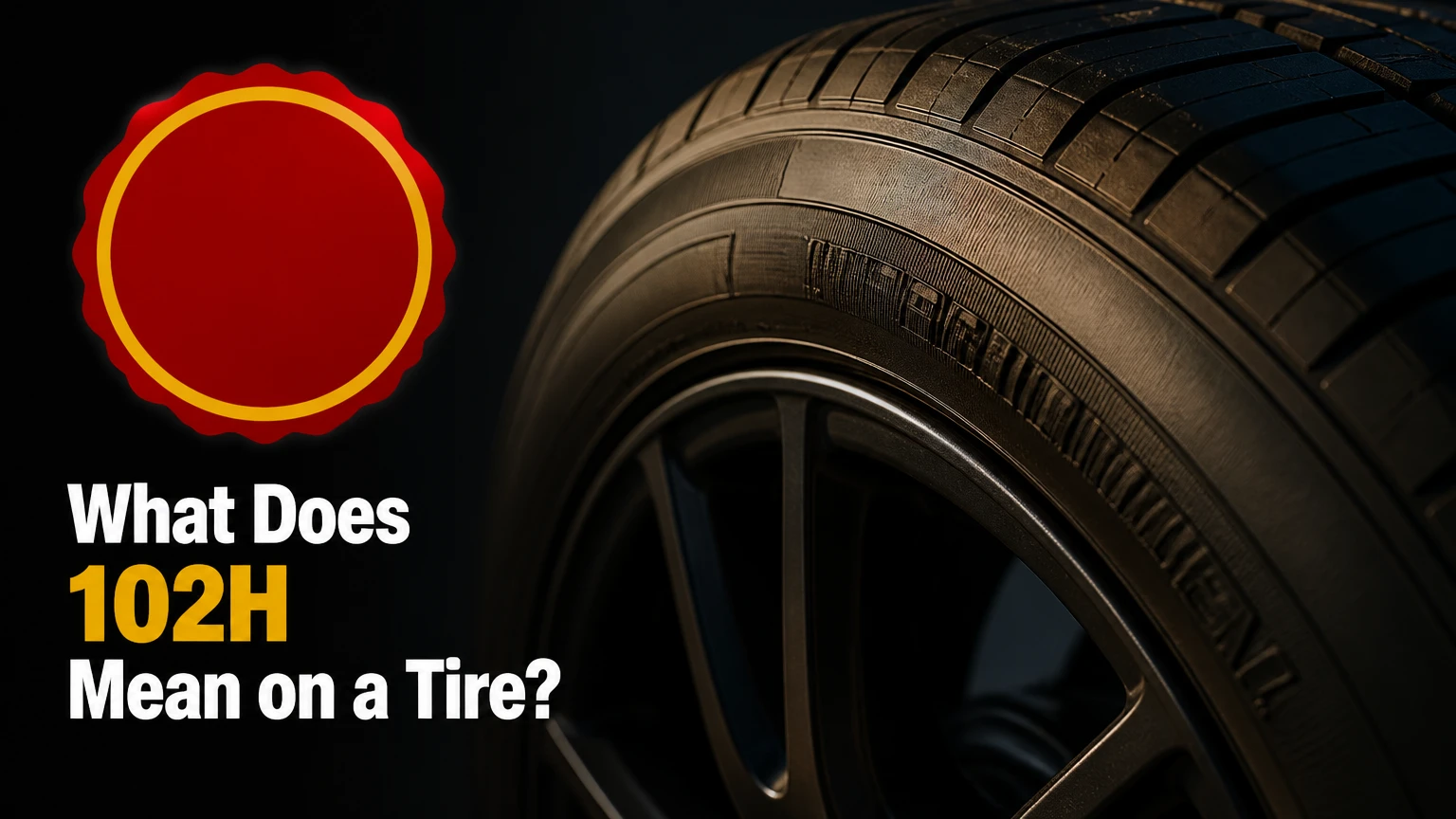
On a tire, the designation 102H is a standardized service description representing the tire’s maximum load capacity and safe speed limit. The number 102 is the load index, indicating a maximum weight capacity of 850 kg or 1,874 pounds per tire. The letter H is the speed rating, indicating a maximum safe speed of 210 km/h or 130 mph.
At a Glance: Key 102H Tire Facts
- Load Index (102): Supports up to 850 kg (1,874 lbs) per individual tire under proper inflation.
- Speed Rating (H): Certified for continuous operation up to 210 km/h (130 mph) in laboratory testing.
- Axle Capacity: Two 102H tires combined support a maximum axle weight of 1,700 kg (3,748 lbs).
- Full Vehicle Limit: Four 102H tires support a combined vehicle weight rating up to 3,400 kg (7,496 lbs).
- Pressure Dependency: Achieving the full 850 kg rating requires correct air pressure, typically 36 psi for Standard Load or 42 psi for Extra Load variants.
What Does the Load Index Number 102 Actually Stand For?
The load index number 102 is an industry-standard numeric code assigned by organizations like the European Tyre and Rim Technical Organisation to designate a specific maximum carrying capacity. This code does not represent pounds or kilograms directly. Instead, lookup tables correlate the code 102 with an absolute maximum weight limit of 850 kg (1,874 lbs) per tire.
This rating assumes the tire is mounted correctly, balanced, and inflated to its specified maximum pressure threshold. Exceeding this numerical limit alters the structural integrity of the internal steel belts and polyester cords. Vehicle manufacturers choose tires with a load index that meets or exceeds the Gross Axle Weight Rating specified on the driver-side door jamb placard.
What Does the Speed Rating Letter H Indicate in Real-World Driving?
The letter H indicates a certified speed rating established through rigorous laboratory testing where the tire is pressed against a high-speed steel drum. An H-rated tire can safely maintain speeds up to 210 km/h (130 mph) for sustained periods without suffering catastrophic heat separation.
This rating places the tire in the mid-tier performance category, common for mid-size sedans, crossovers, and sport utility vehicles. While the laboratory test proves the tire can handle 130 mph, this metric serves as an engineering benchmark rather than a driving recommendation. Local speed laws, weather conditions, mechanical wear, and traffic dynamics always dictate safe operating speeds.
How Much Weight Can a 102H Tire Safely Support Per Axle?
Two 102H tires combined on a single axle can safely support a maximum weight of 1,700 kg (3,748 lbs). When scaling this across all four positions, four matching 102H tires support a total vehicle weight of 3,400 kg (7,496 lbs).
Vehicle owners must compare these totals against the Gross Vehicle Weight Rating listed on the vehicle certification label. If a loaded vehicle exceeds 3,400 kg total weight, or if heavy cargo causes one axle to exceed 1,700 kg, the tires operate in an overloaded state. Overloaded tires experience rapid tread wear, excessive sidewall flex, and dangerous heat accumulation.
What Is the Difference Between a Standard Load and an Extra Load 102H Tire?
A 102H tire can be manufactured as either a Standard Load or an Extra Load variant, with both carrying the exact same 850 kg maximum weight capacity. The structural difference lies in the internal casing construction and the air pressure required to achieve that maximum weight limit.
Standard Load tires reach their 850 kg capacity at an inflation pressure of 36 psi (2.5 bar). Extra Load tires feature reinforced sidewalls and internal plies, requiring a higher inflation pressure, typically 42 psi (2.9 bar), to reach that exact same 850 kg capacity. Replacing an Extra Load tire with a Standard Load tire while maintaining lower air pressure leaves the vehicle structurally under-supported.
Why Do P-Metric 102H Tires Require a Load Derating on Trucks?
Passenger metric tires, identified by a P prefix like P245/65R17 102H, require a 9.1% load capacity reduction when installed on pickup trucks, vans, or utility vehicles. International tire safety standards mandate this derating because truck suspensions create higher side-load forces and harsher structural stress than standard passenger cars.
The math reduces the nominal 850 kg capacity down to 773 kg (1,704 lbs) per tire. Ignoring this rule means a truck loaded to its maximum capacity places excessive stress on passenger-rated tires, increasing the risk of premature failure. Drivers utilizing light trucks should ideally select LT-designated metric tires rather than passenger equivalents.
Can I Replace My Factory Tires with a Higher Load Index or Speed Rating?
Yes, upgrading to a tire with a higher load index or a higher speed rating is completely safe and permitted by automotive engineers. For example, replacing a 102H tire with a 102V tire or a 105H tire maintains or improves structural safety margins.
A higher load index like 105 supports more weight (up to 925 kg), while a higher speed rating like V handles speeds up to 240 km/h (149 mph). The only noticeable downside to upgrading is a potentially firmer ride quality due to stiffer sidewall construction engineered to handle higher performance thresholds.
What Happens If I Install a Tire with a Lower Load Index or Speed Rating?
Installing a tire with a lower load index or speed rating than the vehicle manufacturer specification is dangerous and violates safety compliance standards. A lower load index means the tire cannot support the weight of the vehicle, which can cause sudden structural failure and blowouts under heavy braking or cornering.
Using a lower speed rating can also invalidate automotive insurance policies and cause vehicles to fail mandatory state safety inspections. Tire shops and technicians are legally and ethically prohibited from installing replacement tires that fail to match or exceed original equipment manufacturer minimum specifications.
How Does High Negative Camber Affect 102H Tire Load Limits?
Heavy vehicle modifications involving extreme negative camber cause tires to tilt inward at the top, concentrating the entire 850 kg load onto the inner shoulder tread. Under this uneven weight distribution, the outer half of the tread contributes very little to supporting the vehicle.
In high camber applications, the functional load index must be treated as effectively downgraded because a narrow strip of rubber bears the thermal and mechanical burden. Drivers running aggressive camber setups must monitor inner tread wear closely and maintain precise inflation pressures to prevent unexpected localized blowouts.
Why Does Under-Inflation Destroy a 102H Tire’s Weight Capacity?
Tire load capacities are entirely dependent on maintaining correct internal air pressure. If a 102H tire rated for 850 kg at 36 psi is run at an under-inflated pressure of 26 psi, its actual load capacity drops significantly.
Under-inflation causes extreme sidewall flexing during rotation. This continuous flexing generates massive internal friction and heat, separating the rubber compounds from the internal steel belts. Operating an under-inflated 102H tire under heavy loads causes structural failure long before reaching its maximum speed rating.
How Do Tire Age and Extreme Heat Compromise a 102H Speed Rating?
Speed ratings apply exclusively to new tires in pristine, undamaged condition. As a tire ages past six years, natural oxidation causes the rubber compounds to harden, dry out, and crack.
When combined with extreme environmental conditions, such as driving across hot asphalt in 45 degrees Celsius (113 degrees Fahrenheit) ambient heat, aged rubber loses its structural elasticity. A degraded 102H tire can experience catastrophic tread separation at speeds well below the certified 130 mph speed limit.
Can You Mix a 102H Tire with a Different Speed Rating on the Same Axle?
Mixing a 102H tire with a different rating, such as a 102V tire, on the same axle creates dangerous handling imbalances. Different speed ratings utilize different internal carcass stiffness and rubber compounds, which alters how each side of the vehicle flexes during cornering.
This discrepancy confuses modern electronic stability control systems, anti-lock braking sensors, and all-wheel-drive torque distribution computers. Tires on the same axle must always match in brand, size, load index, and speed rating to ensure predictable vehicle dynamics.
How Does Cargo Distribution Change the Required Tire Inflation Pressure?
Loading heavy cargo into the rear trunk or cargo bed shifts the vehicle center of gravity and increases the load on the rear axle. While the 102H tire is rated for 850 kg at a baseline pressure, vehicle manufacturers often recommend increasing rear tire inflation pressures when carrying maximum payloads.
Drivers should consult the specific tire pressure table located in the owner manual for loaded driving conditions. Raising the cold inflation pressure by a few psi for heavy hauling reduces sidewall deflection and keeps operating temperatures within safe limits.
Will Changing to an XL 102H Tire Alter My Vehicle Ride Comfort?
Switching from a Standard Load 102H tire to an Extra Load 102H tire can result in a slightly stiffer ride quality. Extra Load tires feature additional internal ply reinforcement and thicker sidewalls to support higher pressures and resist impacts.
While this reinforcement improves cornering stability and steering response, it transmits more high-frequency road vibrations into the vehicle cabin. Drivers sensitive to ride comfort should stick strictly to the original load range specified by the vehicle manufacturer unless heavy towing requires the extra structural rigidity.
How Do State Vehicle Inspections Check Tire Load and Speed Ratings?
State and regional safety inspections verify that installed tires meet the minimum load index and speed rating established on the vehicle certification label. Inspectors check the sidewall service description against manufacturer database standards during routine mechanical examinations.
If an inspection station discovers tires with a lower load index or speed rating than required, the vehicle fails inspection until compliant replacements are installed. This rule protects motorists from unsafe aftermarket modifications and maintains baseline highway safety standards.
What Should You Do If Your Door Placard Specifies a Tire Size No Longer Manufactured?
When a vehicle’s original tire size is obsolete or discontinued, owners must consult a professional tire dealer to calculate an approved Plus-Zero or Plus-One conversion. The replacement tire must maintain an equivalent or higher load index of 102 and a matching speed rating.
Professional tire charts allow technicians to cross-reference alternative aspect ratios and section widths that preserve the correct overall rolling circumference and weight capacity. Never guess alternative sizes, as incorrect volume changes affect speedometer calibration and load safety margins.
The Bottom Line
Understanding what 102H means on a tire ensures you maintain vehicle safety, structural integrity, and legal compliance. The 102 index guarantees an 850 kg weight limit per tire, while the H rating certifies speeds up to 130 mph under proper conditions. Always match or exceed factory specifications, monitor your air pressures regularly, and account for load variants like Extra Load or truck applications to prevent sudden tire failure.