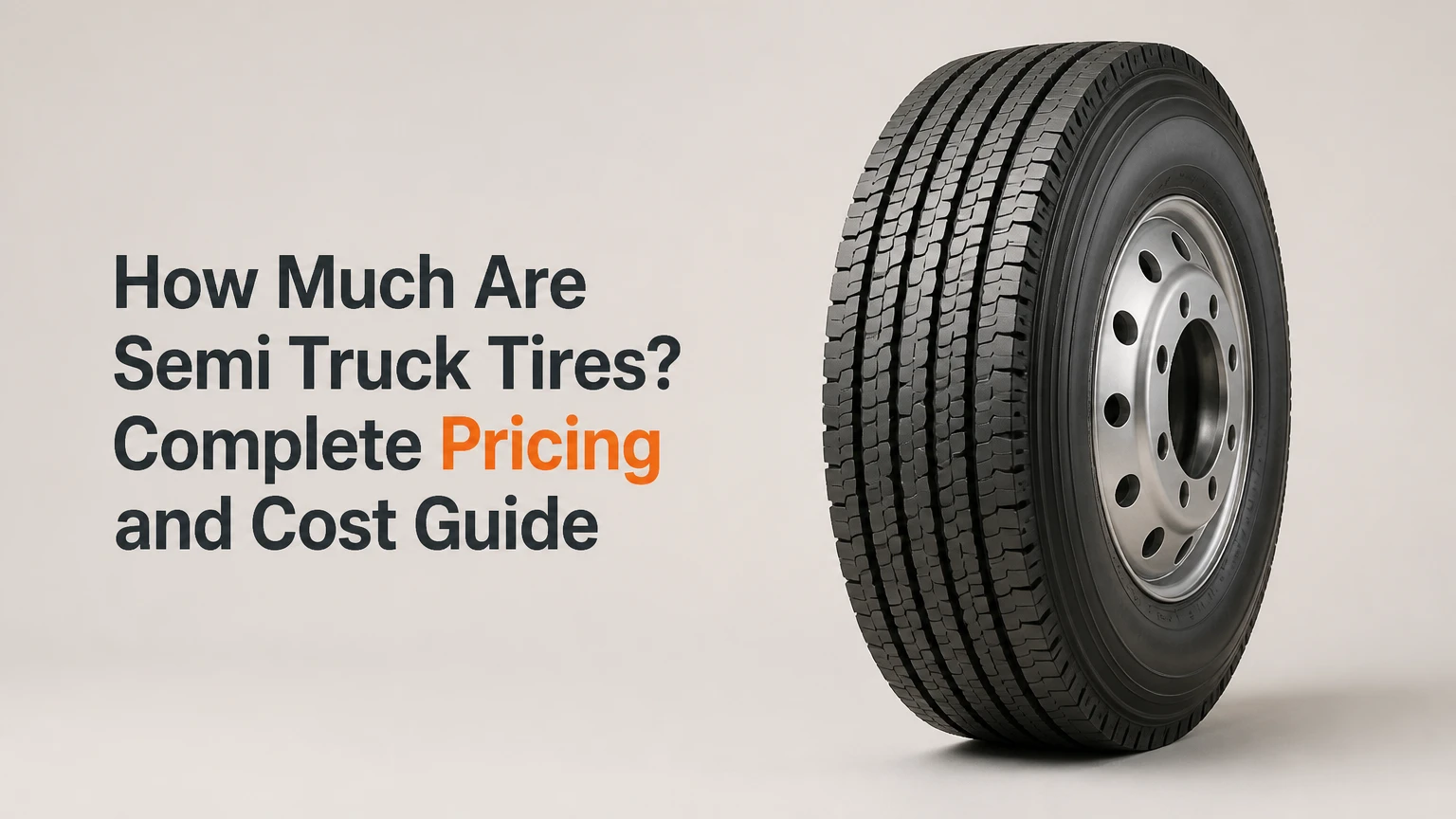
A single, brand-new semi-truck tire generally costs between $250 and $600, while premium name-brand models can reach $1,200 or more. For a standard 18-wheeler, replacing a full set of tires costs anywhere from $4,500 to $10,000+ depending on the tier of rubber selected, axle positions, and maintenance requirements.
At a Glance: Key Semi Truck Tire Facts
- A single new commercial semi-truck tire ranges from $250 to $1,200+ based on brand tier and axle placement.
- Replacing an entire set of 18-wheeler tires requires an investment between $4,500 and $10,000+.
- Steer tires demand virgin rubber and cost $400 to $800+ each for safety and legal compliance.
- Drive and trailer positions allow for high-quality retreads, which drop per-tire costs to between $150 and $250.
- Emergency roadside blowout service on a highway can inflate single-tire replacement costs to $1,000 to $1,500.
What Factors Determine the Total Cost of Semi Truck Tires?
Commercial truck tire pricing relies on a combination of engineering complexity, rubber volume, brand positioning, and manufacturing origin. Manufacturers price heavy-duty commercial rubber based on the anticipated load capacity, structural integrity of the steel casing, and targeted mileage output. Premium commercial tires utilize advanced tread compounds that lower rolling resistance, which directly improves fuel efficiency for long-haul fleets.
Conversely, budget imports cut upfront costs by using thinner sidewalls and lower-grade rubber compounds that wear out faster and cannot be reliably retreaded. Fleet operators must evaluate cost-per-mile rather than upfront purchase price to determine true tire value. A tire that costs $800 upfront but delivers 180,000 miles is significantly cheaper per mile than a $300 tire that fails at 60,000 miles.
How Much Do Steer Tires Cost Compared to Drive and Trailer Tires?
Steer tires cost between $400 and $800+ each, making them the most expensive and critical position on a commercial semi-truck. These tires manage steering feedback, directional stability, and front braking force. Regulations and safety protocols dictate that commercial trucks must use brand-new, virgin rubber on steering axles, meaning retreads are strictly prohibited on steers.
Drive tires cost between $350 and $700 each and handle engine power delivery and traction across wet or dry asphalt. They feature deep, aggressive tread blocks designed to transfer torque to the road surface.
Trailer tires cost between $250 and $500 each, representing the least expensive position on the vehicle. Trailer tires carry cargo loads smoothly and minimize rolling resistance without needing to transmit engine power or steer the rig.
What Is the Price Difference Between Tier 1, Tier 2, and Tier 3 Semi-Truck Tires?
Tier 1 premium tires from brands like Michelin, Bridgestone, and Goodyear cost $600 to $1,200+ per tire. These top-tier models deliver superior fuel mileage, exceptional wet-weather traction, and durable steel casings engineered to withstand multiple retread cycles.
Tier 2 mid-range tires from manufacturers like Yokohama, Firestone, and Toyo cost $400 to $600 per tire. These options strike a reliable balance between dependable daily performance and manageable upfront capital expenditures.
Tier 3 budget and import tires cost $150 to $350 per tire. While these off-brand options provide immediate savings for small operators, they typically yield inferior fuel economy, lower puncture resistance, and non-rebuildable casings.
How Much Do Retreaded Semi-Truck Tires Cost?
Retreaded tires, commonly known as recaps, cost between $150 and $250 per unit. Fleets utilize retreads heavily on drive and trailer positions to cut replacement rubber expenditures in half without sacrificing safety.
A retread process involves buffing away the remaining worn tread of a used, premium casing and bonding a fresh strip of rubber to the skeleton via vulcanization. Fleets that manage their own casings can continuously retread quality steel skeletons, dropping their operational cost per mile to industry-leading lows.
How Much Do Wide-Base Super Single Tires Cost?
Wide-base super single tires cost between $800 and $1,300 per tire. These massive, single wide tires replace traditional dual wheel assemblies on drive and trailer axles.
The primary financial advantage of super singles is weight reduction and improved fuel economy. By eliminating four heavy dual wheels and replacing them with two wider tires, fleets shed hundreds of pounds of dead weight, allowing trucks to haul heavier paying cargo loads while burning less diesel fuel per mile.
What Hidden Fees Should You Expect When Buying Commercial Truck Tires?
The sticker price of commercial truck tires rarely matches the final invoice due to mandatory service fees and taxes. Buyers must account for an extra $25 to $50 per tire for professional mounting, balancing, and valve stem replacement.
State and local disposal fees apply to old rubber cores, and operations in the United States must pay the Federal Excise Tax (FET) on heavy truck tires. Furthermore, shop supplies, tire pressure monitoring system (TPMS) recalibration, and core charges for unrecycled casings can quickly add up across an 18-wheel setup.
How Much Does Roadside Tire Replacement Cost During a Highway Blowout?
A roadside blowout on an interstate pushes replacement costs to between $1,000 and $1,500 for a single tire. Standard shop pricing disappears the moment a commercial truck strands a driver on the highway shoulder.
Emergency mobile service calls incur steep dispatch fees, hourly labor rates for roadside technicians, nighttime or weekend surcharges, and a premium markup on the replacement tire supplied by the service truck. Minimizing these catastrophic expenses requires proactive daily pre-trip inspections and active tire pressure monitoring.
How Much Do Specialized Vocational and Heavy-Haul Truck Tires Cost?
Specialized vocational and heavy-haul truck tires cost between $800 and $1,500+ per tire. Standard highway tire advice fails completely for trucks operating in logging, construction, mining, or heavy-equipment transport.
These severe-service environments require specialized, cut-resistant compound treads and reinforced multi-ply sidewalls to prevent sharp rocks, debris, and jagged terrain from puncturing the casing. Although these tires are expensive and wear out faster in rugged dirt and gravel conditions, standard highway tires would disintegrate within days in the same environments.
How Long Do Semi-Truck Tires Last?
Steer tires typically last between 100,000 and 150,000 miles before reaching legal tread limits. Drive tires and trailer tires last roughly 100,000 to 120,000 miles in first-life usage under optimal highway conditions.
However, drive and trailer casings frequently exceed 300,000 to 400,000 total cumulative miles through scheduled retread maintenance cycles. Actual tire lifespan fluctuates dramatically based on cargo weight, regional climate temperatures, driver habits, and adherence to proper inflation schedules.
Can You Legally Run Retreaded Tires on a Semi-Truck?
Federal laws in the United States prohibit using retreaded tires on the steering axle of buses, but they are technically legal on truck steering axles under federal commercial vehicle regulations. However, standard industry safety practices and fleet risk-management policies strictly dictate using exclusively brand-new, virgin rubber on semi-truck steer axles.
Retreads are standard, legal, and highly recommended for drive and trailer axles where a tread separation poses a lower risk of losing vehicle control.
How Many Times Can a Semi-Truck Tire Casing Be Retreaded?
A high-quality Tier 1 casing can be successfully retreaded 2 to 3 times if the carcass has not suffered structural punctures, bead damage, or ran under-inflated. The structural integrity of the steel belt package dictates casing longevity.
Fleets track casing health through serial numbers and inspection programs. Inspecting casings for nail holes, bruising, and liner damage ensures that only sound skeletons receive a second or third life.
What Is the Minimum Legal Tread Depth for a Semi-Truck?
The Federal Motor Carrier Safety Administration (FMCSA) requires a minimum tread depth of 4/32 of an inch on steering axles and 2/32 of an inch on all other positions. Operating any commercial vehicle with tread depths below these thresholds results in heavy fines, failed Department of Transportation (DOT) inspections, and out-of-service orders.
Professional fleets usually pull tires for replacement or retreading slightly before hitting the strict legal minimum to maintain wet-weather stopping traction and prevent hydroplaning.
How Do Poor Alignment and Worn Shocks Destroy New Semi-Truck Tires?
Worn suspension components and misaligned axles can completely cup, feather, or scrub out a brand-new $700 tire within 30,000 miles. Buying premium Tier 1 rubber is a wasted investment if a truck suffers from worn-out shock absorbers, loose kingpins, or bent axle housings.
Abnormal tire wear patterns serve as diagnostic indicators for mechanical problems. Fleets must perform regular laser alignment checks and replace worn suspension hardware to protect their investment in expensive commercial rubber.
The Bottom Line
Replacing semi-truck tires requires balancing upfront capital costs against long-term operational durability, safety regulations, and fuel economy. While a full set of 18-wheeler tires ranges from $4,500 to $10,000+, proactive maintenance, strategic selection of retreads for drive and trailer positions, and rigid alignment schedules keep total costs manageable. Fleet operators and owner-operators must analyze their specific hauling routes, weight loads, and axle requirements to maximize return on investment.