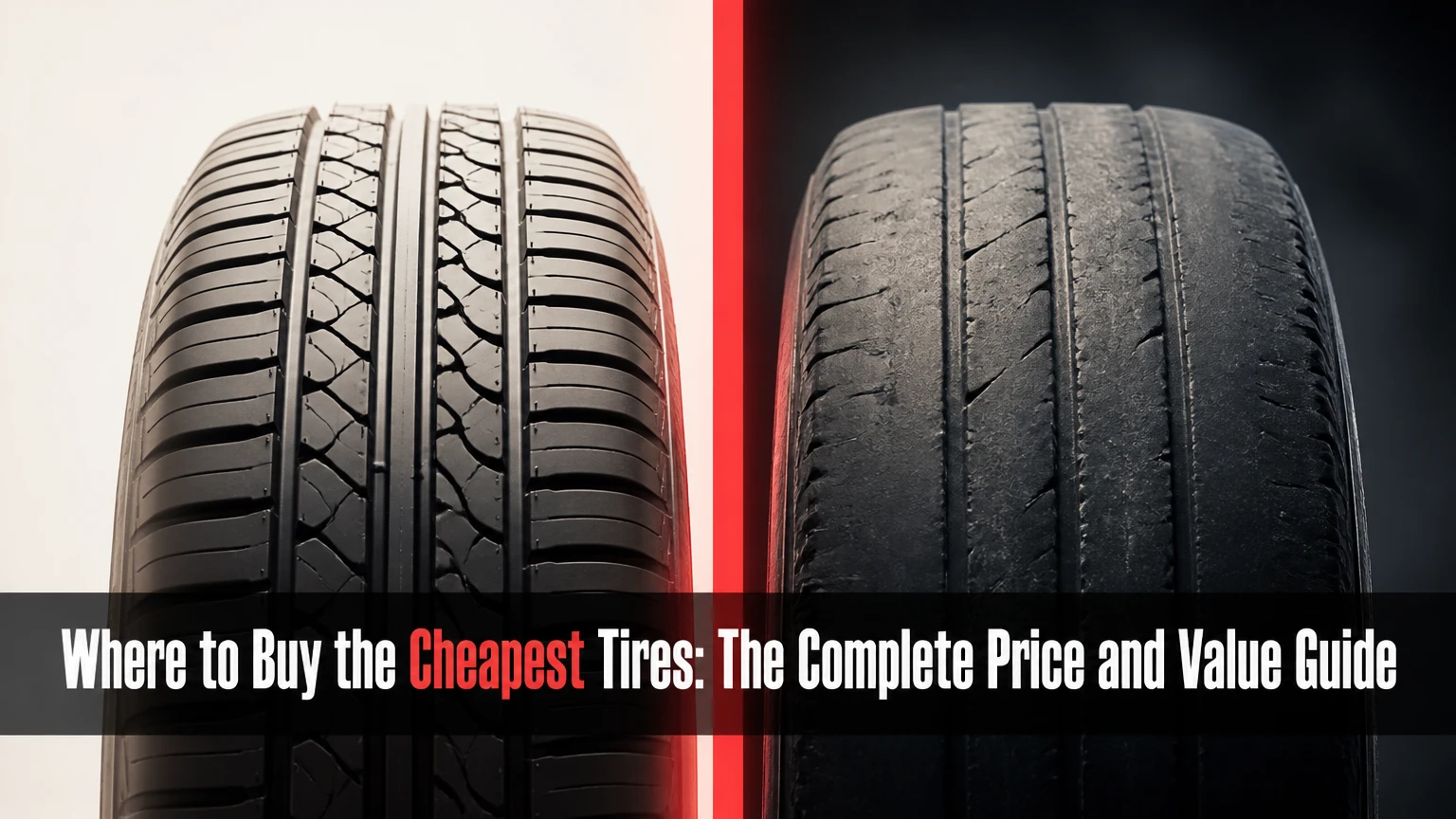
Walmart is the undisputed king for the absolute lowest out-of-pocket sticker price when buying car tires, while Discount Tire and SimpleTire provide superior overall long-term value when factoring in lifetime maintenance, free rotations, and competitive price-matching policies across economy and mid-range inventories.
At a Glance: Key Tire Buying Facts
- Walmart offers exclusive entry-level tire brands starting at $50 to $80 per tire with industry-low installation rates.
- Discount Tire provides free lifetime balancing, rotations, and road hazard protection bundled into standard installation.
- Online retailers like SimpleTire offer massive niche inventory, but buyers must factor in shipping and third-party mounting fees.
- Costco Wholesale skips low-end economy tires entirely, focusing on mid-range and premium brands with regular manufacturer rebates.
- High-mileage drivers often lose money buying the cheapest budget tires due to significantly shorter treadwear warranties.
Where to buy the cheapest tires overall?
Finding the cheapest tires requires evaluating both the upfront sticker price and the cumulative lifetime maintenance expenses associated with installation, balancing, and disposal fees. Walmart remains the top destination for strict budget buyers seeking the lowest initial checkout total, offering exclusive economy brands such as Douglas starting between $50 and $80 per tire. Their in-house Auto Care Centers charge roughly $15 to $18 per tire for standard mounting and balancing, allowing motorists to secure a brand-new set of four fully installed for under $350.
For motorists prioritizing long-term value over the lowest initial cash outlay, Discount Tire stands out by offering promotional entry-level options like Sailun and Vantage alongside comprehensive service perks. While their installation fees run slightly higher at $20 to $22 per tire, every installation includes free lifetime rotations and flat repairs, which saves drivers hundreds of dollars over the active lifespan of the tread.
How do total out-of-pocket costs break down across retailers?
Calculating the true out-of-pocket cost of replacement tires demands a comprehensive line-item breakdown that aggregates base retail pricing, environmental disposal fees, valve stem replacements, and local shop labor charges. Discount retailers structure their pricing models differently, creating distinct cost tiers across the industry:
- Walmart: $50 to $80 per tire base cost plus $15 to $18 installation. Total estimated set cost: $320 to $400.
- Discount Tire: $50 to $90 per tire base cost plus $20 to $22 installation (includes free lifetime maintenance). Total estimated set cost: $360 to $480.
- SimpleTire / Tires Easy: $45 to $75 per tire base cost plus shipping charges and $25 to $35 third-party shop installation. Total estimated set cost: $380 to $500.
- Costco Wholesale: $130 to $170 per tire base cost (mid-range to premium brands only) plus $20 per tire installation. Total estimated set cost: $600 to $800 before manufacturer rebates.
What are the hidden installation and disposal fees to watch out for?
Hidden shop fees routinely inflate online or budget tire purchases by $60 to $100 per set if motorists fail to request an itemized out-the-door price quote before authorizing service. Standard brick-and-mortar garages and warehouse clubs charge mandatory state tire disposal fees ranging from $2 to $5 per tire to recycle old rubber safely. Furthermore, shops frequently charge separate fees for replacing worn TPMS (Tire Pressure Monitoring System) service kits, new rubber valve stems, and nitrogen inflation upgrades. Always demand a written estimate that explicitly incorporates mounting, balancing, disposal, and tax to prevent surprise charges at the cash register.
Can I buy tires online and have a local shop install them?
Online e-retailers like SimpleTire and Tires Easy allow consumers to purchase discount tires online and ship them directly to a local contracted partner garage for professional installation. During the online checkout workflow, the platform prompts the user to enter their ZIP code, displays a network of approved local installation centers, and locks in pre-negotiated installation rates. Once the shipment arrives at the shop, the customer receives an automated notification to schedule their appointment, streamlining what used to be a fragmented logistics process.
Are Walmart budget tires lower quality than standard retail versions?
Walmart frequently stocks specialized, value-engineered tire lines manufactured specifically for mass-retail distribution by major tier-one manufacturers like Goodyear to maintain exceptionally low price points. These specialized budget variations often feature slightly shallower tread depths or shorter official treadwear mileage warranties compared to the identical brand’s premium tier sold at dedicated tire dealerships. While entirely safe and DOT-compliant, these entry-level tires may wear out 15 to 20 percent faster than standard commercial-grade alternatives.
Are used tires a safe way to save money?
Used tires rarely represent a safe or financially sound investment because their structural history, internal cord integrity, and prior impact damage remain completely unknown to the buyer. Although a secondhand tire might cost only $30 to $40, internal belt separation or hidden sidewall bruising can cause catastrophic blowout failures at highway speeds. Drivers who must purchase used tires due to severe financial constraints must meticulously inspect the tread depth with a gauge and verify the DOT manufacturing date stamp to ensure the rubber is not dangerously degraded.
How do I read tire DOT date codes to avoid buying expired rubber?
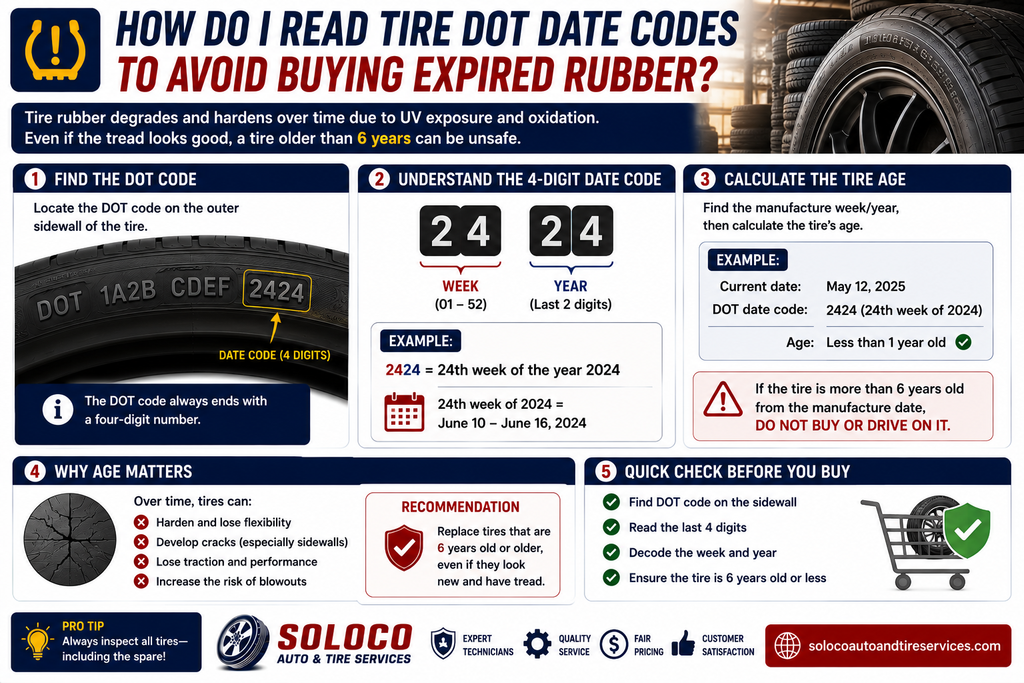
Tire rubber chemically degrades and hardens over time due to UV exposure and oxidation, making it unsafe regardless of remaining tread depth if the tire exceeds six years of age. Consumers can identify the exact manufacture date by locating the Department of Transportation (DOT) code stamped on the outer sidewall, which ends in a four-digit numerical sequence. The first two digits represent the manufacturing week, and the final two digits indicate the manufacturing year. For example, a code ending in 2424 signifies that the tire was manufactured during the 24th week of the year 2026. Never purchase or drive on tires where this stamp indicates an age older than six years.
Is the road hazard warranty worth the extra cost?
Road hazard protection warranties are well worth the modest out-of-pocket expense if you regularly navigate urban potholes, construction zones, or debris-heavy roadways. While online discounters and budget retailers charge an extra $10 to $15 per tire for standalone hazard certificates—which cover free replacement or repair if a tire is destroyed by a nail or road hazard—retailers like Discount Tire and Costco bundle basic road hazard coverage directly into their standard installation packages at no additional charge.
When does buying the cheapest tire actually cost more money?
Buying the absolute cheapest budget tire frequently backfires for high-mileage drivers because low-end models feature shorter mileage warranties that force premature replacement. A $60 budget tire with a 40,000-mile warranty costs approximately $0.015 per mile driven. Conversely, a higher-end $130 premium tire backed by an 80,000-mile treadwear warranty drops the cost per mile down to $0.016, but eliminates the labor cost, alignment checks, and downtime of purchasing a second set twice as often. Motorists driving more than 15,000 miles annually achieve a lower cost per mile by investing in mid-range tires with extended tread warranties.
Are economy tires safe for electric vehicles?
Economy tires cannot withstand the immense vehicle weight and instant high-torque power delivery characteristic of modern electric vehicles without experiencing accelerated, uneven tread destruction. Electric vehicles like Teslas or heavy SUVs place extraordinary loads on contact patches, causing cheap economy tires to wear down completely in fewer than 15,000 miles while compromising handling stability and regenerative braking efficiency. EV owners must install specialized Low Rolling Resistance (LRR) tires reinforced with high-load sidewalls designed specifically for electric mobility.
How do seasonal weather changes dictate tire purchasing rules?
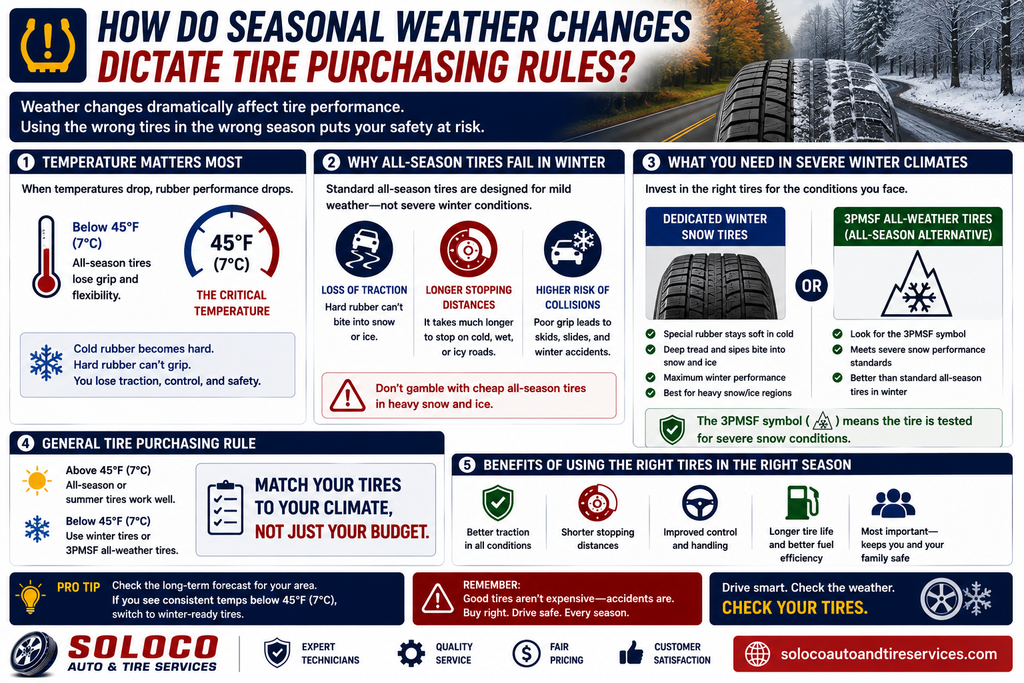
Standard all-season budget tires lose chemical grip and flexibility entirely when ambient temperatures consistently drop below 45°F (7°C), making them a severe safety liability in regions experiencing heavy winter snow and ice. Motorists living in northern climates cannot rely on cheap all-season rubber without risking loss of traction, longer stopping distances, and winter collisions. Drivers facing severe winter climates must allocate budget for dedicated winter snow tires or certified Three-Peak Mountain Snowflake (3PMSF) all-weather tires.
What is the absolute cheapest month to buy tires?
The cheapest months to purchase new car tires are April and October, corresponding directly with nationwide manufacturer promotional rebate cycles. During April, tire brands launch spring rebate campaigns to incentivize drivers preparing for summer road trip season. During October, manufacturers release major mail-in rebates and instant discounts to clear out inventory ahead of the winter tire surge, often saving buyers $70 to $150 instantly on a set of four.
How do tire load index and speed ratings affect the final price?
Tire load index ratings and speed letter codes dictate the engineering complexity of the internal carcass plies, directly driving up the retail cost of the tire. A tire rated with a high load capacity and a high speed rating (such as V or W) utilizes advanced synthetic reinforcing belts to prevent tread separation at high velocities, costing significantly more than a standard T-rated passenger car tire. Motorists must never downgrade their vehicle’s factory-specified speed or load rating to save money, as doing so compromises structural safety during emergency maneuvers.
Are budget sub-brands manufactured by major tire companies reliable?
Budget sub-brands owned and manufactured by tier-one tire giants—such as General Tire (owned by Continental) or Firestone (owned by Bridgestone)—offer exceptional reliability because they inherit advanced rubber compounding technology from their parent companies. Purchasing a tier-two or tier-three sub-brand provides a dependable middle ground for budget-conscious consumers who want dependable wet-braking performance without paying the premium markup associated with flagship brand names.
When is it safe to patch a tire instead of buying a brand-new set?
Professional tire repair is safe and viable only when a puncture occurs squarely within the central tread area and measures less than one-quarter of an inch in diameter. Industry safety standards strictly prohibit plugging or patching any puncture located on the tire sidewall or shoulder, as flexing structural cords in these zones cannot support an internal patch. Furthermore, driving on a tire while completely deflated ruins the inner liner, rendering it unrepairable regardless of where the puncture occurred.
Which credit card rewards or cash-back programs lower tire purchase costs?
Stacking major retailer purchases with specialized cash-back credit cards, wholesale membership rewards, and manufacturer portal apps lowers effective tire purchase costs by an additional 2 to 5 percent. Consumers purchasing tires through warehouse clubs like Costco or Sam’s Club can utilize membership-linked cash-back credit cards to earn annual reward certificates, while online shoppers can activate browser extension cash-back portals on sites like SimpleTire to secure direct percentage rebates on their final invoice.
The Bottom Line
Finding the cheapest tires requires balancing immediate checkout savings at retailers like Walmart against the long-term value and free maintenance perks offered by Discount Tire and online e-retailers. Motorists must evaluate their annual mileage, local climate, and vehicle weight requirements before purchasing entry-level rubber. Always calculate the fully installed out-the-door price—incorporating mounting, balancing, and disposal fees—to ensure your budget tire purchase does not result in hidden expenses.


