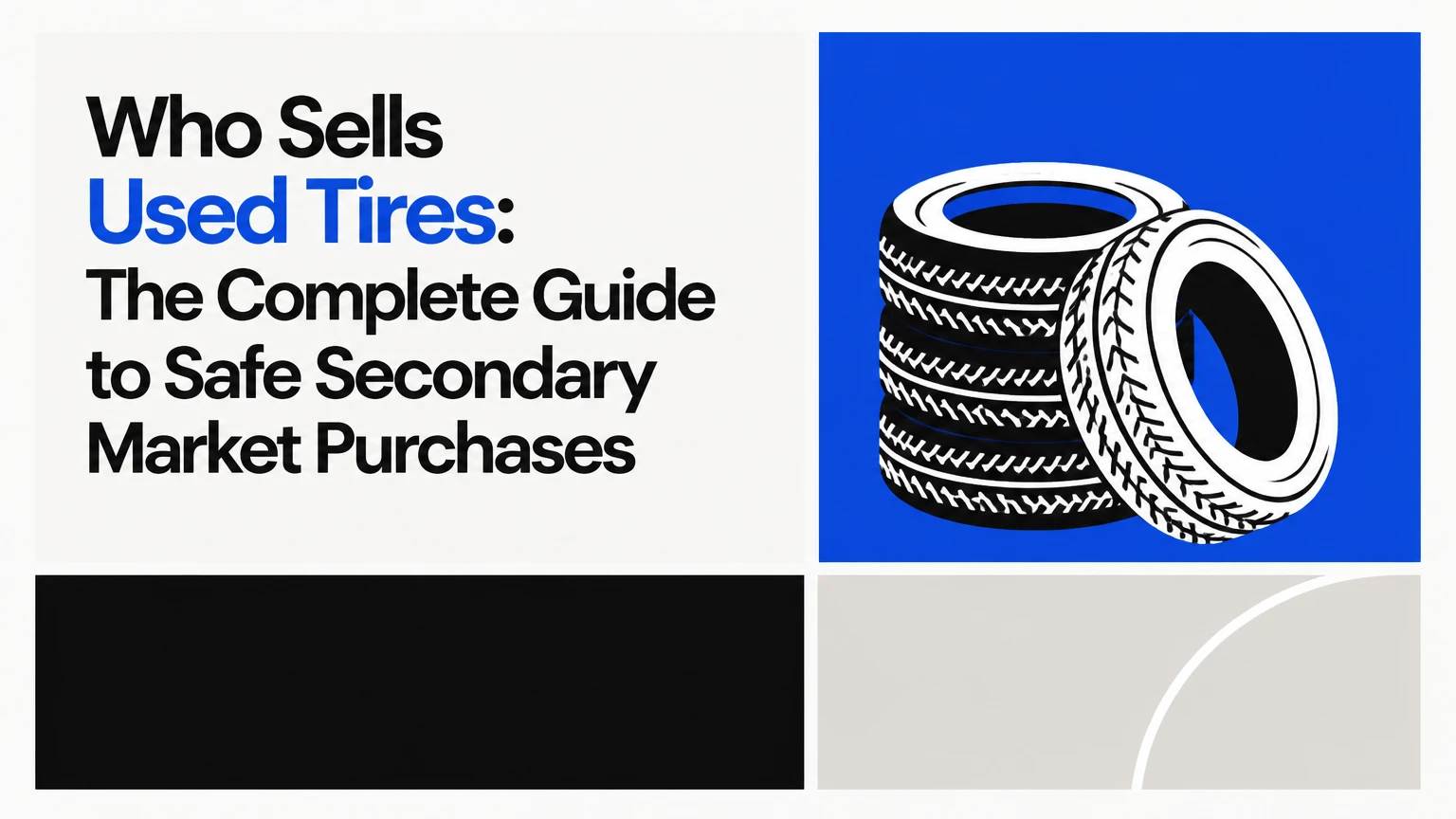
Used tires are secondary market automotive components sold primarily through local independent shops, online aggregators, and salvage yards at 30% to 50% of the cost of new tires. Prices typically range from $25 to $75 per tire, providing a cost-effective solution for single-tire replacements and budget-conscious drivers.
At a Glance
- Independent local tire shops and specialized llanteras are the largest source of inventory, acquiring stock from salvage and trade-ins.
- The absolute minimum acceptable tread depth for a safe used tire is 4/32 of an inch.
- Tires older than 6 years from their manufacture date should be avoided due to chemical rubber oxidization.
- Online aggregators like United Tires ship nationwide with digital tread depth verification.
- Auto salvage yards offer the lowest prices ($15 to $40) but provide zero quality guarantees or installation services.
- All-Wheel Drive vehicles require matching tread depths across all four tires to prevent expensive differential damage.
Where can I buy reliable used tires near me?
Local independent tire shops, commonly known as llanteras or mom-and-pop service stations, are the most reliable local source for inspected used tires. These businesses acquire inventory from trade-ins, wholesale liquidators, and local salvage auctions, often mounting and balancing the tires on-site for an all-inclusive price.
Automotive salvage yards and pick-your-part junkyards represent the lowest-cost local alternative, where buyers pull tires directly from totaled donor vehicles for $15 to $40. However, salvage yards do not test tires for internal structural integrity, and buyers must perform manual inspections. National retail chains such as Discount Tire or Firestone generally do not sell used tires due to liability policies, though they occasionally stock factory take-offs removed from new vehicles immediately after purchase.
How much do used tires cost with installation?
Used tires typically cost between $25 and $75 per tire, with total expenses varying based on tire size, brand tier, and local labor rates. Premium performance or light truck tires sit at the higher end of the pricing spectrum, while standard passenger car tires in sizes like 15-inch or 16-inch lean toward the lower end.
Installation fees, which cover mounting, balancing, and old tire disposal, typically add $15 to $30 per tire if not bundled into the purchase price. When calculating total savings compared to buying a new set, buyers must factor in whether mounting and balancing are included in the quoted sticker price.
What is the minimum legal and safe tread depth for used tires?
The absolute minimum safe and legal tread depth for a used tire is 4/32 of an inch, while 2/32 of an inch is legally bald and hazardous. Brand new tires start at 10/32 to 12/32 of an inch of tread depth.
Tires measuring between 7/32 and 9/32 of an inch offer excellent condition and retain roughly 60% to 70% of their original lifespan. Tires with 5/32 to 6/32 of an inch represent average used condition, giving drivers one to two additional seasons of normal commuting. Any tire measuring under 4/32 of an inch should be rejected immediately because stopping distances on wet roads increase exponentially below this threshold.
How do I check the age of a used tire using the DOT code?
The age of a used tire is verified by locating the four-digit Department of Transportation (DOT) code stamped on the outer sidewall. The final four numbers indicate the exact week and year of manufacture, such as code 3521, which designates the 35th week of 2021.
- Under 4 years old: Safe to purchase and install for normal daily driving.
- 5 to 6 years old: Acceptable only if heavily discounted and free of rubber dry rot or sidewall cracking.
- 6+ years old: Do not buy under any circumstances because chemical rubber degradation compromises structural integrity over time.
Can I buy a single used tire for my car?
Yes, buying a single used tire is a common practice when a single tire is damaged by a nail, pothole, or blowout while the remaining three tires have plenty of tread remaining. To protect vehicle handling, the replacement used tire must match the exact brand, load rating, speed rating, and tread depth of the opposing tire on the same axle.
For All-Wheel Drive vehicles like Subarus or Audi Quattros, tread depth matching is critical. All four tires must have tread depths within 2/32 of an inch of each other to prevent permanent overheating and catastrophic damage to the vehicle center differential.
Are online used tire retailers safe and reliable?
Online used tire aggregators such as United Tires and BestUsedTires.com provide safe, reliable transactions by using digital laser tread depth gauges, photographing individual inventory items, and offering customer satisfaction return windows. These platforms inventory thousands of tires categorized by brand, size, and wear level, shipping them directly to the buyer’s home or preferred local mechanic.
The primary disadvantage of buying online is paying separate shipping fees and local installation costs, which can close the price gap between used tires and budget-friendly new tires. Buyers should verify that online vendors provide a clear return policy in case a delivered tire fails a mechanic’s balance test.
What are the hidden dangers of buying used tires?
Internal belt separation caused by severe pothole impacts represents the most dangerous hidden defect in used tires. A tire can display a thick, healthy tread pattern on the outside while harboring broken internal steel belts that deform and rupture under normal highway air pressure.
Uneven wear patterns, such as cupping or feathering caused by bad wheel alignments on the donor vehicle, create loud road vibrations and premature tread destruction. Additionally, tires exposed to long periods of direct sunlight develop micro-cracks in the rubber compound known as dry rot, which weakens the sidewall and increases blowout risks.
How do I inspect a used tire for internal damage before buying?
- Run your bare palm and fingers along the entire inner liner of the tire to feel for hidden bulges, lumps, or undulating ridges caused by separated internal carcass plies.
- Examine the inner and outer bead areas where the rubber seals against the metal wheel rim for deep gouges or exposed steel reinforcement wires.
- Smell the inside of the tire cavity to detect chemical odors or powdery residue associated with aerosol flat-fix sealants, which degrade rubber over time.
- Check the tread grooves with a digital or manual depth gauge in multiple spots across the width of the tire to verify even wear.
Should I buy used run-flat tires?
No, drivers should never purchase used run-flat tires because their internal structural condition is impossible to verify visually. Run-flat tires are engineered with reinforced sidewalls designed to support vehicle weight temporarily after a complete loss of air pressure.
If the previous owner drove on a deflated run-flat tire even for a short distance, the internal sidewall structure suffers severe thermal and mechanical degradation, accumulating black rubber dust inside the casing while the exterior appears entirely undamaged.
Are used tires safe for highway driving and long road trips?
Used tires are safe for highway driving and long road trips provided they meet strict quality standards, including possessing more than 4/32 of an inch of even tread, being under 6 years old, and passing a professional pressure test. Tires with structural compromise or advanced age ratings are prone to rapid tread separation at sustained high speeds.
Drivers planning long road trips should prioritize new budget tires over used alternatives if the price differential is minimal, as continuous high-temperature friction accelerates the degradation of aged rubber compounds.
Do used tires come with any warranty or return policy?
Online used tire mega-retailers typically provide a 30- to 90-day return policy or defect guarantee, allowing customers to exchange products that fail to balance properly. Local independent mom-and-pop shops usually offer a gate warranty, meaning all sales are final once the vehicle departs the premises, though some shops provide a 7- to 14-day replacement window for air leaks.
Buyers should always clarify warranty terms with the seller before payment and request a receipt specifying the exact tread depth measurements recorded at the time of sale.
How much should tire mounting and balancing cost?
Professional tire mounting, computerized wheel balancing, and old tire disposal fees should cost between $15 and $30 per tire at independent service stations. Some discount used tire shops skip the dynamic wheel balancing step to save time, which causes severe steering wheel vibrations at highway speeds.
Drivers should ensure that the installation quote explicitly includes computerized spin balancing and brand-new valve stems to prevent slow air leaks.
What is the UTQG rating and why does it matter for used tires?
The Uniform Tire Quality Grade (UTQG) rating stamped on the tire sidewall indicates a tire performance across three metrics: treadwear, traction, and temperature resistance. The treadwear number, such as 400 or 700, measures how long a tire lasts compared to a government-regulated baseline tire rated at 100.
When buying used tires, a tire with 5/32 of an inch tread depth and a high UTQG treadwear rating of 600 often outlasts a tire with 7/32 of an inch tread depth from a cheap brand rated at 200. Evaluating the UTQG rating prevents buyers from purchasing soft compound tires that wear out prematurely.
When should you never buy a used tire?
Drivers must never purchase a used tire that exhibits any sign of sidewall bubbling, patch repairs located within half an inch of the bead shoulder, exposed internal fabric cords, or severe dry cracking in the tread grooves. Furthermore, tires lacking a readable DOT manufacture code or showing signs of chemical sealant contamination must be rejected.
Purchasing compromised used rubber eliminates initial cost savings when a structural failure leads to sudden air loss, wheel damage, or dangerous loss of vehicle control at high speeds.