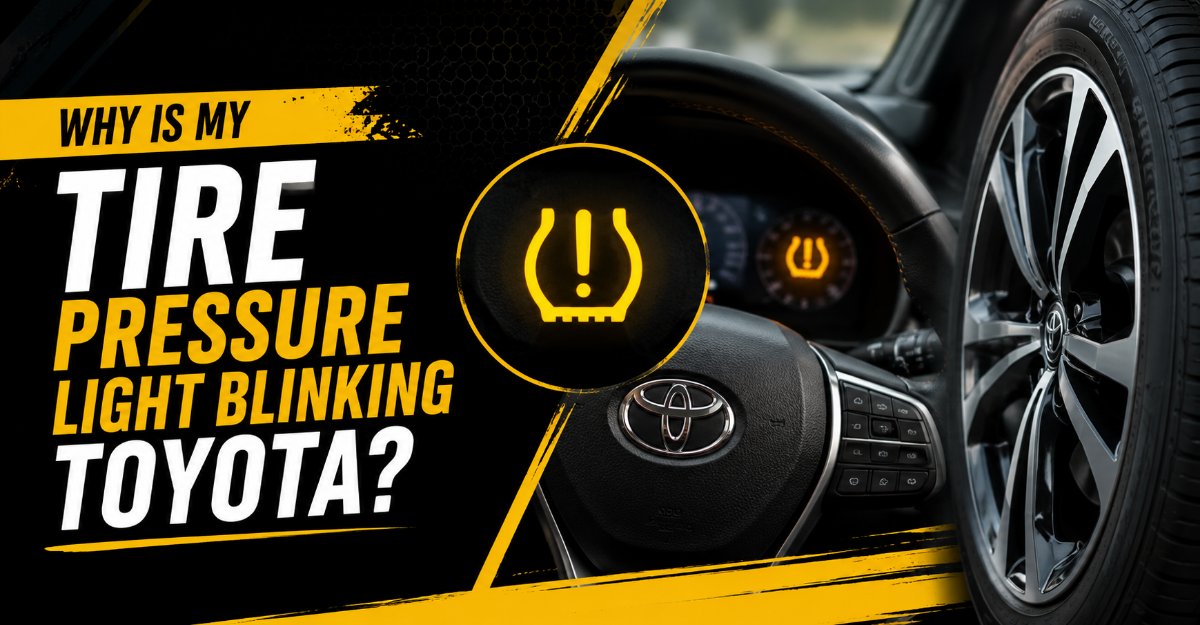
A blinking tire pressure light on a Toyota indicates a system malfunction where the vehicle computer cannot communicate with one or more tire sensors. The light will flash for 60 to 90 seconds upon startup before turning solid. This usually means a sensor battery has died or a sensor was damaged.
At a Glance:
- A solid TPMS light means low tire pressure; a blinking light means hardware communication failure.
- Toyota TPMS sensor batteries typically last between 5 and 10 years before requiring replacement.
- Dead sensor batteries cannot be swapped out because they are permanently sealed in epoxy resin.
- Replacing a single Toyota TPMS sensor costs between $50 and $150 including parts and labor.
- Attempting a manual dashboard reset on a blinking light will permanently lock the computer in an initialization loop.
What is the difference between a blinking and solid TPMS light?
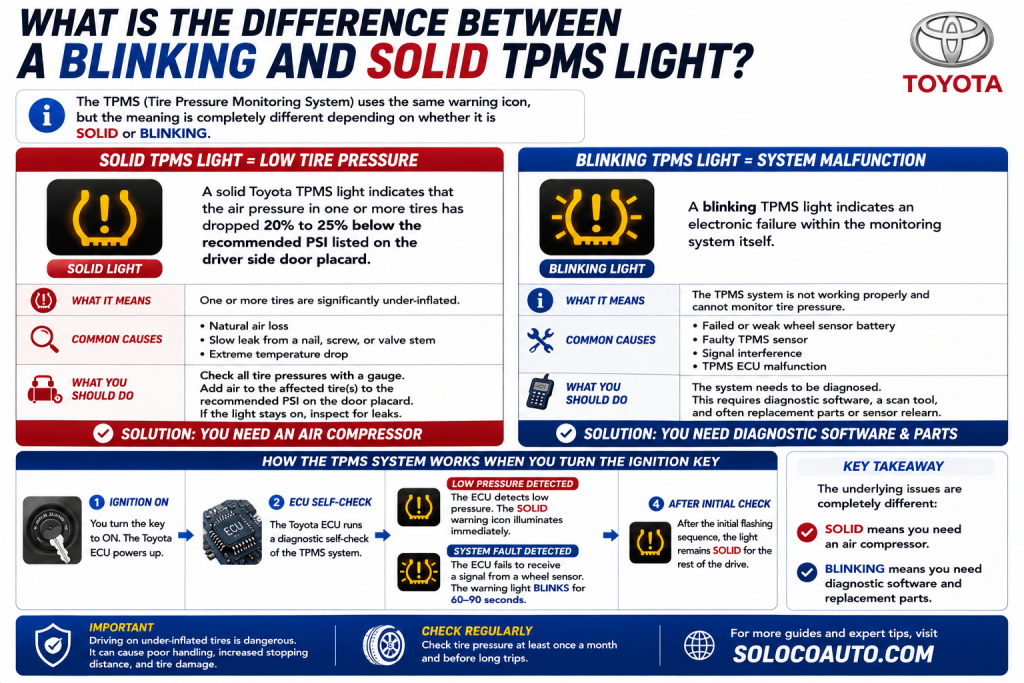
A solid Toyota TPMS light indicates that the air pressure in one or more tires has dropped 20% to 25% below the recommended PSI listed on the driver side door placard. A blinking TPMS light indicates an electronic failure within the monitoring system itself.
When you turn the ignition key, the Toyota Electronic Control Unit (ECU) runs a diagnostic self-check. If the ECU detects low pressure, it illuminates the solid warning icon immediately. If the ECU fails to receive a radio signal from a wheel sensor, it flashes the warning light for roughly 60 to 90 seconds.
After this initial flashing sequence, the light remains solid for the rest of the drive. The underlying issues are completely different: solid means you need an air compressor, while blinking means you need diagnostic software and replacement parts.
How long do Toyota TPMS sensor batteries last?
Toyota tire pressure sensor batteries last between 5 and 10 years. The exact lifespan depends heavily on driving frequency, climate, and the total mileage of the vehicle.
The lithium-ion batteries sealed inside the sensors only transmit data while the vehicle is in motion to conserve power. A vehicle driven constantly at highway speeds will deplete its sensor batteries closer to the 5-year mark. A vehicle driven infrequently in mild weather might stretch that lifespan to 10 years. Once a Toyota reaches this age bracket, a blinking TPMS light is almost always the result of a dead sensor battery.
Why does the light blink on cold mornings and then turn off?
The tire pressure light blinks on cold mornings and turns off later because freezing temperatures temporarily drop the voltage output of a weak sensor battery. This is known as the warm up glitch.
When a lithium-ion sensor battery nears the end of its life, cold weather pushes its voltage below the minimum threshold required to transmit a signal to the Toyota ECU. This triggers the flashing dashboard light upon startup. As the vehicle drives, centrifugal force and friction from the road surface warm up the tire interior. This internal heat slightly boosts the battery voltage, restoring the radio signal. The light will suddenly turn off mid-drive. This phenomenon serves as an early warning sign that the TPMS sensor will completely fail in the near future.
Does the Toyota spare tire trigger the TPMS light?
Yes, the spare tire triggers the TPMS light on many larger Toyota models. Vehicles like older Toyota RAV4s, 4Runners, Sequoias, and Land Cruisers feature a full-size spare tire mounted under the chassis or on the rear door.
Toyota installs a live, matching TPMS sensor inside this hidden fifth wheel. If the spare tire loses air pressure over time or its internal sensor battery dies, the dashboard light will activate. Drivers often check the four primary tires, find them perfectly inflated, and remain baffled by the system alert. Mechanics always advise checking the physical air pressure and the sensor signal of the spare tire before assuming a major system fault exists.
Can electronic devices cause a blinking tire pressure light?
Electronic devices can cause a blinking tire pressure light by jamming the radio frequency used by the TPMS sensors. Toyota sensors transmit data to the vehicle computer using standard 315MHz or 433MHz radio frequencies.
Plugging cheap electronics, aftermarket dashcams, or specific wireless chargers into the 12V accessory outlets can emit electromagnetic interference. This interference physically blocks the weak radio signal coming from the wheels. The vehicle computer assumes the sensors are broken and triggers a temporary, phantom blinking light. This specific problem disappears completely when the vehicle is turned off or when the offending electronic device is unplugged from the dashboard.
Why did my tire light start flashing after installing new tires?
The tire pressure light starts flashing after installing new tires because technicians either physically broke a sensor or failed to program the new sensor IDs into the vehicle computer.
Tire changing machines apply immense pressure to the bead of the tire. Inexperienced technicians frequently snap the delicate plastic or aluminum sensor bodies when dismounting the old rubber. Alternatively, if a shop installed brand new sensors, those sensors do not automatically sync with the vehicle.
The technician must manually program the new 8-digit or 10-digit hexadecimal sensor ID codes into the Toyota computer using a dedicated OBDII programming tool. If this programming step is skipped, the car will not recognize the new wheels.
Can you replace the battery inside a Toyota TPMS sensor?
No, you cannot replace the battery inside a Toyota TPMS sensor. You must purchase and install an entirely new sensor unit.
The lithium-ion batteries are permanently encased in a hard epoxy resin inside the sensor body. Manufacturers design the sensors this way to protect the delicate electronics from moisture, road salt, and the extreme rotational G-forces experienced at highway speeds. Breaking through the epoxy to reach the battery destroys the internal circuit board.
Should I replace all four TPMS sensors if only one fails?
You should replace all four TPMS sensors when one fails due to battery age. Because all four factory sensors were installed on the assembly line at the exact same time, their batteries share identical wear and tear.
Once the first battery dies, the remaining three sensors generally fail within a few weeks or months. Replacing a TPMS sensor requires deflating the tire, breaking the bead, installing the part, and rebalancing the wheel.
Replacing all four sensors at once during a scheduled tire change saves vehicle owners heavily on repetitive dismounting and labor costs at the repair shop.
How much does it cost to fix a blinking Toyota TPMS light?
Fixing a blinking Toyota TPMS light costs between $50 and $150 per wheel. This standard price range includes the cost of the replacement sensor, the labor to dismount and remount the tire, and the digital sensor registration process.
Dealerships typically charge at the higher end of this scale because they use Original Equipment Manufacturer parts. Independent tire shops charge closer to $50 per wheel by using aftermarket universal sensors. If the vehicle simply requires a software reprogramming without new parts, shops usually charge a flat diagnostic fee ranging from $50 to $100.
Can I use aftermarket TPMS sensors on my Toyota?
Yes, you can use aftermarket TPMS sensors on a Toyota, but they come with specific programming requirements. Universal aftermarket sensors from brands like Autel or Schrader cost significantly less than factory replacements.
However, universal sensors begin as blank slates. The mechanic must use a specialized tool to clone the original Toyota sensor data and flash it onto the aftermarket part before installing it in the wheel.
If the tire shop lacks the correct cloning software, the Toyota ECU will reject the sensor. Many Toyota specialists recommend sticking with OEM sensors manufactured by Denso or Pacific Industrial to guarantee seamless communication with the vehicle computer.
Is it safe to drive a Toyota with a flashing tire pressure light?
It is safe to drive a Toyota with a flashing tire pressure light, but you lose an important automated safety feature. A blinking light means the monitoring system is completely offline.
The vehicle will drive perfectly fine mechanically. However, the computer cannot warn the driver if a tire runs over a nail and begins losing air at highway speeds. Drivers operating a vehicle with a flashing TPMS indicator must manually check their tire pressures with a handheld gauge every few days until the hardware is properly repaired.
Will a blinking TPMS light fail a state vehicle inspection?
A blinking TPMS light will fail a state vehicle inspection in certain jurisdictions, but not everywhere. The federal government mandated TPMS on all vehicles built after 2007, making it a recognized safety system.
States with strict safety inspection laws, such as Massachusetts, New York, and Virginia, will issue an automatic failure if the TPMS light is illuminated or blinking.
Other states treat the TPMS system as an advisory feature and will pass the vehicle as long as the tires possess adequate tread depth and hold the correct air pressure. Vehicle owners must check their specific local Department of Motor Vehicles regulations.
Can I manually reset a blinking Toyota tire pressure light?
You should never attempt to manually reset a blinking Toyota tire pressure light. Most internet guides instruct drivers to find the reset button under the steering wheel and hold it down until it blinks three times. This only works for a solid light after adding air.
If a driver attempts to forcefully reset a blinking light before fixing the broken sensor, the system software crashes. The Electronic Control Unit gets permanently stuck in an initialization loop. The light will blink indefinitely, the vehicle will ignore all new sensor inputs, and standard OBDII scanners will be locked out from clearing the error codes.
How do I fix a Toyota ECU stuck in a TPMS initialization loop?
To fix a Toyota ECU stuck in a TPMS initialization loop, a technician must perform a hard hardware reset bypassing standard software commands.
According to diagnostic specialists, resolving this software freeze requires specific manual intervention. The mechanic connects a 12V battery charger to the vehicle to maintain steady voltage. Next, they use a specialized wire to jump pins 4 and 13 on the OBDII diagnostic port located under the dashboard. The ignition is then turned to the “ON” position without starting the engine. The vehicle must sit in this exact state for a minimum of 30 minutes. This forces the Toyota computer to dump its frozen memory cache and accept new sensor data.
The Bottom Line
A blinking tire pressure light on a Toyota signals a total loss of communication between the vehicle computer and the wheel sensors. This usually points to a dead internal sensor battery, a broken sensor body, or radio frequency interference from electronic devices. You cannot fix a blinking light by simply adding air or holding down the dashboard reset button. Fixing the problem permanently requires identifying the dead sensor, installing a complete replacement unit, and registering the new hexadecimal codes to the Toyota ECU.