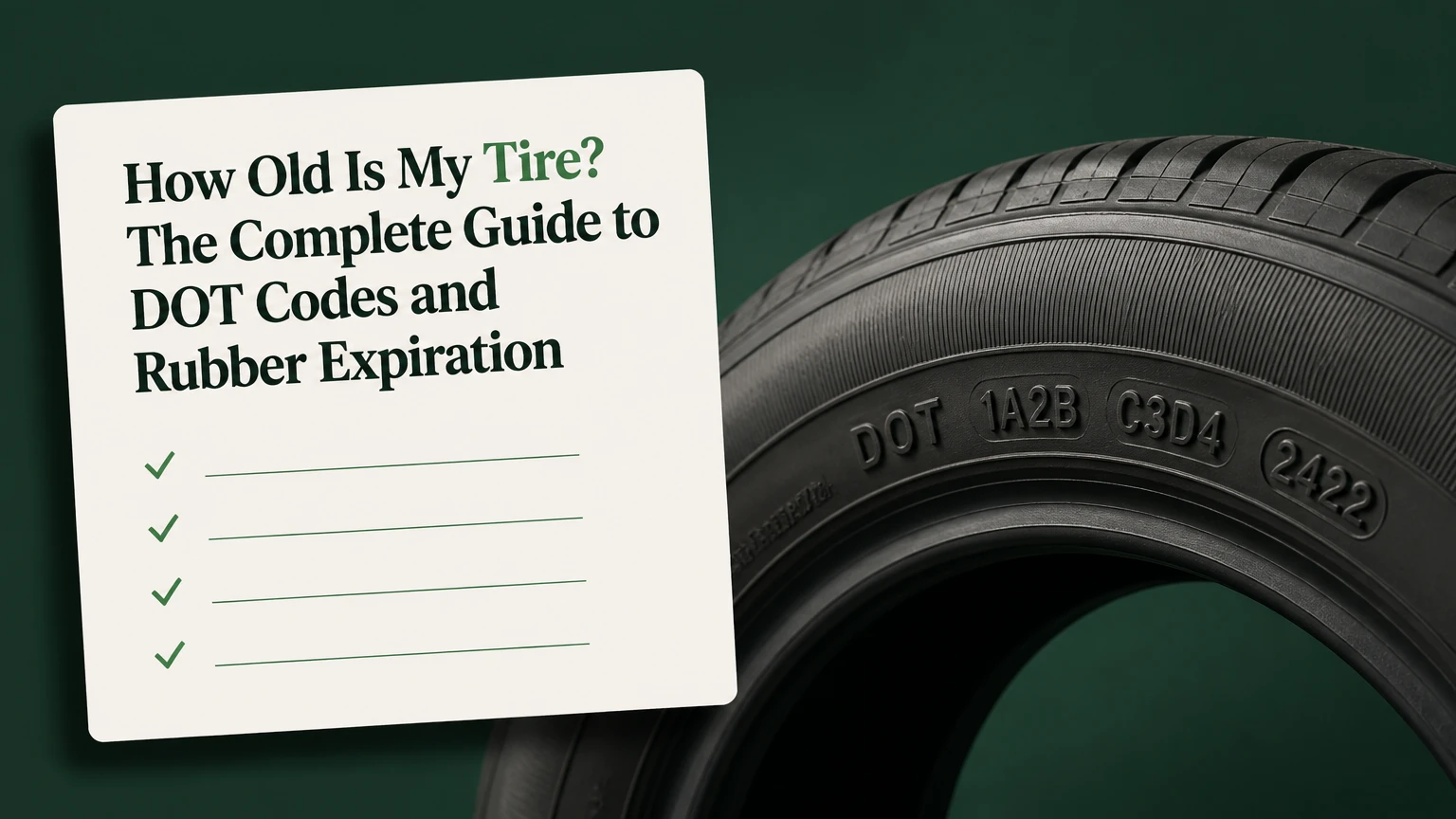
Finding out the exact age of a tire requires locating its Department of Transportation code, commonly known as the DOT code, stamped directly into the outer or inner sidewall rubber. The manufacturing age is determined by the final sequence of numbers in this code, where the first two digits represent the production week and the last two digits represent the production year. Tires older than ten years must be replaced immediately regardless of remaining tread depth because chemical compounds degrade over time.
At a Glance
- The final four digits of the DOT code indicate the production week (01 to 52) and year.
- Professional annual inspections should begin once a tire reaches five years of age.
- Most vehicle manufacturers recommend replacing all tires at six years regardless of wear.
- Ten years is the absolute maximum safe operating limit for any tire in service or storage.
- Pre-2000 tires feature a 3-digit date code and are dangerously degraded.
Where is the DOT code located on a tire?
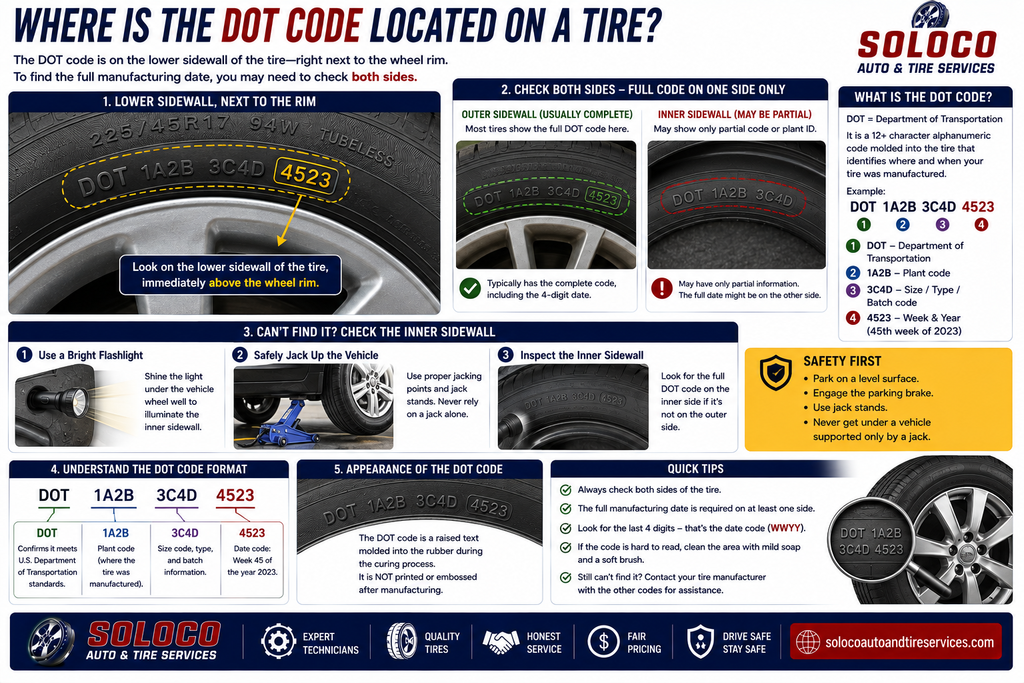
The DOT code is located on the lower sidewall of the tire immediately adjacent to the wheel rim. Finding the full manufacturing date requires inspecting both sides of the tire because federal regulations only mandate that the complete code be printed on a single sidewall. The outward-facing sidewall usually displays the full string, while the inner-facing sidewall may show only an abbreviated plant identification code or partial batch data.
Locating a missing date code requires shining a bright flashlight under the vehicle wheel well or safely jacking up the car to examine the inner sidewall. The text appears as a raised alphanumeric string molded directly into the rubber during the curing process. It always begins with the letters DOT followed by a combination of manufacturing plant codes, size codes, and the final 4-digit date sequence.
What do the numbers on a tire DOT code mean?
The final four digits of the DOT code represent the exact manufacturing timeline of the tire. The first two digits indicate the specific week of production, ranging from 01 through 52, while the final two digits indicate the calendar year. For example, a DOT code ending in 1423 signifies that the tire was manufactured during the 14th week of the year 2023, which corresponds roughly to early April.
Interpreting these digits correctly prevents vehicle owners from driving on compromised rubber. Manufacturing weeks do not map cleanly to standard calendar months because they follow standard ISO week date systems, meaning week 26 is roughly mid-year. Checking this code before purchasing new inventory or buying a used vehicle ensures that tires sitting in retail storage for multiple years are identified and priced or avoided accordingly.
How do I read a 3-digit tire DOT code from before 2000?
Tires manufactured before the year 2000 feature a 3-digit date code at the end of the DOT string instead of a 4-digit sequence. The first two digits represent the week of manufacture, and the final single digit represents the year of that specific decade. For instance, a code reading 358 indicates the tire was produced in the 35th week of either 1988 or 1998, depending on the decade designation.
Encountering a 3-digit code means the tire is critically past its operational life span and must be replaced immediately. Some manufacturers included a small triangular symbol after the 3-digit code during the 1990s to distinguish that decade from the 1980s, but this marker is inconsistent. Driving on tires with 3-digit codes poses an extreme risk of sudden tread separation and catastrophic blowout at highway speeds.
Why is the 4-digit date code missing on one side of my tire?
The 4-digit date code is missing on one side of a tire because federal manufacturing regulations legally require the full date stamp to appear on only one sidewall. Tire manufacturers often place the complete regulatory string on the outward-facing side during assembly, but mounting errors or symmetrical tire designs can result in the complete date code facing inward toward the vehicle suspension.
Resolving this missing code issue requires crawling under the vehicle or using a mirror to inspect the backside of the tire mounted on the wheel rim. If the outward-facing sidewall displays only plant code letters or a truncated batch number, the complete 4-digit stamp resides on the hidden interior sidewall. Mechanics and vehicle owners should verify this hidden side before assuming a tire lacks a date stamp or was improperly manufactured.
When should tires be replaced based on age alone?
Vehicle manufacturers and safety organizations recommend replacing tires when they reach six years of age and mandating replacement at ten years regardless of tread depth. Rubber compounds undergo continuous oxidation and chemical hardening over time, causing structural integrity to degrade even if the vehicle remains parked or accumulates zero mileage.
Professional annual tire inspections should start as soon as any tire reaches five years of service. During these inspections, technicians check for internal belt separation, bead distortion, and sidewall hardening. Relying solely on tread wear indicators leaves motorists vulnerable to structural failure because aged rubber loses its elasticity and traction long before the tread wears down to the legal minimum limit.
Does a brand-new spare tire expire if it is never used?
Spare tires stored in a dark trunk, under a truck bed, or mounted on a rear door still expire based on calendar age. Oxygen exposure, temperature fluctuations, and atmospheric ozone continue to break down the chemical bonds of the rubber even when the spare experiences zero friction, load, or sunlight.
Using a twelve-year-old brand-new spare during an emergency roadside wheel change creates an immediate safety hazard. Although the tread depth may measure a pristine 10/32 of an inch, the aged and brittle rubber carcass is prone to sudden explosive blowout under highway loads. Vehicle owners must inspect their spare tire DOT code during routine maintenance rotations and replace the spare alongside primary set replacements.
How do climate, UV rays, and heat accelerate tire aging?
Hot climates and intense ultraviolet radiation accelerate chemical degradation in tire rubber, cutting normal service life down to four or six years. Continuous exposure to direct sunlight and high ambient temperatures breaks down the protective antiozonants mixed into the rubber compounds, causing premature hardening and surface cracking.
Vehicles parked outside daily in desert regions like Arizona or Florida experience thermal cycling that forces volatile oils out of the tire compound much faster than vehicles stored in temperate climates or indoor garages. This accelerated aging manifests as severe sidewall cracking and reduced structural resilience, requiring proactive replacements long before the standard ten-year threshold arrives.
How long can unmounted new tires sit in storage before going bad?
Unmounted new tires stored in a climate-controlled warehouse remain viable for up to five years from their manufacturing date if kept away from direct sunlight, ozone sources, and extreme temperatures. Retail industry standards consider an unmounted tire “new” for sale purposes if it has been stored properly for less than two to three years.
Exceeding optimal storage durations compromises the performance capabilities of unmounted inventory before it ever gets mounted to a wheel. Warehouses that maintain cool, dark, and dry environments preserve the elasticity of the rubber compounds, whereas facilities subject to seasonal heat spikes degrade inventory rapidly. Consumers purchasing discount tires should check the DOT code at delivery to ensure the stock has not aged significantly in a distribution center.
What is the difference between dry rot and normal tire fading?
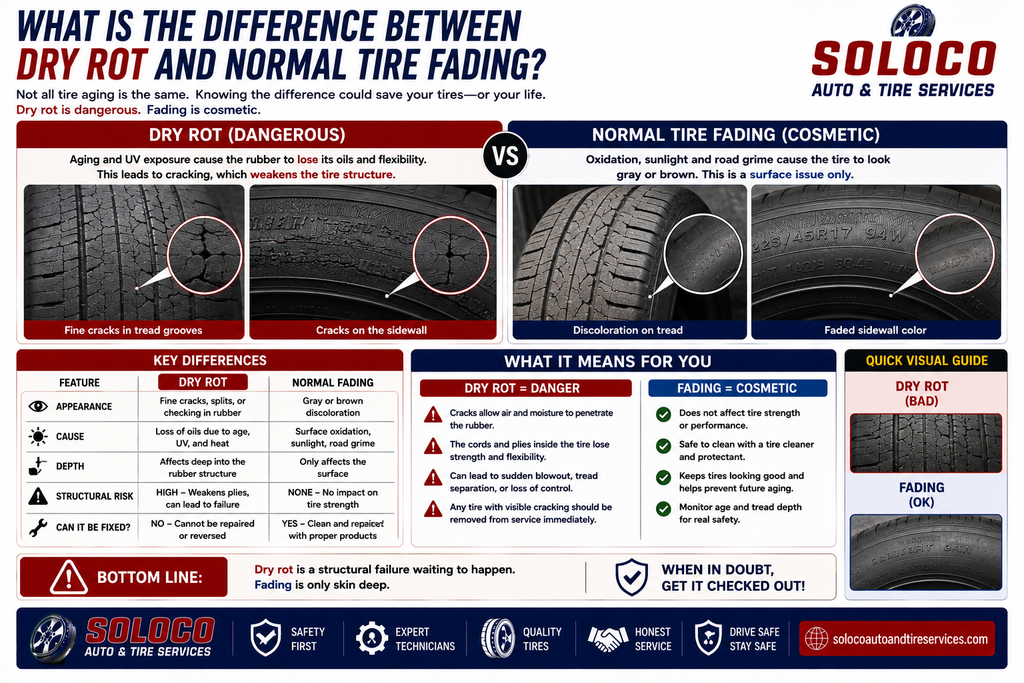
Dry rot appears as a distinct network of fine, hairline cracks in the rubber grooves or lower sidewall, whereas normal tire fading is simply a cosmetic discoloration caused by surface oxidation and road grime. Dry rot signifies deep structural degradation where the internal rubber plies are losing flexibility and bonding strength.
Fading can be scrubbed away with specialized tire cleaners and protective dressings without affecting structural safety. Conversely, dry rot cannot be reversed or repaired, and any tire displaying visible cracking in the tread blocks or sidewall must be taken out of service immediately to prevent sudden blowout or tread detachment.
Do winter tires age faster than all-season tires because of softer rubber?
Winter tires do not necessarily age faster structurally than all-season tires, but their specialized high-silica rubber compounds are engineered to remain pliable in freezing temperatures, making them more sensitive to summer heat storage. Leaving dedicated winter tires mounted and exposed to high ambient summer temperatures degrades their soft tread blocks prematurely.
Proper seasonal storage requires removing winter tires from the vehicle, cleaning them thoroughly, and storing them in airtight plastic bags in a cool, dark indoor location. Storing winter tires in hot attics or unventilated outdoor sheds degrades their sipes and tread flexibility, drastically reducing their winter traction performance by the time cold weather returns.
Are retreaded tires dated differently than standard passenger car tires?
Retreaded tires, which are common on commercial transport trucks and heavy machinery, display a DOT code that reflects the manufacturing date of the original casing rather than the date of the retreading process. This means a retreaded tire might display an older casing date code while having a brand-new tread applied over it.
Identifying the actual age of a retread requires looking for an additional retread certification stamp, plant identifier, or serial label applied by the retreading facility. Commercial fleet managers rely on these secondary stamps and casing inspection logs to ensure that aging carcasses are not repeatedly retreaded past safe structural limits.
Does tire insurance or manufacturer warranty cover age-related degradation?
Standard manufacturer warranties and commercial tire hazard insurance policies rarely cover age-related degradation, dry rot, or environmental weathering. Most manufacturer defects warranties protect against material and workmanship flaws for four to six years from the purchase date, explicitly excluding damage caused by weather, improper storage, or natural aging.
Filing a warranty claim for an expired tire is generally unsuccessful unless a specific manufacturing defect caused structural failure within the initial warranty window. Consumers must rely on preventative maintenance and proactive replacement schedules rather than financial reimbursement when tires reach the end of their safe operating lifecycle.
How do chemical contaminants like fuel and ozone ruin tire compounds?
Chemical contaminants such as gasoline, motor oil, industrial solvents, and atmospheric ozone rapidly destroy tire rubber compounds by stripping away protective agents and dissolving polymer chains. Parking a vehicle on oil-stained pavement or exposing tires to chemical spills compromises the integrity of the rubber within days.
Ozone generated by electric motors, battery chargers, and electrical equipment in enclosed garages attacks stressed rubber under load, causing rapid ozone cracking along the sidewalls. Keeping tires clean, avoiding contact with automotive fluids, and storing vehicles away from high-ozone electrical generators preserves compound elasticity and prevents premature structural failure.
Can expired tires cause sudden tread separation at highway speeds?
Expired tires can cause sudden and catastrophic tread separation at highway speeds because old, oxidized rubber loses the adhesive bond securing the steel belts and polyester casing together. As the vehicle travels at high velocities, centrifugal force and flexing generate intense internal heat, causing the brittle rubber to delaminate.
This sudden structural failure results in rapid deflation and loss of vehicle control, frequently leading to dangerous accidents on highways and interstates. Replacing tires that exceed ten years of age or show signs of environmental degradation is the primary defense against high-speed blowout hazards.
The Bottom Line
Determining tire age relies entirely on reading the final four digits of the DOT code stamped on the sidewall, where the first two digits indicate the manufacturing week and the last two indicate the year. Professional inspections should begin at five years, replacement is recommended at six years, and ten years marks the absolute limit regardless of tread depth. Monitoring environmental factors like UV exposure, heat, and chemical contamination ensures safe vehicle operation.