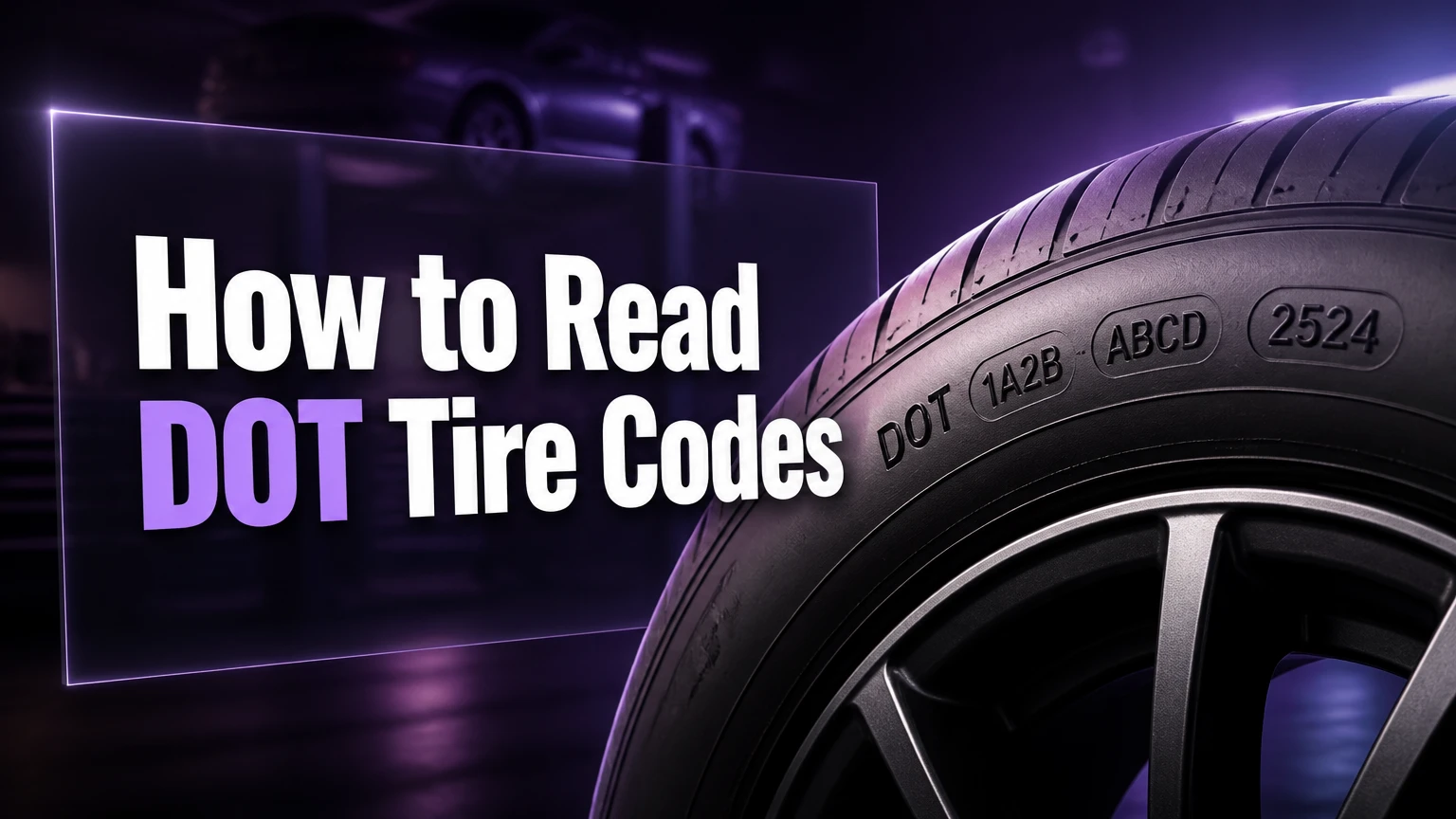
Reading a Department of Transportation tire identification number is a straightforward mechanical inspection process that reveals exact manufacturing data, factory origin, and tire age. By executing a precise six-step sequence—cleaning the outer rim flange area, scanning for the prefix, parsing plant and size codes, and extracting the final four-digit production timestamp—you can verify a tire’s safety status in under five minutes using basic household tools. The single factor that most determines success is checking the correct inner or outer sidewall, as manufacturers frequently mold the complete alphanumeric string onto only one side of the tire structure.
Before You Start
- Time Required: 3 to 5 minutes per tire
- Difficulty Level: Beginner
- Cost: 0 USD to 15 USD (depending on whether cleaning supplies are needed)
- Tools and Materials:
- Flashlight: 1 unit (100+ lumens for low-light or wheel-well inspection)
- Damp microfiber or cotton cloth: 1 unit
- Stiff-bristled nylon utility brush: 1 unit (for heavy brake dust)
- Chalk or white paint marker: 1 unit (optional, for highlighting embossed text)
- Smartphone or digital camera: 1 unit (optional, for macro photography in tight clearances)
- Prerequisite Conditions: Adequate natural lighting or a well-lit garage workspace; vehicle safely parked on level ground with the parking brake engaged if inspecting mounted tires.
Phase 1: Preparation and Inspection Access
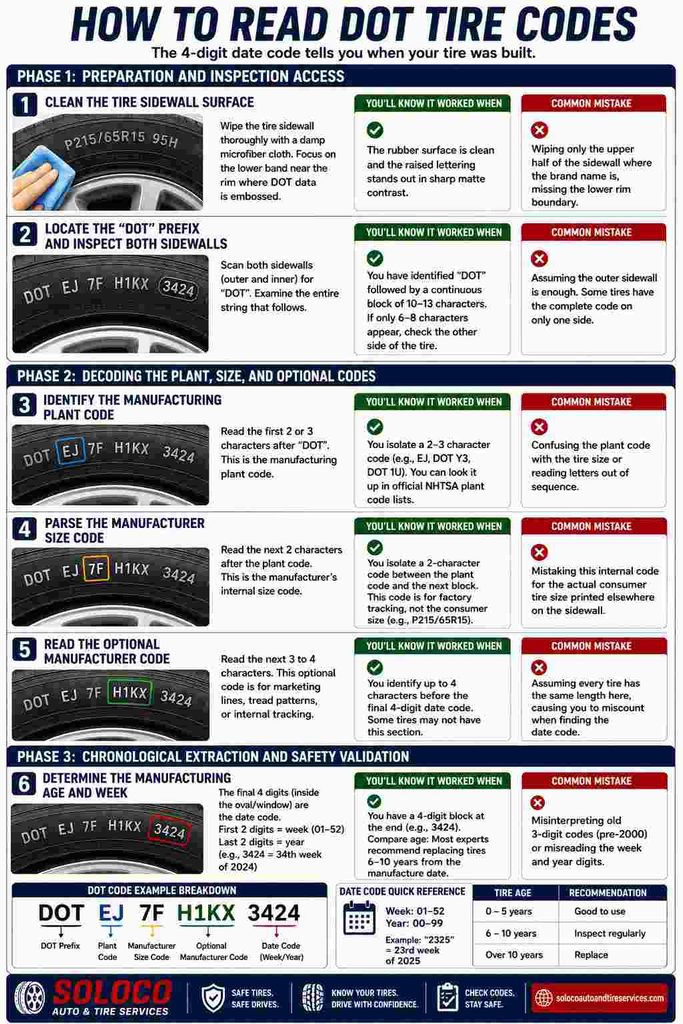
Step 1: Clean the tire sidewall surface
Wipe the tire sidewall thoroughly with a damp microfiber cloth to strip away accumulated mud, road salt, ozone cracking residue, and heavy black brake dust. Focus your cleaning efforts specifically on the lower band of the sidewall closest to the metal wheel rim flange, where manufacturers emboss Department of Transportation compliance data.
- You’ll know it worked when: The rubber surface is free of obscuring particulate matter and the raised rubber lettering stands out in sharp matte contrast against the surrounding sidewall texture.
- Common mistake: Wiping only the upper half of the sidewall where the brand name and model are displayed, completely missing the lower rim boundary where compliance strings are molded.
Step 2: Locate the “DOT” prefix and inspect both sidewalls
Scan the inner and outer circumferences of the tire sidewall until you locate the raised, capitalized letters “DOT”. Examine the entire alphanumeric string that follows this prefix.
- You’ll know it worked when: You have successfully identified the three-letter prefix “DOT” followed by a continuous block of 10 to 13 characters. If you find a shorter, incomplete string of only 6 to 8 characters, immediately walk to the opposite side of the vehicle or inspect the inner wheel-well wall; manufacturers legally mold the complete date-stamped Tire Identification Number (TIN) on only one side of the tire during production.
- Common mistake: Assuming that checking the outer-facing sidewall is sufficient for every tire on the vehicle, leading to confusion when only a partial plant code is visible.
Phase 2: Decoding the Plant, Size, and Optional Codes
Step 3: Identify the manufacturing plant code
Read the first two or three characters immediately following the “DOT” prefix. This alphanumeric sequence represents the specific manufacturing plant code assigned by the National Highway Traffic Safety Administration.
- You’ll know it worked when: You isolate a discrete 2-character or 3-character code (for example, codes starting with “EJ”, “DOT Y3”, or “DOT 1U”). You can cross-reference these codes against official NHTSA plant code lists to identify the exact country, city, and factory where the tire was built.
- Common mistake: Confusing the plant code with the tire size designation or reading the letters out of sequence due to curved sidewall distortion.
Step 4: Parse the manufacturer size code
Read the next two characters immediately following the plant code sequence. This middle block serves as the manufacturer’s internal code designating the specific tire size and structural dimensions.
- You’ll know it worked when: You isolate a distinct two-character code (consisting of letters and/or numbers) positioned directly between the plant code and the optional marketing or size block. Note that this internal code is primarily for factory quality control and regulatory tracing rather than consumer sizing specs like “P215/65R15”.
- Common mistake: Mistaking this internal manufacturing size code for the actual consumer tire size printed in large letters elsewhere on the sidewall.
Step 5: Read the optional manufacturer code
Examine the next three to four characters in the sequence, which represent the optional manufacturer code used for specific marketing lines, tread patterns, or internal tracking parameters.
- You’ll know it worked when: You identify an optional grouping of up to four characters immediately preceding the final four-digit date block. Keep in mind that some manufacturers utilize a variable-length code here, meaning this section can sometimes be omitted entirely depending on the tire model and production batch regulations.
- Common mistake: Assuming every tire contains a uniform length in this section, which causes readers to misalign their count when looking for the final production digits.
Phase 3: Chronological Extraction and Safety Validation
Step 6: Determine the manufacturing age and week
Locate the final four digits of the DOT serial string, which are typically enclosed within a distinct, shallow oval-shaped depression or raised window on the sidewall. Read the first two digits as the week of production (ranging from 01 to 52) and the final two digits as the year of production (for example, “23” denotes the year 2023).
- You’ll know it worked when: You have isolated a clean four-digit numeric block at the very end of the DOT sequence (such as “3424”, indicating the 34th week of 2024). Compare this age against industry safety standards; most automotive manufacturers and safety agencies recommend replacing tires that exceed 6 to 10 years from their manufacturing date, regardless of remaining tread depth.
- Common mistake: Misinterpreting a three-digit code (found on tires built before January 2000) or misreading the week and year digits—such as reading week 12 of year 21 as December 2021 instead of March 2021.
Common Mistakes and How to Fix Them
- Reading only the outer sidewall: Checking the exterior face of a tire mounted with its serial number facing inward leaves you with a partial code that lacks the crucial date block. Fix: Use a flashlight and crawl beneath the vehicle to inspect the inner sidewall if the outer face displays only letters and no final numbers.
- Misinterpreting pre-2000 three-digit codes: Encountering a code ending in three digits (e.g., “459”) means the tire was manufactured in the 1990s (the 45th week of 1989 or 1999). Fix: Recognize that rubber degrades over time through oxidation and structural fatigue; any three-digit DOT tire is dangerously obsolete and must be replaced immediately regardless of visual condition.
- Confusing week numbers with months: Seeing “4819” and assuming it represents April 8th, 2019. Fix: Remember that the first two digits represent the calendar week of the year (01 through 52), not the month or day. Week 48 corresponds to late November.
- Trying to read worn codes in low light: Failing to resolve faint, weathered, or scuffed characters on older tires. Fix: Spray the area with water, scrub with a stiff nylon brush, and hold a high-lumen flashlight at a sharp, low-angle tangent to the rubber. The angled light casts micro-shadows inside the embossed recessed text, making faint digits instantly legible.
Variations: Handling Non-Standard Scenarios
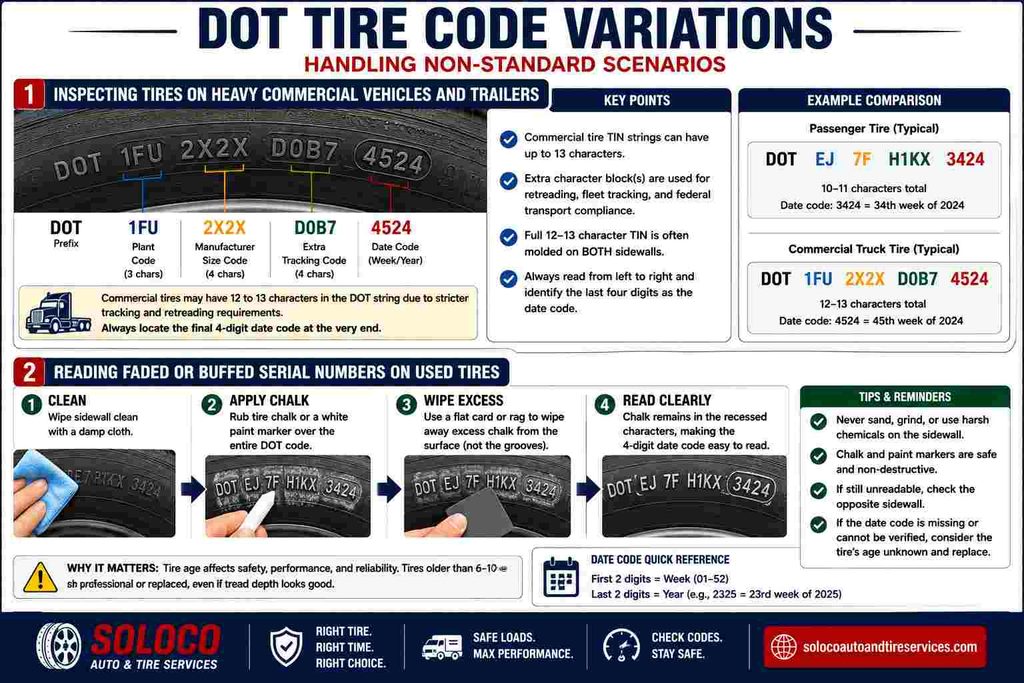
Inspecting Tires on Heavy Commercial Vehicles and Trailers
Commercial truck tires (11R22.5, etc.) and heavy trailer tires often feature longer DOT serial strings that can reach up to 13 characters due to stricter retreading and tracking requirements governed by federal transport authorities. Furthermore, commercial tires frequently display the full 12 to 13-character TIN on both sidewalls because they are designed to be retreaded and flipped on their rims. If you encounter a commercial tire, ensure you account for an extra character block in the middle sequence before locating the final four-digit date stamp at the tail end of the string.
Reading Faded or Buffed Serial Numbers on Used Tires
Used tires purchased from secondary markets or salvage yards sometimes have weathered sidewalls where UV exposure has flattened the raised rubber characters. If chalk or a paint marker fails to settle into the recessed window holding the date code, apply a small amount of tire chalk across the entire code block and wipe away the surface excess with a flat card. The chalk particles will lodge inside the embossed engravings, sharply outlining the four-digit date stamp without damaging the sidewall structural integrity.
How Long Does It Take and What Does It Cost
- Time Investment: Inspecting a single tire takes approximately 1 to 2 minutes. Checking a full set of four vehicle tires, including moving to inspect inner sidewalls where necessary, typically takes 5 to 10 minutes.
- Financial Cost: 0 USD if performed using existing household tools and lighting. If purchasing a dedicated high-lumen tactical flashlight and a tire paint marker, the total out-of-pocket cost ranges between 10 USD and 20 USD.
Frequently Asked Questions
Why do some tires have a DOT code on only one side?
During high-volume industrial tire manufacturing, molding the complete 12-character alphanumeric stamp—including the weekly changing date code—requires complex steel inserts in the mold press. To reduce manufacturing tooling costs and simplify mold-plate changeovers, manufacturers mold the full date-stamped TIN on only the outer serial side of asymmetric or directional tires, while the opposite side receives a truncated plant-and-size identifier.
What should I do if my tire has no date code at all?
If a tire displays no four-digit date code following the DOT prefix, it was almost certainly manufactured prior to the year 2000, when the Department of Transportation mandated the transition to a four-digit standard under federal safety regulations. Such tires possess degraded, hardened rubber compounds susceptible to sudden tread separation and blowout. You should take the vehicle out of service and replace the tires immediately.
Can tire dressings or armor products hide the DOT code?
Yes, heavy applications of silicone-based tire shine, gel protectants, or thick armor sprays can pool inside the recessed window that houses the four-digit date code. This buildup fills the tactile engravings with glossy residue, masking the numbers from direct visual inspection. To resolve this, scrub the sidewall area thoroughly with a damp cloth and mild dish soap to strip away oily chemical residues before attempting to read the code.
How many years does a tire last before it becomes unsafe?
Most automotive manufacturers, tire industry associations, and safety authorities recommend a maximum service life threshold of 6 to 10 years from the date of manufacture stamped in the DOT code. Even if a tire has deep, healthy tread remaining, environmental factors such as UV radiation, ozone exposure, and temperature cycling cause the internal steel belts and rubber compounds to oxidize, embrittle, and lose structural integrity over time.
Are tires manufactured in different countries marked differently?
While the plant code prefix (the first two or three characters following “DOT”) varies globally to designate specific factories in countries like the United States, Japan, Germany, South Korea, or Mexico, the ultimate format of the date code remains standardized worldwide. Regardless of where the tire was built, the final four digits always strictly follow the strict week-and-year format mandated by international transport safety compliance standards.


