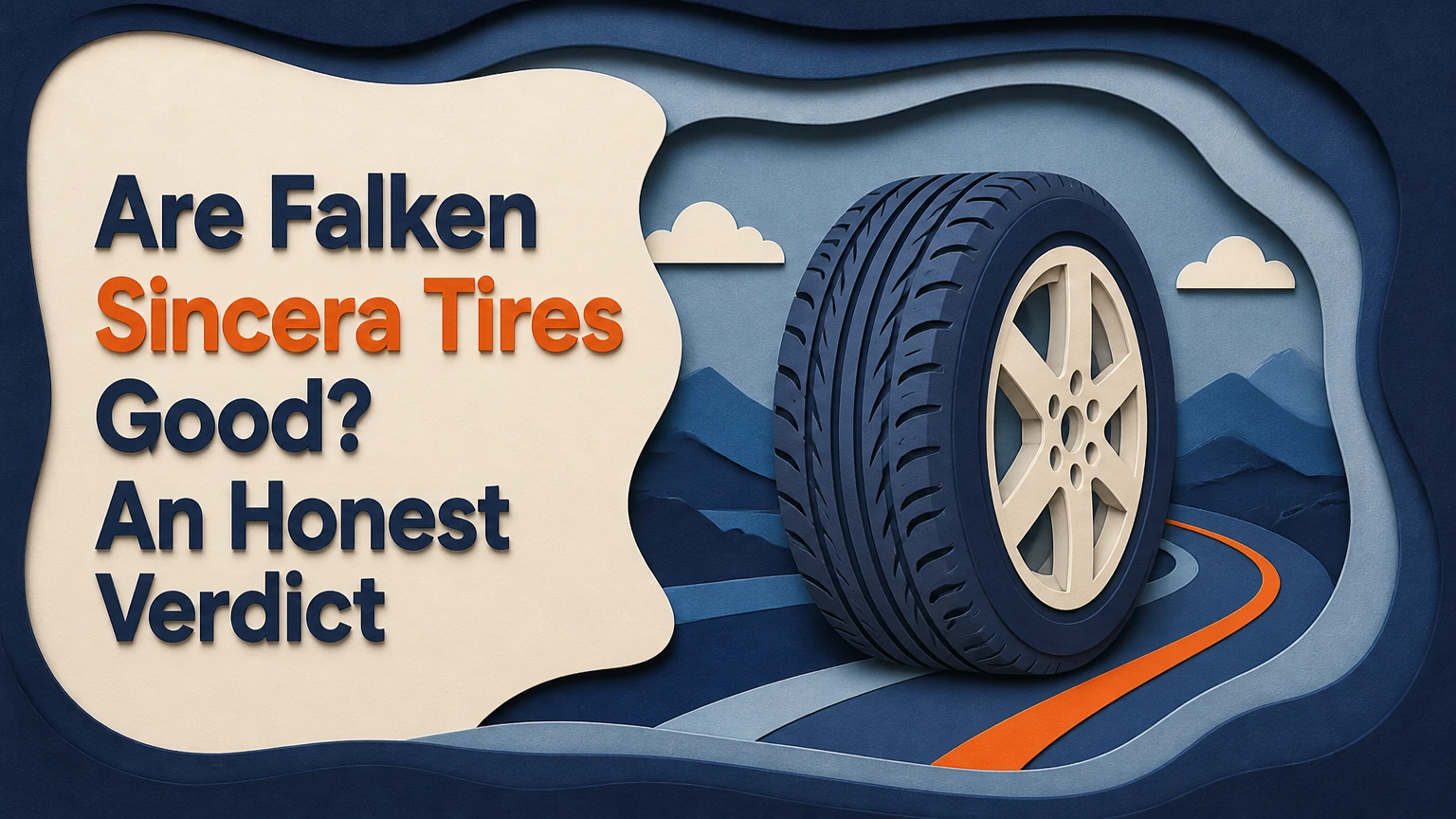
Yes, Falken Sincera tires are good value for drivers who want comfortable, quiet daily transportation, predictable dry and wet handling, and a long mileage warranty at a mid-range price. They are strongest on sedans, compact crossovers, and minivans, but they are not the right choice for aggressive driving, severe winter weather, or performance-focused steering response.
Key Facts at a Glance
Falken Sincera tires are designed for commuting, family vehicles, and ordinary year-round road use.
The Sincera SN250 A/S commonly carries a 75,000 or 80,000-mile limited treadwear warranty, depending on specification.
The Sincera SN201 A/S generally carries a 65,000-mile warranty in applicable markets.
Sincera all-season tires can handle rain and occasional light snow, but they are not substitutes for dedicated winter tires.
Typical retail pricing is approximately $80-$145 per tire before installation, depending on size and seller.
Correct tire size, load index, speed rating, inflation, and rotation history matter more than the brand name alone.
What Are Falken Sincera Tires?
Falken Sincera tires are value-oriented touring and standard all-season tires made for passenger cars, minivans, and some small crossovers. Falken is a Sumitomo Rubber Industries brand, and Sincera sits below the company’s sport-focused Azenis products and truck-oriented Wildpeak products in intended use.
The product family prioritizes tread longevity, ride absorption, low cabin noise, and steady road manners. A Honda Civic, Toyota Corolla, Hyundai Elantra, Nissan Sentra, or compact minivan is a more natural application than a high-output sports sedan.
The word “good” requires a use case. A commuter covering 20,000 highway miles annually may value the Sincera’s warranty and comfort, while a driver who prioritizes rapid steering response may find the same tire too soft. Tire choice is a compromise among traction, tread life, comfort, price, and seasonal capability.
The National Highway Traffic Safety Administration describes tires as “the only part of your vehicle that makes contact with the road.” That principle matters here: a low purchase price does not compensate for an incorrect load rating, poor inflation, or a tire that does not match local winter conditions.
How Does Sincera Technology Affect Driving?
Falken Sincera technology targets casing flexibility, tread stability, and water evacuation rather than maximum cornering force. The practical result is usually a compliant ride and stable commuting behavior, with less immediate steering response than a performance tire.
What Does Dynamic Range Technology Do?
Dynamic Range Technology uses a silica-containing tread compound intended to preserve flexibility across changing temperatures. The compound helps the tread conform to wet pavement and remain usable in moderate cold, although an all-season compound still becomes less effective than winter rubber near and below freezing.
The technology does not make the tire a winter tire. Compound flexibility supports cold-weather traction, but ice grip also depends on tread design, temperature, road surface, vehicle weight, and braking conditions.
How Do 3D Canyon Sipes Support Traction?
3D Canyon Sipes create additional biting edges for rain and light snow while interlocking under load to reduce excessive tread-block movement. That design can improve braking and stability compared with a simple smooth rib pattern.
Sipes cannot overcome packed snow or glazed ice. A tire with the Three-Peak Mountain Snowflake, or 3PMSF, symbol has passed a standardized severe-snow traction test; ordinary Sincera all-season versions generally should not be treated as severe-snow equipment unless the sidewall carries the required marking.
Why Does Tension Control Make the Ride Feel Soft?
Tension Control Technology allows controlled sidewall flex that absorbs sharp impacts while helping the tread maintain road contact. Drivers often experience that construction as reduced harshness over potholes, expansion joints, and broken urban pavement.
The trade-off is steering feel. A soft or delayed response can be normal for a comfort-oriented touring tire, but a steering wheel that feels unusually vague can also indicate low pressure, worn suspension components, incorrect alignment, or a tire with an unsuitable load specification.
Which Falken Sincera Model Fits Your Vehicle?
The correct Sincera model depends on the vehicle’s original equipment size, climate, annual mileage, and desired steering response. SN250 A/S is the main North American long-wear choice, SN201 A/S serves smaller passenger cars, and SN110 Ecorun is more associated with European and other regional markets.
| Model | Typical application | Warranty or positioning | Main trade-off |
|---|---|---|---|
| Sincera SN250 A/S | Sedans, minivans, compact crossovers | Commonly 75,000-80,000 miles, specification dependent | Comfort response is less sporty |
| Sincera SN201 A/S | Compact cars and smaller passenger vehicles | Commonly 65,000 miles where offered | Less premium refinement than top touring tires |
| Sincera SN110 Ecorun | Small European cars and efficiency-focused applications | Regional warranty and availability vary | Not a universal North American replacement |
| Sincera ST80 A/S | Certain passenger and crossover fitments | Size and market dependent | Verify exact vehicle application carefully |
Is the SN250 A/S the Best Sincera Tire?
The SN250 A/S is usually the best Sincera choice for drivers who prioritize long tread life, quiet highway travel, and predictable wet-weather behavior. Its symmetrical tread and circumferential grooves support stable tracking and water removal across common passenger-car sizes.
The model is not automatically correct for every vehicle carrying a Sincera tire. Replacement tires must match the vehicle placard’s size, load index, speed rating, and construction requirements. A higher mileage warranty also becomes less meaningful if the vehicle’s alignment is poor or the driver regularly carries loads beyond the tire rating.
Typical SN250 pricing ranges from $90-$145 per tire in common 15- to 18-inch sizes, before mounting, balancing, disposal fees, taxes, and optional road-hazard coverage.
When Does the SN201 A/S Make More Sense?
The SN201 A/S makes sense when a compact car requires its available fitment and the buyer wants a durable, reasonably priced touring tire. It is a sensible match for vehicles such as a Corolla, Civic, Elantra, or similar small sedan when the exact size and rating are approved.
The 65,000-mile warranty is substantial for the category, but warranty mileage is not a guaranteed service life. Falken’s limited warranty terms can require documented rotation, proper maintenance, and even wear, while exclusions and prorating vary by market and purchase date.
What Is the SN110 Ecorun Used For?
The SN110 Ecorun is an efficiency-oriented Sincera product sold primarily through European and other regional channels. Its design emphasizes rolling resistance and wet-road performance for smaller vehicles, including some unusual city-car sizes.
North American shoppers should not assume that SN110 is a direct substitute for SN250. Regional construction, speed ratings, warranty terms, labeling, and availability can differ. Confirm the tire’s legal market specification and vehicle compatibility before importing a set.
How Do Falken Sincera Tires Perform?
Falken Sincera tires provide balanced performance for ordinary dry roads, rain, and highway travel, with comfort and tread longevity generally taking priority over sharp handling. Their weakest area is severe winter traction, followed by aggressive cornering response.
| Driving criterion | Sincera expectation | Better fit when priority differs | Practical implication |
|---|---|---|---|
| Dry-road handling | Stable at normal speeds | Falken Azenis or Michelin Pilot Sport | Less immediate steering when pushed |
| Wet-road behavior | Predictable rain traction with groove-based evacuation | Premium touring tire for shorter wet braking | Slow down in standing water |
| Light snow | Usable for occasional dusting | 3PMSF all-weather tire for recurring snow | Traction falls sharply on ice |
| Ride comfort | Compliant over rough pavement | Similar touring tire, not a sport tire | Good for urban commuting |
| Highway noise | Generally low when new | Premium touring tire for maximum refinement | Noise may rise with uneven wear |
| Tread longevity | Warranty commonly 65,000-80,000 miles | Long-wear premium tire for maximum consistency | Rotation and alignment determine results |
Are Falken Sincera Tires Good in Rain?
Falken Sincera tires are generally good for routine rain when they have adequate tread depth, correct pressure, and sound alignment. Circumferential grooves and dense siping help channel water away from the contact patch, but no passenger tire eliminates hydroplaning risk.
Wet performance declines as tread wears. At 4/32 inch, many tire professionals recommend planning replacement for wet-weather safety even though the legal minimum in many US jurisdictions is 2/32 inch. That difference is important because rain grooves become less effective before the legal limit is reached.
Are Falken Sincera Tires Good in Snow?
Falken Sincera tires are acceptable for occasional light snow in regions where roads are cleared quickly, but they are not a strong choice for repeated storms, steep icy roads, or prolonged sub-freezing conditions. Standard all-season rubber uses a wider operating compromise than winter rubber.
Choose a 3PMSF all-weather tire for regular snow without seasonal tire changes, or a dedicated winter tire for frequent ice and heavy snowfall. Falken’s Wildpeak range may fit some SUVs and trucks, but Wildpeak is not a universal replacement for a passenger-car Sincera.
Are Sincera Tires Quiet and Comfortable?
Sincera tires are usually quiet and comfortable when correctly inflated and evenly worn. The flexible casing reduces impact harshness, while the tread pattern is designed for consistent highway behavior rather than the louder, blockier pattern found on many all-terrain tires.
A new tire can become noisy after several thousand miles if toe alignment is incorrect or rotations are skipped. Cupping, feathering, and shoulder wear create more cabin noise than the original tread pattern, so noise is also a maintenance signal.
How Much Do Falken Sincera Tires Cost?
A typical Falken Sincera tire costs $80-$145 before installation, while a complete installed set commonly totals $420-$760 after mounting, balancing, valve stems, disposal, taxes, and possible alignment work. Actual pricing changes with tire size, regional inventory, promotions, and retailer.
| Purchase item | Typical amount | When it applies | Cost-control note |
|---|---|---|---|
| One 15-inch Sincera tire | $80-$110 | Common compact-car size | Compare installed totals |
| One 17-inch Sincera tire | $105-$145 | Larger sedan or crossover size | Verify load index |
| Mounting and balancing | $20-$40 per tire | Standard replacement service | Ask whether valve stems are included |
| Four-tire installation | $420-$760 total | Typical complete replacement | Alignment may add $90-$180 |
| Rotation | $0-$30 | Every 5,000-7,500 miles | Some retailers include it |
| Road-hazard plan | $10-$25 per tire, typical | Optional retailer coverage | Read exclusions first |
The warranty should be read as a conditional adjustment policy, not a promise that the tire will reach its printed mileage. Falken warranty coverage can depend on the original purchaser, eligible fitment, uniform wear, inflation records, rotation intervals, and remaining usable tread.
How Long Do Falken Sincera Tires Last?
Falken Sincera tires commonly last about four to six years for ordinary drivers, while mileage can range from approximately 45,000 to 80,000 miles depending on model, alignment, climate, driving style, and maintenance. The warranty range is a ceiling for eligible treadwear, not a forecast for every vehicle.
Replace or professionally inspect the tires when tread reaches 2/32 inch, cracking appears, bulges develop, cords show, or vibration persists after balancing. Many tire specialists recommend earlier replacement planning at 4/32 inch because wet-weather reserve has diminished.
Age also matters. Inspect tires regularly after five years in service, and follow the tire maker’s age guidance, especially when the vehicle is parked outdoors in high heat. The DOT code on the sidewall identifies the week and year of manufacture, so a code ending in 2424 indicates production in the 24th week of 2024.
Falken Sincera Versus Other Tire Choices
Sincera is strongest when the buyer wants a moderate purchase price and long-wear touring behavior. Premium alternatives may provide better refinement or wet braking, while cheaper brands can reduce the initial bill but often provide less predictable quality or weaker warranty support.
| Tire option | Typical price per tire | Warranty range | Best use | Main limitation |
|---|---|---|---|---|
| Falken Sincera SN250 | $90-$145 | 75,000-80,000 miles | Value-focused commuting | Moderate steering response |
| Michelin Defender2 | $150-$230 | Up to 80,000 miles, size dependent | Premium long-distance touring | Higher purchase cost |
| General Altimax RT45 | $95-$150 | Up to 65,000 miles, size dependent | Balanced replacement value | Less model availability in some sizes |
| Goodyear Assurance All-Season | $95-$160 | Varies by exact model | Mainstream all-season use | Performance varies by fitment |
| Ultra-budget regional brand | $50-$85 | Often limited or absent | Lowest upfront price | Greater quality and wet-grip uncertainty |
Should You Choose Sincera or Michelin Defender?
Choose Falken Sincera when the installed price is materially lower and your driving consists mainly of commuting, errands, and moderate-speed highway travel. Choose Michelin Defender when quieter refinement, stronger wet-weather reserve, and consistent long-distance performance justify paying roughly $60-$100 more per tire.
The Defender is not automatically safer in every situation. A properly inflated Sincera with fresh tread is preferable to an aged, underinflated premium tire, and neither standard tire replaces a winter tire on ice.
Is Sincera Better Than an Ultra-Budget Tire?
Sincera is usually the safer value comparison when its price is close to a budget tire because it offers a recognizable warranty structure, established retailer support, and more predictable touring characteristics. The buyer should still compare independent test results and the exact size, rather than treating the brand tier as proof of performance.
A $40 saving per tire may disappear after one early replacement, poor wet traction, or the absence of free rotation service. Check the date code and return policy before installation.
Who Should Buy Falken Sincera Tires?
Falken Sincera tires suit drivers who value predictable commuting, a cushioned ride, and reasonable long-term operating cost more than fast steering response or severe-snow traction. The best choice changes by vehicle, climate, annual mileage, and road surface.
| Driver situation | Recommendation | Why |
|---|---|---|
| 15,000-25,000 highway miles annually | SN250 A/S, if approved | Mileage warranty and stable tracking |
| Compact sedan in a mild climate | SN201 A/S or SN250 A/S | Cost-effective daily transportation |
| Frequent mountain snow | 3PMSF all-weather or winter tire | Better cold and snow performance |
| Sports sedan with aggressive cornering | Performance touring or summer tire | Sharper steering and cornering support |
| Older vehicle with worn suspension | Repair vehicle first | New tires cannot correct mechanical looseness |
| City car using unusual regional size | SN110 Ecorun, only if locally approved | Fitment and market specification matter |
A useful practitioner rule is to spend first on the correct specification, then on wet-weather performance, and only afterward on the mileage warranty. A tire that lasts 80,000 miles but performs poorly in the buyer’s climate is the wrong economic choice.
What Problems Can Sincera Tires Develop?
The most common Sincera-related complaints involve soft steering, uneven wear, noise, and disappointing snow traction. Each symptom has several possible causes, so replacing all four tires without inspection can waste money.
Why Does the Steering Feel Soft?
Check cold inflation against the driver-door placard before judging the tire’s handling. Sincera’s comfort-oriented sidewall can feel less immediate than a performance tire, but excessive softness may indicate underinflation, overloaded tires, incorrect size, worn tie rods, tired shocks, or a front-end alignment problem.
Do not inflate above the placard value simply to imitate a sport tire. Excess pressure can reduce the contact patch, increase center tread wear, and worsen impact harshness.
Why Are the Shoulders Wearing Early?
Shoulder wear commonly results from underinflation, excessive toe error, aggressive cornering, heavy loads, or infrequent rotation. Measure pressure monthly and rotate approximately every 5,000-7,500 miles, following the vehicle and tire retailer’s instructions.
Uneven wear can invalidate some treadwear warranty claims because warranty evaluation usually considers maintenance and alignment. Keep invoices that show rotations and inspections.
Why Did the Tires Become Noisy?
Cupping and feathering often cause a humming or rhythmic sound. Inspect tread blocks by running a hand lightly across the tread, then have a shop check balance, alignment, wheel bearings, shocks, and suspension bushings.
A tire that is quiet at installation but noisy later may have a vehicle problem rather than a defective tread design. Tire rotation can slow the progression, but it cannot repair an already damaged casing or worn suspension component.
What Should You Check Before Buying?
Verify the vehicle placard and tire sidewall before comparing prices. The new tire should meet or exceed the original equipment size, load index, speed rating, and any manufacturer-specific requirement.
Use this buying checklist:
- Read the door-jamb label. Record size, load index, speed rating, and recommended cold pressure.
- Confirm the exact Sincera model. SN250, SN201, SN110, and ST80 are not interchangeable product names.
- Check the DOT date. Prefer current stock and reject visibly aged, cracked, or improperly stored tires.
- Compare installed prices. Include mounting, balancing, disposal, taxes, alignment, and road-hazard coverage.
- Ask about warranty conditions. Confirm mileage, prorating, rotation documentation, and road-hazard exclusions.
- Match the climate. Select 3PMSF all-weather or winter tires when snow and ice are recurring.
- Schedule the first rotation. Put the 5,000-7,500-mile interval on the maintenance calendar.
The most counterintuitive mistake is choosing a tire by warranty number alone. Treadwear warranties measure a manufacturer’s contractual promise under conditions, while braking distance, cold traction, and steering feel determine whether the tire suits the driver.
Frequently Asked Questions
Are Falken Sincera tires made in Japan?
Falken is owned by Japan-based Sumitomo Rubber Industries, but Sincera tires can be manufactured in different countries depending on model, size, and production batch. Check the molded sidewall markings and retailer listing for the specific tire rather than assuming every Falken tire has the same country of origin.
Do Falken Sincera tires need frequent rotation?
Falken Sincera tires should typically be rotated every 5,000-7,500 miles, or according to the vehicle manufacturer’s schedule. Front-wheel-drive cars can wear front tires faster because the front axle handles steering, braking, and much of the engine load. Rotation promotes more even tread wear.
Can I use Falken Sincera tires on an SUV?
You can use a Sincera tire on an SUV only when the exact size, load index, speed rating, and construction are approved for that vehicle. Many compact crossovers use passenger touring tires, while larger SUVs may require higher load capacity or a different tire category.
Are Falken Sincera tires run-flat tires?
Most Falken Sincera products are conventional pneumatic tires, not run-flat tires. Do not replace a vehicle’s run-flat equipment with standard tires unless the vehicle manufacturer and a qualified tire professional confirm that the spare, pressure-monitoring system, and emergency-use requirements remain suitable.
When should I replace a Sincera tire?
Replace a Falken Sincera tire at the legal tread limit, after severe damage, when cracking or bulges appear, or when a professional finds structural deterioration. Consider replacing earlier at 4/32 inch in regions with frequent rain, because wet-weather traction reserve declines before the 2/32-inch legal threshold.
The Bottom Line
Are Falken Sincera tires good? Yes, Falken Sincera tires are a strong mid-range choice for sedans, compact crossovers, minivans, and commuters who prioritize comfort, predictable rain performance, and a 65,000-80,000-mile warranty. Select the SN250 A/S for long-distance value, the SN201 A/S for suitable compact-car applications, and a 3PMSF all-weather or winter tire for recurring snow. The correct answer depends on fitment and climate, not the warranty number alone.