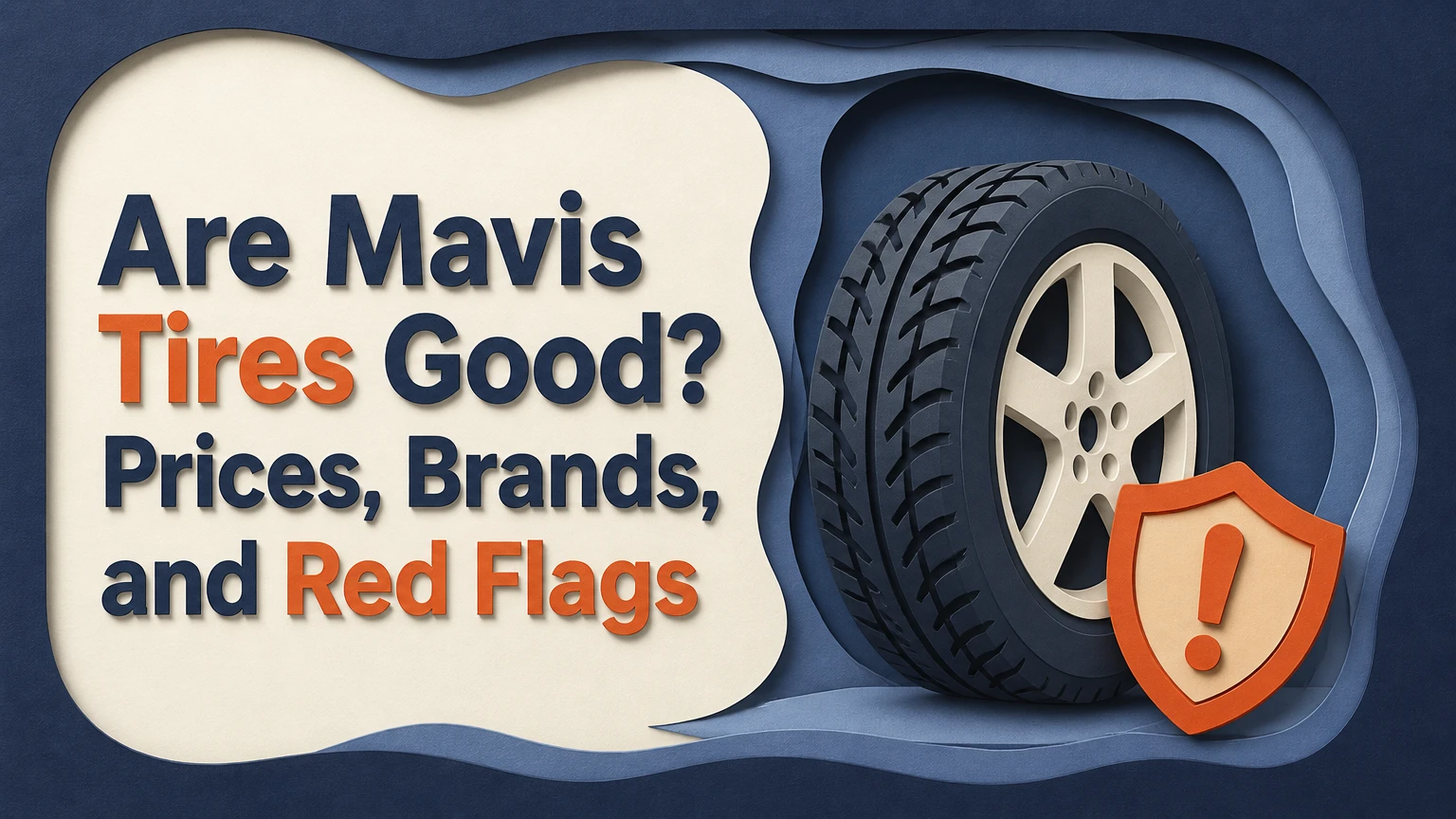
Mavis tires can be a good value when you choose a reputable local branch, verify the exact tire model, and approve an itemized out-the-door price. Mavis sells respected brands such as Michelin, Goodyear, Continental, Bridgestone, and Cooper, but customer service, installation quality, wait times, and upselling vary significantly by location.
Key Facts at a Glance
- Mavis Discount Tire is a retailer and installer, not a single tire manufacturer with one uniform tire quality level.
- A typical four-tire purchase at Mavis can cost approximately $650-$1,000 or more, depending on tire size, brand, vehicle, taxes, and installation charges.
- The tire model matters more than the Mavis name because Mavis sells premium, mid-priced, and private-label products.
- A competent installation should include mounting, balancing, correct inflation, valve-service checks, and TPMS inspection when applicable.
- Local branch reviews are more useful than the national Mavis rating because store management determines much of the customer experience.
- Drivers should request an itemized invoice and independent confirmation before authorizing expensive brake, suspension, or steering repairs.
What Does Mavis Sell?
Mavis sells replacement tires, wheels, brakes, batteries, alignments, oil changes, inspections, and other automotive services through a large network of retail locations. The company operates under names including Mavis Discount Tire, Mavis Tires & Brakes, NTB, and Tire Kingdom in different markets.
Mavis is therefore best evaluated in two separate parts: the quality of the tire model and the quality of the local installation. A Michelin CrossClimate2 installed incorrectly is still a poor purchase, while a properly installed General or Cooper tire may perform very well for ordinary commuting.
The national chain gives Mavis purchasing scale and broad inventory access. A local branch controls the practical experience, including appointment scheduling, technician care, inspection accuracy, communication, alignment work, and resolution of mistakes. That division explains why customer reviews can be sharply different between two nearby stores.
Is Mavis a Tire Manufacturer?
Mavis is mainly a tire retailer and automotive service company. It sells tires manufactured by established companies, and some Mavis-exclusive or private-label models may be produced by major tire manufacturers under a separate retail arrangement.
The name printed on the sidewall identifies the tire brand and model. Buyers should record the complete designation, such as size, load index, speed rating, treadwear warranty, and all-season or winter classification, rather than relying on a generic description such as “Mavis tire.”
Are Mavis Tires Good for Everyday Driving?
Mavis tires are generally suitable for ordinary commuting when the selected model matches the vehicle and climate. The strongest value usually comes from a recognized mid-tier tire or a discounted premium model, while the cheapest private-label option makes the most sense for low-mileage drivers who prioritize purchase price over wet braking, road noise, or maximum tread life.
Tire quality is determined by compound design, tread pattern, casing construction, load capacity, speed rating, age, and maintenance. Mavis cannot make a weak model perform like a premium model merely by installing it.
The practical question is not “Are Mavis tires good?” It is “Which exact tire is Mavis selling, and can this branch install it correctly?” Drivers in heavy rain should prioritize wet braking. Drivers in snow should use a severe-snow-rated tire or dedicated winter tires. Highway commuters should compare projected tread life, road noise, and warranty terms.
Mavis Tire Categories Compared
| Category | Named examples | Typical use | Main trade-off |
|---|---|---|---|
| Premium | Michelin, Continental, Bridgestone, Goodyear | Long highway mileage, wet-road confidence, refined vehicles | Approximately $180-$350 per tire in common sizes |
| Mid-tier | Cooper, Kumho, General, Firestone | Daily commuting and mixed city driving | Approximately $110-$220 per tire |
| Private-label or exclusive | Model-specific Mavis offerings | Lowest upfront cost and basic commuting | Less independent test data and greater model-to-model variation |
| Winter or severe-snow | Michelin X-Ice, Bridgestone Blizzak, Continental VikingContact | Repeated snow, ice, and freezing temperatures | Seasonal storage and an additional tire set may be required |
Prices are typical retail ranges, not guaranteed Mavis quotes. A 19-inch performance tire, light-truck tire, run-flat tire, or uncommon commercial size can exceed these figures substantially.
Are Mavis House-Brand Tires Worth Buying?
A Mavis private-label tire can be worth buying for a dependable commuter with a limited budget, but the exact model must be evaluated by its warranty, independent testing, wet-weather behavior, and correct load and speed ratings. A long mileage warranty is useful, but it does not prove superior braking or handling.
Ask the service advisor for the complete tire model and manufacturer. Check whether the tire carries a UTQG treadwear, traction, and temperature rating, then compare its published warranty with similarly priced Cooper, General, Kumho, or Firestone alternatives.
A private-label tire becomes less attractive when its price is only slightly below a better-documented mid-tier model. Saving $15 per tire may not justify weaker wet traction, more noise, or fewer warranty options. Conversely, a $200-$300 set reduction can be reasonable for a low-mileage second vehicle that is driven conservatively.
How Much Does Mavis Charge for Four Tires?
A typical Mavis four-tire purchase costs about $650-$1,000 before unusual vehicle requirements, although compact-car sets can cost less and large SUV, truck, run-flat, or performance sets can cost considerably more. The advertised tire price is not the final price because mounting, balancing, disposal, taxes, valve components, and optional services may be added.
Mavis’s online price should be treated as a starting figure. Location-specific labor rates and environmental fees can materially change the invoice. Ask for the complete total before authorizing installation.
Typical Four-Tire Cost Breakdown
| Cost component | Typical range | What changes the amount |
|---|---|---|
| Four economy tires | $360-$600 | Size, brand, warranty, current promotion |
| Four mid-tier tires | $500-$880 | Vehicle class, speed rating, seasonal design |
| Four premium tires | $720-$1,400+ | Run-flat construction, diameter, performance compound |
| Mounting and balancing | $80-$160 total | Approximately $20-$40 per tire and local labor policy |
| Disposal and environmental fees | $0-$50 per tire | State rules, tire size, store pricing |
| Alignment, if needed | $80-$150 typical | Vehicle geometry, adjustment complexity, service package |
A technically accurate quote contains tire price, installation, balancing, valve service, TPMS service, disposal, taxes, and every optional recommendation. “Starting at” pricing does not establish the final charge.
Does Mavis Match Lower Prices?
Mavis advertises a 30-day price guarantee in some markets and promotions, commonly tied to finding an identical tire at a lower price from a qualifying local competitor. The exact terms can vary, so verify whether shipping, installation, availability, taxes, and membership restrictions affect the comparison.
An identical tire means more than the same brand. Size, model, load index, speed rating, run-flat designation, and manufacturer part number should match. A cheaper 225/65R17 tire is not equivalent to a 225/65R17 XL or run-flat version.
Save the competing written quote, product page, date, and local availability. Price protection is difficult to enforce when the comparison is based only on a different model or an unavailable online listing.
How Does a Mavis Tire Installation Work?
A scheduled Mavis installation commonly takes 45 minutes to two hours, although a busy store, walk-in status, missing inventory, seized lug nuts, TPMS complications, or additional repairs can extend the visit to three or four hours. The appointment reserves workflow, not necessarily a guaranteed completion time.
The usual process is straightforward: confirm the vehicle and tire size, inspect the vehicle, remove the wheels, mount the tires, balance each assembly, inflate the tires, reinstall the wheels, and complete payment. The technician should also verify lug-nut torque and reset or test TPMS when required.
Before leaving, inspect the sidewalls for damage, confirm that the tire model matches the invoice, and compare cold inflation pressures with the driver-door placard. The placard, not the maximum pressure molded into the sidewall, determines the normal vehicle setting.
What to Confirm Before Installation
- Verify the exact tire: Match size, load index, speed rating, model, and quantity against the online reservation.
- Request the out-the-door total: Include mounting, balancing, disposal, valve stems, TPMS work, taxes, and alignment.
- Separate inspection from authorization: A free inspection does not obligate you to buy brake or suspension repairs.
- Photograph existing wheels: Record curb rash, scratches, tire condition, and odometer mileage.
- Ask about old-tire disposal: Some jurisdictions and stores charge separate environmental fees.
- Request documentation: Keep the invoice, tire warranty, alignment printout, and any inspection photos.
One practitioner rule is especially valuable: do not approve a safety repair from a verbal description alone. Ask the technician to show the worn component on the vehicle or provide measurable evidence, such as brake-pad thickness, rotor measurements, tread depth, or alignment readings.
How Does Mavis Compare With Alternatives?
Mavis is often strongest on local convenience and promotional pricing, while an independent tire specialist may provide more consistent technician attention and Discount Tire may offer a simpler tire-focused experience in areas where its local store is well managed. Costco can be competitive for members, but appointment availability and included services differ.
No national chain guarantees a uniformly excellent installation. The local store, technician workload, vehicle complexity, and selected tire model influence the outcome more than the logo on the building.
Tire-Buying Options Compared
| Option | Typical price position | Main strength | Common limitation |
|---|---|---|---|
| Mavis | $650-$1,000 typical four-tire set | Broad locations and frequent low-price offers | Branch-level service inconsistency |
| Discount Tire | $700-$1,150 typical set | Tire-focused service and common free adjustments | Regional availability and separate alignment policies |
| Costco | $650-$1,100 for members | Member pricing and manufacturer promotions | Membership fee and appointment backlog |
| Tire Rack plus installer | $600-$1,100 before installation variation | Large catalog and independent test information | Buyer must coordinate shipping and installer |
| Independent tire shop | $700-$1,300 typical set | Personalized service and specialist reputation | Fewer locations and sometimes higher labor rates |
The figures are typical planning ranges for four conventional tires, not comparable quotes for the same vehicle. Compare the identical tire model and the complete installed price.
Who Should Choose Mavis?
| Driver or vehicle | Mavis recommendation | Better buying condition |
|---|---|---|
| Budget commuter | Good fit | Choose a documented mid-tier or reputable economy model |
| Rideshare driver | Conditional | Compare tread-life cost per mile and warranty support |
| Snow-belt driver | Good only with correct tire | Select a severe-snow-rated all-season or winter tire |
| Luxury or performance owner | Conditional to weak | Use a branch experienced with low-profile and run-flat tires |
| Older secondary vehicle | Often practical | Confirm age, load rating, and total price |
| Modified or specialty vehicle | Usually avoid | Use a specialist familiar with fitment and alignment geometry |
Mavis is not the best choice for every vehicle. Low-profile tires, staggered wheel setups, delicate painted wheels, run-flats, and vehicles requiring specialized alignment equipment deserve a branch with demonstrated experience or a specialist shop.
How Can You Avoid Mavis Upsells?
You can reduce unwanted Mavis upsells by asking for measurements, requesting photographs, declining same-day authorization, and obtaining an independent inspection for expensive repairs. A tire shop is allowed to recommend brakes, suspension, fluids, or alignment work, but a recommendation is not proof that the work is urgent or necessary.
A free multi-point inspection can identify legitimate defects. It can also create a sales conversation because tire retailers earn more from mechanical repairs than from some promotional tire transactions. The correct response is evidence, not automatic acceptance or automatic distrust.
Ask these specific questions:
- What measurement makes this part unsafe?
- What is the manufacturer’s service limit?
- Can you show me the damaged or worn component?
- Is the vehicle unsafe to drive, or is this preventive maintenance?
- Can I take the estimate and return later?
- Will declining this work affect the tire warranty?
A second practitioner rule: “unsafe” should produce a measurable explanation. For example, brake-pad thickness, rotor discard measurement, tire tread depth, bushing damage, or a documented fluid leak is more useful than a broad statement that the car “needs a front end.”
Is Mavis Alignment Service Reliable?
Mavis alignment service can be satisfactory when the shop has appropriate equipment, the vehicle has adjustable geometry, and the technician provides before-and-after readings. Alignment quality cannot be judged from the price or the word “alignment” on an invoice because some vehicles permit only limited adjustments.
The three principal alignment angles are camber, caster, and toe. Toe is often adjustable on the front axle, while camber and caster may require factory provisions, aftermarket parts, or no adjustment at all. A shop should explain which angles were adjustable and why any value remains outside specification.
Request a printout showing manufacturer specifications and actual readings before and after service. If the car still pulls, the steering wheel is crooked, or the tires scrub after alignment, return promptly and ask for a road test with the manager.
Alignment is not automatically required with every tire purchase. It becomes more justified after a pothole impact, suspension repair, uneven wear, steering pull, crooked steering wheel, or repeated loss of tread on one edge.
What Problems Can Happen After Installation?
The most common post-installation complaints involve vibration, incorrect inflation, TPMS warnings, uneven torque, wheel damage, and a vehicle that pulls after alignment. Most should be reported to the installing branch immediately because the shop can inspect its own work and correct a balancing or sensor issue.
Stop driving and check the vehicle promptly if a tire loses pressure, a wheel nut is missing, the vehicle shakes severely, or the TPMS warning flashes. A steady TPMS light usually indicates low pressure or a sensor issue, while a flashing light can indicate a system fault.
Post-Installation Symptoms and Responses
| Symptom | Likely cause | Immediate response |
|---|---|---|
| Steering vibration at 55-70 mph | Wheel imbalance, bent wheel, missing weight | Return for balance check and road test |
| TPMS light after installation | Incorrect pressure, unlearned or damaged sensor | Check placard pressure, then request TPMS diagnosis |
| Vehicle pulls left or right | Alignment, tire conicity, road crown, brake drag | Verify pressures and request inspection |
| Crooked steering wheel | Unequal toe adjustment or steering-angle issue | Request alignment readings and road test |
| Slow pressure loss | Bead leak, valve leak, puncture, wheel damage | Check cold pressure and obtain leak test |
| Scratched wheel | Mounting equipment or pre-existing damage | Compare pre-service photographs and report immediately |
A tire pressure reading of 70 psi on a passenger vehicle would be abnormal in many applications, but the correct response depends on the door placard and tire specification. Do not bleed pressure based on a generic number; compare each tire with the vehicle manufacturer’s cold-pressure requirement.
What Warranties Actually Cover?
A tire warranty usually covers workmanship or materials for a defined period, while a treadwear warranty provides a prorated adjustment under specified maintenance and rotation conditions. Road hazards, punctures, curb damage, improper inflation, misalignment, overloading, and irregular rotation are commonly excluded or limited.
Mavis may administer retailer or manufacturer warranty programs, but the specific terms belong to the tire model and purchase documentation. Ask whether free rotations, flat repairs, road-hazard coverage, and mileage adjustments are included or sold separately.
Keep rotation records and alignment receipts. A mileage warranty can be reduced when the owner cannot demonstrate proper maintenance, and the adjustment is generally based on remaining tread rather than a full replacement.
What Should You Check at a Local Mavis Store?
Check the individual branch’s recent reviews, response to complaints, appointment reliability, wheel-care reputation, and comments about completed work before booking. National size does not predict whether a particular location communicates clearly or meets promised completion times.
Look for repeated patterns rather than one angry review. Ten recent complaints about unfinished alignments or damaged wheels matter more than a single complaint about a long wait during a holiday weekend.
Call the branch and ask four operational questions:
- Is the exact tire physically available or being transferred?
- What is the total installed price including disposal and taxes?
- Does the shop service TPMS sensors on this vehicle?
- Will the technician provide an alignment printout if alignment is purchased?
The answers reveal more than a national advertisement. A clear quote and precise response are useful positive signals; evasive answers justify comparing another store.
Mavis Tire Buying Checklist
Use this checklist before paying a deposit or leaving the vehicle:
- Confirm the tire size from the door placard or owner’s manual.
- Match load index and speed rating, not only diameter and width.
- Check the tire’s manufacturing date if inventory appears old.
- Compare at least one premium and one mid-tier alternative.
- Get the installed total in writing.
- Ask which services are included in the price.
- Decline unrelated repairs until an independent shop verifies them.
- Photograph wheels and existing body damage.
- Confirm cold inflation pressure at pickup.
- Check that the steering wheel, TPMS light, and road feel are normal.
- Save the invoice and warranty terms.
- Return quickly if vibration, pressure loss, or pulling appears.
The tire date matters because rubber ages in storage and service. NHTSA advises regular tire inspection and emphasizes that tires can fail from age, damage, underinflation, overloading, or wear, not solely from low tread depth.
FAQ
Does Mavis install tires bought elsewhere?
Mavis commonly focuses on tires purchased through its own retail system, and outside-tire installation policies can differ by location. Call the specific branch before transporting tires there, because labor, disposal, valve, TPMS, and warranty charges may apply even when installation is available.
Are Mavis tires good in snow?
Mavis can be a good source for snow tires when you select a model designed for the climate rather than the cheapest available all-season tire. Look for the Three-Peak Mountain Snowflake symbol for severe-snow service, and consider dedicated winter tires where ice, packed snow, and temperatures below freezing are common.
Should I buy premium tires from Mavis?
Buying premium tires from Mavis can make sense when the store offers a competitive installed price and has a strong local reputation. Premium tires are especially valuable for high annual mileage, frequent rain, long highway trips, and vehicles whose handling depends on precise tire construction.
How old should new tires be at installation?
A tire should be inspected for age and storage condition before installation, and many consumers prefer inventory less than two years old. The Department of Transportation identification code on the sidewall provides the production week and year, allowing the buyer to verify age rather than relying on the word “new.”
Do four new tires require an alignment?
Four new tires do not automatically require an alignment. Alignment is appropriate when the vehicle pulls, the steering wheel is off-center, tread wear is uneven, a suspension component was replaced, or the vehicle struck a pothole; otherwise, pressure and balance checks may be sufficient.
What is the best alternative to Mavis?
The best alternative depends on the priority. Discount Tire may suit drivers seeking tire-focused service, Costco may suit members who value warehouse promotions, Tire Rack may suit shoppers comparing extensive model information, and an independent specialist may suit luxury, performance, or unusual vehicles.
The Bottom Line
Are Mavis tires good? Mavis is a reasonable choice for budget-conscious drivers when the exact tire model is sound, the local branch has strong recent reviews, and the final invoice is transparent. Mavis is a weaker choice when a luxury vehicle needs specialized handling, an alignment requires complex adjustments, or a technician pressures you into expensive repairs without measurable evidence.
Choose the tire by brand, model, size, rating, warranty, and climate. Choose the store by branch reputation, documentation, and installation discipline. That approach captures Mavis’s pricing and convenience while limiting the risks that create the chain’s mixed customer experience.