Nexen tyres are good mid-range tyres for everyday driving, commuting, family SUVs, and ordinary motorway use when the correct model is fitted and maintained properly. They usually cost less than Michelin, Continental, or Bridgestone, but premium tyres generally deliver better wet braking, steering precision, winter traction, and consistency as tread wears.
Key Facts at a Glance
- Nexen is a South Korean tyre manufacturer with passenger-car, SUV, light-truck, performance, and winter ranges.
- Nexen supplies original-equipment tyres for selected vehicles from manufacturers including Porsche, Volkswagen, Hyundai, and Kia.
- Nexen’s strongest value is normal road use, where moderate driving demands do not expose every premium-brand advantage.
- A Nexen mileage warranty can range from approximately 40,000 to 80,000 miles, but the exact cover depends on model, market, and conditions.
- Nexen all-season tyres are not a substitute for dedicated winter tyres in frequent ice, deep snow, or temperatures consistently below about 7°C.
- Correct vehicle-placard pressure, alignment, rotation, and tread inspection influence Nexen tyre life as much as the brand name.
Are Nexen Tyres Safe for Everyday Driving?
Nexen tyres are generally safe for everyday driving when they have the correct size, load index, speed rating, inflation pressure, and road approval for the vehicle. Safety depends on the individual tyre’s wet-grip performance, age, condition, and maintenance, so brand reputation alone cannot determine whether a set is suitable.
Nexen is not a no-name budget manufacturer. The company operates research and production facilities internationally and supplies selected tyres as original equipment, meaning a vehicle maker approved a particular Nexen specification for a particular vehicle. That approval is useful evidence of engineering competence, although it does not make every Nexen replacement tyre equivalent to every premium competitor.
The relevant distinction is performance margin. A good Nexen touring tyre can provide secure braking and predictable handling at normal road speeds, but a premium tyre may stop shorter in the wet, respond more cleanly during an emergency lane change, or retain more grip when partially worn.
The National Highway Traffic Safety Administration describes tyres plainly: “Tires are the only parts of your vehicle that make contact with the road.” That is why the correct specification and condition matter more than saving a small amount through an unsuitable tyre.
What Does Nexen’s Construction Tell You?
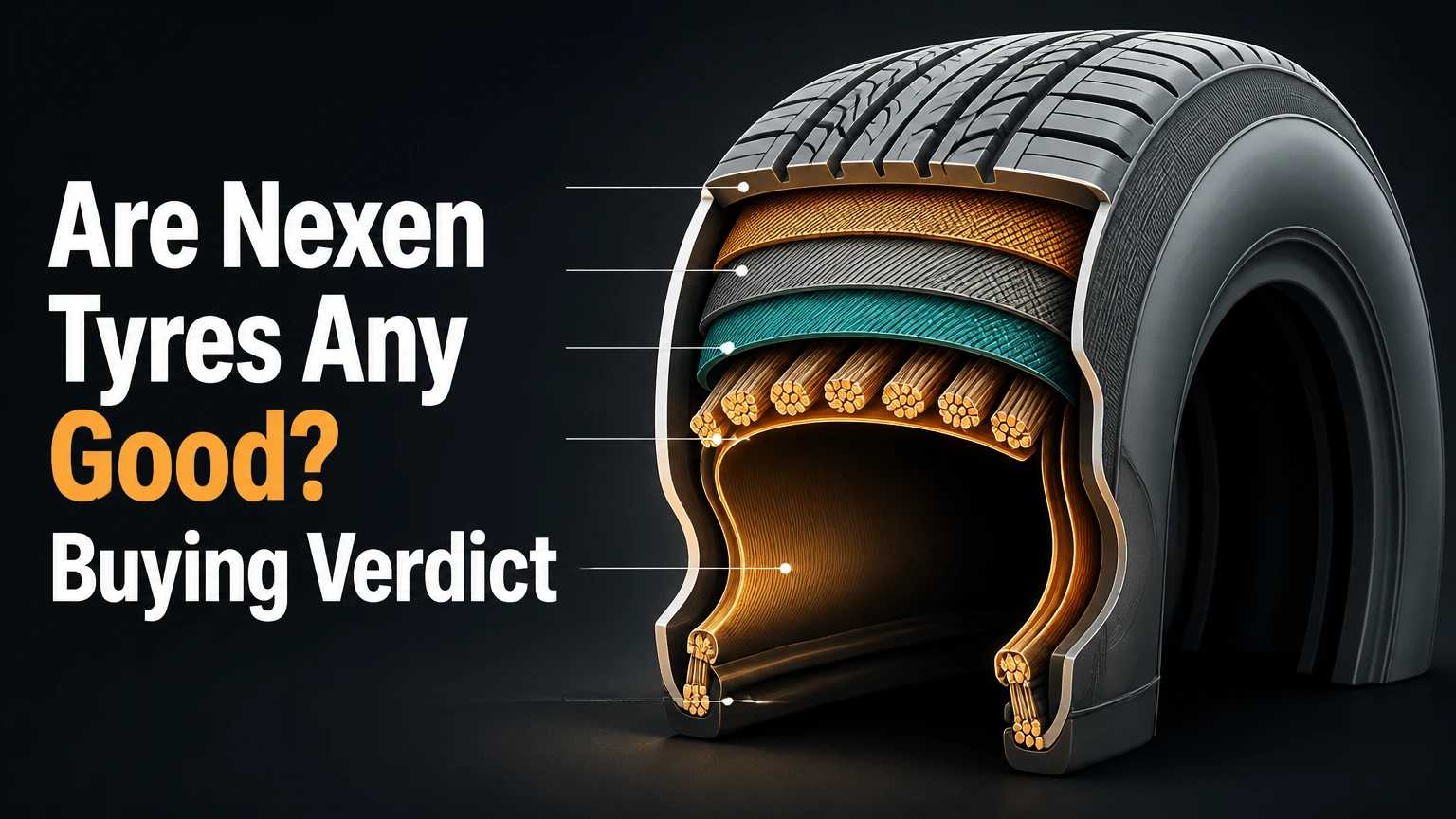
Nexen tyres use the conventional pneumatic radial architecture found across the modern passenger-tyre industry: a rubber tread, reinforcing belts, a textile or steel carcass, sidewalls, beads, and an inner liner. Silica, carbon black, polymers, steel, and other materials are combined to balance grip, durability, rolling resistance, and manufacturing consistency.
Nexen describes a production sequence involving compound mixing, bead preparation, tyre building, moulding, and curing. During curing, heat and pressure vulcanise the rubber and permanently form the tread pattern. These processes explain how a tyre is made, but they do not independently prove that one tread design will outperform another on a wet road.
The useful buying question is how the construction serves the vehicle. A reinforced SUV casing may tolerate load and rougher surfaces better than a soft performance casing, while a high-silica touring compound may prioritise wet traction and rolling resistance over steering feel.
How Do Tyre Features Affect Road Behaviour?
Tread grooves evacuate water, sipes create biting edges, shoulder blocks influence cornering, and the casing controls how accurately steering inputs reach the road. A wider tread is not automatically safer because contact pressure, compound chemistry, groove design, temperature, and vehicle setup also determine grip.
Nexen’s product families apply these trade-offs differently:
| Feature | Road effect | Nexen example | Main compromise |
|---|---|---|---|
| High-silica compound | Improves wet and cool-road grip | N’Blue touring lines | Can increase cost and compound complexity |
| Circumferential grooves | Channels standing water | N’Fera and touring patterns | Removes rubber from the contact area |
| Dense siping | Adds light-snow biting edges | N’Priz and all-season patterns | Softer steering response |
| Reinforced sidewall | Supports load and resists impacts | Roadian SUV lines | Firmer ride and higher weight |
| Stiff shoulder blocks | Improves cornering support | N’Fera Sport | Usually shorter tread life |
| Low-rolling-resistance design | Can reduce energy losses | EV-focused Nexen fitments | May trade away some steering feel |
Which Nexen Range Suits Your Vehicle?
The best Nexen range depends on vehicle class, weather, load, speed, and driving priorities. N’Blue and N’Priz generally address commuting and touring, N’Fera targets performance road use, Roadian covers SUVs and light trucks, and Winguard addresses winter conditions.
Model names and availability vary by country, tyre size, and production year. Always check the exact product code, not only the family name.
| Nexen range | Typical vehicle | Best operating situation | Important limitation |
|---|---|---|---|
| N’Blue | Hatchbacks, saloons, hybrids | Commuting, touring, mixed weather | Not intended for severe winter |
| N’Priz | Passenger cars and some EV fitments | Quiet daily use and moderate motorway travel | Model specification varies by market |
| N’Fera | Performance cars and fast saloons | Dry roads, wet motorways, responsive handling | Performance versions may wear sooner |
| Roadian HTX | Crossovers, SUVs, pickups | Highway driving with normal loads | Less suitable for mud and rocky terrain |
| Roadian AT | SUVs, pickups, utility vehicles | Gravel, trails, and occasional off-road use | More noise and rolling resistance on asphalt |
| Winguard | Cars and selected SUVs | Cold weather, snow, and winter roads | Seasonal storage and changeover may be needed |
Are Nexen Tyres Suitable for Electric Cars?
Nexen tyres can suit electric cars, but EV owners should select an approved size and load specification rather than fitting any tyre that physically fits the wheel. Electric vehicles are heavier, deliver immediate torque, and expose tread wear quickly, while low rolling resistance can affect driving range.
Look for the vehicle maker’s recommended load index, speed rating, acoustic specification, and EV-compatible marking where applicable. Some Nexen products use EV-oriented design strategies, but the correct choice remains vehicle-specific. A tyre with a higher load rating may support the mass but produce a firmer ride or greater rolling resistance.
A typical EV owner should check tread depth every 5,000-7,500 miles, rotate where the vehicle allows it, and monitor inner-edge wear. High torque can spin the driven wheels without dramatic driver input, accelerating shoulder and tread wear.
How Do Nexen Tyres Compare With Premium Brands?
Nexen tyres usually win on purchase price, while Michelin, Continental, and Bridgestone commonly win on ultimate wet braking, steering accuracy, noise control, and performance consistency near the legal wear limit. The difference is meaningful for fast driving, heavy rain, cold climates, and drivers who value maximum safety margin.
Independent test results vary by model, tyre size, vehicle, temperature, and test surface. A premium result for one Michelin pattern does not prove that every Michelin tyre beats every Nexen tyre, and a strong Nexen wet result does not erase premium advantages in other categories.
| Decision factor | Nexen mid-range tyre | Premium alternative | Practical consequence |
|---|---|---|---|
| Typical fitted price per tyre | About £65-£180 in the UK, or $80-$250 in the US | About £100-£280, or $180-$450 | Nexen can reduce initial set cost by roughly £140-£400 |
| Wet-road braking | Usually competent in current touring lines | Often class-leading in independent tests | Premium may provide more emergency margin |
| Steering response | Predictable, sometimes less immediate | Usually sharper and more linear | Premium suits enthusiastic driving |
| Road noise | Often acceptable when new | More consistent across surfaces | Nexen noise can increase with wear or uneven tread |
| Tread warranty | Model and market dependent, often 40,000-80,000 miles | Commonly similar or higher on touring lines | Warranty mileage is not a guaranteed lifespan |
| Deep-snow performance | Limited for all-season products | Requires a dedicated winter line | Neither brand wins without the right category |
The 20%-40% saving often quoted for Nexen is plausible in common replacement sizes, but it is not universal. A rare 20-inch SUV size, run-flat construction, reinforced load rating, or local retailer promotion can reverse the price gap.
Is Nexen Better Than a Budget Tyre?
Nexen is usually a safer value bet than an unknown budget tyre because the company has established product testing, OE programmes, published specifications, and wider dealer support. The advantage is not absolute, since a strong budget model can beat a poor Nexen model in a particular independent test.
Avoid deciding from price alone. Compare wet-grip label ratings, external test results, manufacturing date, warranty terms, and the retailer’s fitting quality. The cheapest tyre can become expensive if it produces poor wet confidence, rapid wear, or repeated balancing problems.
What Do Nexen Tyres Cost?
Nexen tyres typically cost about £65-£180 each for common UK passenger-car sizes, £100-£250 for many SUV sizes, and more for large, reinforced, run-flat, or specialist applications. In the United States, typical retail ranges are approximately $80-$130 for touring tyres, $110-$180 for performance products, and $130-$280 for Roadian SUV or all-terrain models.
Those figures exclude or vary with fitting, balancing, valves, disposal charges, taxes, delivery, and alignment. A four-wheel alignment may add roughly £60-£120 in the UK or $80-$180 in the US, but it can prevent premature wear that destroys a new set.
| Use case | Typical Nexen price per tyre | Typical set of four before fitting | Cost variable |
|---|---|---|---|
| Small hatchback touring | £65-£95 | £260-£380 | 15-17 inch size |
| Family saloon touring | £80-£140 | £320-£560 | Load and speed rating |
| Performance saloon | £100-£180 | £400-£720 | N’Fera size and rating |
| Crossover or SUV highway | £110-£210 | £440-£840 | XL, 18-20 inch size |
| SUV all-terrain | £130-£280 | £520-£1,120 | Sidewall and terrain construction |
A lower price is worthwhile when the tyre matches the vehicle and lasts acceptably. It is poor value when the saving funds a tyre that is unsuitable for frequent heavy rain, winter roads, towing, or demanding high-speed driving.
How Long Should Nexen Tyres Last?
Nexen tyres can last roughly 25,000-60,000 miles in typical mixed driving, although touring tyres used gently may exceed that range and performance or all-terrain tyres may fall below it. A mileage warranty of 40,000-80,000 miles is a warranty ceiling, not a promise that the tread will reach that distance.
Front-wheel-drive cars often wear front tyres faster, while powerful rear-wheel-drive cars can consume driven-axle tyres quickly. Aggressive acceleration, low pressure, toe misalignment, worn dampers, heavy loads, and infrequent rotation can reduce life dramatically.
Replace a tyre when tread reaches the legal limit, when damage appears, or when age and condition create concern. In the UK, the legal minimum is 1.6 mm across the central three-quarters of the tread around the complete circumference, but replacing before that point is sensible when wet performance has deteriorated.
What Causes Uneven Nexen Wear?
Uneven Nexen wear usually indicates alignment, inflation, suspension, wheel-balance, or rotation problems rather than a brand-wide defect. Inner-edge wear commonly points toward excessive toe or negative camber, while centre wear often follows overinflation and both shoulder edges suggest underinflation.
Use this diagnostic sequence:
- Measure all four cold pressures against the door-jamb placard.
- Inspect tread depth at inner, centre, and outer positions.
- Check for feathering by running a hand lightly across the tread.
- Request a four-wheel alignment if wear is asymmetric.
- Have the wheel and tyre checked for radial force variation if vibration persists.
- Inspect bushes, ball joints, dampers, and wheel bearings when alignment will not hold.
A vibration at 60-70 mph should not be dismissed as a soft Nexen compound. Road-force balancing can identify tyre uniformity or wheel issues that a conventional balance misses.
Can Nexen All-Season Tyres Handle Winter?
Nexen all-season tyres can handle cold rain, occasional light snow, and treated urban roads, but they are not the right choice for regular deep snow, black ice, steep untreated roads, or prolonged freezing conditions. Dedicated winter tyres remain more effective because their compounds stay flexible and their tread contains denser cold-weather biting edges.
Check the sidewall for the three-peak mountain snowflake symbol, known as 3PMSF, rather than relying on the words “all-season” or “M+S.” The symbol indicates a certified severe-snow performance test, although it still does not make an all-season tyre identical to a dedicated winter product.
A dedicated winter set is normally justified when temperatures remain below about 7°C for long periods or when snow and ice are frequent. Drivers in milder coastal or urban climates may prefer a capable all-season tyre, especially if storage and seasonal fitting would be impractical.
Who Should Buy Nexen Tyres?
Nexen tyres suit drivers who want controlled costs and dependable normal-road performance more than maximum handling performance. The strongest candidates are commuters, family-car owners, moderate-mileage drivers, and SUV owners who stay mainly on paved roads.
| Driver profile | Nexen suitability | Better choice when | Nexen category to inspect |
|---|---|---|---|
| Urban commuter | Strong | Low annual mileage and mixed rain | N’Blue or N’Priz touring |
| Family motorway driver | Good | Correct wet rating and regular rotation | Touring or highway pattern |
| EV owner | Conditional | Load, noise, and rolling resistance are verified | EV-approved fitment |
| Frequent snow driver | Weak for all-season | Roads remain icy or deeply snow-covered | Winguard or another winter tyre |
| Track or spirited-road driver | Limited | Steering precision is the priority | Premium performance tyre |
| Towing and heavy-load SUV owner | Conditional | Load index and heat capacity match use | Roadian highway or approved commercial fitment |
Nexen is not ideal for a driver who regularly brakes hard from high speed, drives mountain roads for enjoyment, or expects the quietest and most polished ride over several years. Premium tyres cost more because those margins require more expensive compounds, testing, casing refinement, and noise control.
What Are the Main Nexen Warranty Conditions?
Nexen warranty terms differ by country and product, so the retailer’s current written policy is more reliable than a general brand summary. Some markets provide limited workmanship coverage, mileage protection, roadside assistance, or road-hazard benefits, but these provisions can have separate time limits and exclusions.
Typical conditions include proof of purchase, original installation, regular rotation, correct inflation, alignment, and remaining legal tread. Punctures, impact breaks, racing damage, irregular wear from mechanical faults, and tyres bought outside the authorised distribution network may be excluded.
Before purchasing, confirm four details:
- The exact mileage allowance for the tyre model and size.
- Whether road-hazard cover lasts one year, a stated mileage, or another period.
- Whether roadside assistance is included in your country.
- What maintenance records are required for a claim.
Treat warranty mileage as a potential financial safeguard, not as evidence that the tyre will outperform a competitor.
What Are the Best Alternatives to Nexen?
The best alternative depends on the weakness you want to address. Michelin and Continental are logical upgrades for wet braking and refined handling, Bridgestone is strong across broad vehicle applications, Hankook often occupies a similar mid-range-to-premium position, and a dedicated winter specialist is preferable for severe cold.
| Alternative | Main reason to choose it | Typical price position | Most relevant buyer |
|---|---|---|---|
| Michelin | Wet braking, refinement, long-distance consistency | High, often £110-£280 per tyre | Safety-margin-focused motorway driver |
| Continental | Wet handling and steering accuracy | High, often £100-£260 | Driver prioritising balanced road performance |
| Bridgestone | Broad OE coverage and robust range | High, often £100-£270 | Mixed vehicle and touring applications |
| Hankook | Similar value with strong modern touring products | Mid to high, often £80-£210 | Buyer wanting a Nexen alternative |
| Goodyear | Wet-weather and all-season options | High, often £100-£250 | Driver needing broad climate coverage |
| Specialist winter brand | Snow and ice performance | Seasonal, often £90-£220 | Driver in regular severe winter conditions |
The correct comparison uses the same size, load rating, speed rating, and category. Comparing a Nexen touring tyre with a premium ultra-high-performance tyre creates a price and performance mismatch.
How Should You Choose a Nexen Tyre?
Choose a Nexen tyre by matching the product category first, then checking the exact specification, independent test evidence, price, date code, and fitting service. The most important decision is whether the tyre will face ordinary roads, severe winter, heavy loads, or demanding performance driving.
Use this buying process:
- Read the vehicle placard for size, pressure, load index, and speed rating.
- Decide whether you need touring, performance, highway SUV, all-terrain, all-season, or winter construction.
- Compare the exact model in the correct size, not a similarly named product.
- Check wet-grip labelling and 3PMSF status where winter use matters.
- Inspect the DOT date code or production date and avoid unusually old stock.
- Add fitting, balancing, disposal, and alignment to the real price.
- Confirm warranty and road-hazard terms before payment.
- Recheck pressures after fitting and inspect wear after the first 1,000 miles.
The tyre should be replaced if the tread, casing, age, or damage is questionable. Never mix radically different categories across the same axle, and follow the vehicle manufacturer’s rules for staggered sizes, four-wheel drive, and EV load requirements.
FAQ: Common Nexen Tyre Questions
Are Nexen tyres made in China?
Nexen tyres are manufactured in several locations, including South Korea and other international production facilities, depending on the product and market. Country of manufacture does not determine quality by itself; certification, specification, factory controls, age, and the exact model are more useful checks.
Do Nexen tyres have a good wet-grip rating?
Many Nexen touring and performance tyres offer competent wet grip, but ratings vary by model and size. Check the tyre label and independent tests for the exact product because a wet-grip grade from one Nexen pattern cannot be transferred to every N’Blue, N’Fera, or Roadian tyre.
Should I replace all four Nexen tyres together?
Replace all four when wear, age, or category differs significantly, especially on four-wheel-drive vehicles. If replacing only two tyres, fit the newer pair to the rear axle unless the vehicle manufacturer specifies another arrangement, because rear-axle grip helps reduce oversteer on wet roads.
Are Nexen tyres noisy?
Nexen noise depends on tread pattern, road surface, vehicle insulation, pressure, and wear. Highway and all-terrain patterns are naturally louder than touring tyres, while cupping or feathering can create a drone that indicates alignment, balance, or suspension trouble rather than normal brand behaviour.
How often should Nexen tyres be rotated?
Rotate Nexen tyres at the vehicle manufacturer’s interval, commonly every 5,000-8,000 miles, when the vehicle permits rotation. Directional, staggered, and asymmetric fitments have specific limits, so the fitting centre should follow the arrows and approved axle positions rather than swapping tyres indiscriminately.
The Bottom Line
Are Nexen tyres any good? Yes, Nexen tyres are a credible mid-range choice for ordinary commuting, family cars, crossovers, and moderate motorway driving when the model matches the vehicle and climate. They deliver useful savings, but Michelin, Continental, and Bridgestone generally retain advantages in wet braking, steering precision, winter grip, noise control, and worn-tread consistency.
Choose Nexen when value matters and your driving is conventional. Choose a premium or dedicated winter alternative when maximum safety margin, severe-weather traction, heavy towing, or enthusiastic handling matters more than the initial price. The exact tyre model, specification, pressure, alignment, and maintenance determine whether the purchase succeeds.