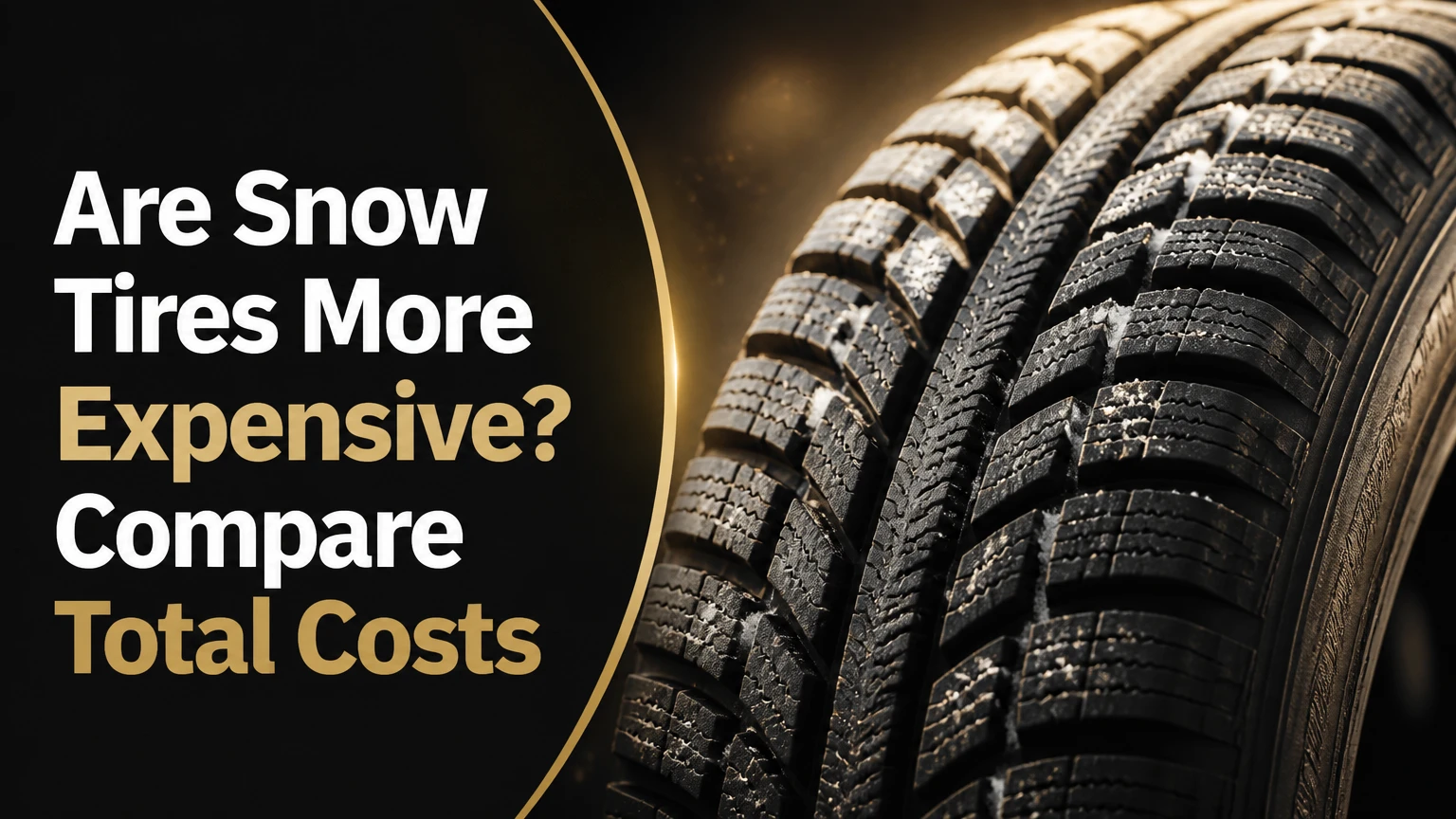
Snow tires are not inherently more expensive per tire than equivalent all-season or summer tires, but they often cost more to own initially because you need four winter tires, seasonal installation, and possibly separate wheels. Over several seasons, the cost can partially balance because your all-season tires remain stored and accumulate no summer mileage.
Key Facts
A typical set of four winter tires costs about $280-$1,200 or more, depending on size and brand.
A second wheel set commonly adds $200-$600 before taxes and installation.
Seasonal mounting and balancing commonly costs $60-$240 per year when tires share one set of wheels.
Winter tires generally perform best below 7°C, or 45°F, even when roads are dry.
A 3PMSF-marked tire passes a standardized packed-snow traction test, but the symbol does not guarantee equal ice braking among all models.
Winter tires should be installed on all four wheel positions, including front-wheel-drive vehicles.
Are Snow Tires More Expensive Per Tire?
Snow tires usually cost about the same as comparable all-season tires in the same size and performance category. A winter tire for a compact sedan may cost $70-$150, while a premium winter tire for a large SUV, performance vehicle, or electric vehicle can exceed $250 per tire.
The important comparison is between equivalent products. A basic all-season tire is not a fair price benchmark for a high-speed performance winter tire, and a 17-inch winter tire cannot be compared directly with a 15-inch all-season tire. Wheel diameter, load index, speed rating, brand warranty, compound technology, and vehicle weight all affect the price.
| Tire category | Typical price per tire | Set of four | Typical application |
|---|---|---|---|
| Budget winter tire | $70-$100 | $280-$400 | Compact sedan, low annual mileage |
| Mid-range winter tire | $100-$160 | $400-$640 | Sedan, CUV, regular commuting |
| Premium winter tire | $160-$300+ | $640-$1,200+ | SUV, EV, luxury vehicle, severe winter |
| Performance winter tire | $180-$350+ | $720-$1,400+ | Sports sedan, high-speed cold-weather driving |
Tire retailers commonly price winter models within the same broad range as all-season models, but winter inventory can become more expensive or scarce before the first major storm. Buying in late summer or early fall may provide more size availability than waiting until November.
What Does a Complete Winter Setup Cost?
A complete winter setup typically costs $400-$1,800 before tax, depending on whether the vehicle needs only tires or also needs wheels, TPMS sensors, storage, and repeated seasonal service. The first-year total is higher than the price shown on a tire retailer’s product page.
A tire-only setup uses the vehicle’s existing wheels. A wheel package includes winter tires mounted on a second set of steel or alloy wheels, allowing the shop to remove and install complete assemblies rather than repeatedly removing rubber from the same rims.
| Cost item | Tire-only setup | Separate-wheel setup | Typical payment timing |
|---|---|---|---|
| Four winter tires | $280-$1,200+ | $280-$1,200+ | First purchase |
| Steel or basic alloy wheels | $0 | $200-$600 | First purchase |
| TPMS sensors, if required | Usually included in existing wheels | $100-$250 | First purchase |
| Seasonal installation | $60-$240 per year | $40-$120 per year | Twice yearly |
| Seasonal storage | $50-$150 per year | $50-$150 per year | Annual |
| First-year typical total | $390-$1,590+ | $670-$2,320+ | First season |
These are typical planning figures, not fixed quotes. A shop may charge per wheel, per axle, or per seasonal appointment. Some dealerships include storage or installation in a service package, while independent tire shops may charge separately for balancing, valve stems, disposal, and torque checks.
The second wheel set is more expensive upfront but can reduce labor over time. It also reduces the number of times the tire bead is removed and refitted, which is useful for drivers who keep winter tires for several seasons.
Why Can Winter Tires Cost More Overall?
Winter tires can cost more overall because they add a second seasonal tire system, not because each tire necessarily carries a higher price. The extra system may include four tires, wheels, TPMS sensors, spring and fall installation, storage, and eventual replacement of both sets.
The lifecycle calculation is more balanced than the first invoice suggests. If a driver uses winter tires for five months and all-season tires for seven months, each set receives only part of the annual mileage. Both sets may therefore reach their replacement limits later than one year-round set would.
For example, assume the following typical costs:
- All-season set: $600, replaced every three years.
- Winter set: $600, replaced every four years.
- Seasonal mounting on one wheel set: $160 per year.
- Separate wheels: $400 once, with $80 annual changeover.
- Storage: $100 per year in either arrangement.
Over four years, the tire-only plan costs approximately $600 for the winter set, $600 for the all-season set, $640 for mounting, and $400 for storage. That produces about $2,240 before tax and unexpected repairs.
The separate-wheel plan costs approximately $1,200 for both tire sets, $400 for wheels, $320 for changeovers, and $400 for storage, or about $2,320. The difference is small in this example because tire replacement timing, labor rates, and storage policies determine the result.
When Does a Second Wheel Set Pay for Itself?
A second wheel set often pays for itself after three to six years when it reduces each seasonal service visit by $40-$100. The break-even point is calculated by dividing the wheel package price by annual labor savings.
For example, a $400 wheel package that saves $80 per year reaches simple break-even after five years. That calculation excludes TPMS sensors, wheel damage, storage, and the value of faster appointments.
A wheel package may still be worthwhile before break-even because it provides practical benefits:
- Fewer bead-removal operations.
- Faster seasonal installation.
- Lower risk of cosmetic damage to expensive factory wheels.
- Easier home inspection and emergency replacement.
- The option to use narrower, approved winter wheels.
Separate wheels are less attractive for a leased vehicle if the driver will return it after one or two winters. They are more attractive for ownership periods of five years or longer.
What Makes Winter Tires Different?
Winter tires use cold-flexible rubber compounds, dense siping, and tread designs that retain traction when temperatures fall below 7°C. The compound remains more pliable than many all-season compounds, allowing the tread to conform to small road irregularities on cold pavement.
Sipes are narrow grooves cut into tread blocks. They create additional biting edges and help the tread block open under load. Winter tread patterns also use larger voids and channels to move slush and compact loose snow into the tread.
The 3PMSF symbol means the tire passed a defined snow-traction test under the relevant regulatory standard. Michelin and Bridgestone both explain that winter performance depends on compound behavior and tread design, not on tread depth alone. The symbol does not mean every 3PMSF tire has the same ice braking, cornering, noise, or dry-road handling.
| Feature | Winter tire value | All-season limitation | Driving consequence |
|---|---|---|---|
| Cold-weather compound | Remains flexible below 7°C | Hardens progressively in cold | More grip on cold roads |
| Dense siping | Adds snow and ice edges | Lower sipe density on many models | Better acceleration and cornering |
| Deep tread voids | Moves slush and loose snow | Smaller or less aggressive voids | Lower slush-planing risk |
| 3PMSF certification | Confirms tested snow traction | Many ordinary all-seasons lack it | Better suitability for severe snow |
| Softer tread blocks | Improves cold traction | More stable in warm weather | More winter grip, less summer durability |
The trade-off is deliberate. A compound optimized for cold conditions usually wears faster, feels softer, and produces more tread noise when used in warm weather.
Which Types of Winter Tires Cost the Most?
Studded and premium performance winter tires often cost the most, while budget studless tires usually have the lowest purchase price. The right type depends on ice, snow depth, road maintenance, driving speed, local law, and vehicle fitment.
| Winter tire type | Typical set price | Best road condition | Main limitation |
|---|---|---|---|
| Budget studless | $280-$500 | Light snow and urban roads | Shorter warranty or lower refinement |
| Premium studless | $640-$1,200+ | Mixed snow, ice, and cleared pavement | Higher purchase price |
| Studded | $500-$1,300+ | Persistent hard ice and rural roads | Noise and seasonal legal restrictions |
| Performance winter | $720-$1,400+ | Cold wet pavement and light snow | Less deep-snow capability |
| All-weather 3PMSF | $500-$1,200+ | Mild-to-moderate winter | Faster summer wear than all-season tires |
Studless Winter Tires
Studless models are the most versatile winter choice for city drivers and highway commuters. They rely on flexible compounds and siping rather than metal pins, so they are quieter and more manageable on bare pavement.
Premium examples include the Bridgestone Blizzak WS90 and Michelin X-Ice Snow. Budget models can deliver meaningful snow improvement, but buyers should check independent test results, wet braking performance, warranty terms, and the tire’s minimum recommended tread depth.
Studded Winter Tires
Studded tires use metal or hard-material studs to create mechanical grip on glare ice. They can help on steep rural roads, hard-packed snow, and roads that remain icy for long periods.
Studded tires are noisy on dry pavement and may reduce smooth-road comfort. Several U.S. states, Canadian provinces, and European jurisdictions restrict their use by date, vehicle, or road surface. Check local transportation rules before purchase.
Performance Winter Tires
Performance winter tires preserve more steering response and higher speed capability in cold weather. Their tread often favors wet and dry pavement over deep snow, making them suitable for a performance sedan in a cold city rather than a rural mountain route.
A high speed rating does not turn a performance winter tire into a deep-snow tire. Buyers should prioritize the vehicle manufacturer’s load requirement and winter conditions over the letter on the sidewall.
All-Weather Tires
All-weather tires are a compromise between standard all-season tires and dedicated winter tires. A qualifying all-weather model carries the 3PMSF symbol and can remain installed year-round, which eliminates seasonal mounting and storage costs.
All-weather tires usually provide less ice and deep-snow traction than dedicated winter tires and may wear faster during hot summers. They fit drivers in regions with occasional snow, moderate temperatures, and limited severe-ice exposure.
Does AWD Eliminate the Need for Winter Tires?
All-wheel drive improves acceleration but does not eliminate the need for winter tires because braking and cornering depend primarily on tire-road grip. An AWD vehicle with all-season tires can accelerate confidently and still require substantially more distance to stop on ice.
AWD distributes engine torque among wheels, but it cannot create friction where the tire compound has hardened. Winter tires benefit front-wheel-drive, rear-wheel-drive, and AWD vehicles alike.
The benefit is largest for drivers who regularly encounter packed snow, freezing rain, steep grades, or unplowed roads. Drivers in a warm region with rare snow may reasonably choose high-quality all-season or all-weather tires instead, provided local law and driving conditions allow it.
When Should Winter Tires Be Installed?
Winter tires should usually be installed when temperatures routinely fall below 7°C, or 45°F, rather than waiting for the first snowfall. Many drivers schedule installation in October or early November, but the correct timing depends on local nighttime temperatures and appointment availability.
Installing too early increases warm-weather wear. Installing too late leaves the vehicle on a less suitable compound during cold rain or an early freeze.
Use the vehicle door-jamb placard and owner’s manual to verify:
- Tire size and approved alternative sizes.
- Load index and speed rating.
- Wheel diameter and offset.
- TPMS sensor compatibility.
- Clearance around brake calipers.
- Rotation direction for directional tires.
A narrower winter tire can sometimes improve performance in deep snow and reduce wheel cost, but downsizing is safe only when the vehicle manufacturer or a qualified tire professional approves the complete wheel and tire specification.
Can Snow Tires Stay on Year-Round?
Snow tires should not stay on year-round because warm pavement accelerates tread wear and can lengthen braking distances. The soft winter compound loses its handling precision during hot weather, especially during emergency maneuvers on dry roads.
Remove winter tires when sustained spring temperatures remain above approximately 7°C. Wash salt and road debris from the tires, dry them completely, and store unmounted tires upright or stacked according to the manufacturer’s guidance; mounted wheel assemblies can be stored horizontally or vertically if supported without distortion.
Keep tires away from direct sunlight, ozone-producing electrical equipment, solvents, and heat sources. Record their position, inspect for cuts, and check tread depth before the next installation.
Winter tires can become unsuitable before the tread reaches the legal wear indicator. Many manufacturers recommend replacement when winter traction is no longer adequate, often around 4/32 inch of remaining tread for snow use, although the exact threshold varies by manufacturer and jurisdiction.
Can Buying Used Winter Tires Reduce the Cost?
Used winter tires can reduce the purchase price, but age, tread depth, storage history, and hidden damage determine whether the saving is worthwhile. A tire with deep tread may still have hardened rubber after years of heat exposure or improper storage.
Before buying used winter tires, verify:
- The DOT date code, which identifies the week and year of manufacture.
- Matching size, load index, speed rating, and 3PMSF status.
- At least 5/32 inch of usable tread for meaningful snow service.
- No sidewall bulges, puncture repairs near the shoulder, cracks, or exposed cords.
- Even wear across all four tires.
- A remaining manufacturer warranty, if applicable.
Do not mix two very different winter tire models on the same axle. On AWD vehicles, consult the manufacturer because some systems require closely matched rolling circumference across all four positions.
The cheapest used set is a poor bargain if mounting reveals vibration, bead damage, or internal separation. A professional inspection before installation costs less than replacing a damaged tire after a winter failure.
How Long Do Snow Tires Last?
Snow tires commonly last four to six seasons or about 18,000-25,000 miles, equivalent to roughly 30,000-40,000 kilometers, when used only during winter and maintained correctly. Heavy commuting, aggressive cornering, warm-weather use, and rough pavement can reduce that lifespan.
The calendar age also matters. Rubber compounds age even when tires are stored, so inspect older tires for cracking and consult the manufacturer’s replacement guidance. Tire industry organizations generally recommend professional inspection once tires reach six years and replacement by ten years from manufacture, although manufacturer limits may be shorter.
| Usage pattern | Typical seasonal mileage | Likely service life | Main wear risk |
|---|---|---|---|
| Occasional city driving | 2,000-4,000 miles | 5-6 seasons | Aging before tread wear |
| Daily suburban commute | 4,000-6,000 miles | 4-5 seasons | Tread and shoulder wear |
| Mountain highway driving | 6,000-8,000 miles | 3-4 seasons | Abrasion and heat |
| Year-round use | 10,000+ miles | Often under 2 seasons | Rapid warm-weather wear |
Check inflation monthly and after major temperature changes. The National Highway Traffic Safety Administration notes that tire pressure changes with temperature, while the commonly used planning rule is about 1 psi for every 10°F change, though the exact change varies by tire and atmospheric conditions.
Are Snow Tires More Expensive Than All-Season Tires Over Time?
Snow tires are often more expensive over time for low-mileage drivers in mild climates, but the difference can shrink for drivers who use two sets for many seasons. The financial result depends on tire prices, annual mileage, installation, storage, heat exposure, and replacement intervals.
| Driver profile | Best-value setup | Typical reason | Estimated annual service cost |
|---|---|---|---|
| Warm climate, rare snow | All-season tire | No seasonal changeover | $0-$60 |
| Mild winter, occasional snow | 3PMSF all-weather | Avoids two tire sets | $0-$100 |
| Regular snow, maintained roads | Studless winter plus all-season | Better cold braking | $100-$300 |
| Severe ice and rural grades | Studded winter plus all-season | Mechanical ice grip | $120-$350 |
| High annual mileage, stored wheels | Two wheel assemblies | Lower changeover labor | $40-$170 |
The cost question should therefore be treated as a safety and use-case decision. A driver who encounters snow twice a year may not recover the added expense, while a commuter who drives through freezing temperatures for five months may value the traction even when the accounting difference is modest.
What Are the Most Common Cost and Safety Mistakes?
The most expensive winter tire mistakes usually involve buying the wrong specification, installing only two tires, or leaving a soft winter compound on hot pavement. Each error can create premature replacement costs or unstable handling.
- Buying only two winter tires: Four tires with similar traction characteristics are required for predictable balance. Two winter tires on the drive axle can make the other axle lose grip during braking or cornering.
- Ignoring tire size: A cheaper tire in the wrong load index or diameter is not a valid substitute. Confirm fitment before paying.
- Skipping TPMS checks: A second wheel set may need compatible sensors, sensor programming, or relearn procedures.
- Leaving tires on too long in spring: Warm pavement can destroy tread quickly and reduce wet-road handling.
- Storing tires wet: Salt and moisture can corrode wheels and damage rubber surfaces.
- Ignoring vibration after installation: Snow or ice inside the wheel, incorrect balance, or a bent rim can cause vibration at highway speed.
- Using the door-placard pressure incorrectly: Inflate to the vehicle manufacturer’s cold-pressure specification, not the maximum pressure printed on the tire sidewall.
A practical rule from tire service work is to measure tread, pressure, and age before each season rather than relying on appearance. Winter traction can decline before a casual visual inspection reveals a problem.
Which Setup Should Each Driver Choose?
City Driver With Regular Snow
A premium or well-reviewed studless winter set on a second wheel package is usually the strongest choice. The setup handles cold pavement, slush, packed snow, and occasional ice without the noise and legal restrictions associated with studs.
Rural or Mountain Driver
A studless severe-snow tire or legally permitted studded tire may be appropriate when roads remain icy and unplowed. Confirm local stud restrictions, carry emergency equipment, and prioritize load rating because rural routes often involve heavier vehicles and rougher surfaces.
Budget-Conscious Driver
A reputable value-tier studless tire is safer in winter conditions than a premium all-season tire that lacks a cold-weather compound. Save money through approved wheel downsizing, early purchasing, and a tire package that includes installation, rather than choosing an unknown tire with no reliable warranty information.
Mild-Winter Driver
A 3PMSF all-weather tire can provide the lowest ownership complexity when snow is occasional and severe ice is uncommon. The driver gives up some dedicated-winter traction and may accept faster summer wear, but avoids a second set, storage, and twice-yearly appointments.
Electric Vehicle Owner
EV owners should check the tire’s load index, rolling-resistance characteristics, and manufacturer approval. Battery weight can increase tire loading, while a softer winter compound may reduce range during cold weather. A correct winter tire can improve control, but it cannot prevent the normal range loss associated with low temperatures.
The Bottom Line
Are snow tires more expensive? Individual snow tires are not automatically more expensive than equivalent all-season tires, but a dedicated winter setup usually costs more at the beginning because it adds four tires and possibly wheels, sensors, storage, and seasonal labor. Over four to six seasons, reduced mileage on each set can narrow the ownership gap.
Choose dedicated winter tires when temperatures regularly fall below 7°C, snow or ice is frequent, or stopping performance matters more than convenience. Choose 3PMSF all-weather tires when winters are mild and infrequent. Compare the complete four-year cost, not the price of one tire.
Frequently Asked Questions
Are winter tires cheaper than all-season tires?
Winter tires can be cheaper, similar in price, or more expensive than all-season tires in the same size. Budget winter tires may cost $70-$100 each, while premium all-season tires can exceed $200. The meaningful comparison includes four tires, installation, storage, wheel packages, and replacement timing.
Do snow tires increase fuel consumption?
Snow tires can slightly increase fuel consumption because their tread compounds and patterns create more rolling resistance. The effect varies by model, pressure, temperature, vehicle, and driving speed. Underinflation creates a separate efficiency penalty, so maintain the vehicle’s recommended cold pressure throughout winter.
Does insurance cost less with winter tires?
Some insurers offer winter-tire discounts, but eligibility and savings vary by insurer, region, vehicle, and installation dates. Ask the insurer for written requirements, which may include four qualifying tires, a 3PMSF marking, approved dimensions, and installation within specified seasonal dates.
How much tread should winter tires have?
Winter tires should generally retain more tread than the legal minimum to perform well in snow. Many tire professionals use about 5/32 inch as a practical replacement-planning point, while some manufacturers cite 4/32 inch for reduced snow capability. Follow the tire maker’s guidance and local law.
Can I use snow tires on only the front wheels?
Do not install snow tires only on the front wheels. Front-only winter tires can improve forward traction while making the rear axle lose grip during braking or turns, increasing oversteer risk. Install four matching or closely matched winter tires unless the vehicle manufacturer specifies another arrangement.