Studded snow tires are worth the cost when your regular winter routes include glare ice, refrozen freezing rain, steep untreated roads, or hard-packed snow that remains slippery after plowing. They are usually not worth it for commuters who spend most winter miles on plowed pavement, because studless winter tires are quieter, often stronger on wet and dry roads, and face fewer legal restrictions.
Key Facts at a Glance
- Studded winter tires provide their largest advantage on polished or glazed ice, not on ordinary loose snow.
- A Washington State Department of Transportation test reported a 30-mph ice stop of about 92 feet for a studded tire and about 182 feet for a studless winter tire in that test setup.
- Studded tires create more road noise and can wear pavement, while studless tires provide quieter year-round winter compliance in most jurisdictions.
- Factory-studded tires arrive ready to use; studdable tires must be studded while new if you want reliable seating.
- Most drivers should install four matching winter tires, never only two studded tires on one axle.
- Local law determines when studded tires may be used, and rules differ by state, province, road, vehicle, and season.
What Are Studded Winter Tires?
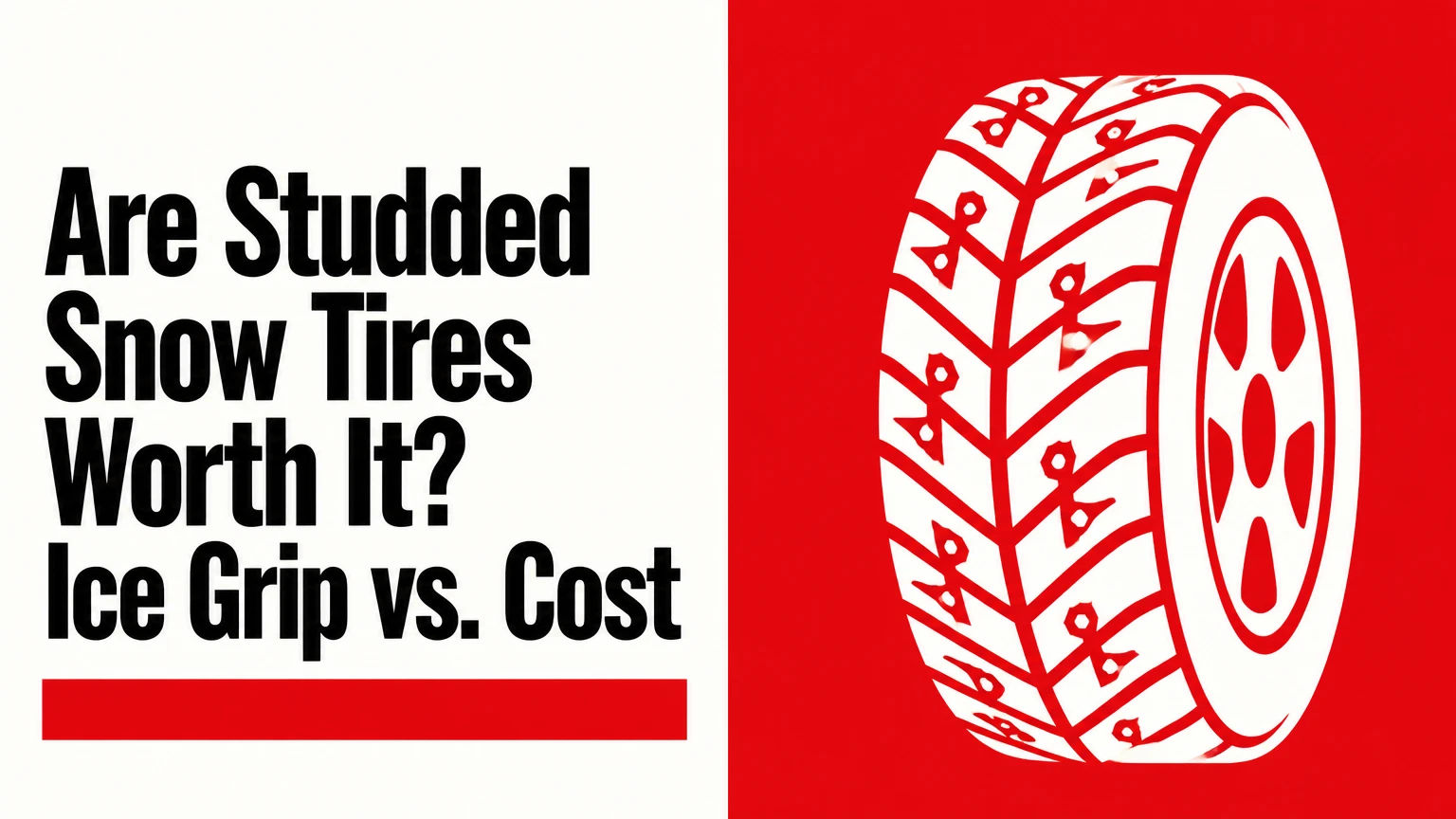
Studded winter tires combine a flexible cold-weather rubber compound with small metal pins molded into the tread. The rubber remains pliable below freezing, while each stud creates a concentrated point of pressure that can bite into hard ice and increase resistance to sliding.
The central benefit is mechanical grip. A conventional rubber tire depends on tread compound, microscopic texture, and tread edges; a studded tire adds a physical interface between the tread and the ice. That difference matters most when a smooth ice film prevents rubber from generating enough shear resistance for braking or cornering.
A stud is not a nail inserted randomly into a normal tire. Approved winter tires contain reinforced stud pockets, a specified stud layout, and a tread design intended to keep the metal pin supported as the tire flexes. Stud count varies by tire size and model, but approximately 100-250 studs per tire is a typical retail range.
Studded tires do not make black ice safe. They cannot overcome excessive speed, poor visibility, worn tread, incorrect inflation, or a road surface that contains loose gravel over ice.
How Do Studs Improve Ice Traction?
Studs improve ice traction by penetrating microscopic irregularities in the ice and converting some tire slip into localized mechanical resistance. The benefit is strongest on smooth, hard, wet ice near the freezing point, where rubber friction alone is most compromised.
Ice is not equally slippery at every temperature. Near 32°F (0°C), a thin water film can form on the surface, reducing rubber grip; a stud can pierce that film and engage the harder ice below. At much colder temperatures, ice becomes harder and less ductile, so stud penetration becomes more difficult, although studs do not suddenly become ineffective at 0°F.
The Washington State Department of Transportation’s studded-tire research documented a major ice-braking difference in one controlled 30-mph test: the studded tire stopped in approximately 92 feet, while the studless winter tire required approximately 182 feet. That result is useful for understanding the possible advantage, but it is not a universal stopping-distance promise because tire models, temperature, ice texture, vehicle, ABS calibration, load, and test protocol change the result.
Studless tires can remain highly competitive in cold snow and on mixed surfaces. Their advanced silica compounds, dense sipes, interlocking blocks, and flexible tread often produce strong acceleration and braking on packed snow without the noise and pavement wear associated with metal studs.
Do Studs Work Below 0°F?
Studs still contribute below 0°F, but their relative advantage can narrow because very cold ice resists penetration. A premium studless winter tire may approach or exceed a studded tire in some extremely cold, snowy, or dry-road tests, so temperature alone should not determine the purchase.
The more useful question is whether your route repeatedly contains polished ice. A driver in a cold continental climate with mostly loose snow may prefer studless tires; a driver in a warmer freeze-thaw climate with repeated refreezing may gain more from studs.
What Types of Winter Tires Can You Buy?
The three main choices are factory-studded tires, studdable tires, and studless winter tires. A fourth category, retractable-stud technology, exists in limited product lines and generally costs more than conventional winter tires.
| Tire type | Typical construction | Typical use case | Main trade-off |
|---|---|---|---|
| Factory-studded | 100-250 installed metal studs per tire | Frequent glare ice and untreated roads | Highest noise and legal exposure |
| Studdable, left bare | 0 installed studs, molded stud pockets | Variable winter conditions | Usually less specialized than premium studless designs |
| Studdable, newly pinned | 100-250 shop-installed studs per tire | Buyer wants a selectable ice setup | Must be studded before meaningful road use |
| Studless winter | 0 metal studs, high-silica compound and sipes | Plowed roads, snow, slush, mixed pavement | Less mechanical grip on polished ice |
Factory-studded tires use a manufacturer-engineered stud layout. Examples include the Nokian Hakkapeliitta family and Michelin X-Ice North products, although exact availability depends on market and tire size.
Studdable tires contain empty pockets designed for a compatible stud. A tire shop uses a pneumatic studding tool to insert the pins, usually with lubrication and a depth check. Do not drive a studdable tire for weeks and then expect perfect stud installation. Dirt, sand, and road debris can fill the pockets and prevent proper seating.
Retractable or adaptive stud systems use a movable stud and a supporting base layer that changes behavior with temperature or road conditions. These designs may reduce noise or surface contact, but the technology, legality, availability, and replacement cost vary by market.
How Do Studded and Studless Tires Compare?
Studded tires win on polished ice, while premium studless winter tires usually provide the better compromise for mixed winter pavement. The right choice depends on the percentage of your winter miles spent on untreated ice rather than the total amount of snow in your region.
| Decision factor | Studded winter tire | Premium studless winter tire | All-weather tire |
|---|---|---|---|
| Glare-ice braking | Shortest in many controlled tests | Strong, but usually behind studs on polished ice | Weaker than winter-specific designs |
| Packed-snow traction | High, with metal and winter compound | High, with sipes and flexible rubber | Moderate to high, depending on model |
| Wet pavement braking | Often reduced by lower rubber contact | Usually strong at winter temperatures | Stronger above freezing on some models |
| Dry-road noise | Approximately 3-8 dB higher in typical cabin comparisons | Similar to a quiet touring winter tire | Similar to an all-season tire |
| Road-surface wear | Can abrade asphalt and expose aggregate | No metal-stud abrasion | No metal-stud abrasion |
| Seasonal legality | Restricted in multiple jurisdictions | Usually permitted year-round | Usually permitted year-round |
| Typical retail price | $120-$250 or more per tire | $110-$240 or more per tire | $130-$250 or more per tire |
| Best route profile | Untreated ice, rural hills, freeze-thaw roads | Plowed snow, slush, mixed city routes | Moderate snow with one-tire strategy |
The frequently cited 92-foot versus 182-foot ice-braking comparison shows why studs can matter, but the result should be treated as a controlled example rather than a guaranteed real-world ratio. On wet asphalt, dry pavement, and loose snow, the gap can shrink substantially or reverse.
All-wheel drive changes acceleration, not the basic laws of braking. An AWD vehicle with four worn all-season tires can still stop poorly on ice, while a front-wheel-drive vehicle with four high-quality winter tires may brake and steer more predictably.
Which Tire Stops Best on Ice?
A properly fitted studded winter tire generally stops shortest on smooth glare ice, especially around the freezing point. A premium studless tire can deliver nearly comparable performance in some cold or textured conditions, and it may stop shorter on wet or dry pavement.
Braking performance also depends on tread depth. A winter tire at 5/32 inch may have less snow evacuation and ice-edge effectiveness than the same model at 10/32 inch, regardless of whether studs remain visible. Tire pressure, wheel alignment, ABS operation, and vehicle load matter as well.
Which Tire Is Quieter?
Studless winter tires are quieter because their tread contains no metal pins repeatedly contacting bare pavement. Studded tires can produce a clicking sound at low speeds and a persistent hum at highway speed, with the perceived volume affected by vehicle insulation, pavement texture, tire pressure, and stud design.
Noise is not merely cosmetic for drivers who spend two hours daily on dry highways. Fatigue, phone-call difficulty, and reduced comfort can make a tire that is technically more capable on ice a poor fit for a predominantly clear-road commute.
Are Studded Snow Tires Worth It for Your Driving?
Studded snow tires are worth it for drivers who encounter untreated ice often enough that a rare emergency stop justifies higher noise, restrictions, and pavement impact. Studless winter tires are the stronger default for most urban and suburban drivers whose roads are plowed, salted, or wet rather than continuously icy.
| Driver situation | Typical winter exposure | Recommended tire | Reason |
|---|---|---|---|
| Rural morning commuter | 40-80% untreated roads before 7 a.m. | Factory-studded | Repeated hard ice and delayed plowing justify mechanical grip |
| Mountain resident | 20-50% steep packed-ice roads | Studded or severe-service studless | Route grade and refreeze frequency drive the decision |
| Urban commuter | 70-95% plowed or wet pavement | Premium studless | Lower noise and stronger mixed-surface behavior |
| Occasional skier | 5-15 mountain trips each winter | Studless plus chains where legal | Studs add daily compromises for infrequent exposure |
| Moderate-snow budget buyer | 10-30 snow days, mostly cleared roads | Studdable left bare or studless | Flexibility matters more than maximum ice grip |
| Remote worker or low-mileage driver | Fewer than 3,000 winter miles | Studless or all-weather | Studded benefits may not offset ownership and storage costs |
Rural and Mountain Routes
Rural and mountain drivers gain the clearest value from studs when roads remain untreated for hours, freezing rain refreezes overnight, or a steep descent contains polished wheel tracks. A driver who must travel before plows and salt trucks arrive faces a different risk profile from someone who can delay a trip.
Studs are less useful on deep, loose snow than many buyers assume. Tread design and vehicle control matter more there, while studs matter most after traffic compresses snow into a hard, slippery layer.
Urban and Suburban Routes
Urban drivers usually should choose studless winter tires. Frequent bare asphalt exposes the noise, reduced road contact, pavement wear, and legal limitations of studded models without providing enough ice exposure to repay those compromises.
A premium studless tire such as the Michelin X-Ice Snow or Bridgestone Blizzak WS90 is designed for snow, cold wet pavement, and changing city conditions. Exact performance varies by size and vehicle, so independent testing and correct fitment matter more than brand reputation alone.
Occasional Winter Travelers
Occasional mountain travelers should usually buy studless winter tires and carry approved chains or traction devices if local rules permit and the vehicle manufacturer allows them. Chains can provide exceptional short-term traction, but they require practice, have speed limits, and may be prohibited in wheel wells with limited clearance.
How Much Do Studded Tires Cost?
A four-tire studded setup typically costs $480-$1,000 before tax, mounting, storage, and seasonal changeovers. Studdable tires generally add about $15-$30 per tire for shop installation, while a second wheel set can reduce repeated mounting costs over several seasons.
| Cost item | Typical range | Timing | Four-tire example |
|---|---|---|---|
| Studded tire | $120-$250 each | Initial purchase | $480-$1,000 |
| Studding service | $15-$30 each | Before road use | $60-$120 |
| Mount and balance | $20-$40 each | Each installation | $80-$160 |
| Seasonal storage | $50-$150 per season | Annual | $50-$150 |
| Replacement after damage | $120-$250 each | As needed | $120-$1,000 |
| Second wheel set | $400-$1,200 | Initial purchase | $400-$1,200 |
Typical service pricing varies by region, tire size, vehicle, and whether the shop accepts customer-supplied tires. A second set of inexpensive steel wheels can preserve tire beads and reduce seasonal labor, but the initial purchase increases break-even time.
Studded tires often last four to five winter seasons when stored indoors, rotated according to the vehicle manufacturer’s pattern, and removed during the legal spring deadline. A typical usable life is approximately 15,000-20,000 winter miles, although dry-road exposure, aggressive acceleration, alignment, and tread depth can shorten it.
Are Studded Tires Legal Where You Live?
Studded tire legality is jurisdiction-specific, and many regions limit use to winter dates, certain roads, or specific weather conditions. Washington, Oregon, Alaska, several Canadian provinces, and northern states have different rules, so drivers should verify current transportation-agency regulations before purchase.
Rules may specify:
- A permitted period, such as November through March.
- A date extension when road conditions remain hazardous.
- Exemptions for emergency vehicles, rural routes, or certain vehicle classes.
- Maximum stud projection or approved tire standards.
- Fines, insurance implications, or road restrictions after the deadline.
Studless winter tires are generally legal outside studded-tire restrictions, but “legal” does not mean every tire is suitable for every chain-control route. Some mountain passes require chains or qualifying traction tires, and local definitions can differ by tread marking, axle configuration, and weather event.
Check your state or provincial transportation department, not only a retailer’s summary page. Confirm the law for your registration location and the roads you expect to use.
How Are Studdable Tires Installed and Broken In?
A tire shop should install studs only in a new, unused studdable tire, using the manufacturer-approved stud type and insertion depth. The technician typically cleans the pockets, applies lubricant, uses a pneumatic insertion tool, checks seating, and balances the completed wheel.
The installation process is:
- Inspect the new tire. Confirm that every stud pocket is clean and undamaged.
- Match the stud. Use the tire maker’s specified stud diameter and length.
- Lubricate the pocket. A compatible soapy solution reduces insertion friction.
- Insert the stud. A pneumatic tool seats the flange at the pocket base.
- Check protrusion. The pin should project consistently, often around 1 millimeter above the tread, subject to the tire specification.
- Mount and balance the wheel. Uneven stud installation or packed debris can contribute to vibration.
- Break in the tire. Drive gently for approximately 300 miles, avoiding hard acceleration, emergency-style braking, and sharp cornering when conditions permit.
The break-in period allows the rubber surrounding each stud to settle. There is no curing process that makes reckless driving safe, and manufacturer instructions take priority over generic mileage advice.
What Are the Main Drawbacks and Failure Modes?
The main disadvantages of studded tires are pavement noise, road wear, legal restrictions, reduced convenience on clear roads, and stud loss. Those disadvantages become expensive when a vehicle spends most winter miles on dry pavement rather than ice.
A common practitioner rule is to judge studs by route exposure, not snowfall totals. A region with 60 inches of snow that is consistently plowed may favor studless tires, while a region with 15 inches of snow and frequent freezing rain may justify studs.
Watch for these failure modes:
- Installing only two studded tires: Unequal axle grip can destabilize braking and cornering. Use four matching winter tires.
- Spinning the wheels aggressively: Wheelspin on dry pavement can tear studs from their pockets.
- Driving a studdable tire before pinning: Debris can contaminate the empty pockets.
- Ignoring vibration: Packed snow, imbalance, a damaged wheel, or a displaced stud can cause high-speed vibration.
- Keeping tires past safe tread depth: Visible metal does not compensate for hardened rubber or inadequate tread.
- Leaving studs on all summer: Warm dry roads accelerate wear and may violate local law.
A few missing studs do not automatically make a tire unusable, but a concentrated missing section, exposed pocket damage, vibration, or major stud loss requires professional inspection. Replacing individual studs after road contamination is often unreliable.
What Is the Best Alternative to Studded Tires?
The best alternative for most drivers is a premium studless winter tire mounted on all four wheels. All-weather tires suit moderate climates and drivers who cannot change tires seasonally, while tire chains suit temporary severe conditions rather than daily commuting.
| Alternative | Winter capability | Summer convenience | Typical limitation |
|---|---|---|---|
| Premium studless winter | High snow and cold-wet performance | Must be removed in warm weather | Less grip on polished ice than studs |
| All-weather tire with 3PMSF marking | Moderate to high snow performance | Can remain installed year-round | Weaker cold-ice performance than winter tires |
| Tire chains | Very high short-term traction | Stored off the vehicle | Speed limits and installation time |
| Cable chains | Moderate short-term traction | Compact storage | Lower durability on rough roads |
| Standard all-season tire | Moderate in light snow | Year-round convenience | Harder compound and weaker ice grip |
| Automatic traction device | High emergency traction in some cases | Limited route use | Vehicle clearance and legal restrictions |
The Three-Peak Mountain Snowflake, or 3PMSF, marking indicates that a tire meets a standardized severe-snow performance test. It does not mean the tire equals a dedicated winter tire on ice, and it does not guarantee compliance with every chain-control rule.
Which Tire Should You Choose?
Choose Studded Tires If You Drive Untreated Ice
Choose factory-studded tires if untreated or polished ice appears on your normal route at least several times each winter, particularly on hills, rural roads, bridge decks, and shaded mountain sections. Confirm legality first and budget for four tires, seasonal storage, and additional road noise.
Choose Studless Winter Tires for Mixed Pavement
Choose premium studless winter tires if your route combines plowed snow, slush, wet pavement, and dry highway. Studless tires provide a quieter, less restricted setup and often offer more balanced braking across the surfaces you actually encounter.
Choose All-Weather Tires for Moderate Conditions
Choose 3PMSF all-weather tires if snowfall is occasional, winter temperatures are moderate, and changing tires twice yearly is impractical. Do not select them as a substitute for dedicated winter tires when glare ice or prolonged subfreezing conditions dominate.
Choose Chains for Infrequent Severe Trips
Choose chains or approved traction devices if severe mountain travel happens only a few times per season. Practice installation at home, verify wheel-well clearance, and follow the vehicle manual and road authority’s speed limits.
FAQ
Do Studded Tires Help on Black Ice?
Studded tires can improve black-ice traction by mechanically engaging the ice surface, but black ice may be too thin, wet, irregular, or contaminated for consistent stud performance. Reduce speed before suspected icy sections, increase following distance, and avoid abrupt steering or braking inputs.
Can You Put Studded Tires on Only Two Wheels?
Do not install studded winter tires on only two wheels. A two-tire setup creates a grip imbalance between axles, which can produce oversteer or understeer during braking and cornering; install four matching winter tires with compatible size, load index, and speed rating.
Are Studded Tires Better Than AWD?
AWD and studded tires solve different problems. AWD can improve acceleration by distributing engine torque, while studded tires can improve braking and lateral grip on ice; AWD does not prevent a vehicle from sliding, and all four tires still determine contact with the road.
How Long Do Studded Snow Tires Last?
Studded snow tires typically last four to five winter seasons or about 15,000-20,000 winter miles when stored correctly and used during legal winter months. Replace them sooner if tread depth, cracking, uneven wear, hardened rubber, or substantial stud loss reduces winter performance.
Can You Remove Studs From a Studded Tire?
Removing studs does not convert a studded tire into a premium studless tire. The empty pockets remain, the tread was engineered around the studs, and removal can damage the rubber; replace the tires with a purpose-built studless model instead.
Should You Buy Studdable Tires and Add Studs Later?
Buy studdable tires and add studs later only if the tires are new, the shop supports the exact model, and your route may require more ice grip. Once driven, empty pockets can collect debris, so delayed installation may produce poor seating and premature stud loss.
The Bottom Line
Are studded snow tires worth it? They are worth it when glare ice, refrozen freezing rain, steep untreated roads, and early-morning rural travel define your winter driving. For mostly plowed city roads, wet pavement, slush, and dry highway miles, premium studless winter tires usually deliver the better overall balance of grip, quiet operation, legality, and cost.