Are All Terrain Tires Good for Winter? A Clear Verdict
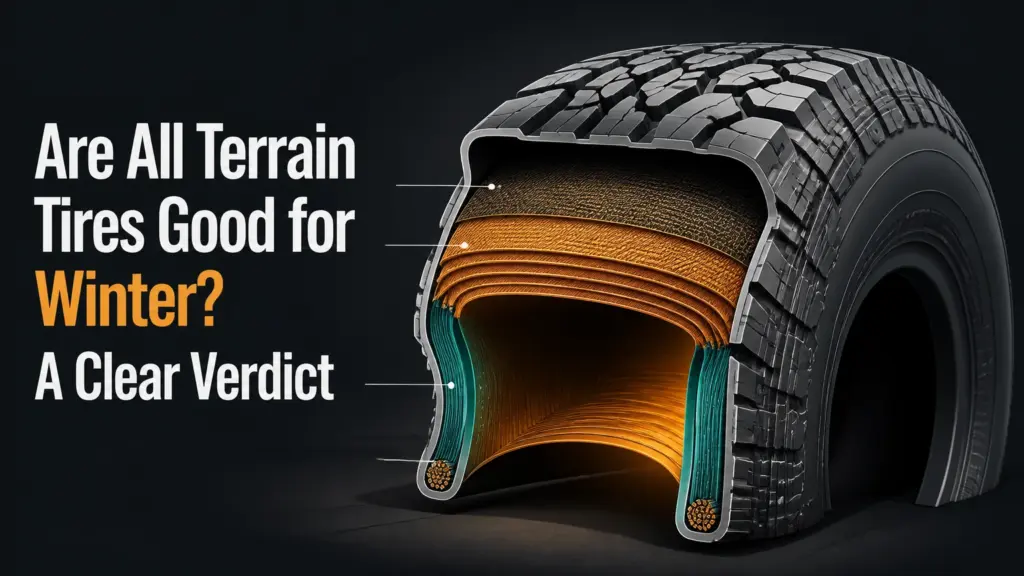
All-terrain tires are acceptable for light to moderate snow, but they are not equal to dedicated winter tires on ice, packed snow, or prolonged subfreezing roads. A 3-Peak Mountain Snowflake, or 3PMSF, rated A/T tire is the better single-set compromise, while a dedicated winter tire remains the safest choice for frequent severe winter conditions. Key […]
Can I Drive With a Screw in My Tire? Safe Next Steps
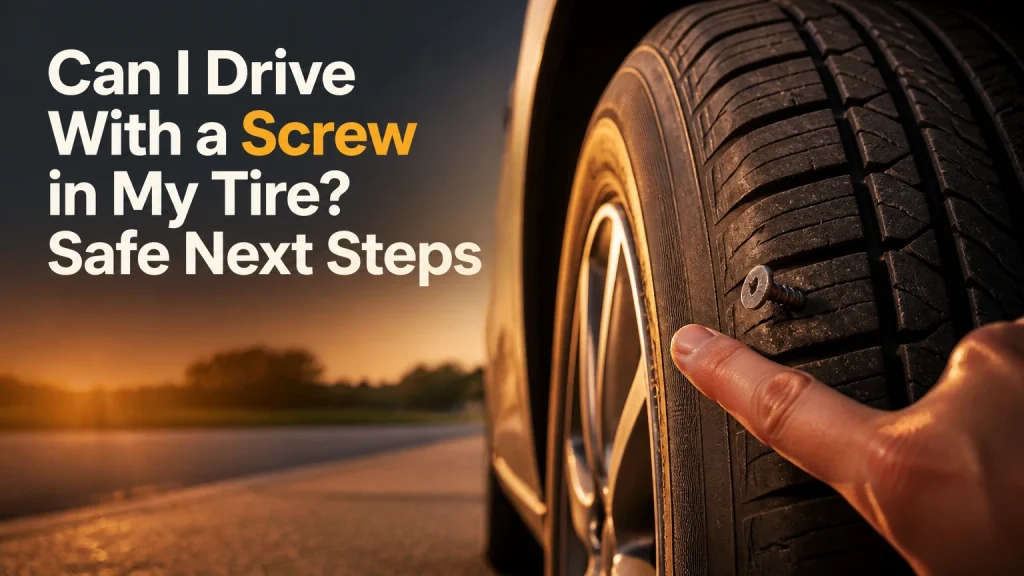
You should not drive normally with a screw in your tire. If the tire still holds pressure, you may be able to drive a very short distance directly to a tire shop at low speed, but a flat, rapidly leaking, sidewall-damaged, or visibly distorted tire requires a spare tire or tow. Key Facts at a […]
Can I Fill a Nitrogen Tire With Air? Safe PSI Rules
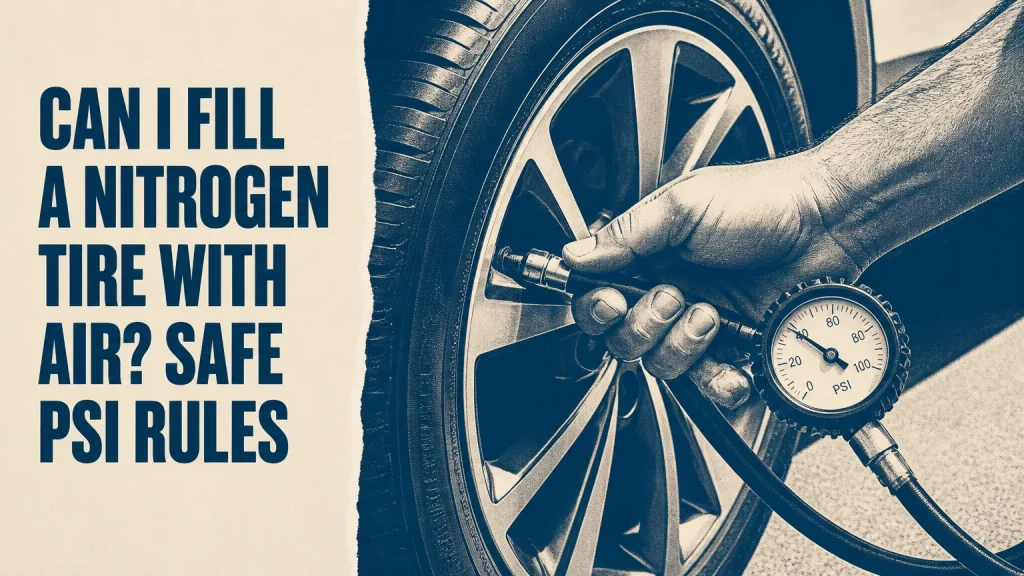
Yes, you can safely fill a nitrogen-inflated tire with ordinary compressed air. Air and nitrogen do not create a dangerous chemical reaction or damage the tire when mixed, because automotive tire inflation gases are nonflammable under normal conditions. Inflate the tire to the vehicle manufacturer’s recommended cold pressure, even if that dilutes the nitrogen. Key […]
Are All Terrain Tires Considered Snow Tires? Check the Marking
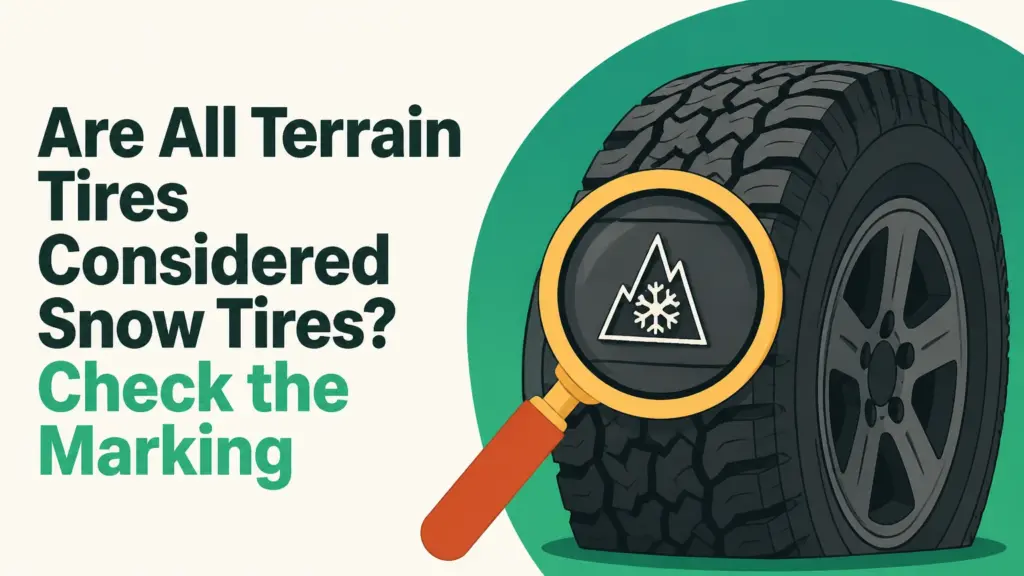
No, all-terrain tires are not automatically considered snow tires. An all-terrain tire with the Three-Peak Mountain Snowflake, or 3PMSF, symbol has passed a defined severe-snow traction test, while an A/T tire marked only M+S has no equivalent severe-snow certification. Dedicated winter tires still generally provide better ice braking and cold-weather control. Key Facts at a […]
Can I Drive With a Flat Tire? Safe Limits Explained
No, you should not drive with a flat tire. A standard pneumatic tire with little or no air can lose steering and braking stability while its sidewall and wheel rim suffer damage within a short distance. Move only far enough to escape immediate danger, usually at walking speed, then stop and arrange a spare, repair, […]
Are All Weather Tires as Good as Winter Tires? The Verdict
No, all-weather tires are not as good as dedicated winter tires in severe cold, packed snow, or icy conditions. All-weather tires are a strong year-round compromise with the 3PMSF severe-snow symbol, while winter tires retain softer cold-weather compounds and more specialized tread for shorter stops and better control when temperatures stay below freezing. Key Facts […]
Are All Weather Tires Considered Snow Tires? The Exact Difference
No, all-weather tires are not the same as dedicated snow tires, although many all-weather tires qualify for severe-snow service through the Three-Peak Mountain Snowflake symbol. All-weather tires are year-round compromises, while winter tires use a softer cold-weather compound and snow-focused tread for superior performance below freezing, especially on ice and packed snow. Key Facts at […]
Can I Leave My Car on While Filling Tires? Safety Guide
No, you should normally turn your car engine off while filling tires, especially at a gas station. The air pump does not need power from the vehicle, and switching off the engine removes unnecessary movement, exhaust, and electrical risks. A portable 12V compressor is different: follow its manual, and use the engine only when required […]
Can I Fill a Car Tire With a Bike Pump? Safe Steps
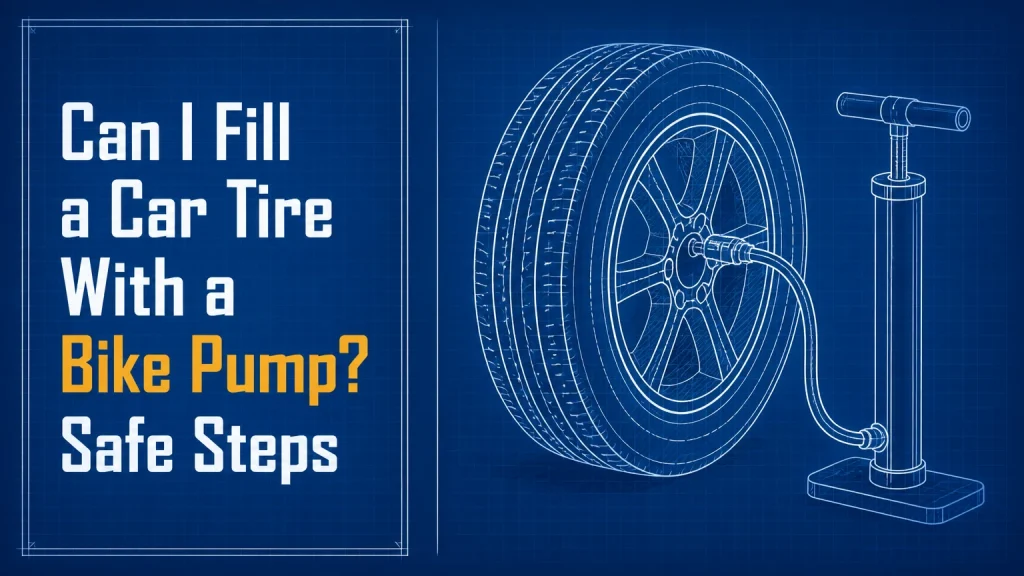
Yes, you can fill a car tire with a bicycle pump if the pump connects to the tire’s Schrader valve and can reach the vehicle’s recommended pressure. A floor pump works best for a small top-off or emergency inflation, but a completely flat tire may require hundreds of strokes and should be inspected for punctures […]
Are All-Weather Tires Traction Tires? Legal Facts
All-weather tires generally qualify as traction tires when they carry the Three-Peak Mountain Snowflake, or 3PMSF, symbol and meet the applicable jurisdiction’s tread and equipment rules. The designation confirms tested severe-snow performance, but it does not automatically satisfy every mountain-pass requirement, which may also require at least 4/32-inch tread depth, chains, or other conditions. Key […]