You can physically use snow tires in the summer, but you should not leave them installed once warm weather is consistent. Winter tires use a softer cold-weather compound and flexible, heavily siped tread that become less precise and wear faster on warm pavement. Switch to summer, all-season, or all-weather tires when local temperatures remain above roughly 7°C (45°F), following the tire maker’s guidance.
Key Facts at a Glance
Winter tires are designed for cold conditions, generally below about 7°C (45°F), not for sustained summer heat.
Warm pavement increases winter-tire tread movement, rolling resistance, noise, and wear.
The 7°C rule is a useful seasonal guideline, not a universal legal threshold or a guarantee that every tire changes performance at exactly that temperature.
Summer tires usually provide the best warm-weather steering and braking; all-season tires provide broader temperature coverage.
Use four matching winter tires in winter, and replace tires according to the vehicle manufacturer’s size, load, speed, and drivetrain requirements.
A brief trip on winter tires during an unexpected warm spell is different from driving them through an entire hot season.
Can I Use Snow Tires in the Summer?
Snow tires, more accurately called winter tires, are not the right choice for regular summer driving. A single warm day will not normally destroy a sound winter tire, but weeks or months of hot pavement can reduce tread life and make the vehicle less stable during braking, cornering, and lane changes.
The main issue is temperature-specific design. Winter tires must remain flexible when the road is cold, while summer tires must remain stable when the road is hot. The same softness that helps a winter tire conform to cold, uneven surfaces can make its tread blocks move excessively on warm asphalt.
A driver who is waiting for an appointment can usually make a necessary short trip cautiously, provided the tires are undamaged, correctly inflated, and within their speed rating. That exception does not make winter tires suitable for a summer commute, cross-country trip, or high-speed holiday drive.
Does one warm day damage winter tires?
One warm day usually does not create an immediate safety failure, but high temperatures increase wear and reduce the winter tire’s handling advantage. Tire manufacturers commonly recommend changing to warm-weather tires when temperatures are consistently above approximately 7°C, especially during the times the vehicle is driven.
The practical decision depends on the whole forecast. If mornings remain near freezing and late snow is likely, keeping winter tires installed can be reasonable. If daytime and nighttime temperatures remain warm for several weeks, delaying the changeover wastes tread and compromises performance.
Why Do Winter Tires Perform Poorly in Heat?
Winter tires perform poorly in heat because their cold-weather rubber compound becomes too soft and their tread blocks flex more than warm-weather tires. That flexibility can produce slower steering response, longer stopping distances, faster shoulder wear, and higher rolling resistance on warm roads.
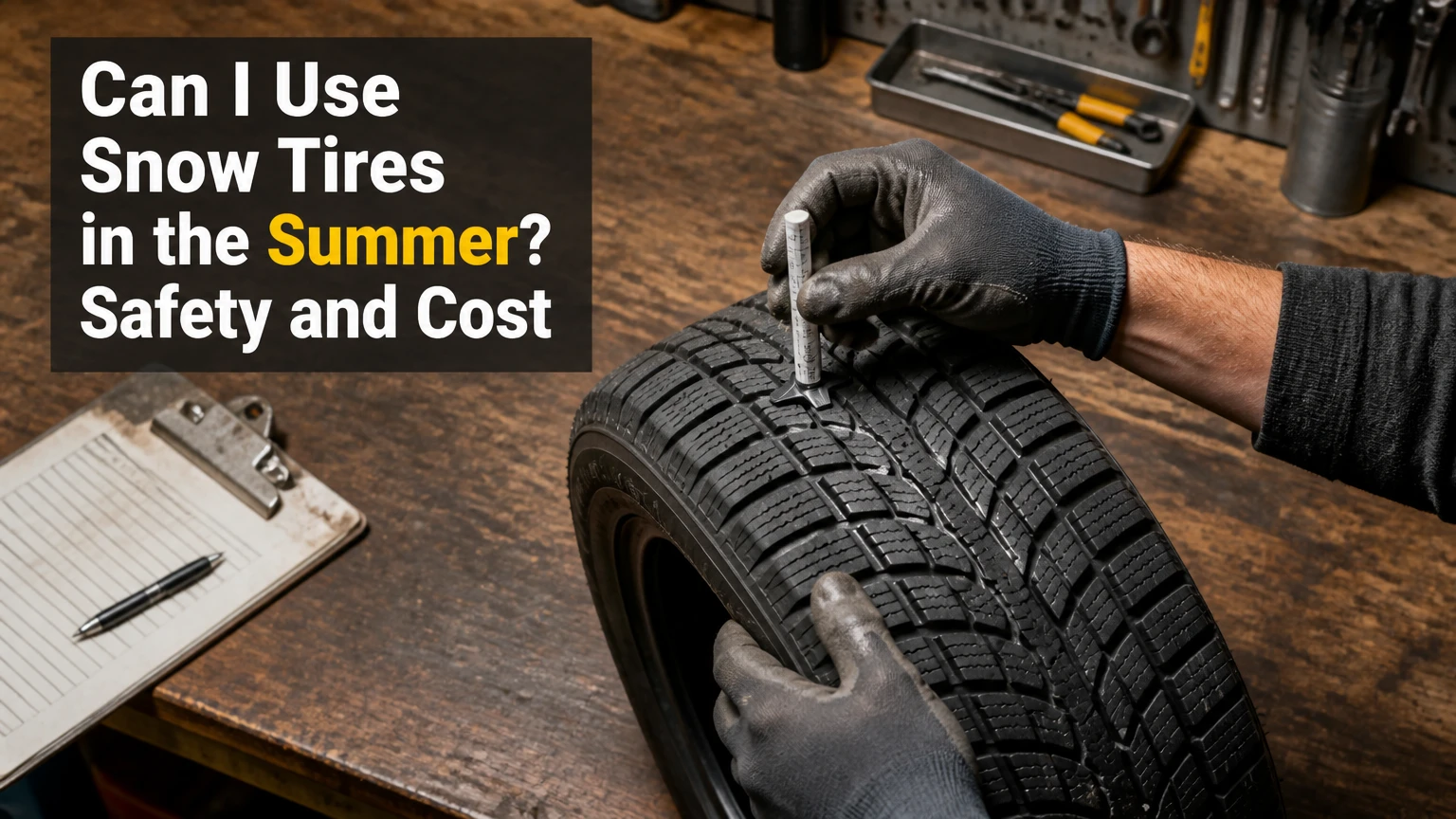
Winter tire tread contains many sipes, narrow cuts that create biting edges and allow tread blocks to conform to ice. Deep grooves also help move slush and retain packed snow, which can improve traction in winter. On dry or hot pavement, however, the same features reduce block rigidity.
The term “hydrophilic rubber” is often used loosely in consumer explanations. Silica and other compound ingredients can improve wet and cold performance, but winter-tire grip does not come from water-attracting chemistry alone. Traction results from compound temperature behavior, tread geometry, contact pressure, carcass construction, and the road surface.
Sipes also do not guarantee hydroplaning prevention. Hydroplaning resistance primarily depends on speed, water depth, inflation pressure, tread depth, vehicle load, and the tire’s main grooves. A heavily worn winter tire can lose wet-weather safety even when many small sipes remain visible.
What happens to the tread blocks?
Warm pavement makes winter-tire tread blocks deform under acceleration, braking, and cornering forces. The driver may feel a vague steering response, while the tread experiences higher friction and heat that can round the block edges and create irregular wear.
This wear can become uneven. Front tires may develop shoulder wear from cornering, driven tires can wear rapidly under acceleration, and vehicles with misalignment can consume a winter set in a few thousand summer miles. A tire shop should check alignment if wear appears on only one edge.
How Do Winter Tires Affect Braking and Handling?
Winter tires generally give up warm-weather braking and steering precision in exchange for cold-weather traction. Summer tires normally provide the firmest response on warm dry and wet pavement, while all-season tires occupy a broader middle ground.
Exact stopping-distance differences vary with tire model, vehicle, road temperature, tread depth, inflation, and test method. The frequently repeated claim that winter tires are always 26% worse in summer is not a universal engineering value. Treat it as a possible test result under particular conditions, not a guaranteed result for every vehicle.
A useful comparison looks at the design purpose rather than one headline percentage.
| Tire category | Compound operating priority | Tread and sipe design | Warm-weather behavior |
|---|---|---|---|
| Studless winter | Cold air and cold pavement, often below 7°C | Deep grooves and dense sipes | Softer response, higher wear, increased noise |
| Studded winter | Ice and packed snow below freezing | Metal studs plus winter tread | Stud wear and pavement damage on bare roads |
| All-season | Broad annual temperature range | Moderate grooves and siping | Balanced response, weaker deep-snow grip |
| All-weather | Year-round use with winter certification | More winter-oriented tread and 3PMSF marking | Acceptable summer performance, more noise than summer tires |
| Summer | Warm dry and wet pavement | Fewer sipes, rigid blocks, rain-focused grooves | Firm steering and strong warm-road braking |
The U.S. Tire Manufacturers Association identifies the three-peak mountain snowflake, or 3PMSF, symbol as a certification marking for tires that meet a defined severe-snow traction test. The symbol does not mean a tire is a dedicated winter tire, and it does not define summer performance.
Does tire pressure change the answer?
Correct pressure remains necessary in every season, but pressure does not make a winter tire’s compound suitable for summer. Use the pressure on the vehicle placard or owner’s manual, not the maximum pressure molded into the sidewall.
Warm weather raises measured pressure as the air inside the tire heats. Do not bleed a hot tire to the placard value because the cold pressure will then be too low. Check all four tires when cold, including the spare if equipped, and recalibrate the TPMS after installing another wheel set.
How Much Faster Do Winter Tires Wear in Summer?
Winter tires can wear substantially faster in summer, but no reliable universal percentage applies to every tire and driver. A high-mileage driver on hot highway pavement may consume a winter set far sooner than a low-mileage driver in a cool coastal climate.
Typical replacement winter tires cost about $120-$300 or more each, depending on size and construction. A complete set commonly costs $480-$1,200 before mounting, taxes, wheels, and storage. Burning through that tread in summer can cost more than two seasonal installation appointments.
| Cost item | Typical range | Main price driver | Practical consequence |
|---|---|---|---|
| Winter tire, 16-inch passenger size | $120-$190 each | Brand, snow rating, load index | $480-$760 for four |
| Winter tire, 18-inch SUV size | $180-$300 each | Size, XL construction, supply | $720-$1,200 for four |
| Seasonal wheel swap | $60-$120 per visit | Region and balancing service | $120-$240 per year |
| Tire mounting and balancing | $20-$45 per tire | Loose tire versus complete wheel | $80-$180 for four |
| Indoor tire storage | $60-$150 per season | Dealer, climate, and insurance | Reduces home storage needs |
| Premature winter-set replacement | $480-$1,200 typical set | Wear, age, and tire size | Can exceed several swap fees |
Fuel economy can also decline because winter tires often have greater rolling resistance than warm-weather designs. The actual fuel penalty depends on tire pressure, tread pattern, vehicle weight, alignment, speed, and weather. A driver should not assume that a precise 10% or 15% penalty applies universally.
Is wearing out old winter tires a good money-saving strategy?
Using old winter tires through summer to “finish them off” is usually poor economy. Summer driving can remove valuable tread unevenly, leaving a tire less capable when the next winter arrives, while the driver still pays for fuel and eventually needs another set.
Winter tires should not be used below the manufacturer’s winter replacement recommendation simply because the legal minimum tread remains. Winter traction can decline before a tire reaches the general legal limit, especially when sipes become shallow or the compound ages.
When Should You Switch From Winter Tires?
Switch from winter tires when temperatures are consistently above about 7°C (45°F) during the periods you drive and the probability of sustained snow or ice has fallen. In autumn, install winter tires before temperatures regularly fall below that level, rather than waiting for the first snowfall.
The 7°C guideline is not a universal physical switch. Road temperature, sunlight, tire model, overnight lows, elevation, and local weather all matter. A mountain driver may need winter tires while a lowland driver at the same latitude does not.
Use this practical changeover process:
- Review the forecast for 7-14 days. Look at commute-time temperatures, overnight lows, and snow or ice warnings.
- Inspect the warm-weather set. Check tread depth, sidewall damage, cracking, embedded objects, and the date code.
- Confirm fitment. Verify size, load index, speed rating, wheel direction, and TPMS sensors.
- Book the service before the rush. Seasonal appointments can fill quickly during the first warm week.
- Ask for a pressure and torque check. Wheel fasteners must be tightened to the vehicle maker’s specification.
- Recheck after driving. Confirm that no warning light remains and that the vehicle tracks straight.
A tire should generally have at least 2/32 inch of tread to meet the common U.S. legal minimum, but 4/32 inch is often used as a practical wet-weather replacement threshold. The actual requirement varies by jurisdiction, and winter tires may need replacement sooner for snow performance.
Which Tire Type Fits a One-Set Household?
All-season tires fit drivers who encounter mild winters, occasional light snow, and warm summers but do not need maximum snow or ice traction. All-weather tires fit drivers who want one year-round set and regularly face snow, provided the specific tire carries the 3PMSF severe-snow symbol.
Dedicated summer and winter tires fit drivers who prioritize seasonal performance and can pay for storage and changeovers. Summer tires offer better warm-road response, while winter tires provide stronger cold, snow, and ice traction.
| Driving situation | Recommended primary tire | Winter capability | Summer trade-off |
|---|---|---|---|
| Hot climate with no snow | Summer or touring all-season | Rare cold-weather need | Summer tire gives sharper response |
| Mild city winter with occasional snow | All-season | Limited snow capability | Year-round convenience |
| Frequent snow below 7°C | Dedicated winter | Strongest cold and snow performance | Must be removed for warm season |
| Mixed climate with one wheel set | All-weather, 3PMSF | Better certified snow traction | More noise and wear than summer tires |
| Mountain roads and regular ice | Studless or studded winter | Highest specialized traction | Seasonal storage and legal limits |
| Track or performance driving | Summer performance tire | Not intended for freezing conditions | Requires a separate winter setup |
All-weather tires are not identical to all-season tires. All-weather models use a more winter-oriented compound and tread pattern, but they remain compromises in both seasons. They cannot match a dedicated winter tire on ice or a dedicated summer tire during aggressive warm-weather driving.
Can You Mix Winter Tires With Other Tires?
You should not mix winter tires with summer or all-season tires on the same vehicle unless the vehicle manufacturer and a qualified tire professional specifically approve the arrangement. Different axle grip can cause understeer or oversteer, particularly during emergency braking or a wet corner.
Installing winter tires only on the front axle can give the front tires more snow traction while leaving the rear tires unable to follow, increasing the risk of rear instability. Installing them only on the rear axle can make the front lose steering and braking grip first.
The safest standard arrangement is four matching winter tires with comparable size, construction, tread pattern, and wear. AWD does not eliminate the need for four suitable tires. The drivetrain can help the vehicle accelerate, but it cannot give mismatched tires equal cornering or braking ability.
Replace tires in pairs on the same axle when possible. If only two newer tires are installed, many manufacturers and tire organizations recommend placing the deeper-tread tires on the rear axle, but the owner’s manual and tire professional should control the final decision.
What Changes for Studded Winter Tires?
Studded winter tires create additional summer problems because metal studs are designed to bite into ice, not bare asphalt. Warm, dry pavement can accelerate stud wear, increase road noise, reduce smooth-road grip, and damage the road surface.
Studded-tire rules differ by location. Some U.S. states and Canadian provinces restrict them to specific dates or permit them only when winter conditions justify their use. Check the transportation authority where the vehicle is registered and where it will travel.
Studdable tires without installed studs behave more like studless winter tires, although their tread and compound remain winter-oriented. They are not a summer substitute.
Can You Drive Winter Tires on a Summer Road Trip?
A short, necessary trip on winter tires during a cool spring or autumn day is usually less concerning than a long summer road trip through high heat. A sustained highway drive raises tire temperature, increases wear, and exposes any low speed rating, underinflation, alignment problem, or structural damage.
Before an unavoidable trip, inspect the sidewalls and tread, set cold pressure to the vehicle placard, confirm the speed rating, and avoid exceeding the lowest rated tire. Stop if vibration, pulling, unusual noise, or a tire-pressure warning appears.
| Sidewall rating example | Rated maximum speed | Summer-trip implication |
|---|---|---|
| Q | 160 km/h, 99 mph | Common on some winter tires; never exceed the rating |
| T | 190 km/h, 118 mph | Suitable only within vehicle and tire limits |
| H | 210 km/h, 130 mph | More common on performance-oriented applications |
| V | 240 km/h, 149 mph | Common on some summer and performance tires |
| Vehicle placard | Vehicle-specific | Controls required size, load, and often speed guidance |
Speed ratings are not a permission to drive at that speed in every condition. Load, pressure, temperature, tire age, and damage affect safety. Drivers should use the lowest applicable rating and follow the vehicle manufacturer’s requirements.
What If You Have No Summer Tires Available?
If no summer or all-season tires are available, use the winter tires only long enough to obtain a correct replacement set, and drive conservatively. Avoid unnecessary mileage, very hot afternoons, heavy loads, aggressive cornering, and sustained high speeds.
Do not install two summer tires and leave two winter tires as a casual temporary solution. A tire shop may recommend a specific temporary configuration after inspecting the vehicle, but mixed seasonal tires can alter handling substantially.
A rental car, borrowed vehicle, or used-car purchase creates another edge case. Confirm the tire type by checking the sidewall and tread, because “M+S” means mud and snow classification in some markets but does not equal the 3PMSF severe-snow certification. Ask for the vehicle’s tire documentation when the marking is unclear.
How Should You Store Winter Tires?
Store winter tires clean, dry, cool, dark, and away from petroleum products, solvents, direct sunlight, and ozone-producing equipment. Ozone from some electric motors can accelerate rubber cracking over time, so a dark area away from compressors and workshop machinery is preferable.
After removal, wash off road salt and allow the tires to dry completely. Mark their previous positions, inspect for nails and cuts, and record tread depth. Tire manufacturers differ on bagging advice, so follow the tire maker’s storage instructions rather than assuming airtight plastic is always required.
Mounted tires and unmounted tires need different storage methods:
| Tire condition | Storage position | Inspection interval | Important precaution |
|---|---|---|---|
| Mounted on wheels | Stack horizontally or hang on approved hooks | Every 2-3 months | Do not hang unmounted tires by the bead |
| Unmounted tires | Stand vertically and rotate monthly | Every 2-3 months | Keep away from sunlight and chemicals |
| Studded winter set | Stack only after cleaning studs | Before autumn installation | Check missing or damaged studs |
| Tire-and-wheel bags | Use manufacturer-approved bags | At removal and refit | Keep bags dry and ventilated as directed |
The best storage location is a climate-controlled garage or tire-storage facility. Do not place heavy equipment on a tire stack, and do not store tires beside a furnace, battery charger, welding equipment, or solvent cabinet.
Common Mistakes That Reduce Safety
Several seasonal tire mistakes repeatedly cause avoidable handling problems:
- Waiting for the first snowfall: Winter tires work best before roads become icy, and appointment shortages can leave drivers on worn all-season tires during the first storm.
- Using the 7°C rule mechanically: A single afternoon above 7°C does not require an immediate swap when freezing mornings and snow remain likely.
- Ignoring tire age: Tread depth does not reveal all aging. Check the DOT date code and replace tires with significant cracking, hardened rubber, or manufacturer-recommended age limits.
- Forgetting alignment: Uneven wear from toe or camber misalignment can destroy a winter tire set before the next season.
- Trusting AWD: AWD improves acceleration, not braking distance or cornering grip.
- Leaving studs installed: Studded tires can violate seasonal road rules and wear quickly on bare pavement.
- Using the sidewall maximum pressure: The correct cold pressure comes from the vehicle placard, not the tire’s maximum molded value.
A practical technician’s rule is to inspect the tires at both seasonal changeovers, not only when a puncture occurs. The wheel is already accessible, so checking tread depth, sidewall condition, wear pattern, valve stems, and torque adds little time.
Frequently Asked Questions
Can winter tires be used in rain during summer?
Winter tires can operate in summer rain, but they are not optimized for warm wet pavement. Dense siping and soft tread may reduce steering precision, while worn grooves reduce water evacuation. Correct inflation, adequate tread depth, moderate speed, and greater following distance reduce risk, but they do not turn a winter tire into a summer tire.
Are snow tires better than all-season tires in every condition?
Snow tires are usually better than all-season tires in cold snow and ice, but not in every condition. All-season tires generally provide firmer warm-weather handling and longer annual usability, while summer tires typically provide stronger warm dry and wet-road performance. Tire model, tread depth, temperature, and road surface determine the result.
Can I use winter tires in a hot climate?
You can use winter tires temporarily in a hot climate, but year-round use is inefficient and can reduce safety. High pavement temperatures soften the tread, increase wear, and raise rolling resistance. Drivers who never encounter snow should normally choose summer or all-season tires based on the vehicle, rainfall, load, and performance requirements.
How long can winter tires last if used only in winter?
Winter tires often last several seasons when stored correctly and driven at appropriate temperatures, but mileage varies widely. Typical service life may be three to five winter seasons, subject to tread depth, annual mileage, tire age, damage, alignment, and compound condition. Inspect the DOT date code and tread every season.
Should I replace all four winter tires at once?
Replace all four winter tires when tread differences are substantial, the tires are damaged, or the vehicle manufacturer requires matched tires. Replacing only one can create handling and drivetrain differences. If two tires must be replaced, a tire professional should assess tread matching and normally place the deeper-tread pair on the rear axle.
Do winter tires use more fuel in summer?
Winter tires can use more fuel in summer because soft compounds and aggressive tread patterns often create more rolling resistance than summer or low-rolling-resistance all-season tires. The size of the difference depends on pressure, alignment, speed, load, weather, and vehicle design, so no single percentage applies to every car.
The Bottom Line
You can drive winter tires in the summer for a short, unavoidable period, but regular warm-weather use is a poor safety and cost decision. Winter tires become less precise as pavement warms, wear faster, may consume more fuel, and cannot match summer tires for warm-road braking and steering.
Use four matching winter tires during cold-weather driving, then change to summer, all-season, or 3PMSF-rated all-weather tires when warm temperatures consistently replace winter conditions. The best answer to “can i use snow tires in the summer” is therefore: physically yes, routinely no.