Car tire chains are high-traction mechanical devices fitted to a vehicle drive wheels to penetrate hard-packed snow and ice layers where rubber tread alone fails. Selecting the right snow chains requires evaluating your vehicle wheel clearance, local Department of Transportation requirements, and driving frequency across winter mountain passes.
Key Facts at a Glance
- Maximum Speed Limit: 30 mph (50 km/h) to prevent centrifugal force from throwing chains and destroying vehicle bodywork.
- Clearance Standards: SAE Class S clearance requires a maximum of 15mm of inner sidewall and tread space.
- Lifespan Range: 50 to 500 miles depending on asphalt exposure, vehicle weight, and driving speed.
- Installation Window: 5 to 15 minutes per pair once practiced in dry conditions.
- Cost Spectrum: 40 dollars for basic cable chains up to 600 dollars for automated spider systems.
Understanding Car Tire Chains and Winter Traction
Car tire chains provide vital auxiliary traction when ambient temperatures drop below freezing and municipal snow removal cannot keep pace with heavy precipitation. Understanding the mechanical interaction between steel links, ice crystals, and vehicle weight ensures safe winter navigation.
How Car Tire Chains Work Under Load
Car tire chains function through four distinct mechanical actions that transform smooth ice into a drivable surface. Mechanical grip occurs as hardened steel links bite physically into packed snow and ice layers. Friction enhancement takes place because the metal cross-members present a much rougher contact patch than rubber tire sipes.
Clearing action happens when open link designs allow crushed snow to escape sideways instead of packing solidly into the tread voids. Weight distribution concentrates the entire gross vehicle weight onto narrow chain links, producing high pounds-per-square-inch pressure that pierces slippery ice films.
The Four Main Types of Car Tire Chains
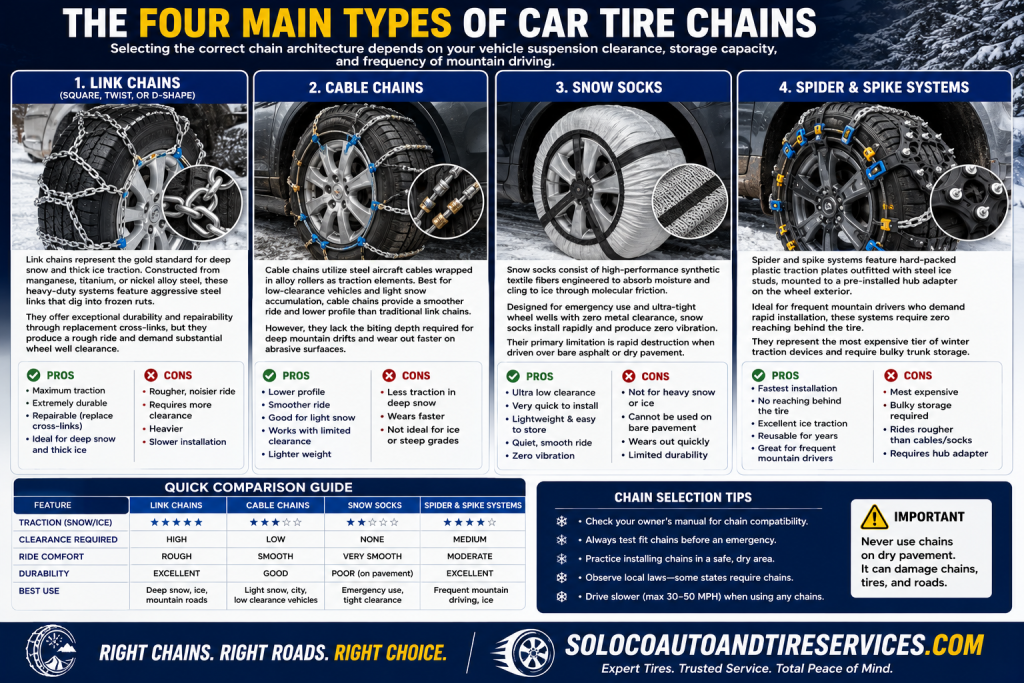
Selecting the correct chain architecture depends on your vehicle suspension clearance, storage capacity, and frequency of mountain driving.
Link Chains (Square, Twist, or D-Shape)
Link chains represent the gold standard for deep snow and thick ice traction. Constructed from manganese, titanium, or nickel alloy steel, these heavy-duty systems feature aggressive steel links that dig into frozen ruts. They offer exceptional durability and repairability through replacement cross-links, but they produce a rough ride and demand substantial wheel well clearance.
Cable Chains
Cable chains utilize steel aircraft cables wrapped in alloy rollers as traction elements. Best for low-clearance vehicles and light snow accumulation, cable chains provide a smoother ride and lower profile than traditional link chains. However, they lack the biting depth required for deep mountain drifts and wear out faster on abrasive surfaces.
Snow Socks
Snow socks consist of high-performance synthetic textile fibers engineered to absorb moisture and cling to ice through molecular friction. Designed for emergency use and ultra-tight wheel wells with zero metal clearance, snow socks install rapidly and produce zero vibration. Their primary limitation is rapid destruction when driven over bare asphalt or dry pavement.
Spider and Spike Systems
Spider and spike systems feature hard-packed plastic traction plates outfitted with steel ice studs, mounted to a pre-installed hub adapter on the wheel exterior. Ideal for frequent mountain drivers who demand rapid installation, these systems require zero reaching behind the tire. They represent the most expensive tier of winter traction devices and require bulky trunk storage.
How to Determine Correct Sizing and Vehicle Clearance
Buying car tire chains by wheel diameter alone is a critical error that leads to torn brake lines and destroyed fenders. Tire width, sidewall aspect ratio, and rim size collectively dictate the exact chain part number required.
Decoding Your Tire Sidewall
Locate the alphanumeric code printed on your tire sidewall, formatted as an example like 225/65R17. The first number (225) represents section width in millimeters. The second number (65) is the aspect ratio, indicating sidewall height as a percentage of width. The final number (17) denotes the wheel rim diameter in inches. Every tire chain manufacturer publishes sizing charts that cross-reference these three dimensions.
Verifying SAE Class S Clearance Limits
Modern vehicles with independent suspension and tight electronic sensor housings often feature restricted inner wheel wells. SAE Class S clearance requires a minimum of 15mm of clear space around the inner tire sidewall and tread circumference. Ultra-low clearance vehicles demand class U or specialized low-profile cable chains requiring 9mm or less of inner clearance. Consult your vehicle owner manual under the tire chains section before purchasing to confirm whether your specific trim level permits metal link chains.
Step-by-Step Installation Manual
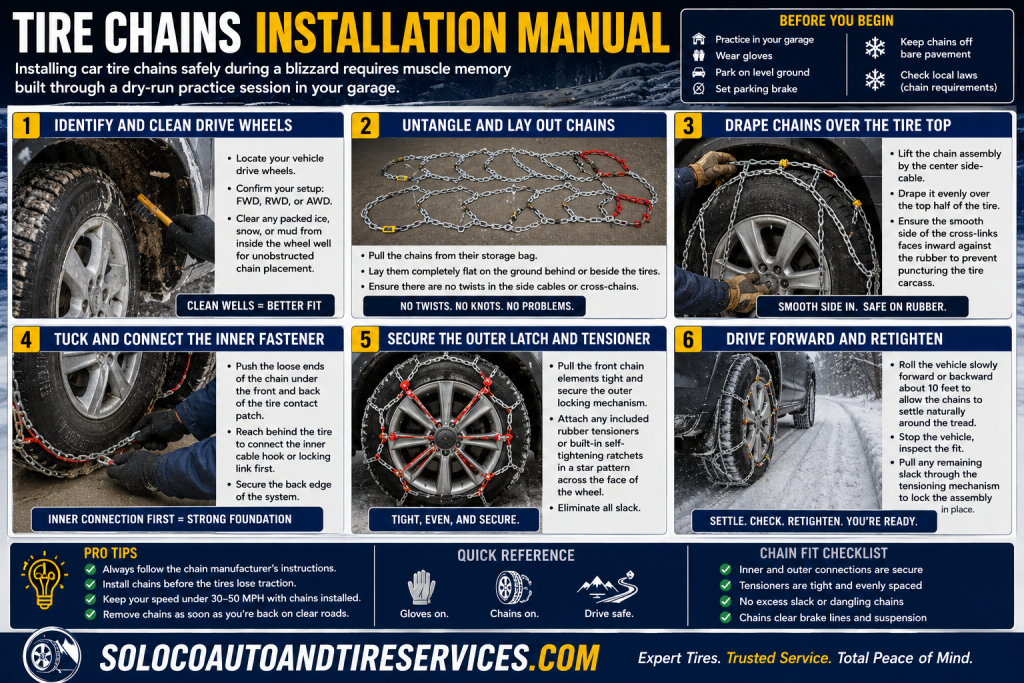
Installing car tire chains safely during a blizzard requires muscle memory built through a dry-run practice session in your garage.
Step 1: Identify and Clean Drive Wheels
Locate your vehicle drive wheels, confirming whether your setup is front-wheel drive, rear-wheel drive, or all-wheel drive. Clear any packed ice or mud from inside the wheel well to ensure unobstructed chain placement.
Step 2: Untangle and Lay Out Chains
Pull the chains from their storage bag and lay them completely flat on the ground behind or beside the tires. Ensure there are no twists in the side cables or cross-chains.
Step 3: Drape Chains Over the Tire Top
Lift the chain assembly by the center side-cable and drape it evenly over the top half of the tire. Ensure the smooth side of the cross-links faces inward against the rubber to prevent puncturing the tire carcass.
Step 4: Tuck and Connect the Inner Fastener
Push the loose ends of the chain under the front and back of the tire contact patch. Reach behind the tire to connect the inner cable hook or locking link first, securing the back edge of the system.
Step 5: Secure the Outer Latch and Tensioner
Pull the front chain elements tight and secure the outer locking mechanism. Attach any included rubber tensioners or built-in self-tightening ratchets in a star pattern across the face of the wheel to eliminate slack.
Step 6: Drive Forward and Retighten
Roll the vehicle slowly forward or backward about 10 feet to allow the chains to settle naturally around the tread. Stop the vehicle, inspect the fit, and pull any remaining slack through the tensioning mechanism to lock the assembly firmly in place.
Comparison Matrix: Choosing Your Winter Traction
| Type | Best For | Pros | Cons | Typical Cost |
| Link Chains | Deep snow, steep mountain passes | Ultimate ice bite, high durability, repairable links | Heavy weight, rough ride, requires large clearance | 60 dollars to 200 dollars |
| Cable Chains | Sedans, light snow, low clearance | Budget friendly, lightweight, smooth ride | Lower ice durability, poor deep drift performance | 40 dollars to 100 dollars |
| Snow Socks | Emergency use, tight wheel wells | Zero clearance issues, rapid installation, quiet | Shreds instantly on dry asphalt, low ice grip | 70 dollars to 130 dollars |
| Spider Systems | Frequent mountain commuters, luxury vehicles | External mounting, lightning-fast setup, zero reach | Very expensive, bulky storage, requires hub setup | 300 dollars to 600 dollars |
Common Mistakes and How to Avoid Them
Avoiding installation errors protects your vehicle safety systems and prevents costly mechanical repairs during winter storms.
- Installing on Non-Drive Wheels: Placing chains on the front wheels of a rear-wheel-drive truck eliminates steering control and provides zero forward propulsion. Always install chains on the primary drive axle specified in your owner manual.
- Driving at Highway Speeds: Exceeding 30 mph causes centrifugal force to fling heavy steel links outward, battering fender wells, severing ABS sensor wires, and puncturing brake lines.
- Driving on Bare Pavement: Steel links disintegrate rapidly when friction strips encounter dry asphalt. Remove chains immediately once you reach plowed, clear roadway surfaces.
- Skipping the Dry Run: Attempting your first chain installation in freezing darkness during a mountain pass roadblock creates dangerous roadside delays. Practice fitting chains in your driveway at least once before winter travel.
Frequently Asked Questions
Do I need car tire chains on all four wheels?
Most passenger vehicles require tire chains only on the primary drive axle to maintain steering and acceleration control. All-wheel-drive vehicles should consult the owner manual, as some models require chains on all four wheels to prevent center differential damage, while others specify front-axle installation only. Installing chains on all four wheels provides maximum braking and cornering stability on severe ice sheets.
Can I use tire chains with alloy wheels?
Standard steel link chains can scratch or gouge polished alloy wheel rims during installation or loose rotation. To protect custom rims, choose cable chains with protective rollers, synthetic snow socks, or external spider systems that mount solely to a center hub adapter without touching the wheel face.
What should I do if a chain snaps while driving?
Stop your vehicle immediately in a safe location out of active traffic lanes. Remove the broken chain entirely to prevent loose steel ends from whipping around and destroying brake lines, suspension components, or body panels. Inspect the remaining intact chains for structural damage before resuming your journey at reduced speed.
How do I store car tire chains after winter use?
Wash your tire chains thoroughly with warm water to remove corrosive road de-icing salts and magnesium chloride residue. Dry the metal completely with a clean towel, spray the links with a corrosion-inhibiting lubricant, and pack them neatly into their storage case to prevent tangling and rust formation before the next winter season.


