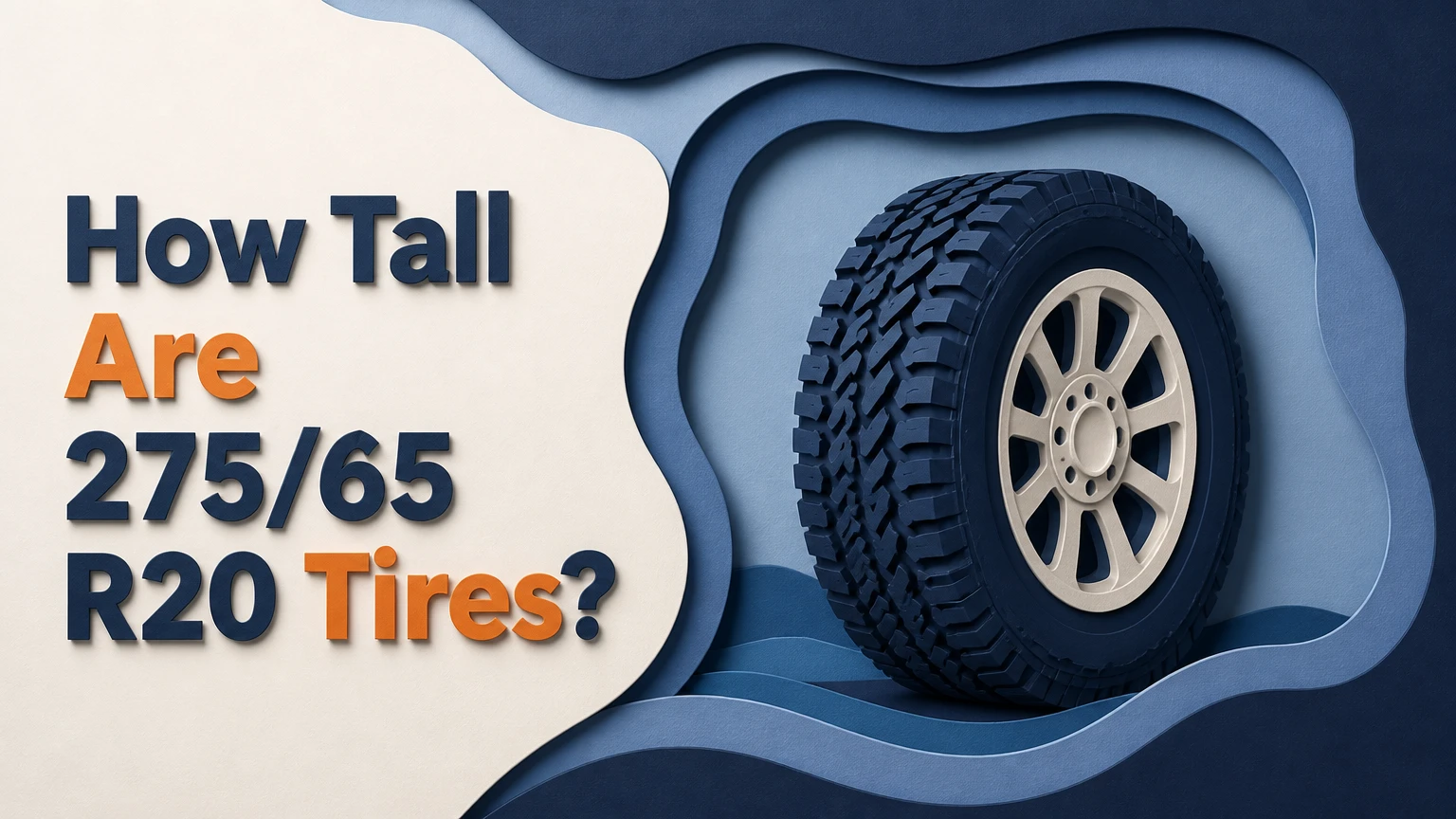
A 275/65 R20 tire has a theoretical height of 34.1 inches and an actual measured real-world height ranging from 34.0 to 34.4 inches, depending on the tread design and manufacturer. This size combines a 10.8-inch section width with a 20-inch wheel diameter, making it a popular choice for truck owners seeking a substantial stance without extreme modifications.
At a Glance: Essential Facts
- The theoretical mathematical height of a 275/65 R20 tire is exactly 34.08 inches.
- Real-world dimensions vary from 34.0 inches for highway treads to 34.4 inches for heavy-duty mud-terrains.
- Half-ton trucks like the Ford F-150 or Ram 1500 typically require a 2.0 to 2.5-inch leveling kit to prevent rubbing.
- This tire size causes a roughly 6.4 percent speedometer and odometer error when upgrading from stock 275/55 R20 tires.
- Static vehicle weight compresses the bottom sidewall, reducing the rolling height by 0.5 to 1.0 inch during operation.
Is a 275/65 R20 a 34-inch or 35-inch tire?
A 275/65 R20 tire is structurally classified as a 34-inch tire, frequently called a true 34 by automotive enthusiasts. It serves as an intermediate upgrade size that bridges the gap between factory 32-inch options and massive 35-inch setups. Choosing this size allows truck owners to achieve an aggressive look and increased ground clearance without the severe power loss, heavy steering component wear, and extensive body trimming required to fit true 35-inch tires.
What are the exact metric and imperial dimensions?
Calculating the exact dimensions of a 275/65 R20 tire requires breaking down the three distinct numerical components of its standardized tire code. The section width is 275 millimeters, which converts to 10.83 inches by dividing by 25.4. The aspect ratio of 65 means that the single sidewall height is 65 percent of that section width, resulting in 178.75 millimeters or 7.04 inches per sidewall. Combining two sidewalls with the 20-inch rim diameter yields a total theoretical height of 34.08 inches.
How do tread styles change actual tire height?
Tread design and rubber depth significantly alter the physical measurements of an unmounted 275/65 R20 tire. Highway Terrain tires feature shallower tread depths ranging from 10/32 to 12/32 of an inch, keeping their height close to the 34.1-inch theoretical baseline. All-Terrain and Mud-Terrain tires use deep, aggressive lugs and reinforced casings with tread depths between 15/32 and 19/32 of an inch. This extra rubber thickness pushes the actual unmounted height closer to 34.3 or 34.4 inches.
How does wheel rim width affect tire height and width?
Rim width alters the profile shape of a 275/65 R20 tire because tire manufacturers design these specifications around a standardized measuring rim width of 8.5 inches. Installing the tire on a narrower rim width between 7.5 and 8.0 inches squeezes the beads closer together, forcing the tread crown outward and slightly increasing total tire height. Conversely, mounting the tire on a wider rim width between 9.5 and 10.0 inches spreads the sidewalls apart, flattening the contact patch and slightly decreasing overall height.
How does tire pressure alter loaded height and contact patch?
Tire pressure directly dictates the functional contact patch and working height of a 275/65 R20 tire under load. Operating a tire at lower PSI increases sidewall flex, which flattens the footprint to maximize traction on soft terrain like sand or mud while reducing the effective center height. Over-inflating the tire causes the center tread to bulge outward, increasing the vertical measurement slightly while accelerating center tread wear and reducing braking grip. Maintaining the vehicle manufacturer placard pressure ensures uniform height and even tread wear across the lifespan of the tire.
What are the load range ratings and weight limits?
Most 275/65 R20 tires are manufactured in Load Range E, which corresponds to a 10-ply rating capable of handling heavy payloads and high inflation pressures up to 80 PSI. A typical Load Range E tire in this size supports approximately 3,415 pounds at maximum PSI, making it ideal for towing heavy trailers and hauling construction materials. Passenger-rated versions in this size are less common, but they offer a softer ride with lower load capacities suited primarily for light-duty daily driving.
Will 275/65 R20 tires fit on a truck without a lift kit?
Fitting 275/65 R20 tires without a lift kit depends entirely on the specific make and model of the truck. Heavy-duty three-quarter-ton and one-ton trucks like the Ford F-250, Ram 2500, and Chevrolet Silverado 2500 feature ample factory clearance and accommodate these tires on stock suspensions without rubbing. Standard half-ton light-duty trucks like the Ford F-150 or Ram 1500 lack sufficient clearance in the front wheel wells, causing the taller tires to strike the inner plastic liners and upper control arms at full steering lock.
What suspension modifications are needed to prevent rubbing?
Preventing front-end rubbing on half-ton trucks equipped with 275/65 R20 tires typically requires installing a 2.0 to 2.5-inch front leveling kit. This modification raises the front suspension to match the factory rake of the rear, creating the necessary vertical clearance around the bumper and fender wells. Owners retaining factory wheels with positive offsets experience minimal rubbing, whereas aftermarket wheels with negative offsets or wider stances push the tire outward into the fender crash bars, requiring further clearance work.
What plastic trimming or crash-bar modifications are required?
Persistent rubbing after installing a leveling kit on half-ton trucks requires targeted trimming of the inner plastic fender liners using a utility knife or rotary tool. If aggressive All-Terrain or Mud-Terrain tires still contact the factory steel crash bars located behind the front bumper, professional cutting and reinforcement may be necessary. Avoiding these invasive body modifications requires selecting a narrower wheel width or verifying that the specific tire model runs true to size rather than measuring on the larger end of the spectrum.
How do 275/65 R20 tires affect speedometers and odometers?
Upgrading from a smaller factory size like the 275/55 R20, which measures approximately 31.9 inches tall, to a 275/65 R20 introduces a significant rotation variance. Because the larger tire covers more ground per single rotation, the vehicle travels roughly 6.4 percent faster than what the factory speedometer indicates. This discrepancy means traveling at an indicated highway speed of 60 miles per hour actually results in a true speed of roughly 63.8 miles per hour, while odometers underreport total mileage until recalibrated via a digital programmer or dealership tool.
How does upgrading tire size impact fuel economy and power?
Switching to 275/65 R20 tires introduces additional rotational mass and rolling resistance that impacts both fuel economy and acceleration. Load Range E tires weigh significantly more than standard passenger tires, requiring the engine and transmission to work harder from a dead stop. Most truck owners experience a drop of 1 to 2 miles per gallon in fuel economy, accompanied by slightly sluggish throttle response unless the vehicle’s axle gear ratios are optimized for the larger diameter.
How does the static load squat factor change rolling height?
Static vehicle weight compresses the bottom sidewall of a 275/65 R20 tire, creating a noticeable difference between unmounted specifications and installed dimensions. The moment the truck’s weight settles onto the pavement, gravity compresses the rubber and reduces the actual vertical distance from the ground to the center of the wheel hub by 0.5 to 1.0 inch. Measuring a truck parked on a flat concrete pad reveals this loaded radius, which is the actual figure used for precise vehicle dynamics calculations and speedometer tuning.
How do these tires handle towing, hauling, and heavy payloads?
The stiff sidewalls and high weight ratings of 275/65 R20 tires provide exceptional stability when towing heavy trailers and hauling weighty payloads in the truck bed. The reinforced casing minimizes lateral sway during high-speed lane changes while trailering, ensuring predictable handling under heavy tongue weights. Drivers pulling heavy loads should ensure tire pressures are adjusted to maximum recommended cold PSI levels to prevent excessive internal heat buildup during long highway trips.
How do 275/65 R20 tires perform in deep snow, rain, and mud?
Performance in adverse weather depends heavily on the specific tread pattern chosen within the 275/65 R20 size category. Highway Terrain variants excel on wet asphalt and light rain by channeling water through circumferential grooves to prevent hydroplaning, but they struggle in deep snow and sticky mud. All-Terrain and Mud-Terrain variants feature deep siping and wide void ratios that bite into loose snow and eject packed mud effectively, though their larger contact patches can reduce traction on icy winter roads compared to specialized winter tires.
Do these tires experience centrifugal growth at high speeds?
Centrifugal force causes 275/65 R20 tires to expand outward slightly when operating at sustained highway speeds above 70 miles per hour. This phenomenon, known as centrifugal growth, stretches the tire carcass by a fraction of an inch due to rotational momentum. Truck owners with tight clearances in the wheel wells should account for this dynamic expansion, as a tire that clears the fender liner while parked in the driveway may occasionally scuff the plastic during high-speed highway travel.
How does a 275/65 R20 compare to alternative sizes?
Comparing tire sizes clarifies why the 275/65 R20 remains a preferred option for truck modifications. Compared to a factory 275/60 R20, which measures 33.0 inches tall, the 275/65 R20 adds a full inch of height without increasing section width, keeping the tire safely tucked within the fender wells. Compared to a true 35×12.50 R20, the 275/65 R20 is narrower and shorter, allowing it to fit with basic leveling components rather than requiring expensive lift kits, re-gearing, and extensive body modification.
The Bottom Line
A 275/65 R20 tire provides a true 34-inch profile with an actual height ranging from 34.0 to 34.4 inches, depending on tread depth and manufacturer specifications. While half-ton trucks require a 2.0 to 2.5-inch leveling kit to clear this size without rubbing, heavy-duty trucks accept them directly on factory suspensions. Upgrading to these tires enhances ground clearance and vehicle stance, but drivers must account for a 6.4 percent speedometer discrepancy and a minor reduction in fuel economy.