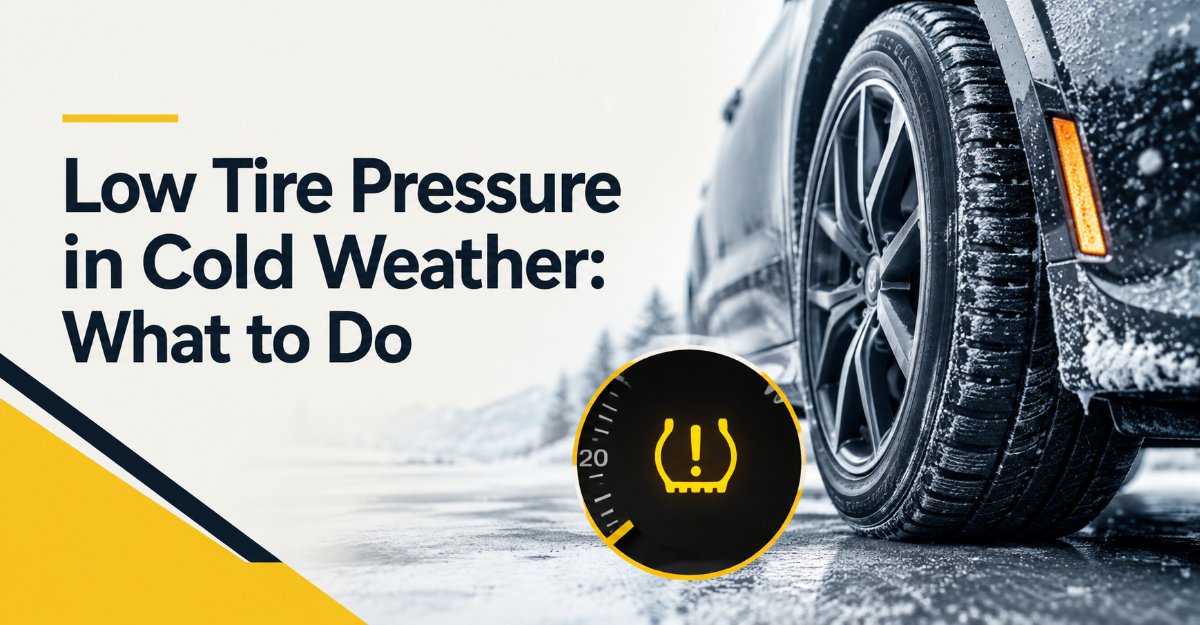
When wondering about low tire pressure in cold weather what to do, the immediate answer is to manually add compressed air until the tire reaches the recommended PSI listed on your vehicle’s driver-side door jamb. Tires naturally lose pressure as temperatures drop, and driving will not generate enough heat to safely reverse this winter deflation.
Key Facts At a Glance
- Tires lose approximately 1 PSI of pressure for every 10°F (5.6°C) drop in ambient temperature.
- A “cold tire” reading requires the vehicle to be parked for at least 3 hours or driven less than 1 mile.
- The Tire Pressure Monitoring System (TPMS) dashboard light typically only illuminates after a dangerous 25% loss in pressure.
- The PSI number printed on the rubber tire sidewall indicates the structural maximum, not the safe driving pressure.
- Nitrogen gas fluctuates less in extreme cold than standard compressed air because it contains zero moisture.
Why Cold Weather Causes Tire Deflation
Tires lose pressure in winter without experiencing a structural puncture due to the Ideal Gas Law ($P_1/T_1 = P_2/T_2$). As the ambient temperature decreases, the air molecules inside the tire slow down, condense, and take up less physical volume.
The air has not escaped the tire; it has simply contracted. However, this volume contraction reduces the outward pressure supporting the vehicle’s weight. Driving on underinflated tires compromises steering response, increases braking distance on icy roads, decreases fuel economy, and accelerates tread wear on the outer edges of the tire.
Before You Start: Preparation and Tools
Correcting winter tire pressure is a straightforward process, provided you measure the tires under the right conditions.
- Total Time: 10 to 15 minutes.
- Difficulty: Beginner.
- Total Cost: Free to $50 (depending on owned equipment).
- Tools Required: A reliable tire pressure gauge (analog dial preferred for freezing temperatures), an air compressor or pump, and gloves.
- Prerequisite: The vehicle must be completely cooled down. Do not attempt to set baseline tire pressure after a highway commute.
Step-by-Step Tire Inflation Process
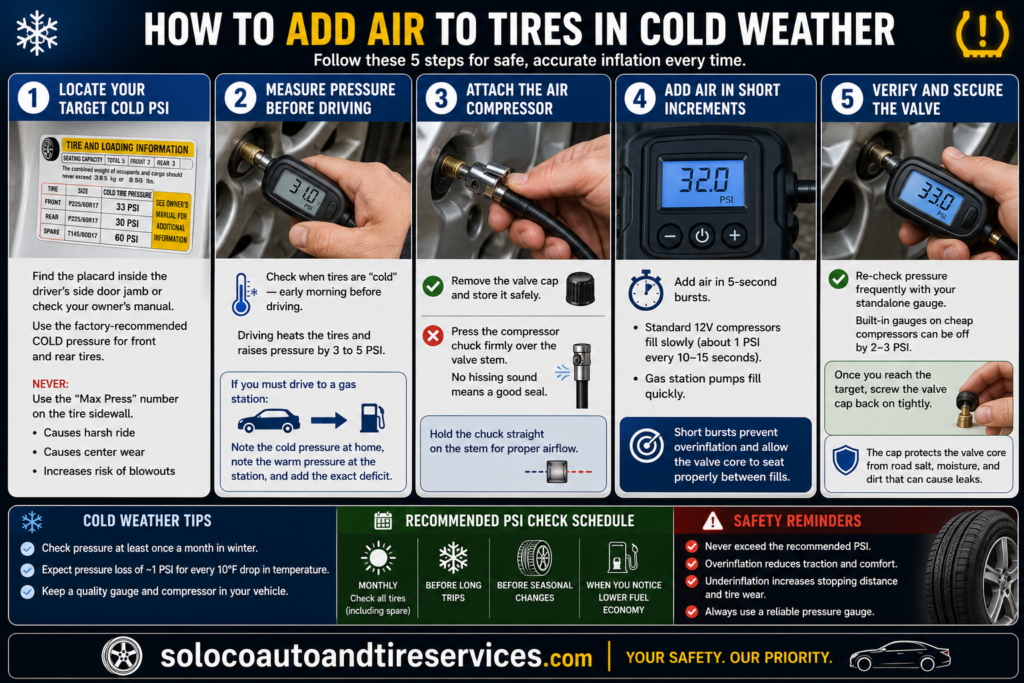
Step 1: Locate Your Target Cold PSI
Finding your correct target tire pressure requires checking the placard located inside the driver’s side door jamb or consulting the owner’s manual. This sticker lists the factory-recommended cold pressure for both front and rear tires. Never use the “Max Press” number molded into the tire sidewall, as filling to this level will result in a harsh ride, center-tread wear, and an increased risk of blowouts.
Step 2: Measure Pressure Before Driving
Checking tire pressure accurately requires measuring a “cold tire.” Connect your pressure gauge to the valve stem early in the morning before driving. Driving creates friction, which heats the air inside the tire and temporarily raises the pressure by 3 to 5 PSI. If you must drive to a gas station for air, note the cold pressure at home, note the warm pressure at the station, and add the exact deficit.
Step 3: Attach the Air Compressor
Remove the plastic or metal valve cap and store it safely in your pocket. Press the air compressor hose chuck firmly over the threaded valve stem. You should not hear a persistent hissing sound; hissing indicates a poor seal. Hold the chuck perfectly straight to ensure the air flows directly into the valve core.
Step 4: Add Air in Short Increments
Adding air in freezing temperatures requires precision. Squeeze the inflator trigger or turn on the pump in 5-second bursts. Standard 12V portable compressors fill tires slowly (around 1 PSI every 10-15 seconds), while commercial gas station pumps deliver air rapidly. Using short bursts prevents accidental overinflation and allows the valve core to seat properly between fills.
Step 5: Verify and Secure the Valve
Re-check the pressure frequently with your standalone gauge, as built-in gauges on cheap compressors are often inaccurate by 2 to 3 PSI. Once you reach the target number, screw the valve cap back on tightly. The cap is the primary defense against road salt, moisture, and dirt freezing inside the delicate valve core.
Equipment Options for Winter Inflation
Choosing the right tool dictates how quickly and comfortably you can resolve a low-pressure warning on a freezing morning.
| Equipment Type | Setup Cost | Fill Time (per tire) | Best Feature | Major Drawback |
| Gas Station Air Pump | $1 to $3 | 1 to 2 minutes | High commercial power. | Requires driving, which warms the tires and skews the PSI reading. |
| 12V Portable Compressor | $25 to $60 | 3 to 6 minutes | Plugs into the car dashboard; always available. | Slow inflation rate; loud operation; cold cables become stiff. |
| Cordless Battery Pump | $50 to $120 | 3 to 5 minutes | Zero cords; highly maneuverable around the vehicle. | Lithium batteries drain rapidly if stored in a freezing trunk. |
| Garage Air Compressor | $150 to $400 | Under 1 minute | Instantaneous fill; useful for multiple pneumatic tools. | Heavy, immobile, and requires a dedicated power outlet. |
Which Should You Choose: Air vs. Nitrogen?
Most drivers assume all tire inflation is identical, but the type of gas used significantly impacts winter pressure stability.
Standard Compressed Air
Regular compressed air is comprised of 78 percent nitrogen, 21 percent oxygen, and trace amounts of water vapor.
- Pros: Free or incredibly cheap; accessible at any service station or via a home pump.
- Cons: The moisture naturally present in compressed air turns into liquid condensation in freezing weather, causing wider and more unpredictable pressure fluctuations.
Pure Nitrogen Gas
Nitrogen inflation uses 93 to 99 percent pure nitrogen gas, completely stripped of water vapor.
- Pros: Nitrogen molecules are physically larger than oxygen, escaping through the rubber casing at a much slower rate. The lack of moisture means the gas expands and contracts consistently, preventing sudden TPMS alerts on the first freezing night of autumn.
- Cons: Filling a tire with nitrogen costs between $5 and $10 per tire. It requires visiting a specialized tire shop, and topping it off with regular air later dilutes the benefits.
Troubleshooting Common Winter Tire Mistakes
Mistake: Waiting for the TPMS Light to Tell You to Inflate
Depending entirely on your dashboard warning light is a severe safety hazard. The Tire Pressure Monitoring System is legally mandated to trigger only when a tire loses 25 percent of its recommended pressure. If your target is 35 PSI, the light will not illuminate until the tire drops below 26 PSI. Dangerous handling instability on snow and ice occurs well before the light comes on.
Troubleshooting: The TPMS Light Stays On After Filling
Modern TPMS sensors do not turn off instantly. After reaching the correct PSI, you must drive the vehicle continuously for 10 to 15 minutes at speeds above 20 mph (32 km/h) to force the sensors to transmit new data to the computer. If the light remains solid, consult your owner’s manual. Many vehicles from Honda, Toyota, and Volkswagen require you to press a physical TPMS reset button located in the glovebox or navigate to a reset sequence in the infotainment menu. A flashing TPMS light indicates a malfunctioning sensor battery, not a tire pressure issue.
Troubleshooting: Pressure Drops Daily
Cold weather causes all four tires to drop uniformly. If the front-left tire reads 24 PSI while the other three remain at 32 PSI, the cold weather merely exposed a physical leak. You have a punctured tread, a corroded alloy wheel bead, or a failing rubber valve stem. Take the vehicle to a tire shop immediately.
Expert Recommendations For Different Drivers
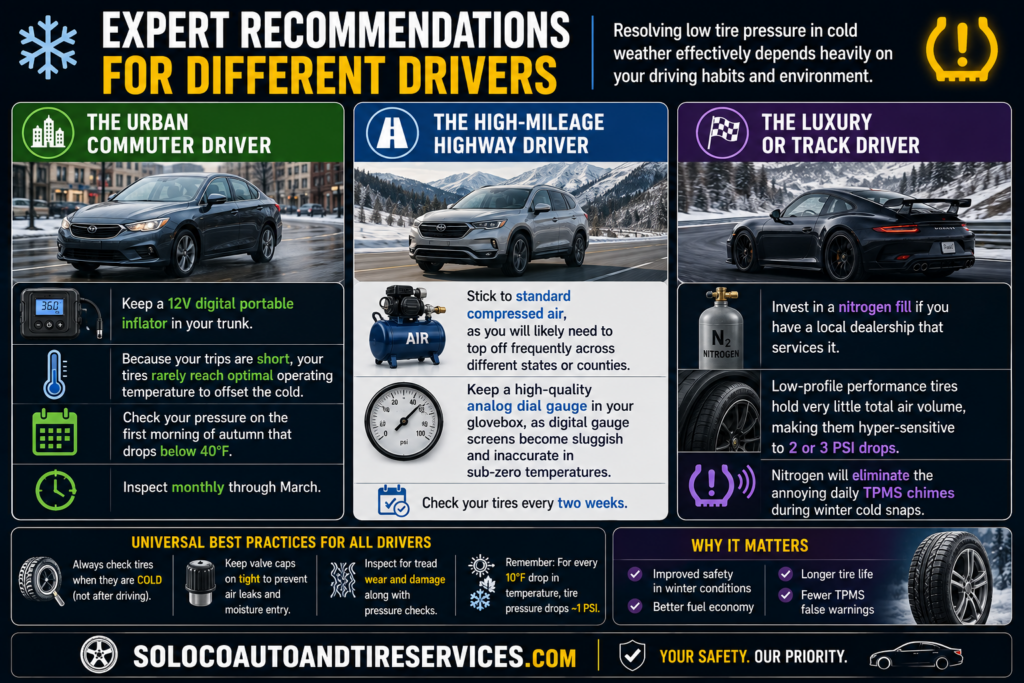
Resolving low tire pressure in cold weather effectively depends heavily on your driving habits and environment.
The Urban Commuter Driver: Keep a 12V digital portable inflator in your trunk. Because your trips are short, your tires rarely reach optimal operating temperature to offset the cold. Check your pressure on the first morning of autumn that drops below 40°F, and inspect monthly through March.
The High-Mileage Highway Driver: Stick to standard compressed air, as you will likely need to top off frequently across different states or counties. Keep a high-quality analog dial gauge in your glovebox, as digital gauge screens become sluggish and inaccurate in sub-zero temperatures. Check your tires every two weeks.
The Luxury or Track Driver: Invest in a nitrogen fill if you have a local dealership that services it. Low-profile performance tires hold very little total air volume, making them hyper-sensitive to 2 or 3 PSI drops. Nitrogen will eliminate the annoying daily TPMS chimes during winter cold snaps.
Frequently Asked Questions
Will tire pressure go back up when it gets warm?
Yes. Just as tires lose 1 PSI for every 10-degree drop, they gain 1 PSI for every 10-degree increase in ambient temperature. However, you should not wait for spring to fix winter underinflation, as driving on soft tires ruins the internal steel belts.
Is it safe to drive with low tire pressure in cold weather?
No. Underinflated tires have a distorted contact patch. The center of the tread lifts away from the road, placing all the vehicle’s weight on the outer shoulders. This severely reduces traction on slush, snow, and ice, and greatly increases the risk of hydroplaning.
Should I overinflate my tires slightly in winter?
Some automotive manufacturers recommend adding 3 to 5 extra PSI to your baseline winter pressure if you are mounting dedicated winter snow tires (which have softer sidewalls). However, you should never exceed the door jamb recommendation for standard all-season tires unless explicitly instructed by your vehicle’s owner manual, as overinflation reduces your grip on icy surfaces.
Why is my tire flat at the bottom but the gauge says it is full?
Radial tires naturally have a slight bulge at the bottom where they contact the pavement. In extreme cold, the stiff rubber can make this bulge look exaggerated. Always trust a calibrated pressure gauge over your eyes. If the gauge reads the correct PSI, the tire is properly inflated regardless of how it looks.