A portable car tire pump, commonly referred to as a portable tire inflator, is a compact motorized pneumatic device engineered to inflate vehicle tires on the roadside or in remote locations without requiring a stationary commercial garage air compressor. Selecting the correct portable air compressor prevents unexpected roadside strandings, optimizes fuel economy, and extends tire tread life by maintaining precise inflation pressures. Modern portable inflators range from compact 12V cigarette lighter plug-in units designed for emergency trunk storage to high-capacity direct-to-battery compressors built for heavy-duty off-road recovery. This definitive guide examines the mechanics, performance metrics, hardware types, and operational protocols required to choose and operate a portable car tire pump effectively.
Key Facts At a Glance
- Pressure Capacity: Standard passenger car tires require 30 to 35 PSI, while most portable inflators support maximum pressures ranging from 100 to 150 PSI.
- Air Delivery Volume: Portable units typically deliver between 0.5 and 1.5 CFM (Cubic Feet per Minute), determining overall inflation speed.
- Power Delivery Sources: Units operate via 12V DC cigarette lighter sockets, rechargeable lithium-ion battery packs, dual AC/DC inputs, or direct battery alligator clips.
- Thermal Limitations: Standard portable compressors feature a 10 to 15-minute duty cycle before requiring an equal cooling period to prevent internal seal failure.
- Cost Tiers: Entry-level 12V units cost between $20 and $40, mid-range digital cordless models range from $45 to $80, and heavy-duty units run $90 to $150+.
How Portable Tire Pumps Work Mechanically
Portable tire inflators convert electrical energy into pneumatic pressure using a small internal electric motor driving a reciprocating piston.
[12V / Battery Power] --> [Electric Motor] --> [Reciprocating Piston] --> [One-Way Check Valve] --> [Tire Valve Stem]
- Power Intake: The internal motor draws electrical current either from a vehicle’s 12V auxiliary power outlet or an integrated rechargeable lithium-ion battery pack.
- Mechanical Compression: The electric motor turns a crankshaft connected to a small reciprocating piston housed within a sealed metal cylinder.
- Air Delivery: As the piston moves downward, it draws ambient air through intake vents; upward strokes compress that air and force it past a one-way check valve into the delivery hose.
- Pressure Regulation: Compressed air enters the tire valve stem while an integrated digital or analog pressure gauge monitors backpressure to track ongoing inflation progress.
Main Types of Portable Car Tire Pumps
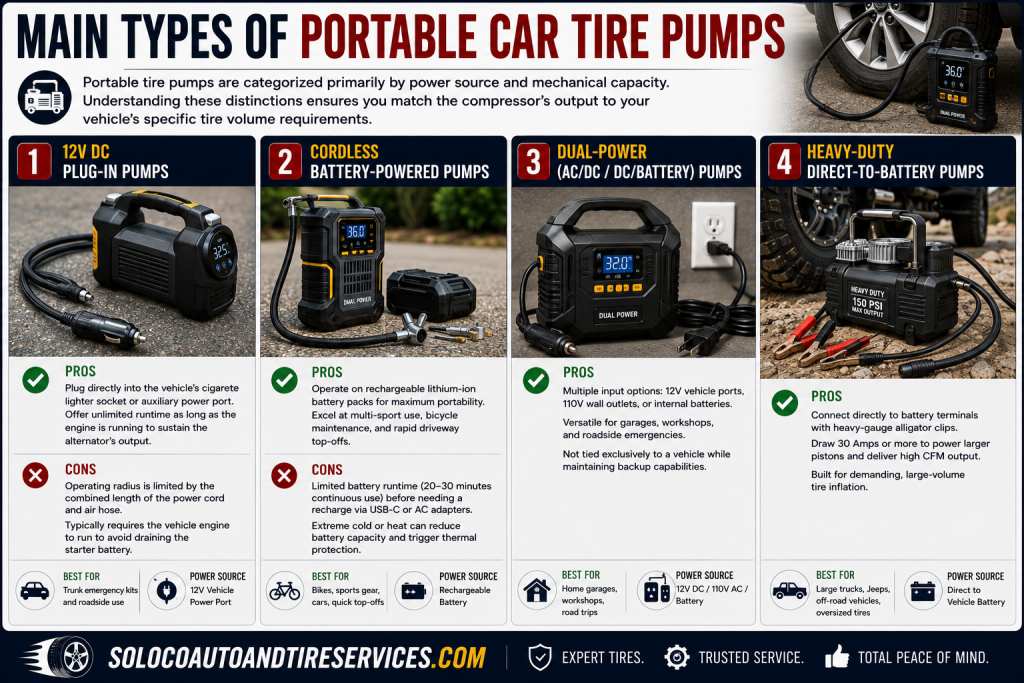
Portable tire pumps are categorized primarily by power source and mechanical capacity. Understanding these distinctions ensures you match the compressor’s output to your vehicle’s specific tire volume requirements.
1. 12V DC Plug-In Pumps
12V DC powered units plug directly into the vehicle’s cigarette lighter socket or auxiliary power port. They offer unlimited runtime as long as the vehicle’s engine is running to sustain the alternator’s output, making them reliable additions to standard trunk emergency kits.
However, their operating radius is constrained by the combined length of the power cord and air hose, and they typically require the vehicle engine to run to avoid draining the starter battery.
2. Cordless Battery-Powered Pumps
Cordless tire inflators operate on rechargeable lithium-ion battery packs, providing maximum portability without tangled cords or outlet limitations. They excel at multi-sport use, bicycle maintenance, and rapid driveway top-offs.
The primary drawback is limited battery runtime, which typically yields 20 to 30 minutes of continuous operation before requiring a recharge via USB-C or AC adapters. Furthermore, extreme cold or scorching trunk heat can temporarily diminish battery capacity and trigger thermal protection circuits.
3. Dual-Power (AC/DC / DC/Battery) Pumps
Dual-power compressors feature multiple input configurations, allowing operation via 12V vehicle ports, standard household 110V wall outlets, or internal rechargeable batteries. This versatility makes them ideal for household garages, workshops, and roadside emergencies alike. They eliminate the limitation of being tied exclusively to a vehicle while maintaining emergency backup capabilities.
4. Heavy-Duty Direct-to-Battery Pumps
Heavy-duty compressors bypass low-amperage cabin auxiliary ports by utilizing heavy-gauge cables with alligator clips that attach directly to the vehicle’s positive and negative battery terminals. Drawing 30 Amps or more, these units power larger pistons capable of generating high CFM output. They are mandatory for large pickup trucks, Jeeps, and off-road vehicles equipped with oversized all-terrain tires.
Key Technical Specifications and Performance Metrics
Evaluating a portable tire inflator requires looking beyond marketing claims and analyzing core performance specifications.
- PSI (Pounds per Square Inch): Measures the force exerted by compressed air. Passenger cars require 30 to 35 PSI, light trucks require 35 to 45 PSI, and heavy-duty off-road tires range from 50 to 80 PSI. Most portable units claim 100 to 150 PSI maximum ratings, but sustained output at higher pressures matters more than peak claims.
- CFM (Cubic Feet per Minute): Measures volumetric air delivery speed. Portable units typically range from 0.5 to 1.5 CFM. A higher CFM rating reduces total inflation time.
- Duty Cycle: The operational time a compressor can run continuously before requiring a mandatory rest period to cool down. Portable models feature a 10 to 15-minute duty cycle. Exceeding this rating melts internal rubber seals and burns out motor windings.
- Amperage Draw: 12V cigarette lighter models pull 10 to 15 Amps, matching standard vehicle fuse limits (usually 15A). Direct-to-battery models pull 30 Amps or higher, requiring direct terminal connection to prevent blowing interior fuses.
Direct Comparison of Portable Tire Pump Types
| Feature / Metric | 12V DC Plug-In | Cordless Battery-Powered | Direct-to-Battery Heavy Duty |
| Primary Power Source | 12V Auxiliary Port | Rechargeable Li-Ion Pack | Vehicle Battery Terminals |
| Runtime Limit | Unlimited (Engine Running) | 20 to 30 Minutes | 20 to 45 Minutes (Thermal Limited) |
| Inflation Speed (0-32 PSI) | 4 to 7 Minutes | 5 to 8 Minutes | 2 to 3 Minutes |
| Portability & Weight | Lightweight (2 to 4 lbs) | Ultra-Portable (1.5 to 3 lbs) | Heavy (6 to 12 lbs) |
| Best Suited For | Sedan/Sedan Commuters | Bicycles, Sports, Light Top-Offs | Jeeps, Trucks, SUVs, Overland |
Step-by-Step Guide to Safely Inflating a Car Tire
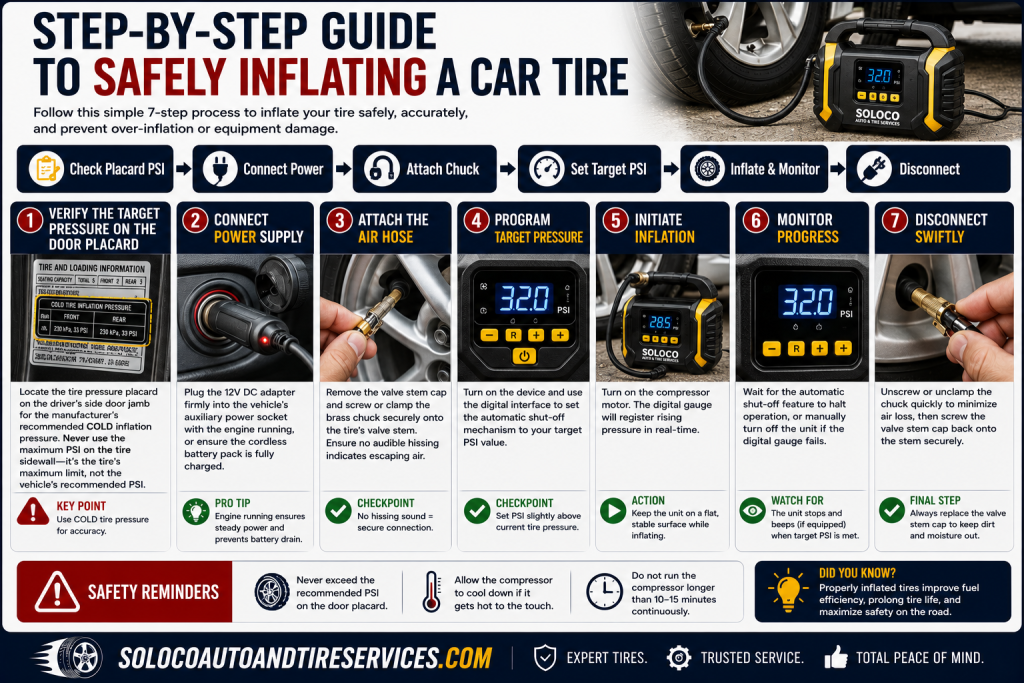
Operating a portable air compressor safely requires following a structured protocol to prevent over-inflation, electrical overloads, and thermal damage.
[Check Placard PSI] --> [Connect Power] --> [Attach Chuck] --> [Set Target PSI] --> [Inflate & Monitor] --> [Disconnect]
Step 1: Verify the Target Pressure on the Door Placard
Locate the tire pressure placard on the driver’s side door jamb to find the vehicle manufacturer’s recommended cold inflation pressure. Never rely on the maximum pressure printed on the tire sidewall, as that figure represents the tire’s structural limit rather than the vehicle’s optimal operating pressure.
Setup and Connection Protocols
- Step 2: Connect Power Supply: Plug the 12V DC adapter firmly into the vehicle’s auxiliary power socket with the car engine running, or ensure the cordless battery pack displays a full charge.
- Step 3: Attach the Air Hose: Remove the valve stem cap and screw or clamp the brass chuck securely onto the tire’s valve stem. Ensure no audible hissing indicates escaping air.
- Step 4: Program Target Pressure: Turn on the device and use the digital interface to set the automatic shut-off mechanism to your target PSI value.
Execution and Disconnection
- Step 5: Initiate Inflation: Turn on the compressor motor. The digital gauge will register rising pressure in real-time.
- Step 6: Monitor Progress: Wait for the automatic shut-off feature to halt operation, or manually turn off the unit if the digital gauge fails.
- Step 7: Disconnect Swiftly: Unscrew or unclamp the chuck quickly to minimize air loss, then screw the valve stem cap back onto the stem securely.
Common Mistakes to Avoid
- Exceeding the Duty Cycle: Running a portable pump continuously past its rated 10 to 15-minute window melts internal piston rings and destroys the motor.
- Depleting the Car Battery: Operating a 12V DC pump for extended periods without idling the car engine drains the starter battery, leaving the vehicle stranded.
- Neglecting Cordless Battery Maintenance: Storing a lithium-ion inflator in a freezing or scorching trunk for months without recharging results in a dead battery during emergencies.
- Using Sidewall Pressure Ratings: Inflating tires to the maximum PSI printed on the tire sidewall causes an overly stiff ride, uneven center tread wear, and reduced traction.
Troubleshooting Common Issues
- The pump fails to turn on: Check the glass or blade fuse located inside the 12V cigarette lighter plug tip. For cordless models, ensure the battery is not locked in thermal protection mode due to extreme trunk temperatures.
- The motor runs but air does not pump: Inspect the hose connection for a torn rubber O-ring or cracked casing. A seized internal check valve will also prevent air passage.
- The pressure gauge reads inaccurately: Turn off the device, disconnect the air chuck from the valve stem, reconnect it firmly, and power the unit back on to reset the digital pressure sensor.
- The pump slows down dramatically: The unit is overheating. Shut it off immediately and allow it to cool down in ambient shade for 15 minutes before resuming operation.
Expert Recommendations for Different User Profiles
For the Daily Commuter: Standard 12V DC Digital Inflator
Daily commuters driving sedans or compact crossovers should look for a standard 12V DC digital inflator equipped with automatic shut-off. These units are inexpensive, store compactly in spare tire wells, and operate reliably during roadside emergencies by drawing power directly from the vehicle’s electrical system without requiring battery maintenance.
For the Suburban Family: Dual-Power AC/DC Inflator
Suburban households managing multiple vehicles, bicycles, and sports equipment benefit from a dual-power AC/DC or cordless handheld inflator. These units top off car tires in the driveway without idling the engine, and they include nozzle attachments for bicycle tires, sports balls, and inflatable recreational gear.
For the Off-Roader, Truck, or SUV Owner: High-CFM Direct-to-Battery Compressor
Owners of lifted trucks, Jeeps, and large SUVs require a heavy-duty, high-CFM direct-to-battery compressor equipped with alligator clips. Large-volume tires demand substantial air mass; standard 12V cigarette lighter pumps will overheat and trip internal fuses long before filling a large truck tire from trail pressure back to highway spec.
Frequently Asked Questions
Can a portable tire pump inflate a completely flat car tire from 0 PSI?
Yes, a portable tire pump can inflate a completely flat car tire from 0 PSI, but it requires patience and adherence to duty cycles. Standard 12V DC or cordless models take 5 to 12 minutes of continuous pumping, requiring mandatory cooling pauses if the inflation time exceeds the manufacturer’s rated duty cycle limit.
Why does my portable tire inflator keep blowing car fuses?
Portable inflators blow car fuses when their electrical current draw exceeds the amperage rating of the vehicle’s auxiliary socket circuit, which is typically limited to 10 or 15 Amps. If your compressor draws high amperage, connect it directly to the car battery using alligator clips rather than plugging it into an interior cigarette lighter port.
How accurate are digital pressure gauges on portable pumps?
Digital pressure gauges on quality portable inflators are accurate within plus or minus 1 PSI. However, pressure readings fluctuate when air is actively rushing through the hose; for absolute precision, turn off the compressor momentarily to let the gauge settle, or verify with a dedicated manual tire pressure gauge.
Do portable tire pumps require regular maintenance?
Portable tire pumps require minimal maintenance, but you should inspect the air hose rubber O-rings annually for cracking, keep the quick-connect chuck free of dirt and road grime, and recharge cordless battery packs every three months to prevent deep discharge degradation.
Should I inflate my tires when they are cold or warm?
You should always check and inflate your tires when they are cold—meaning the vehicle has been parked for at least three hours or driven less than a mile. Driving heats up the air inside the tire, artificially inflating pressure readings by 3 to 5 PSI.


