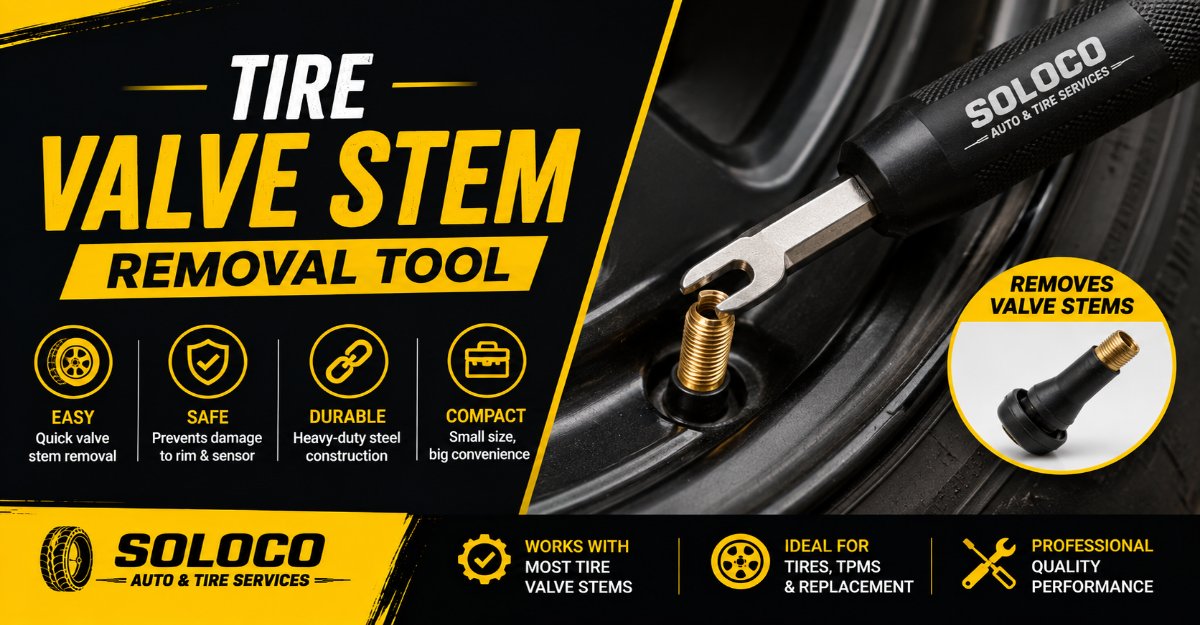
Tire Valve Stem Removal Tool: Complete Guide & Usage Steps
A tire valve stem removal tool is a specialized mechanical device designed to install, remove, or repair the core and body of a tire valve stem for rapid deflation, assembly maintenance, and Tire Pressure Monitoring System (TPMS) servicing. Selecting the correct instrument prevents thread stripping, eliminates air leaks, and protects delicate pressure sensors on modern passenger vehicles, commercial trucks, and bicycles.
Key Facts At a Glance
- Primary Function: Unfastens internal valve cores via counterclockwise rotation and pulls rubber snap-in stems through wheel rims using mechanical leverage.
- Standard Schrader Threads: External threads measure 0.305 inches by 32 Threads Per Inch (TPI); internal core threads measure 0.206 inches by 36 TPI.
- TPMS Torque Limit: Standard torque-limiting drivers click at 4 to 5 inch-pounds (0.45 to 0.56 Nm) to avoid snapping fragile sensor shafts.
- Execution Speed: Removing a standard valve core takes 5 to 10 seconds, while installing a pull-through rubber stem takes approximately 30 seconds.
- Lifespan Range: Pocket 4-way tools last several years before teeth wear down, whereas professional screwdriver-style removers endure decades of heavy garage use.
How Tire Valve Stem Removal Tools Work
The operational mechanics of a valve stem tool depend entirely on whether you are servicing the internal spring-loaded core or extracting the outer rubber housing from the wheel rim.
Core removal relies on a forked, dual-pronged metal tip that slides directly into the cylindrical barrel of the valve stem. The prongs engage the flattened shoulders of the brass valve core. Rotating the tool counterclockwise unscrews the core from its internal seat, allowing pressurized air to vent rapidly past the open channel.
Stem extraction utilizes mechanical leverage rather than rotational threading. For rubber snap-in stems, a heavy-duty pivot lever or slide-hammer mechanism hooks onto or screws directly onto the external threads of the stem. Pulling the handle pivots a rubber-padded foot against the outer face of the aluminum rim, drawing the thick rubber base through the narrow rim hole until it snaps securely into place.
Types of Valve Stem Removal Tools and Their Applications
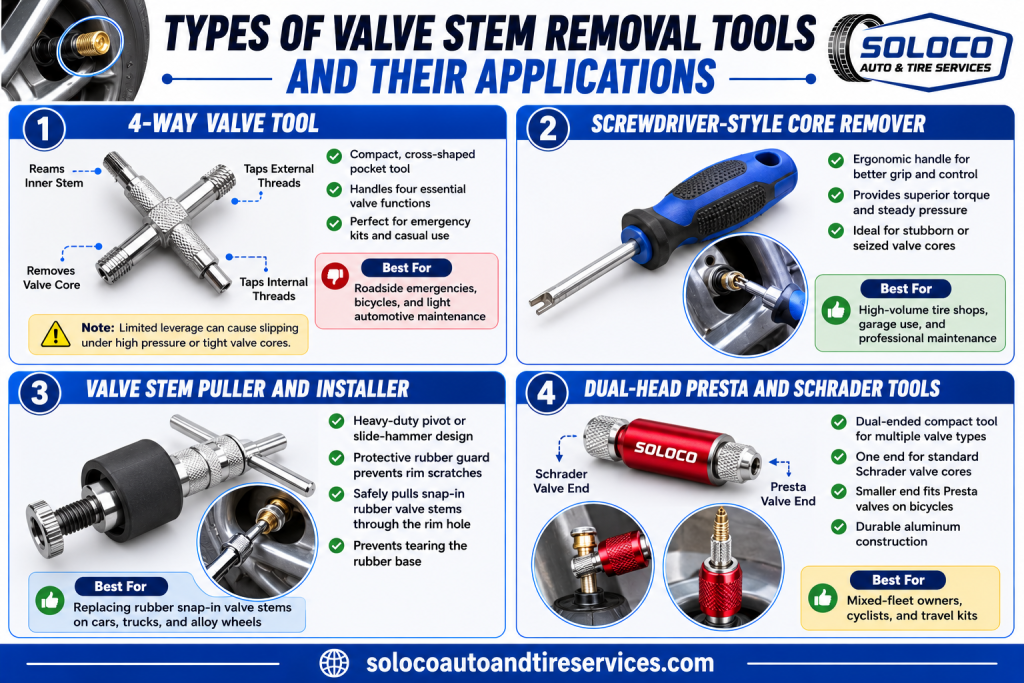
Different mechanical environments require specific tool designs to prevent damage to wheels, valves, and internal threads.
4-Way Valve Tool
The 4-way valve tool is a compact, cross-shaped pocket device built from stamped steel. It removes standard Schrader valve cores, taps internal stem threads, taps external cap threads, and reams the inner stem wall. It is ideal for roadside emergency kits and casual bicycle or automotive maintenance. However, its lack of leverage makes it prone to slipping under heavy pressure.
Screwdriver-Style Core Remover
Featuring an ergonomic plastic or rubberized handle attached to a rigid steel shaft, the screwdriver-style remover provides superior torque and grip. It is engineered for high-volume tire shops and routine garage maintenance where stubborn or seized valve cores require steady downward pressure to break free without stripping the brass slots.
Valve Stem Puller and Installer
The valve stem puller is a heavy-duty pivot or slide-hammer tool equipped with a protective rubber guard. It grips snap-in rubber valve stems to pull them through the wheel rim hole without tearing the rubber base or scratching custom alloy wheel faces.
Dual-Head Presta and Schrader Tools
Designed for mixed-fleet owners or cyclists, these compact aluminum cylinders feature dual-ended fittings. One end handles standard automotive Schrader valves, while the smaller end accommodates removable cores found on high-pressure tubeless bicycle Presta valves.
Technical Specifications and Thread Standards
Understanding the precise dimensions of valve stems prevents cross-threading and catastrophic air loss during maintenance.
- Schrader External Threads: Standard automotive and bicycle Schrader stems feature external threads measuring 0.305 inches with 32 threads per inch, used primarily for securing valve caps and inflation chucks.
- Schrader Internal Threads: The inner core chamber utilizes finer threads measuring 0.206 inches with 36 threads per inch to secure the removable valve core.
- Presta Removable Cores: High-end tubeless bicycle Presta valves utilize metric internal core threads, typically standardized at M4.5 x 0.5.
- TPMS Sensor Torque Thresholds: Modern clamp-in TPMS sensors feature delicate aluminum or brass valve stems. Applying standard hand tool torque snaps the shaft instantly. Specialized torque-limiting drivers disengage or click at precisely 4 to 5 inch-pounds to prevent structural failure.
Step-by-Step Process: Removing and Replacing a Valve Core
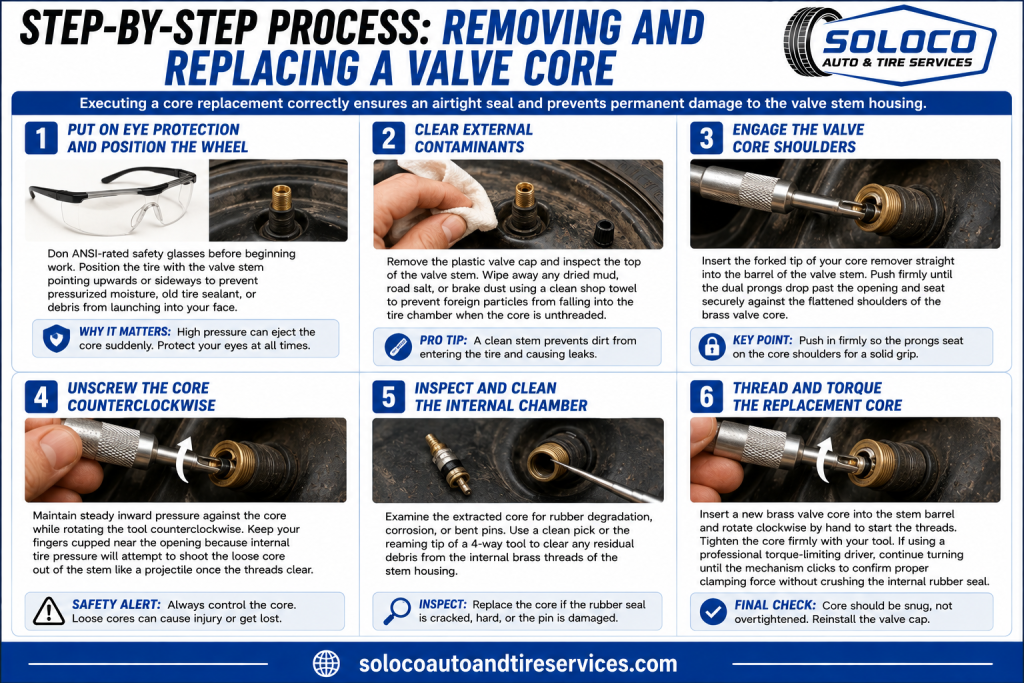
Executing a core replacement correctly ensures an airtight seal and prevents permanent damage to the valve stem housing.
Step 1: Put on Eye Protection and Position the Wheel
Don ANSI-rated safety glasses before beginning work. Position the tire with the valve stem pointing upwards or sideways to prevent pressurized moisture, old tire sealant, or debris from launching directly into your face.
Step 2: Clear External Contaminants
Remove the plastic valve cap and inspect the top of the valve stem. Wipe away any dried mud, road salt, or brake dust using a clean shop towel to prevent foreign particles from falling into the tire chamber when the core is unthreaded.
Step 3: Engage the Valve Core Shoulders
Insert the forked tip of your core remover straight into the barrel of the valve stem. Push firmly until the dual prongs drop past the opening and seat securely against the flattened shoulders of the brass valve core.
Step 4: Unscrew the Core Counterclockwise
Maintain steady inward pressure against the core while rotating the tool counterclockwise. Keep your fingers cupped near the opening because internal tire pressure will attempt to shoot the loose core out of the stem like a projectile once the threads clear.
Step 5: Inspect and Clean the Internal Chamber
Examine the extracted core for rubber degradation, corrosion, or bent pins. Use a clean pick or the reaming tip of a 4-way tool to clear any residual debris from the internal brass threads of the stem housing.
Step 6: Thread and Torque the Replacement Core
Insert a new brass valve core into the stem barrel and rotate clockwise by hand to start the threads. Tighten the core firmly with your tool. If using a professional torque-limiting driver, continue turning until the mechanism clicks to confirm proper clamping force without crushing the internal rubber seal.
Common Mistakes and How to Avoid Them
- Over-Tightening the Core: Forcing a core past its natural stop crushes the small rubber sealing gasket at its base, causing persistent slow air leaks. Tighten until snug, not overly compressed.
- Skipping Eye Protection: Removing a core from a high-pressure commercial truck tire operating at 80 to 110 PSI turns the tiny brass core into a high-velocity projectile capable of causing severe eye injury.
- Using Standard Tools on TPMS Sensors: Applying high-leverage screwdriver handles to aluminum TPMS stems will snap the rigid sensor housing, resulting in an expensive sensor replacement bill. Always use calibrated torque drivers for TPMS hardware.
- Cross-Threading the Stem: Forcing a tool or new core into the stem at an angle destroys the soft brass inner threads, rendering the entire valve stem permanently unrepairable.
Troubleshooting Damaged Valve Stems and Stuck Cores
- The Core Spins Without Unthreading: The internal brass threads are stripped. To resolve this, use needle-nosed pliers to pull outward gently on the center pin while rotating the core counterclockwise with your removal tool.
- The Tool Slips Off the Core: The core shoulders are rounded off or the tool teeth are worn down. Switch immediately to a high-precision screwdriver-style tool, or tap a small screw extractor into the core barrel to bite into the damaged metal.
- Persistent Air Leaks After Replacement: Dirt is trapped in the seating threads or the inner wall is corroded. Remove the core, clean the internal chamber with a reaming tool, and install a brand-new valve core equipped with a fresh rubber seal.
Frequently Asked Questions
Can you replace a tire valve stem without removing the tire from the rim?
Snap-in rubber valve stems can be cut out and pulled through the rim hole using a specialized puller tool without dismounting the entire tire, provided the tire bead is unseated and pushed away from the rim edge to create internal clearance for the new stem base.
What causes a tire valve core to seize inside the stem?
Galvanic corrosion between dissimilar metals, such as a brass core reacting with an aluminum valve stem in the presence of moisture and road salt, fuses the threads together, requiring a penetrating lubricant and a high-torque screwdriver-style tool to break free.
How often should tire valve cores be replaced?
Valve cores should be inspected during every seasonal tire rotation and replaced whenever tires are mounted or dismounted, as the microscopic rubber seals degrade, dry out, and flatten over time, leading to slow leaks.
Are bicycle valve stem tools interchangeable with car tools?
Standard automotive Schrader valve tools work on all car, truck, and motorcycle Schrader stems, but they are too large for thin bicycle Presta valves, which require a dedicated dual-head tool or an ultra-small core removal wrench designed for M4.5 threads.A tire valve stem removal tool is a specialized mechanical device designed to install, remove, or repair the core and body of a tire valve stem for rapid deflation, assembly maintenance, and Tire Pressure Monitoring System (TPMS) servicing. Selecting the correct instrument prevents thread stripping, eliminates air leaks, and protects delicate pressure sensors on modern passenger vehicles, commercial trucks, and bicycles.
Key Facts At a Glance
- Primary Function: Unfastens internal valve cores via counterclockwise rotation and pulls rubber snap-in stems through wheel rims using mechanical leverage.
- Standard Schrader Threads: External threads measure 0.305 inches by 32 Threads Per Inch (TPI); internal core threads measure 0.206 inches by 36 TPI.
- TPMS Torque Limit: Standard torque-limiting drivers click at 4 to 5 inch-pounds (0.45 to 0.56 Nm) to avoid snapping fragile sensor shafts.
- Execution Speed: Removing a standard valve core takes 5 to 10 seconds, while installing a pull-through rubber stem takes approximately 30 seconds.
- Lifespan Range: Pocket 4-way tools last several years before teeth wear down, whereas professional screwdriver-style removers endure decades of heavy garage use.
How Tire Valve Stem Removal Tools Work
The operational mechanics of a valve stem tool depend entirely on whether you are servicing the internal spring-loaded core or extracting the outer rubber housing from the wheel rim.
Core removal relies on a forked, dual-pronged metal tip that slides directly into the cylindrical barrel of the valve stem. The prongs engage the flattened shoulders of the brass valve core. Rotating the tool counterclockwise unscrews the core from its internal seat, allowing pressurized air to vent rapidly past the open channel.
Stem extraction utilizes mechanical leverage rather than rotational threading. For rubber snap-in stems, a heavy-duty pivot lever or slide-hammer mechanism hooks onto or screws directly onto the external threads of the stem. Pulling the handle pivots a rubber-padded foot against the outer face of the aluminum rim, drawing the thick rubber base through the narrow rim hole until it snaps securely into place.
Types of Valve Stem Removal Tools and Their Applications
Different mechanical environments require specific tool designs to prevent damage to wheels, valves, and internal threads.
4-Way Valve Tool
The 4-way valve tool is a compact, cross-shaped pocket device built from stamped steel. It removes standard Schrader valve cores, taps internal stem threads, taps external cap threads, and reams the inner stem wall. It is ideal for roadside emergency kits and casual bicycle or automotive maintenance. However, its lack of leverage makes it prone to slipping under heavy pressure.
Screwdriver-Style Core Remover
Featuring an ergonomic plastic or rubberized handle attached to a rigid steel shaft, the screwdriver-style remover provides superior torque and grip. It is engineered for high-volume tire shops and routine garage maintenance where stubborn or seized valve cores require steady downward pressure to break free without stripping the brass slots.
Valve Stem Puller and Installer
The valve stem puller is a heavy-duty pivot or slide-hammer tool equipped with a protective rubber guard. It grips snap-in rubber valve stems to pull them through the wheel rim hole without tearing the rubber base or scratching custom alloy wheel faces.
Dual-Head Presta and Schrader Tools
Designed for mixed-fleet owners or cyclists, these compact aluminum cylinders feature dual-ended fittings. One end handles standard automotive Schrader valves, while the smaller end accommodates removable cores found on high-pressure tubeless bicycle Presta valves.
Technical Specifications and Thread Standards
Understanding the precise dimensions of valve stems prevents cross-threading and catastrophic air loss during maintenance.
- Schrader External Threads: Standard automotive and bicycle Schrader stems feature external threads measuring 0.305 inches with 32 threads per inch, used primarily for securing valve caps and inflation chucks.
- Schrader Internal Threads: The inner core chamber utilizes finer threads measuring 0.206 inches with 36 threads per inch to secure the removable valve core.
- Presta Removable Cores: High-end tubeless bicycle Presta valves utilize metric internal core threads, typically standardized at M4.5 x 0.5.
- TPMS Sensor Torque Thresholds: Modern clamp-in TPMS sensors feature delicate aluminum or brass valve stems. Applying standard hand tool torque snaps the shaft instantly. Specialized torque-limiting drivers disengage or click at precisely 4 to 5 inch-pounds to prevent structural failure.
Step-by-Step Process: Removing and Replacing a Valve Core
Executing a core replacement correctly ensures an airtight seal and prevents permanent damage to the valve stem housing.
Step 1: Put on Eye Protection and Position the Wheel
Don ANSI-rated safety glasses before beginning work. Position the tire with the valve stem pointing upwards or sideways to prevent pressurized moisture, old tire sealant, or debris from launching directly into your face.
Step 2: Clear External Contaminants
Remove the plastic valve cap and inspect the top of the valve stem. Wipe away any dried mud, road salt, or brake dust using a clean shop towel to prevent foreign particles from falling into the tire chamber when the core is unthreaded.
Step 3: Engage the Valve Core Shoulders
Insert the forked tip of your core remover straight into the barrel of the valve stem. Push firmly until the dual prongs drop past the opening and seat securely against the flattened shoulders of the brass valve core.
Step 4: Unscrew the Core Counterclockwise
Maintain steady inward pressure against the core while rotating the tool counterclockwise. Keep your fingers cupped near the opening because internal tire pressure will attempt to shoot the loose core out of the stem like a projectile once the threads clear.
Step 5: Inspect and Clean the Internal Chamber
Examine the extracted core for rubber degradation, corrosion, or bent pins. Use a clean pick or the reaming tip of a 4-way tool to clear any residual debris from the internal brass threads of the stem housing.
Step 6: Thread and Torque the Replacement Core
Insert a new brass valve core into the stem barrel and rotate clockwise by hand to start the threads. Tighten the core firmly with your tool. If using a professional torque-limiting driver, continue turning until the mechanism clicks to confirm proper clamping force without crushing the internal rubber seal.
Common Mistakes and How to Avoid Them
- Over-Tightening the Core: Forcing a core past its natural stop crushes the small rubber sealing gasket at its base, causing persistent slow air leaks. Tighten until snug, not overly compressed.
- Skipping Eye Protection: Removing a core from a high-pressure commercial truck tire operating at 80 to 110 PSI turns the tiny brass core into a high-velocity projectile capable of causing severe eye injury.
- Using Standard Tools on TPMS Sensors: Applying high-leverage screwdriver handles to aluminum TPMS stems will snap the rigid sensor housing, resulting in an expensive sensor replacement bill. Always use calibrated torque drivers for TPMS hardware.
- Cross-Threading the Stem: Forcing a tool or new core into the stem at an angle destroys the soft brass inner threads, rendering the entire valve stem permanently unrepairable.
Troubleshooting Damaged Valve Stems and Stuck Cores
- The Core Spins Without Unthreading: The internal brass threads are stripped. To resolve this, use needle-nosed pliers to pull outward gently on the center pin while rotating the core counterclockwise with your removal tool.
- The Tool Slips Off the Core: The core shoulders are rounded off or the tool teeth are worn down. Switch immediately to a high-precision screwdriver-style tool, or tap a small screw extractor into the core barrel to bite into the damaged metal.
- Persistent Air Leaks After Replacement: Dirt is trapped in the seating threads or the inner wall is corroded. Remove the core, clean the internal chamber with a reaming tool, and install a brand-new valve core equipped with a fresh rubber seal.
Frequently Asked Questions
Can you replace a tire valve stem without removing the tire from the rim?
Snap-in rubber valve stems can be cut out and pulled through the rim hole using a specialized puller tool without dismounting the entire tire, provided the tire bead is unseated and pushed away from the rim edge to create internal clearance for the new stem base.
What causes a tire valve core to seize inside the stem?
Galvanic corrosion between dissimilar metals, such as a brass core reacting with an aluminum valve stem in the presence of moisture and road salt, fuses the threads together, requiring a penetrating lubricant and a high-torque screwdriver-style tool to break free.
How often should tire valve cores be replaced?
Valve cores should be inspected during every seasonal tire rotation and replaced whenever tires are mounted or dismounted, as the microscopic rubber seals degrade, dry out, and flatten over time, leading to slow leaks.
Are bicycle valve stem tools interchangeable with car tools?
Standard automotive Schrader valve tools work on all car, truck, and motorcycle Schrader stems, but they are too large for thin bicycle Presta valves, which require a dedicated dual-head tool or an ultra-small core removal wrench designed for M4.5 threads.


