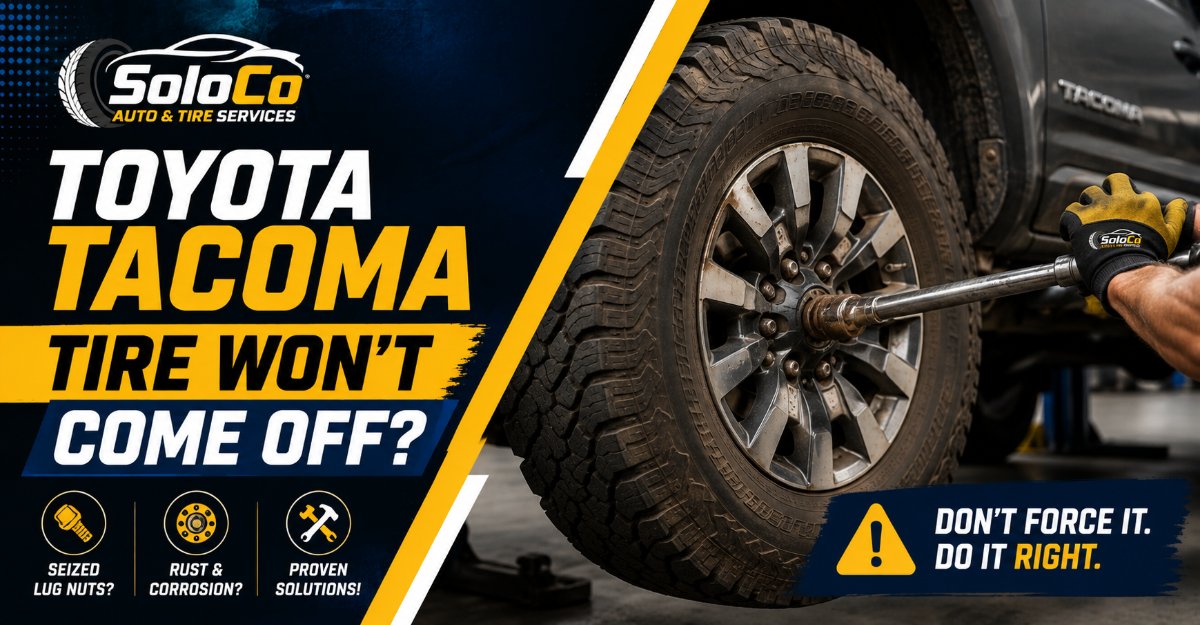
A Toyota Tacoma wheel that refuses to detach after all lug nuts are removed is suffering from a mechanical seizure caused by galvanic corrosion bonding the aluminum alloy wheel center bore directly to the steel hub lip. Resolving this issue requires controlled kinetic energy, proper safety margins, and systematic mechanical separation rather than brute-force hammering that risks damaging suspension components or vehicle stability.
Key Facts at a Glance
- Root Cause: Galvanic corrosion between dissimilar metals (aluminum wheel and steel hub) activated by moisture and road salt.
- Tolerance Clearance: The central hub pilot gap measures approximately 0.1 mm, meaning minimal oxidation locks the wheel solid.
- Standard Torque: Factory Toyota Tacoma lug nut torque specification is 83 lb⋅ft (113 N⋅m).
- Repair Timeframe: 15 to 45 minutes depending on rust severity and available shop tools.
- Professional Cost: $50 to $120 per axle if handled by a commercial service garage.
Before You Start: Preparation and Safety
- Estimated Time: 20 to 45 minutes.
- Difficulty Level: Intermediate mechanical intervention.
- Total Cost: $0 (using standard onboard tools) to $25 (purchasing penetrating oil and wire brushes).
- Tools and Materials Needed:
- Hydraulic floor jack and heavy-duty steel jack stands (rated for 3,000 lbs minimum).
- 3-lb to 4-lb rubber dead-blow mallet or a heavy wooden block paired with a sledgehammer.
- Penetrating catalyst (such as PB Blaster, Kroil, or Liquid Wrench).
- Coarse steel wire brush or a drill-mounted wire wheel attachment.
- Tube of copper or marine-grade anti-seize lubricant.
- Standard factory lug wrench or breaker bar.
Safety Warning: Never place any portion of your body underneath a vehicle supported solely by a hydraulic bottle jack or floor jack. Always transfer the truck’s weight onto certified structural steel jack stands positioned on reinforced frame rail contact points before attempting any physical breakout procedures.
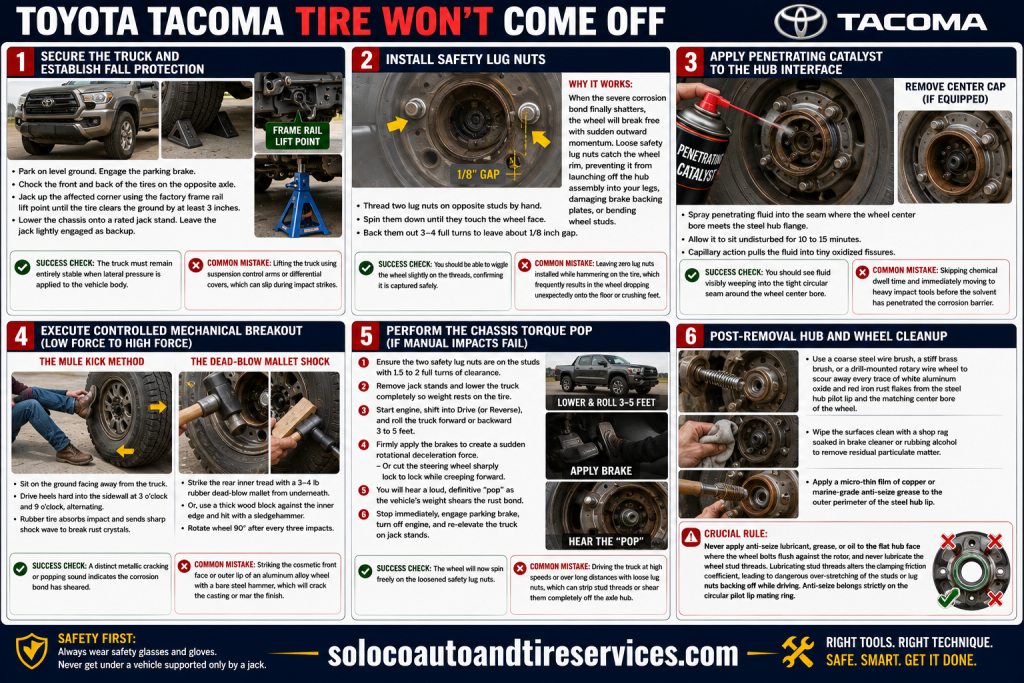
Step 1: Secure the Truck and Establish Fall Protection
Park the Toyota Tacoma on level, hard asphalt or concrete. Engage the emergency parking brake fully to lock the rear axle. Place solid rubber wheel chocks securely against both the front and back of the tires on the opposite axle to prevent any longitudinal shifting while the vehicle is elevated.
Jack up the affected corner of the truck using the factory-specified frame rail lift point until the stuck tire clears the ground by at least 3 inches. Lower the chassis directly onto a rated jack stand, leaving the hydraulic jack lightly engaged as a secondary safety backup.
- Success Check: The truck must remain entirely stable when lateral pressure is applied to the vehicle body.
- Common Mistake: Lifting the truck using suspension control arms or differential covers, which can slip during impact strikes.
Step 2: Install Safety Lug Nuts
Thread two factory lug nuts back onto opposite wheel studs by hand. Spin them down until they contact the wheel face, then back them out by roughly 3 to 4 full rotations, leaving a gap of approximately 81 inch between the flat face of the lug nut and the wheel surface.
- Why It Works: When the severe corrosion bond finally shatters, the wheel will break free with sudden outward momentum. Loose safety lug nuts catch the wheel rim, preventing it from launching off the hub assembly into your legs, damaging brake backing plates, or bending wheel studs.
- Success Check: You should be able to wiggle the wheel slightly on the threads, confirming it is captured safely.
- Common Mistake: Leaving zero lug nuts installed while hammering on the tire, which frequently results in the heavy wheel dropping unexpectedly onto the floor or crushing feet.
Step 3: Apply Penetrating Catalyst to the Hub Interface
Spray a low-viscosity penetrating fluid directly into the tiny seam where the center bore of the aluminum wheel meets the steel hub flange. If your Tacoma has aftermarket wheels with a central dust cap, pop the cap off to expose the axle nut and hub mating surface from the front side as well.
Allow the chemical solvent to sit undisturbed for 10 to 15 minutes. Capillary action will draw the fluid into the microscopic oxidized fissures between the iron and aluminum surfaces, softening the hard crystalline crust of aluminum oxide.
- Success Check: You should see fluid visibly weeping into the tight circular seam around the wheel center bore.
- Common Mistake: Skipping chemical dwell time and immediately moving to heavy impact tools before the solvent has penetrated the corrosion barrier.
Step 4: Execute Controlled Mechanical Breakout
Choose your mechanical breakout method based on the severity of the rust bond, moving sequentially from low-force to high-force applications.
The Mule Kick Method
Sit flat on the ground facing away from the side of the truck. Drive your heels hard into the outer rubber sidewall of the tire, alternating between the 3 o’clock and 9 o’clock positions. The flexible give of the rubber tire absorbs the impact while transferring a sharp shock wave directly through the rim to shatter brittle rust crystals at the hub center.
The Dead-Blow Mallet Shock
Take a 3-lb to 4-lb rubber dead-blow mallet and strike the rear inner rubber tread of the tire from underneath the truck outward. Alternatively, hold a thick block of wood firmly against the back inside edge of the tire and strike the wood with a sledgehammer. Rotate the wheel 90 degrees after every three impacts to distribute the mechanical shock evenly across the entire hub circumference.
- Success Check: A distinct metallic cracking or popping sound indicates the corrosion bond has sheared.
- Common Mistake: Striking the cosmetic front face or outer lip of an aluminum alloy wheel with a bare steel hammer, which will easily crack the casting or mar the finish.
Step 5: Perform the Chassis Torque Pop (If Manual Impacts Fail)
If kicking and mallet strikes fail to break a severely frozen Tacoma wheel, utilize the weight of the vehicle itself.
- Ensure the two safety lug nuts are threaded onto the studs with exactly 1.5 to 2 full turns of clearance.
- Remove the jack stands and lower the truck completely so the weight of the vehicle rests on the stuck tire.
- Start the engine, shift the transmission into Drive (or Reverse), and roll the truck forward or backward approximately 3 to 5 feet.
- Firmly apply the brakes to create a sudden rotational deceleration force against the hub assembly. Alternatively, cut the steering wheel sharply from lock to lock while creeping forward slowly.
- You will hear a loud, definitive structural “pop” as the vehicle’s weight shears the rust bond.
- Immediately stop the vehicle, engage the parking brake, turn off the engine, and re-elevate the truck on your floor jack and jack stands.
- Success Check: The wheel will now spin freely on the loosened safety lug nuts.
- Common Mistake: Driving the truck at high speeds or over long distances with loose lug nuts, which can strip stud threads or shear them completely off the axle hub.
Step 6: Post-Removal Hub and Wheel Cleanup
Unscrew the safety lug nuts entirely and pull the wheel straight off the hub flange. Inspect the mating surfaces to ensure all debris is cleared before remounting.
- Use a coarse steel wire brush, a stiff brass brush, or a drill-mounted rotary wire wheel to scour away every trace of white aluminum oxide and red iron rust flakes from the steel hub pilot lip and the matching center bore of the wheel.
- Wipe the surfaces clean with a shop rag soaked in brake cleaner or rubbing alcohol to remove residual particulate matter.
- Apply a micro-thin film of copper or marine-grade anti-seize grease to the outer perimeter of the steel hub lip.
Crucial Rule: Never apply anti-seize lubricant, grease, or oil to the flat hub face where the wheel bolts flush against the rotor, and never lubricate the wheel stud threads. Lubricating stud threads alters the clamping friction coefficient, leading to dangerous over-stretching of the studs or lug nuts backing off while driving. Anti-seize belongs strictly on the circular pilot lip mating ring.
Common Mistakes and How to Fix Them
- Striking Alloy Rims with Steel Hammers: Hammering directly on aluminum wheel spokes or outer lips causes structural fractures, deep gouges, and out-of-round wheel deformation. Fix: Always use dead-blow mallets against rubber tire sidewalls or wooden buffer blocks.
- Removing All Lug Nuts Before Breaking the Bond: Leaving no safety nuts attached allows a 40-pound wheel to drop violently onto your feet or smash brake hydraulic lines. Fix: Always thread two loose safety nuts back onto the studs.
- Over-Torquing Lug Nuts During Reinstallation: Cranking lug nuts past 120 lb⋅ft with an uncalibrated pneumatic impact gun pulls the wheel center bore into an aggressive interference fit against the hub, guaranteeing future seizures. Fix: Always torque Toyota Tacoma lug nuts to the factory specification of 83 lb⋅ft using a calibrated torque wrench.
- Neglecting Annual Hub Maintenance: Failing to clean salt and moisture residue off hub lips during seasonal tire rotations leads to repeat seizures every winter. Fix: Inspect and clean wheel hubs once a year in rust-belt regions.
Frequently Asked Questions
Why do Toyota Tacoma wheels stick to the hubs so tightly?
Toyota Tacomas use a hub-centric wheel design where the central bore of the wheel matches the machined pilot lip of the hub with a tight tolerance of approximately 0.1 mm. When winter road salts and moisture penetrate this narrow gap, galvanic corrosion occurs between the aluminum alloy wheel and the steel hub. The resulting aluminum and iron oxides expand in volume, effectively welding the two dissimilar metals together.
Can I drive my Tacoma short distances with loose lug nuts to unstick a wheel?
Yes, but only under strictly controlled conditions. Loosening the lug nuts by 1.5 to 2 turns and rolling the truck forward or backward at a walking speed of under 5 mph allows the vehicle’s weight to break the rust bond safely. Never drive on public roads or at high speeds with loose lug nuts, as this destroys wheel studs and risks losing control of the vehicle.
What is the correct tightening torque for Toyota Tacoma wheel lug nuts?
The factory torque specification for all stock Toyota Tacoma steel and aluminum wheels is 83 lb⋅ft (113 N⋅m). Always tighten lug nuts in a star pattern using a calibrated torque wrench to ensure even clamping pressure and prevent warped brake rotors or stuck wheels.
Should I put anti-seize on my Tacoma wheel studs to stop them from sticking?
No. Never apply anti-seize lubricant, oil, or grease to the threaded wheel studs or the flat mounting face of the brake rotor. Lubricants on stud threads distort torque readings, causing over-tightening and snapped studs. Apply a thin, microscopic film of anti-seize exclusively to the outer raised circular ring of the center hub pilot lip.