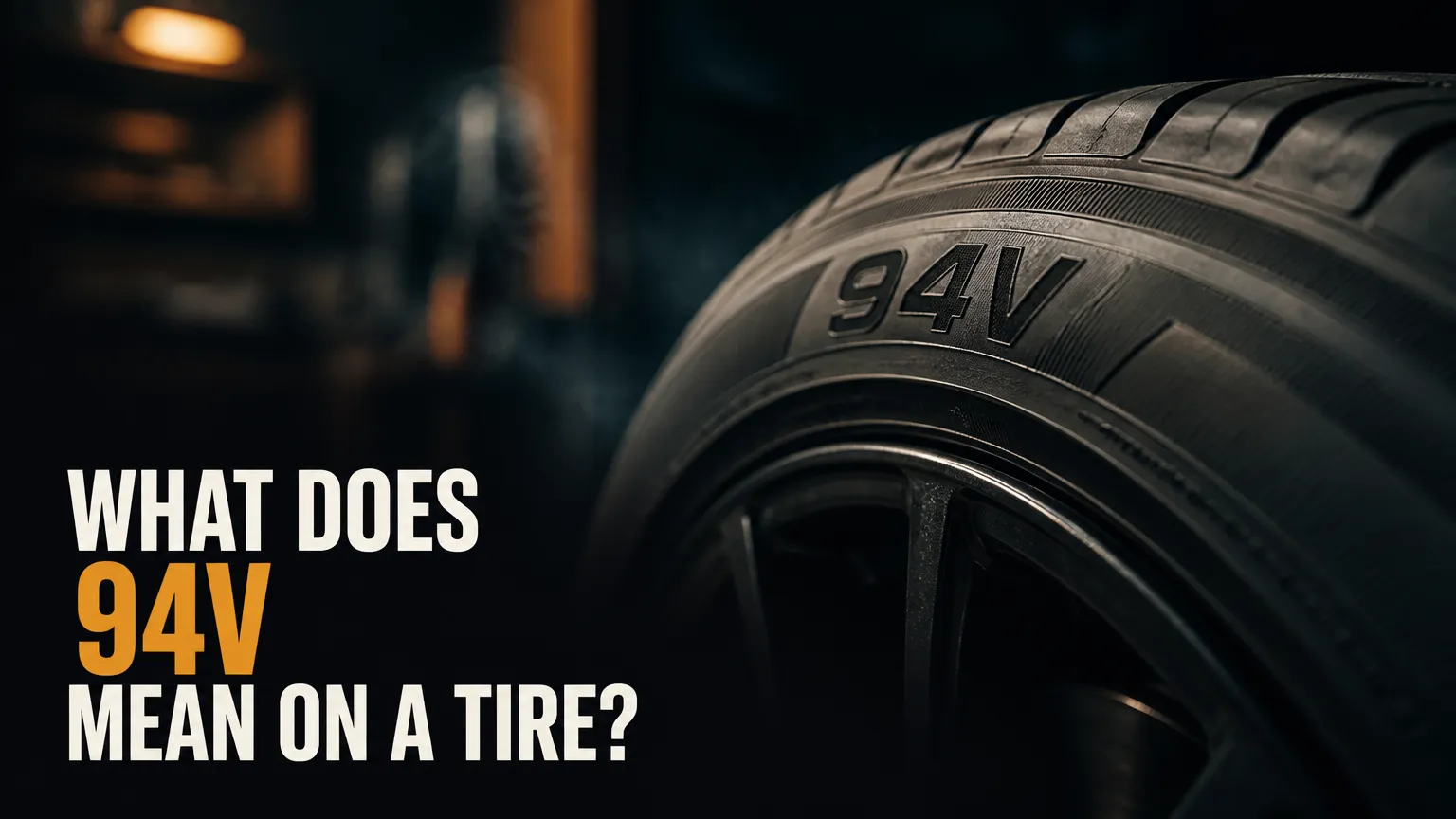
A 94V tire code specifies a load index of 94, meaning the tire can safely support up to 1,433 pounds, and a speed rating of V, indicating a maximum sustainable speed of 149 miles per hour under optimal operating conditions. This alphanumeric combination appears on the tire sidewall to help drivers match replacement tires to their vehicle manufacturer safety specifications.
At a Glance: Key Facts About 94V Tires
- A load index of 94 corresponds to a maximum weight capacity of 1,433 pounds per individual tire.
- A speed rating of V designates a certified maximum safe speed capability of 149 miles per hour.
- Achieving the full 1,433-pound weight limit requires inflating the tire to its maximum rated pressure, not the lower vehicle door jamb recommendation.
- Standard Load (SL) 94V tires differ structurally from Extra Load (XL) variants, which require higher inflation pressures to reach identical weight ratings.
- Mixing 94V tires with different speed ratings on the same vehicle alters handling dynamics and creates hazardous vehicle control risks.
What Does the Load Index 94 Mean?
The numerical portion of the code represents the maximum weight capacity that a single tire can support when properly inflated. A load index rating of 94 corresponds to a maximum weight capacity of 1,433 pounds or 650 kilograms per tire. When multiplied across a standard set of four matching tires, this rating equals a total maximum vehicle weight capacity of 5,732 pounds. Drivers must ensure that their vehicle’s gross vehicle weight rating, including passengers and cargo, never exceeds this combined structural threshold.
What Does the Speed Rating V Mean?
The letter following the load index indicates the maximum sustainable speed the tire can safely maintain over time without experiencing dangerous heat buildup. A V speed rating signifies a maximum speed capability of 149 miles per hour or 240 kilometers per hour. Tire engineers test these products on specialized drums to verify that the internal belt packages and rubber compounds maintain structural integrity at high velocities. Exceeding this limit compromises the structural cohesion of the tire.
How Does Standard Load Differ from Extra Load on a 94V Tire?
Most 94V tires are manufactured as Standard Load variants, but some feature an Extra Load designation requiring higher internal pressures. An XL 94V tire utilizes reinforced internal polyester and steel cord structures to achieve the exact same 1,433-pound load rating as an SL tire. However, an Extra Load tire requires higher inflation pressure, typically 42 psi, to achieve its maximum load capacity, compared to a standard load tire that typically reaches it at 36 psi. Failing to inflate an XL tire to its required pressure level degrades its actual load-carrying capacity.
Why Is Maximum Inflation Pressure Required for Full Load Capacity?
The maximum load capacity of 1,433 pounds is not guaranteed at the lower inflation pressure recommended on your vehicle door jamb sticker, which is usually set for ride comfort around 32 psi. Full weight capacity is only achieved when the tire is inflated to its maximum permissible inflation pressure, which is printed directly on the tire sidewall as 41 or 51 psi. Under-inflated tires flex excessively during operation, generating internal heat that reduces their actual load capacity and accelerates tread wear. Drivers carrying heavy payloads must adjust their inflation pressures accordingly to match their actual cargo weights.
Can I Mix 94V Tires with 94H or 94W Tires on the Same Car?
Mixing different speed ratings on the same vehicle is highly discouraged because it creates uneven grip and unpredictable handling characteristics across axles. Different speed-rated tires feature varying sidewall stiffness levels and tread compounds, causing the front and rear tires to respond differently during cornering maneuvers. If an emergency forces a temporary mix of different speed ratings, motorists must install the higher-rated tires on the rear axle to prevent sudden oversteer and loss of vehicle control on wet roads. Matching all four tire specifications remains the safest industry practice.
Is a 94V Tire Better Than a 94H Tire?
A 94V tire is not inherently superior to a 94H tire; it is simply engineered for a higher maximum velocity threshold. A 94V tire features a stiffer internal construction designed to resist centrifugal force and heat buildup up to 149 miles per hour, compared to a 94H tire rated for 130 miles per hour. This increased internal stiffness provides sharper steering response and enhanced cornering stability, but it frequently results in a slightly firmer ride quality and faster tread wear compared to a more flexible H-rated tire.
What Happens If I Drive Faster Than 149 Speed Limits on a 94V Tire?
Operating a vehicle beyond 149 miles per hour on a 94V tire risks catastrophic tread separation, belt detachment, and sudden blowout. At speeds exceeding its certified rating, the tire generates thermal energy faster than the rubber compound can dissipate it. The extreme heat causes internal adhesives to fail, leading to the rapid disintegration of the tread face and structural casing. Professional track drivers use tires specifically rated for higher speed categories like Y or (Y) when operating vehicles at extreme velocities.
Does a V Speed Rating Mean I Will Get Less Tread Mileage?
High-speed rated tires, including V, W, and Y categories, generally provide lower overall tread mileage than lower-rated alternatives. Tire manufacturers utilize softer, stickier rubber compounds in performance tires to maximize surface traction and cornering grip at elevated speeds. Consequently, a 94V tire often carries a shorter tread life warranty than a T-rated or H-rated tire built primarily for longevity and fuel efficiency. Drivers prioritizing long-term mileage over high-speed handling characteristics often select touring tires with lower speed ratings if permitted by their vehicle manufacturer.
How Do I Verify If a 94V Tire Matches My Vehicle Manufacturer Specifications?
Vehicle owners can verify correct tire specifications by checking the tire information placard located on the driver-side door jamb or inspecting the owner manual. This placard lists the exact original equipment load index and speed rating required to support the vehicle weight and braking dynamics engineered by the manufacturer. Installing a replacement tire with a lower load index or speed rating than the factory specification compromises vehicle safety margins and electronic stability control programming. Mechanics recommend matching or exceeding the original factory load and speed index during every tire replacement cycle.
Can I Install a Lower Speed-Rated Tire If I Never Exceed Normal Highway Speeds?
Installing a lower speed-rated tire than factory specifications is generally unsafe and violates engineering guidelines, even if the driver never approaches highway speed limits. For example, dropping from a factory V-rated tire to a T-rated tire introduces a softer sidewall construction that degrades cornering stability and emergency lane-change response. This excessive sidewall flex can trigger electronic stability control systems prematurely and alter the vehicle braking distance. Professional technicians advise against lowering speed ratings below original equipment requirements regardless of personal driving habits.
How Does Heavy Cargo Loading or Towing Affect Rear Axle Load Limits on 94V Tires?
Heavy cargo loading and trailer towing shift substantial weight onto the rear axle of a vehicle, potentially exceeding the structural limits of individual tires. Even if a vehicle total weight remains below the combined 5,732-pound maximum capacity of four 94V tires, rear tongue weight can push the rear axle weight distribution past the combined 2,866-pound capacity of the two rear tires. Motorists hauling heavy equipment must monitor axle weight distributions using certified scales and ensure tire pressures match maximum sidewall ratings to safely manage heavy load dynamics.
What Is the Significance of a ZR Sub-Marking Accompanying a 94V Tire Rating?
Older or high-performance tire sidewalls occasionally display a ZR sub-marking alongside the standard 94V code, denoting legacy high-speed manufacturing classifications. The letters ZR historically indicated a tire capable of sustaining speeds exceeding 149 miles per hour before the industry standardized modern letter speed ratings. When a tire features a combined 94V ZR designation, the explicit V rating takes precedence, capping the maximum safe operating speed strictly at 149 miles per hour despite the historical ZR prefix. Modern high-performance vehicles rely on these precise alphanumeric indicators to ensure accurate maintenance compliance.
How Do Winter and Snow Tire Regulations Alter Speed Rating Rules?
Many regional jurisdictions and automotive safety authorities permit motorists to install dedicated winter tires with a speed rating one step lower than factory original equipment. For instance, swapping a factory V-rated all-season tire for an H-rated winter tire is legally and mechanically acceptable in cold-weather regions because winter driving speeds are naturally lower. Softer winter rubber compounds require lower speed tolerances to maintain optimal flexibility on freezing pavement. Drivers must reinstall matching original speed-rated tires once winter weather conditions subside and seasonal temperatures rise above 45 degrees Fahrenheit.
Does Tire Age or Wear Degrade Maximum Load Capacity and Speed Ratings?
Tire aging and tread wear progressively compromise the structural integrity, load capacity, and speed rating of any tire regardless of initial manufacturing quality. Rubber compounds oxidize over time, causing micro-cracks in the sidewall and internal belt degradation that reduces the tire ability to dissipate high-speed heat. Industry experts recommend inspecting tires annually after five years of service and replacing all tires exceeding ten years from their Department of Transportation manufacturing date stamp. Worn tread depth also reduces wet traction, increasing hydroplaning risks during high-speed transit.
How Does Improper Tire Inflation Pressure Impact Fuel Economy on a 94V Tire?
Under-inflated 94V tires increase rolling resistance, forcing the vehicle engine to consume additional fuel to maintain constant forward momentum. When a tire operates below its recommended inflation pressure, the contact patch distorts, generating excessive internal friction and mechanical drag. Maintaining correct inflation pressures according to vehicle manufacturer guidelines minimizes rolling resistance, optimizes fuel economy, and prevents uneven tread wear across the tire shoulder blocks. Drivers should check tire pressures monthly using a calibrated gauge before operating the vehicle.
What Steps Should I Take If My Replacement Tire Has a Higher Load Index?
Installing a replacement tire with a higher load index than the original factory specification is entirely safe and structurally sound for passenger vehicles. A higher load index indicates a stronger internal carcass construction capable of supporting greater weight without excessive deflection. Motorists should maintain the vehicle manufacturer recommended inflation pressure listed on the door jamb placard rather than the maximum sidewall pressure when upgrading to a higher load index tire, preserving ride comfort without sacrificing safety. Professional tire installers verify that physical tire dimensions match clearance requirements before mounting higher load variants.
The Bottom Line
Understanding the 94V tire code ensures motorists maintain proper vehicle safety, weight capacity, and high-speed handling performance. A load index of 94 provides a maximum weight capacity of 1,433 pounds per tire, while a V speed rating permits operation up to 149 miles per hour under correct inflation conditions. Drivers must always match or exceed original equipment manufacturer specifications, adjust pressures for heavy payloads, and avoid mixing different speed ratings on the same vehicle axle to guarantee optimal road safety.