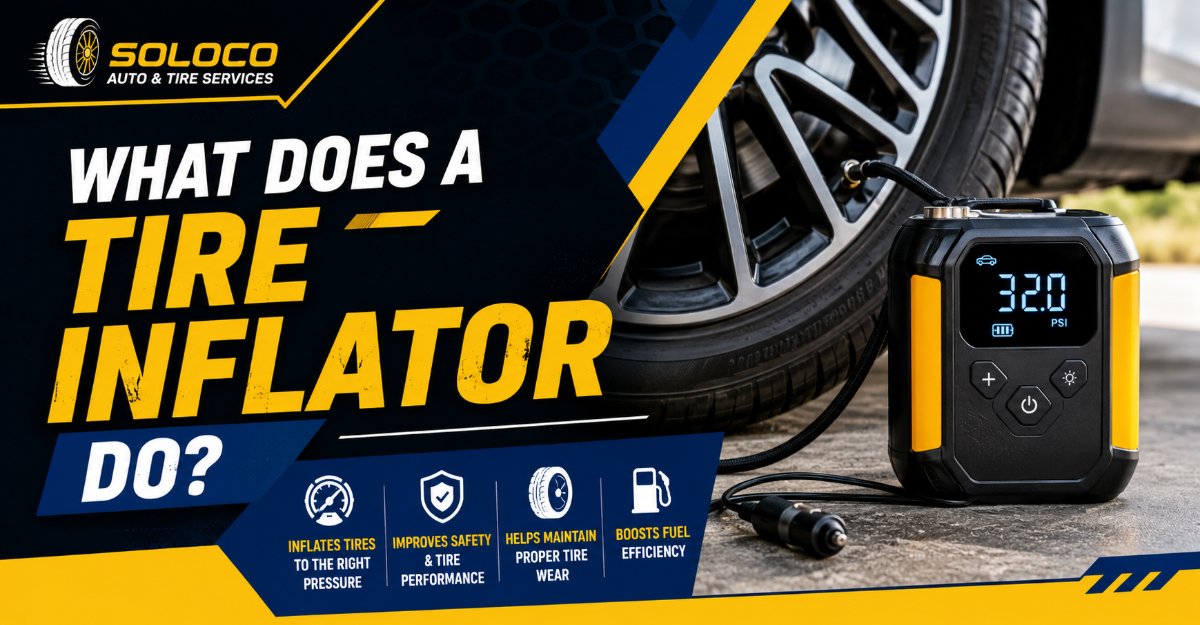
A tire inflator uses an electric motor to pump pressurized ambient air into a tire, actively increasing its internal pounds per square inch (PSI) to restore proper vehicle load capacity, fuel economy, and handling safety. By converting electrical power into mechanical pneumatic output, portable inflators eliminate the need for manual floor pumps or hazardous service station air lines.
At a Glance: Key Tire Inflator Facts
- Core Function: Pumps ambient air into vehicle tires to reach specified PSI levels safely and quickly.
- Power Sources: Typically runs on 12V DC vehicle outlets or 20V rechargeable lithium-ion battery packs.
- Pressure Limits: Standard consumer units generate a maximum of 120 to 150 PSI, far exceeding typical passenger vehicle requirements of 30 to 35 PSI.
- Speed Metrics: A quality portable compressor inflates a standard passenger car tire from 25 PSI to 32 PSI in under 2 minutes.
- Operational Limits: Most portable units require a strict 10-to-15-minute cool-down cycle after continuous runtime to prevent thermal motor damage.
How Does a Tire Inflator Work by the Numbers?
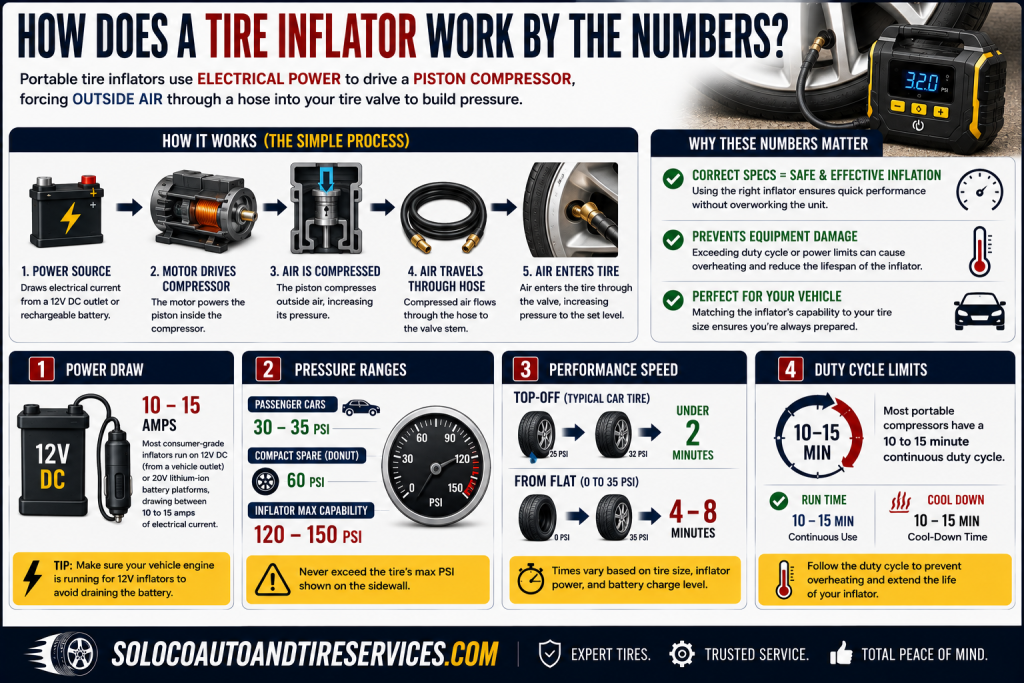
A portable tire inflator operates by drawing electrical current from an internal battery or vehicle source to drive a piston compressor, forcing outside air through a rubber hose into the valve stem. Understanding the exact quantitative specifications of these devices ensures you select the right tool for your vehicle type and avoid pushing equipment past its engineered thresholds.
- Power Draw: Most consumer-grade portable inflators operate on 12V DC power via a vehicle cigarette lighter socket or 20V rechargeable lithium-ion battery platforms, drawing between 10 and 15 amps of electrical current.
- Pressure Ranges: Standard passenger cars require 30 to 35 PSI, while compact spare donut tires require 60 PSI. Consumer portable inflators generally top out at a maximum capability of 120 to 150 PSI.
- Performance Speed: A high-quality portable unit can replenish a standard passenger tire from 25 PSI to 32 PSI in under 2 minutes, or take 4 to 8 minutes to fill a completely flat tire from 0 to 35 PSI.
- Duty Cycle Limits: Most portable compressors feature a 10-to-15-minute duty cycle, meaning they require an equal 10 to 15 minutes of cool-down time for every 10 to 15 minutes of continuous operation to protect internal components from melting.
What Are the Differences Between High-Volume and High-Pressure Pumps?
Standard tire inflators are high-pressure, low-volume machines designed specifically to overcome high internal tire resistance, whereas high-volume pumps move large quantities of air quickly at very low pressure. Using the wrong pump type for an application results in equipment burnout or complete failure to inflate the target object.
- High-Pressure Pumps (Tire Inflators): These units utilize small-diameter pistons engineered to pack dense air into a confined space. They easily achieve 30 to 100 PSI but push minimal cubic feet per minute (CFM) of air flow. They will struggle, overheat, and burn out if connected to large, low-pressure objects like inflatable rafts or air mattresses.
- High-Volume Pumps (Blower Pumps): These units use turbine impellers or diaphragm fans to move vast volumes of air rapidly. However, they generate virtually no back-pressure capability, meaning an air mattress pump cannot generate the high pressure needed to push open a car tire Schrader valve.
Why Do Heavy-Duty or RV Tires Fail With Standard Inflators?
Heavy-duty truck tires, large RV tires, and agricultural tractor tires require commercial-grade, dual-cylinder air compressors because of their massive air volume and high operating pressure requirements. A standard 12V consumer inflator will hit its thermal shut-off limit and battery exhaustion threshold long before filling an RV tire to its mandatory 80 to 110 PSI.
When attempting to inflate an 80 PSI RV tire with a standard 30 PSI passenger car inflator, the electric motor experiences continuous high-resistance back-pressure. This resistance spikes internal temperatures rapidly, triggering built-in thermal protection switches or melting the internal plastic piston seals. Operators requiring high-pressure capacity for commercial or recreational towing vehicles must invest in heavy-duty, hardwired 12V compressors or 120V workshop tank compressors rated for continuous high-PSI output.
How Does Extreme Cold Weather Affect Portable Tire Inflators?
In sub-zero temperatures, battery-powered tire inflators lose significant electrical efficiency, digital pressure gauges lag or freeze entirely, and rigid rubber air hoses become brittle and prone to snapping. Cold ambient temperatures chemically slow down the lithium-ion battery discharge rate, cutting the operational runtime of cordless inflators by up to 40 percent.
Furthermore, moisture trapped inside compressed air lines can freeze instantly when exposed to sub-freezing expansion, causing internal valve blockages. To mitigate cold-weather failure, store cordless inflators inside the warm cabin of your vehicle rather than the trunk, allow the unit to warm up before operating, and inspect rubber air hoses for cracking before attaching them to your tire valve stems.
When Does Standard Tire Placard Advice Fail?
General automotive maintenance advice states that you should always fill your tire to the exact PSI listed on the yellow placard located inside the driver-side door jamb. This standard factory advice fails immediately if you have installed aftermarket tires featuring a different load index, casing construction, or overall tire size compared to the original equipment manufacturer specifications.
Aftercoming oversized off-road tires or low-profile performance tires often require calculated custom pressures based on vehicle weight and load tables rather than the factory door sticker. Relying blindly on the factory placard for modified tire setups leads to improper tread contact patches, accelerated shoulder or center wear, and compromised emergency braking traction.
What Causes a False Bead Seal When Inflating a Tire?
If a tire has completely unseated from the wheel rim because the rubber bead is broken, a portable tire inflator lacks enough volume flow, measured in Cubic Feet per Minute (CFM), to force the tire against the wheel flange and create an airtight seal. The air pumped by a portable unit simply escapes out the side gaps faster than the small motor can build pressure.
Correcting a false bead seal requires high-CFM bursts of air delivered by a commercial shop air compressor equipped with a surge air tank, or specialized bead-seating techniques involving flammable aerosol blasts performed by professional technicians. Attempting to seat a completely unseated bead with a standard handheld inflator is mechanically impossible.
Why Is Relying Solely on Your TPMS Dashboard Light Dangerous?
Relying on your car’s Tire Pressure Monitoring System dashboard warning light to tell you when to stop inflating is hazardous because TPMS sensors often update on a significant delay or only activate while the vehicle is actively moving. This lag frequently results in severe over-inflation before the dashboard indicator light has time to register the new internal pressure.
Always rely on a physical, calibrated analog or digital pressure gauge attached directly to the inflator hose or valve stem during the inflation process. Never use the dashboard warning light as a real-time measurement tool while pumping air.
Can I Over-Inflate My Tire Until It Pops With a Portable Inflator?
No, a standard portable inflator will burn out and stall mechanically long before a modern passenger car tire reaches structural bursting point. Standard passenger car tires require roughly 200 PSI of internal pressure to burst structurally, which is far beyond the 120 to 150 PSI mechanical ceiling of standard consumer inflators.
However, over-inflating past your tire’s maximum sidewall rating, typically marked as 44 or 51 PSI, causes an excessively harsh ride, reduced braking footprint, and rapid center-tread wear. Always cross-reference your target inflation pressure against the maximum pressure rating stamped directly on the tire sidewall.
Why Does Pressure Drop Right After I Disconnect the Inflator?
The sudden pressure drop immediately following inflation is caused by thermal stabilization. Compressing ambient air generates friction and heat, making the air molecules inside the tire hot and artificially inflating the digital pressure reading on your gauge.
As the compressed air cools down to ambient outdoor temperature over the next 30 to 60 minutes, the kinetic energy drops, resulting in a natural pressure decrease of 1 to 3 PSI. Professionals compensate for this thermal drop by inflating tires 2 PSI above the target specification when working in cold environments, ensuring correct pressure once the tire stabilizes.
Can I Use a Tire Inflator If the Tire Has a Puncture?
Yes, you can use a tire inflator on a punctured tire, but only as an emergency temporary measure to drive a few miles to the nearest professional repair shop. If the puncture opening is larger than 1/4 inch, located on the vulnerable tire sidewall, or involving a torn bead area, a portable tire inflator is entirely useless because air escapes faster than the unit can pump it in.
For small tread punctures, running the inflator allows you to restore enough PSI to drive safely at low speeds to a service center without running on a dangerous flat tire.
How Do I Choose Between a Corded 12V and a Cordless Battery Inflator?
Choosing the right tire inflator depends on your vehicle usage patterns, storage preferences, and willingness to manage power supplies. Evaluating the distinct operational trade-offs ensures you select a tool that matches your roadside emergency requirements.
| Feature / Factor | Corded 12V Inflator | Cordless Battery-Powered Inflator |
|---|---|---|
| Power Source | Vehicle 12V accessory socket (cigarette lighter) | Rechargeable lithium-ion battery pack |
| Runtime Limit | Limited only by vehicle engine running status | Limited by battery capacity (typically 2 to 4 tires per charge) |
| Portability | Restricted by cord length and vehicle proximity | Fully portable, usable anywhere without vehicle power |
| Reliability Risk | Blown vehicle fuses or loose accessory sockets | Dead battery if left uncharged over long periods |
| Best Suited For | Long road trips, large SUVs, and emergency kits | Quick daily top-offs, bicycles, motorcycles, and sports gear |
What Is the Correct Duty Cycle Management Protocol?
Managing your inflator’s duty cycle correctly prevents thermal meltdown and ensures your equipment survives years of reliable service. Ignoring manufacturer duty cycle guidelines is the leading cause of premature motor failure in portable air compressors.
- Check Specifications: Review your specific inflator manual to identify its rated duty cycle, typically ranging from 10 minutes on to 10 minutes off for standard consumer units.
- Monitor Runtime: Use a stopwatch or phone timer when pumping low or completely flat tires from 0 PSI to ensure continuous runtime does not exceed 10 minutes.
- Initiate Cool-Down: Power down the unit immediately upon reaching your time limit and disconnect it from power, allowing ambient air to cool the aluminum piston housing.
- Resume Inflation: Once the compressor housing feels cool to the touch (after 10 to 15 minutes of rest), resume inflation until the target PSI is achieved.
How Do Digital Auto-Shutoff Tire Inflators Prevent Human Error?
Digital auto-shutoff tire inflators feature integrated microprocessors that allow users to pre-set a target PSI value before stopping the pump automatically once that exact threshold is reached. This technology completely eliminates human error, preventing both dangerous over-inflation and tedious manual monitoring.
When using an auto-shutoff model, you simply use the digital interface buttons to dial in your exact vehicle requirement—for example, 33 PSI—and press the power trigger. The internal pressure sensor monitors real-time back pressure continuously, cutting power instantly the millisecond the target value registers on the digital board. This automation prevents accidental over-inflation and protects the electric motor from straining against closed back-pressure.
What Are the Steps to Safely Inflate a Low Car Tire From Scratch?
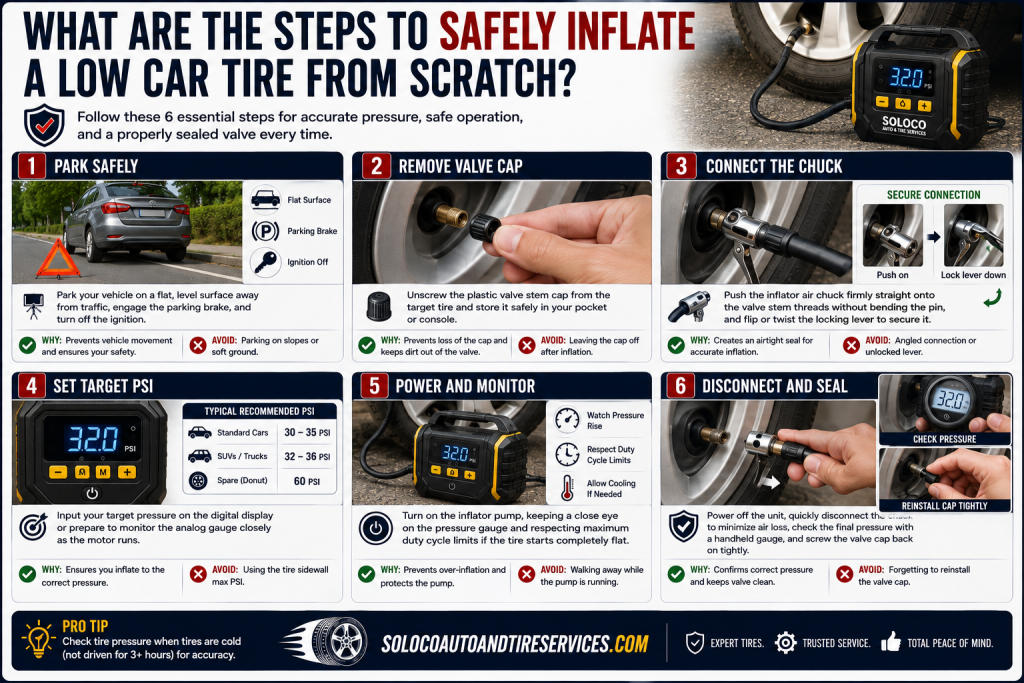
Properly executing a tire inflation sequence ensures accurate pressure readings, mechanical safety, and correct valve stem sealing. Following a structured procedure prevents common mistakes made by roadside novices.
- Park Safely: Park your vehicle on a flat, level surface away from traffic, engage the parking brake, and turn off the ignition.
- Remove Valve Cap: Unscrew the plastic valve stem cap from the target tire and store it safely in your pocket or console so it does not get lost in gravel or grass.
- Connect the Chuck: Push the inflator air chuck firmly straight onto the valve stem threads without bending the pin, and flip or twist the locking lever to secure it.
- Set Target PSI: Input your target pressure on the digital display or prepare to monitor the analog gauge closely as the motor runs.
- Power and Monitor: Turn on the inflator pump, keeping a close eye on the pressure gauge and respecting maximum duty cycle limits if the tire starts completely flat.
- Disconnect and Seal: Power off the unit, quickly disconnect the chuck to minimize air loss, check the final pressure with a handheld gauge, and screw the valve cap back on tightly.
How Often Should You Check and Correct Your Tire Pressure?
Checking and adjusting your tire pressure should be performed at least once a month and prior to embarking on any long-distance highway road trips. Tires naturally lose approximately 1 to 2 PSI of pressure per month due to natural air permeation through rubber compounds, as well as fluctuating ambient outdoor temperatures.
Maintaining proper tire pressure ensures optimal fuel efficiency, prevents uneven tire wear across the tread contact patch, and maintains responsive vehicle handling during emergency braking and cornering maneuvers.
What Maintenance Do Portable Tire Inflators Require?
Portable tire inflators require minimal maintenance, but basic preventive care ensures the device operates reliably when an emergency strikes on the roadside. Neglecting storage conditions leads to internal corrosion and electrical failure.
- Battery Maintenance: If you own a cordless lithium-ion inflator, recharge the battery pack every three to six months to prevent deep discharge degradation.
- Hose Inspection: Periodically check rubber and braided air hoses for microscopic cracks, abrasions, or loose threaded fittings that cause pneumatic air leaks.
- Clean Storage: Keep the unit stored in a clean, dry canvas carrying case inside your trunk, protecting digital screens and internal motors from moisture and heavy shifting cargo.
The Bottom Line
A tire inflator is an essential automotive tool that converts electrical power into pneumatic force to maintain correct tire PSI, ensuring optimal vehicle safety, braking performance, and fuel economy. By understanding equipment duty cycles, recognizing the limitations of portable compressors against heavy-duty or unseated tires, and relying on physical pressure gauges rather than lagging dashboard warnings, motorists can manage tire maintenance with precision. Always account for thermal cooling drops and follow manufacturer guidelines to ensure your inflator is ready when unexpected pressure drops occur.