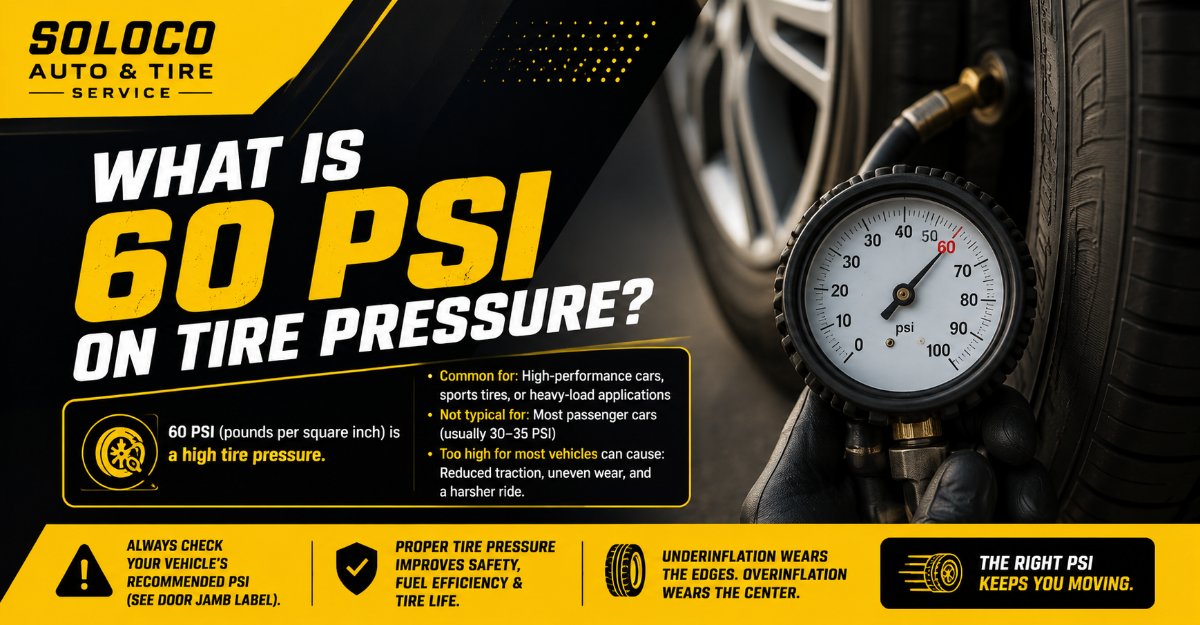
60 PSI is a high-pressure setting typically reserved for temporary donut spare tires, heavy-duty commercial trucks, and specialized trailers, making it dangerously overinflated for standard passenger cars.
Driving a regular sedan or SUV at this level severely degrades handling, accelerates center tread wear, and increases blowout risks.
At a Glance: Key Facts About 60 PSI Tire Pressure
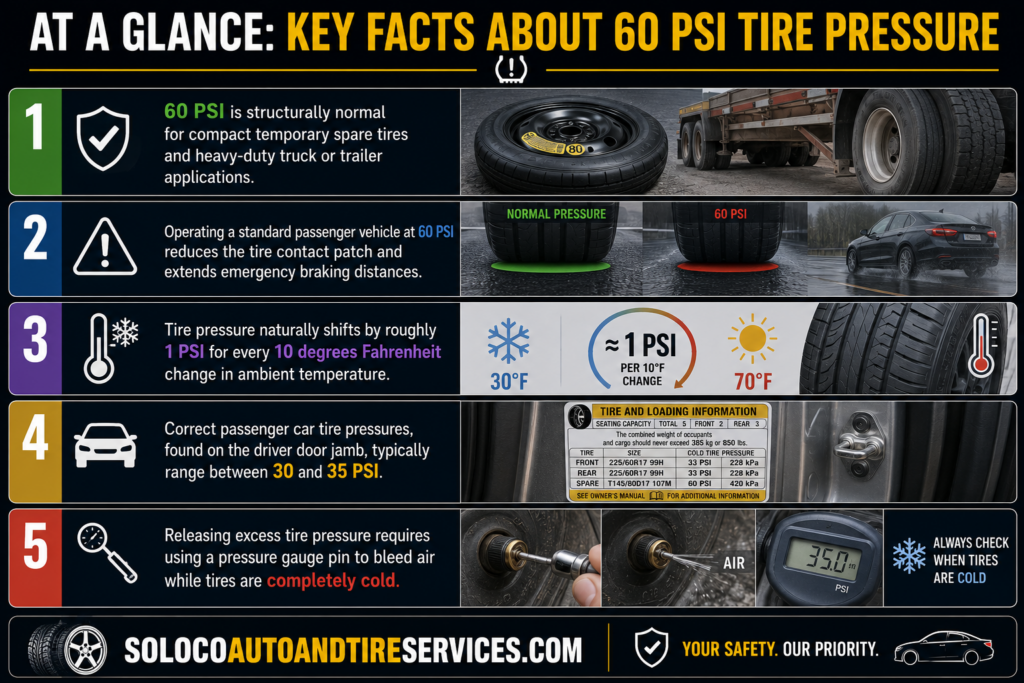
- 60 PSI is structurally normal for compact temporary spare tires and heavy-duty truck or trailer applications.
- Operating a standard passenger vehicle at 60 PSI reduces the tire contact patch and extends emergency braking distances.
- Tire pressure naturally shifts by roughly 1 PSI for every 10 degrees Fahrenheit change in ambient temperature.
- Correct passenger car tire pressures, found on the driver door jamb, typically range between 30 and 35 PSI.
- Releasing excess tire pressure requires using a pressure gauge pin to bleed air while tires are completely cold.
What Is 60 PSI on Tire Pressure?
60 PSI represents an internal inflation pressure of 60 pounds per square inch, which is an exceptionally high measurement for everyday automotive use. To put this into perspective, standard passenger cars require a cold inflation pressure between 30 and 35 PSI.
When a tire registers 60 PSI, it is holding nearly double the air volume design intent for a typical commuter vehicle. This level of pressure creates rigid structural tension inside the tire carcass, altering how the rubber interacts with the road surface.
Is 60 PSI Safe for a Standard Car?
No, 60 PSI is not safe for a standard car under any normal driving circumstances. Passenger sedans, hatchbacks, crossovers, and light SUVs are engineered to operate on lower pressures that allow the tire sidewall and tread to flex harmoniously with the suspension. Inflating standard passenger tires to 60 PSI turns them into rigid balloons.
This improper inflation causes the vehicle to bounce erratically, reduces mechanical grip on wet or dry asphalt, and places excessive stress on wheel alignments and suspension bushings.
What Is the Difference Between Door Sticker Pressure and Maximum Tire Sidewall Pressure?
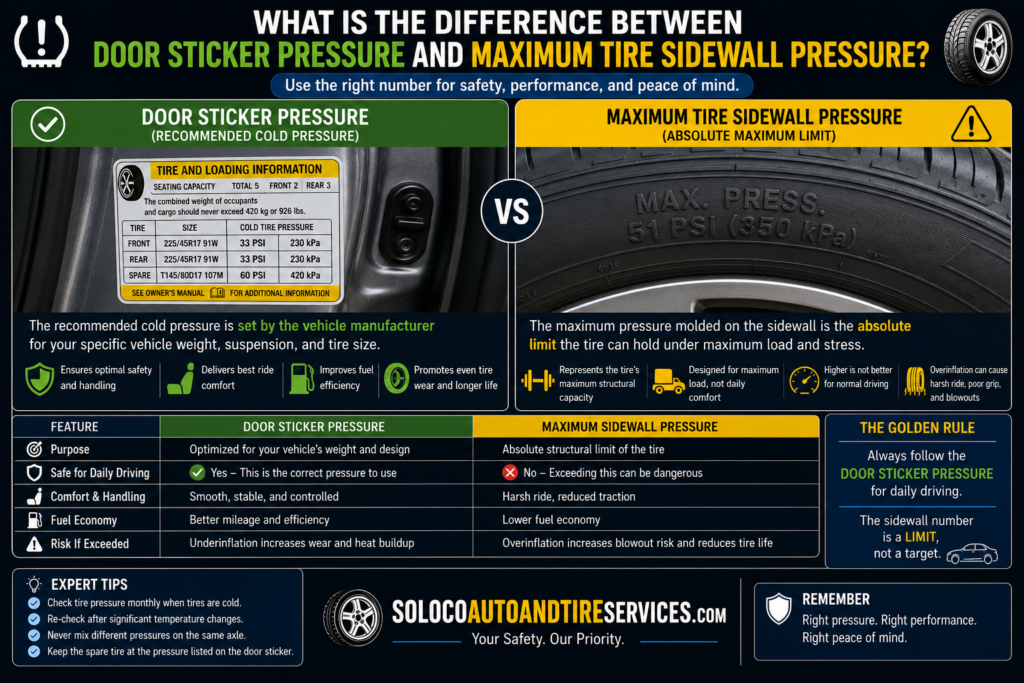
The recommended cold pressure located on the driver side door jamb placard is the optimal pressure designed by vehicle manufacturers for safety, ride comfort, and fuel efficiency.
Conversely, the maximum inflation pressure molded directly onto the tire sidewall indicates the absolute limit the tire can safely hold under maximum vehicle load. Drivers must always follow the door placard for daily driving rather than inflating tires to the maximum number listed on the sidewall.
What Happens if I Drive My Normal Passenger Car at 60 PSI?
Driving a normal passenger car at 60 PSI results in a harsh ride, poor traction, and rapid uneven wear. Because the tire balloons outward under high pressure, the shoulder treads lift off the asphalt, leaving only the center strip of rubber in contact with the road.
This drastically reduces your vehicle braking efficiency and causes the center tread to wear down prematurely. Furthermore, every road imperfection, pothole, and expansion joint is transferred directly into the cabin without the cushioning effect of proper tire flex.
Will a Tire Explode Immediately at 60 PSI?
No, a tire will not explode immediately when inflated to 60 PSI because modern tires are engineered with structural safety margins that withstand pressures exceeding 100 PSI. However, running a standard tire at 60 PSI makes it dangerously brittle and vulnerable to structural failure.
The moment the stiffened tire impacts a sharp pothole or road debris, the lack of shock absorption can cause an instant blowout or sidewall rupture.
How Does 60 PSI Affect Braking Distance and Tire Contact Patch?
High tire pressure shrinks the contact patch of a tire to a fraction of its intended surface area, significantly increasing emergency stopping distances.
When a tire is overinflated to 60 PSI, only a narrow strip in the middle of the tread touches the road. This minimal footprint lacks the friction necessary to halt a vehicle quickly, especially in wet or slippery weather conditions where wider contact patches are vital to prevent hydroplaning.
How Does High Tire Pressure Impact Vehicle Suspension Components?
Operating with tires inflated to 60 PSI forces your vehicle suspension system to absorb severe kinetic shocks that the tires would normally filter out.
Shock absorbers, struts, control arm bushings, and ball joints experience accelerated fatigue because they must absorb harsh impacts directly from the road. Over time, this constant pounding leads to premature wear of steering components and costly mechanical repairs.
Which Vehicles Actually Require 60 PSI Tire Pressure?
Vehicles that genuinely require 60 PSI or higher include temporary compact spare tires, heavy-duty commercial trucks, and heavy towing trailers.
These specialized applications require higher internal pressures to bear intense loads or maintain structural integrity on narrow profiles. Passenger cars are never included in this category, and assuming all vehicles use the same pressure standard is a dangerous mistake.
Why Do Temporary Donut Spare Tires Need 60 PSI?
Temporary donut spare tires require exactly 60 PSI because they feature a much smaller physical volume and a narrow profile. To safely support the weight of a full-sized vehicle on a fraction of the standard rubber footprint, the air pressure inside must be significantly higher.
Without 60 PSI, a compact spare would compress too much under vehicle weight and risk slipping off the wheel rim entirely.
How Do Heavy-Duty Trucks and Trailers Utilize 60 PSI or Higher Ratings?
Heavy-duty trucks using Load Range D or E tires often require 65 to 80 PSI, while specialized trailer tires frequently require 50 to 65 PSI.
These high ratings are mandatory when hauling massive payloads or heavy tongue weights. The elevated pressure prevents excessive sidewall flexing, which generates destructive internal heat during long-distance highway hauling.
How Does Outdoor Temperature Change a Tire From 40 PSI to 60 PSI?
Tire pressure fluctuates by approximately 1 PSI for every 10 degrees Fahrenheit change in ambient temperature. If you inflate a tire in a cold garage and drive onto a hot summer highway, friction and rising air temperatures can easily cause the internal pressure to spike dangerously.
While a jump from 40 to 60 PSI requires extreme temperature shifts or friction combined with initial overinflation, thermal expansion remains a critical factor in pressure management.
How Do I Fix It if My Tiers Are Accidentally Inflated to 60 PSI?
To fix overinflated tires, you must manually bleed the excess air using a tire pressure gauge. Press the small metal pin located inside the center of the tire valve stem to release air in short bursts. Check the pressure frequently with your gauge until it matches the exact specification listed on your vehicle door placard.
How Long Must a Car Sit for an Accurate Cold Tire Pressure Reading?
An accurate cold tire pressure reading requires the vehicle to sit parked out of direct sunlight for at least three hours, or driven less than one mile at low speeds.
Driving warms up the air molecules inside the tire, causing them to expand and artificially inflate pressure readings by 3 to 5 PSI. Always check and adjust your pressures before starting a morning commute.
What Tools Are Required to Safely Release Excess Air Pressure?
Releasing excess air pressure requires a standard dial or digital tire pressure gauge equipped with a deflation pin or a dedicated defroster valve tool.
Avoid using random sharp objects like keys or nails to press the valve core, as this can permanently damage the rubber seal inside the valve stem and cause a slow leak. A proper pencil gauge or digital gauge with a bleed valve provides precise control.
How Do After-Market Wheel Swaps Change Proper Inflation Rules?
Swapping factory wheels for larger rims with low-profile tires renders the factory door placard inaccurate, requiring consultation with a tire load inflation table.
Low-profile after-market tires often require different pressure baselines to support vehicle weight without damaging the rim edges. Consulting the tire manufacturer or a professional installer ensures proper inflation for custom setups.
Does Running Tires at 60 PSI Trigger a Tire Pressure Monitoring System Warning?
Yes, running tires at 60 PSI will trigger the Tire Pressure Monitoring System dashboard warning light, though many drivers misunderstand why.
While TPMS sensors are typically programmed to illuminate when pressure drops too low, modern advanced systems can also flag abnormal pressure deviations that fall outside safe operating thresholds. If your dashboard warning illuminates after an air fill, check your pressures immediately against the door placard.
The Bottom Line
Maintaining correct tire pressure is vital for vehicle safety, handling longevity, and fuel economy. While 60 PSI is an essential specification for temporary donut spares and heavy-duty commercial trailers, it is dangerously high for standard passenger cars.
Always verify your target inflation numbers against the manufacturer placard on your driver door jamb rather than relying on guesswork or tire sidewall maximums.