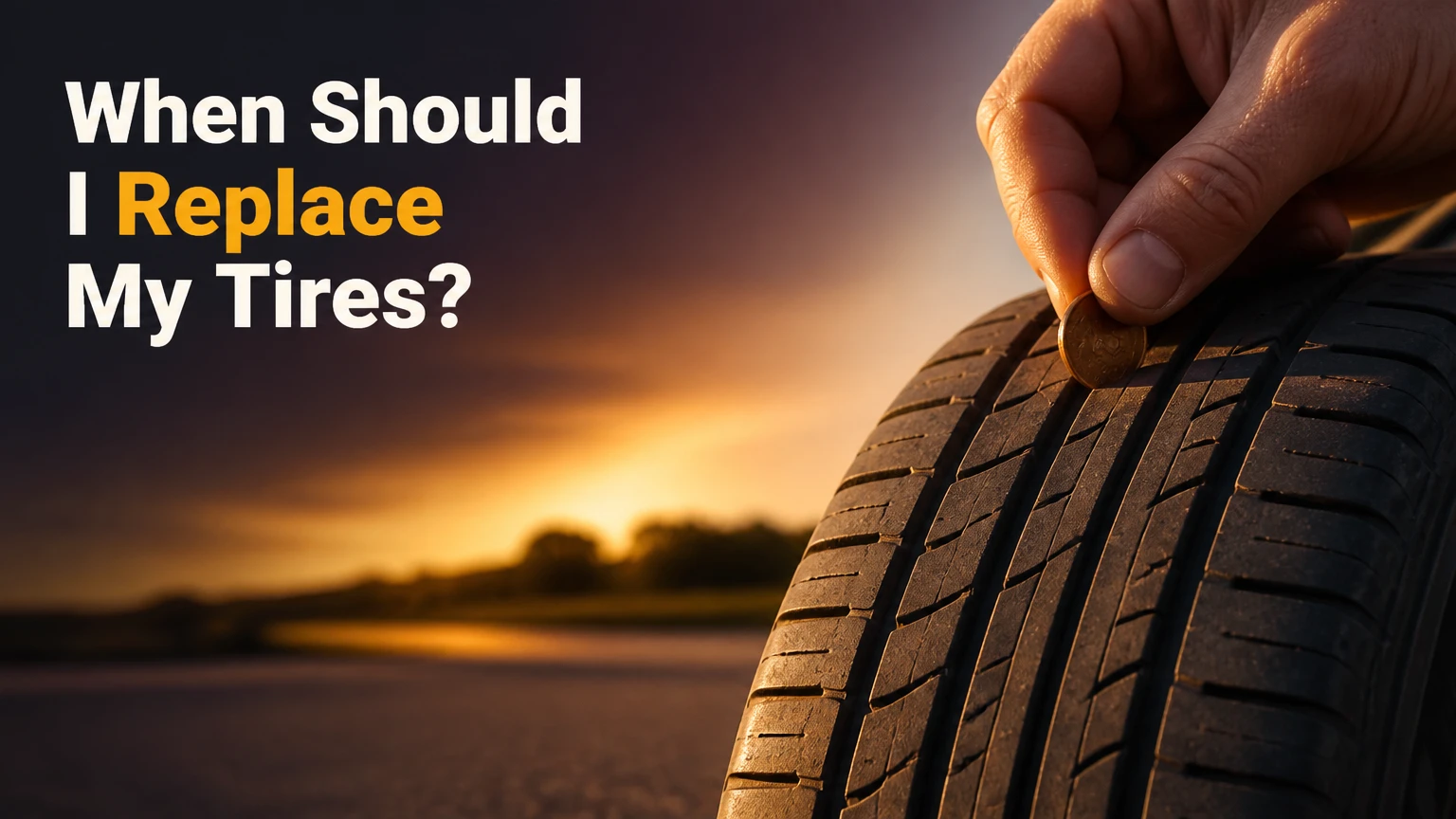
You must replace your tires immediately when they reach a tread depth of 2/32 of an inch, hit 6 to 10 years of age from the manufacturing date, or show visible structural damage like sidewall bubbles or deep dry rot. While a general mileage rule suggests replacement every 50,000 miles, factors like vehicle weight, climate, and driving habits alter actual tire lifespan significantly.
At a Glance: Essential Tire Replacement Facts
- The absolute legal minimum tread depth is 2/32 of an inch, while wet climates demand 4/32 of an inch and snow requires 5/32 of an inch.
- Tires reach their maximum structural lifespan at 10 years regardless of remaining tread due to chemical oxidation.
- Electric vehicles wear through tire tread 20% to 50% faster than internal combustion engine vehicles due to increased weight and instant torque.
- Punctures in the tire sidewall or shoulder cannot be repaired and mandate immediate tire replacement.
- All-Wheel Drive vehicles require replacing all four tires simultaneously to prevent severe damage to the central differential.
What is the Minimum Tread Depth for Safe Driving?
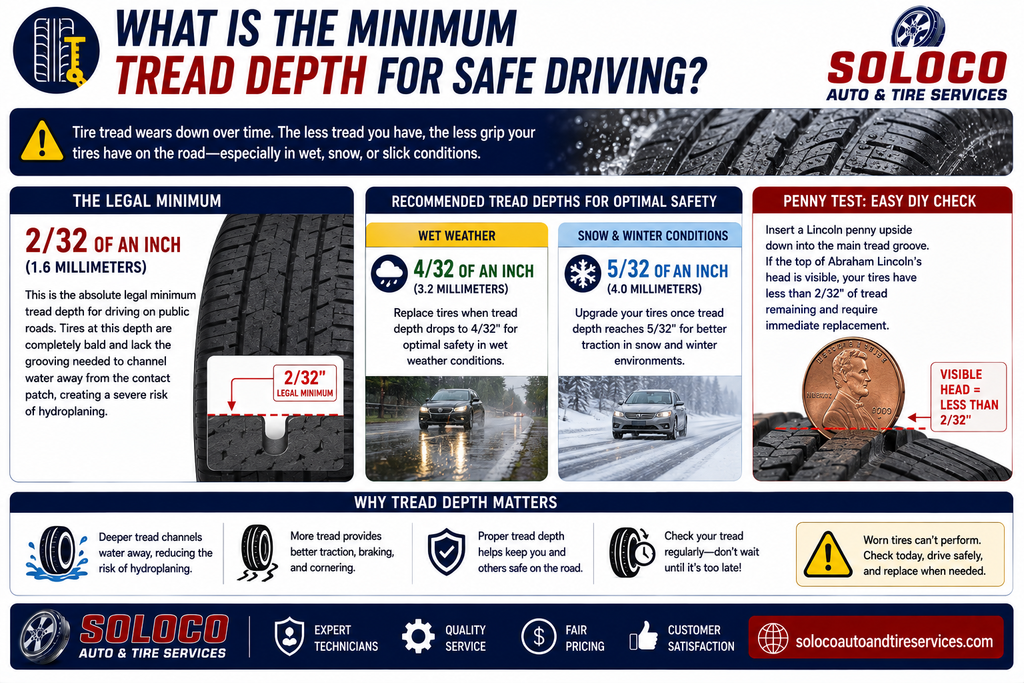
The absolute legal minimum tread depth for driving on public roads is 2/32 of an inch, which equals 1.6 millimeters. Tires operating at this depth are completely bald and lack the grooving required to channel water away from the contact patch, creating a severe risk of hydroplaning.
For optimal safety in wet weather conditions, safety experts recommend replacing tires when tread depth drops to 4/32 of an inch. Drivers navigating snowy and winter environments should upgrade their tires once tread depth reaches 5/32 of an inch. To test this manually without a tread depth gauge, insert a Lincoln penny upside down into the principal tread grooves. If the top of Abraham Lincoln’s head remains completely visible, your tires have less than 2/32 of an inch of tread remaining and require immediate replacement.
How Many Years Do Tires Last Before They Expire?
Vehicle manufacturers and tire safety experts establish 6 years as the threshold for professional tire inspections and 10 years as the absolute maximum lifespan for any tire. Rubber compounds degrade over time through a natural chemical process called oxidation, causing the material to harden and lose elasticity even if the vehicle sits parked in a garage with pristine tread.
You can verify the exact age of any tire by inspecting the DOT code stamped into the outer sidewall. Locate the letters DOT followed by a series of numbers and letters, ending in a four-digit code. The final four digits represent the manufacturing date, where the first two digits signify the week of production and the last two digits represent the manufacturing year. For example, a DOT code ending in 3221 means the tire was manufactured during the 32nd week of 2021.
What Are the Mileage Limits for Different Tire Types?
All-season passenger car tires typically last between 40,000 and 80,000 miles under normal highway driving conditions, regular rotation schedules, and proper inflation. Performance tires and summer tires utilize softer rubber compounds engineered for maximum cornering grip, limiting their typical operational lifespan to between 20,000 and 40,000 miles.
These mileage expectations serve as general guidelines rather than strict guarantees. Drivers who frequently navigate unpaved roads, aggressive mountain switchbacks, or stop-and-go urban traffic experience accelerated wear that cuts these mileage ranges in half. Regular alignment checks and monthly pressure adjustments help vehicles achieve the upper limits of their designed mileage brackets.
What Structural Damage Requires Immediate Tire Replacement?
You must replace your tires immediately—even if they possess deep tread and fall well within their age limit—if they display any form of structural failure. Sidewall bulges or blisters indicate that the internal fabric cords and steel belts have ruptured, representing an imminent blowout hazard.
Deep cracking and fissuring in the sidewall or tread grooves, known as dry rot, signal severe UV degradation and rubber decomposition. Furthermore, if steel belts or internal fabric cords show through worn rubber, the tire is compromised. Punctures located directly on the sidewall or the shoulder transition zone cannot be safely patched and require a complete tire replacement.
Do I Need to Replace All Four Tires at Once?
All-Wheel Drive and Four-Wheel Drive vehicles require replacing all four tires simultaneously to protect the vehicle’s drivetrain and center differential. A brand-new tire has a larger outer circumference than worn tires with reduced tread depth, forcing the differential gears to rotate at mismatched speeds constantly and leading to catastrophic mechanical failure.
For Front-Wheel Drive and Rear-Wheel Drive vehicles, replacing tires in axle pairs rather than all four at once is acceptable. The replacement tires must match the existing tires in speed rating, load index, and general tread pattern to maintain predictable vehicle handling characteristics across varying road surfaces.
Should New Tires Go on the Front or Back Wheels?
Always install brand-new replacement tires on the rear axle of your vehicle, regardless of whether you drive a Front-Wheel Drive, Rear-Wheel Drive, or All-Wheel Drive car. Fresh tread on the rear tires maximizes wet-weather grip and prevents the rear end of the vehicle from sliding outward during emergency braking or cornering maneuvers.
When worn tires sit on the rear axle, a condition called oversteer occurs on wet pavement, causing the vehicle to spin out of control. Rear-axle hydroplaning is exceptionally difficult for average drivers to correct, whereas front-axle traction loss results in understeer, which feels like the car plowing straight ahead and remains easier to manage.
When Can a Punctured Tire Be Patched Instead of Repaired?
A punctured tire can be safely repaired using a combination plug and patch method only when the damage meets strict industry parameters. The puncture must measure one-quarter of an inch or 6 millimeters in diameter or smaller, and the injury must reside strictly within the central tread area away from the sidewall and shoulder.
Punctures located on the sidewall cannot be repaired because the sidewall flexes continuously during vehicle operation, causing patch adhesives to fail. Furthermore, tires cannot be repaired if they feature multiple overlapping punctures, previous improper exterior-only string plugs, or tread depth readings that have already dropped below the legal 2/32-inch limit.
Why Do Electric Vehicles Wear Out Tires Faster?
Electric vehicles wear through tire tread 20% to 50% faster than comparable gasoline-powered vehicles due to increased vehicle weight from heavy battery packs and instant torque delivery to the wheels. The instantaneous power surge delivered by electric motors creates microscopic slip at the contact patch during acceleration, shearing rubber away from the tread blocks at an accelerated rate.
Owners of electric vehicles must monitor tire pressure monthly and rotate tires every 3,000 to 5,000 miles to counteract this rapid wear cycle. Selecting specialized EV-rated tires featuring reinforced sidewalls and low-rolling-resistance rubber compounds helps mitigate premature replacement intervals.
How Do Hot Climates and UV Exposure Degrade Tire Rubber?
Extreme ambient temperatures and intense solar ultraviolet radiation in hot desert climates accelerate the chemical oxidation of tire rubber compounds. High pavement temperatures soften the tread blocks, making them more susceptible to abrasive wear, while UV rays break down the antioxidant chemicals embedded in the rubber matrix.
Vehicles parked outdoors in high-temperature regions often experience severe sidewall cracking and rubber embrittlement by year five, even if the vehicle accumulates low annual mileage. Drivers in hot climates should inspect their tires semi-annually for micro-fissures and utilize tire covers when parked for extended periods.
What Happens to Tires If You Barely Drive Your Car?
Low-mileage vehicles that travel fewer than 3,000 miles per year face severe internal degradation despite retaining thick tread depth. When tires remain stationary for months at a time, the vehicle weight resting on a single patch of rubber creates flat-spotting and accelerates localized structural stress.
Furthermore, internal steel belts and body plies corrode over time due to ambient humidity trapped within the tire cavity. Drivers who drive infrequently must rely on the 6-to-10-year absolute age limit rather than remaining tread depth when deciding when to install fresh tires.
How Do UTQG Treadwear Ratings Predict Tire Lifespan?
The Uniform Tire Quality Grading system assigns a three-part rating to passenger tires, including a numerical treadwear grade representing relative lifespan compared to a baseline tire tested at 100. A tire rated 400 offers approximately four times the treadwear durability of the baseline test tire, while a rating of 600 indicates even greater longevity.
These government-mandated UTQG ratings serve as a useful comparative tool for shopping, but they are not an absolute guarantee of mileage. Driving style, climate, suspension geometry, and road surface abrasiveness directly influence whether a tire achieves or falls short of its rated treadwear number.
What Causes Uneven Tire Wear Like Cupping and Feathering?
Uneven tire wear patterns such as cupping, feathering, and edge-specific baldness indicate mechanical faults within the vehicle suspension, steering geometry, or wheel balance. Feathering occurs when tread ribs wear faster on one side than the other, pointing to a severe wheel alignment toe-in or toe-out issue.
Cupping, or scalloping, produces high and low spots around the circumference of the tread and stems from worn shock absorbers, failing strut mounts, or unbalanced wheel assemblies. Replacing the tires without correcting the underlying suspension or alignment problem causes the new tires to develop identical destructive wear patterns within thousands of miles.
How Does Improper Tire Pressure Ruin Tread Life?
Improper inflation pressure distorts the tire’s contact patch against the road surface, causing localized wear patterns that ruin tread life prematurely. Overinflation causes the center portion of the tread to carry the entire vehicle weight, wearing out the middle ribs while leaving the shoulders untouched.
Underinflation forces the outer edges of the tread to bear excessive structural loads, generating excessive friction and heat that accelerates shoulder wear and reduces fuel economy. Checking tire pressure monthly using a calibrated digital gauge ensures the contact patch remains flat and extends tire life to its maximum potential.
How Do I Maximize My Tire Life and Prevent Premature Replacement?
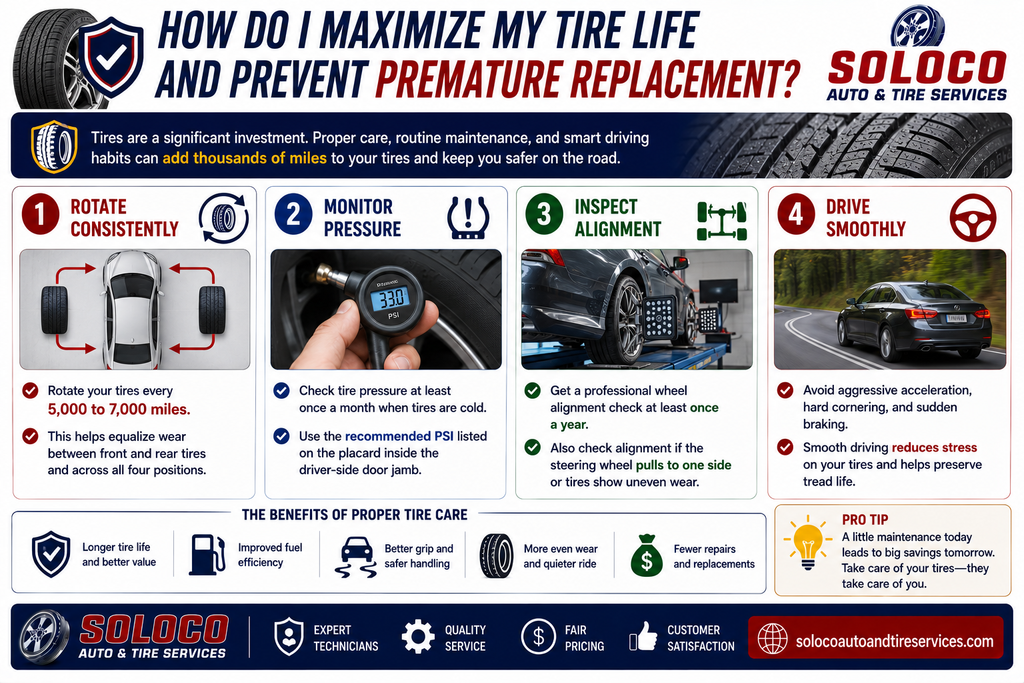
- Rotate consistently: Rotate your tire position every 5,000 to 7,000 miles to equalize front and rear wear rates across all four positions.
- Monitor pressure: Verify correct pressure monthly against the placard located inside the driver-side door jamb.
- Inspect alignment: Schedule a professional wheel alignment check annually or whenever the steering wheel pulls to one side.
- Drive smoothly: Avoid aggressive acceleration, hard cornering, and sudden braking maneuvers that strip rubber from the tread blocks.
The Bottom Line
Deciding when to replace your tires depends on monitoring three distinct metrics: reaching the 2/32-inch legal tread depth limit, hitting the 6-to-10-year manufacturing age threshold, or discovering structural damage like sidewall bulges and deep dry rot. General mileage expectations fail when confronted with heavy electric vehicles, extreme hot climates, or infrequent driving habits. Prioritizing timely replacements and proper maintenance safeguards vehicle handling performance and prevents dangerous blowout failures on the road.