The size of a tire is located directly on its outer sidewall, printed in raised rubber letters and numbers alongside the driver side door jamb sticker and the vehicle owner manual. This standardized code reveals critical structural and performance dimensions necessary for safe replacement.
At a Glance
- Tire sizes appear as a standardized alphanumeric sequence like P215/65R15 95H on the outer rubber sidewall.
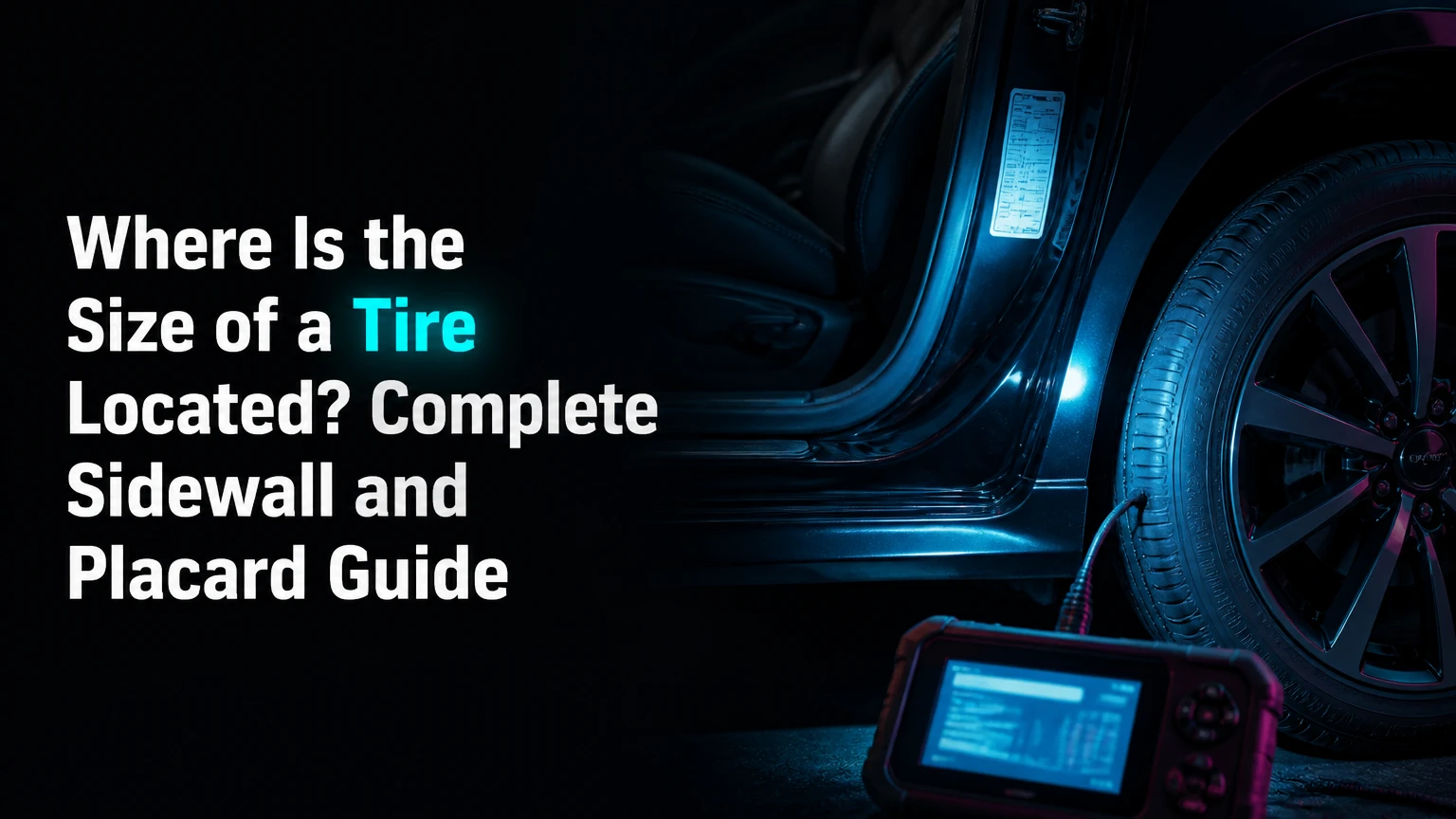
- The vehicle safety placard is permanently attached to the driver side door pillar or inside the glove box.
- Section width is measured in millimeters from sidewall to sidewall across the widest point.
- Wheel diameter specifies the exact rim size in inches that the tire interior is engineered to fit.
- Mixing mismatched tire sizes across a single axle can permanently damage mechanical differentials and trigger ABS sensor faults.
How Do You Read a Standard Tire Size Code?
A standard tire size code is read by breaking down the alphanumeric sequence into distinct performance and dimensional blocks. Using the common example P215/65R15 95H, each segment communicates a specific engineering specification established by the Tire and Rim Association.
- Service Type Prefix: The starting letter P designates a Passenger car tire, while LT stands for Light Truck.
- Section Width: The three-digit number following the prefix measures the section width in millimeters from outer sidewall to inner sidewall.
- Aspect Ratio: The two-digit number after the slash represents the sidewall height as a percentage of the section width.
- Internal Construction: The letter R signifies Radial construction, which is standard for modern passenger vehicles.
- Wheel Diameter: The two-digit number indicates the required wheel rim diameter in inches.
- Load Index: The numeric code corresponds to the maximum weight capacity a fully inflated tire can support.
- Speed Rating: The final letter designates the maximum safe operating speed capability of the tire under proper load.
How Do You Calculate Total Tire Diameter from Sidewall Numbers?
Total tire diameter is calculated using a mathematical formula that combines the wheel rim size with twice the height of the tire sidewall. This calculation is essential when drivers want to alter their wheel setups without causing mechanical rubbing against vehicle fenders or suspension components.
- Convert Section Width to Inches: Multiply the section width in millimeters by the aspect ratio percentage, then divide the result by 25.4 to convert millimeters into inches.
- Calculate Sidewall Height: For a 215/65R15 tire, multiply 215 by 0.65 to get 139.75 millimeters of sidewall height, which equals 5.5 inches.
- Double the Sidewall: Multiply the single sidewall height by two to account for both the top and bottom sections of the tire circle ($5.5 \times 2 = 11.0$ inches).
- Add Wheel Diameter: Add the wheel rim diameter in inches to the total sidewall height ($11.0 + 15.0 = 26.0$ inches total tire diameter).
What Is the Difference Between P-Metric and Euro-Metric Tire Sizes?
P-metric and Euro-metric tire sizes differ primarily in their load-carrying capacity calculations at identical inflation pressures, even though their physical dimensions look identical on the sidewall. P-metric tires are regulated by US standards, whereas Euro-metric tires follow European Tyre and Rim Technical Organisation standards.
- Load Capacity Standards: Euro-metric tires often have slightly different load capacities than P-metric tires of the exact same numerical dimension because they use distinct load-inflation tables.
- Interchangeability: You can generally replace a P-metric tire with a Euro-metric tire of the same size, provided the load index on the new tire meets or exceeds the vehicle manufacturer original equipment requirements.
- Inflation Pressure Sensitivity: Euro-metric tires may require specific vehicle-manufacturer pressure adjustments to carry the identical weight load as their P-metric counterparts.
Why Do Off-Road Trucks Use Flotation Tire Sizes?
Off-road and heavy truck tires use flotation sizing because their measurement system prioritizes overall ground footprint, flotation performance in soft terrain, and total height in inches rather than metric aspect ratios. A classic flotation size looks like 33×12.50R15.
- Total Height: The first number indicates the total outer diameter of the tire in inches (33 inches tall).
- Section Width: The second number specifies the cross-sectional width of the tire in inches (12.50 inches wide).
- Rim Diameter: The final number denotes the wheel rim diameter in inches that the tire mounts onto (15 inches).
- Terrain Application: This sizing format helps off-road drivers quickly calculate vehicle lift requirements and ground clearance without converting metric percentages.
What Do Commercial Metric Tire Sizes with a “C” Mean?
Commercial metric tire sizes contain the letter C placed directly after the rim diameter designation, such as 195/70R15C, indicating heavy-duty construction built for commercial cargo vans and light utility trucks. These tires feature reinforced internal carcasses designed to handle much higher operating pressures and sustained heavy payloads.
- Enhanced Ply Rating: Commercial C-type tires utilize stronger internal steel belts and polyester cords to resist sidewall flexing under heavy vehicle loads.
- Higher Inflation Pressures: They frequently require inflation pressures exceeding 50 to 80 PSI, which standard passenger vehicle tires cannot safely maintain.
- Application Rule: Never install standard passenger P-metric tires on a vehicle engineered for commercial C-rated tires, as the lower load index will cause structural tire failure under heavy payloads.
Can You Put a Larger or Smaller Tire Size on Current Rims?
You can install a slightly larger or smaller tire size on your current rims, provided the new tire width stays within the approved rim width range specified by the tire manufacturer. Deviating more than 3 percent from the original equipment rolling diameter causes speedometer calibration errors and transmission shift anomalies.
- Rim Width Compatibility: A 215mm wide tire requires a wheel rim width typically between 6.0 and 7.5 inches wide. Installing it on an excessively narrow or wide rim compromises bead seating.
- Suspension Clearance: Going wider or taller risks rubbing against internal suspension struts, inner plastic fender liners, and brake calipers during full steering lock turns.
- Gearing and Speedometer: Increasing overall tire diameter makes your speedometer read slower than your actual vehicle speed, increasing the risk of unintended speeding citations.
What Happens If You Mix Different Tire Sizes on the Same Axle?
Mixing different tire sizes on the same axle creates dangerous handling imbalances, compromises emergency braking traction, and can permanently destroy your vehicle’s mechanical differential. Even slight discrepancies in rolling circumference force differential gears to spin constantly at mismatched speeds, generating destructive heat.
- Differential Destruction: Open and limited-slip differentials will overheat and wear out prematurely when forced to compensate for different wheel rotational speeds over long distances.
- Electronic Stability Failures: Modern anti-lock braking systems and traction control computers rely on matching wheel speed sensors; mismatched sizes frequently trigger dashboard warning lights and disable stability control.
- Handling Instability: Different tire widths or sidewall stiffnesses across an axle cause unpredictable vehicle pull during hard braking and severe hydroplaning in wet weather.
Does the Speed Rating Letter Actually Matter for Daily Driving?
The speed rating letter on a tire sidewall matters significantly for vehicle safety, cornering stability, and heat dissipation during highway driving. You should never install replacement tires with a lower speed rating than the vehicle manufacturer original equipment specification.
- Heat Dissipation: Higher speed-rated tires are constructed with advanced rubber compounds and internal nylon caps designed to expel heat efficiently at sustained high speeds.
- Cornering Stiffness: Speed-rated tires like V, W, or Y feature stiffer sidewalls that improve steering response and vehicle stability during emergency evasive maneuvers.
- Insurance and Safety Standards: Downgrading speed ratings compromises vehicle handling limits and can void mechanical safety compliances established by the auto manufacturer.
Where Can You Find the Age of a Tire on the Sidewall?
The age of a tire is located at the end of the DOT serial code stamped into the lower portion of the outer sidewall, appearing as a four-digit number inside a shallow rectangular box. The first two digits represent the manufacturing week, and the final two digits indicate the manufacturing year.
- DOT Serial Prefix: Look for the letters DOT followed by a alphanumeric batch code that culminates in a four-digit manufacturing stamp.
- Decoding Example: A code reading 2426 means the tire was manufactured during the 24th week of the year 2026.
- Pre-2000 Tires: Older tires manufactured before the year 2000 utilized a three-digit code without a triangular symbol, which indicates the tire is dangerously obsolete and must be scrapped immediately.
What Is the Maximum Safe Age for a Tire Regardless of Tread Depth?
The maximum safe age for any tire is six to ten years from its manufacturing date, regardless of how much remaining tread depth is visible on the rubber blocks. Ultraviolet exposure, oxygen degradation, and thermal cycling cause internal rubber compounds to harden and crack over time, leading to sudden tread separation at highway speeds.
- Rubber Oxidation: Invisible chemical breakdown hardens the inner liner and steel belt bonding agents, weakening the structural integrity of the tire carcass.
- Dry Rot Inspection: Tiny micro-cracks appearing in the tread grooves or outer sidewall indicate advanced rubber embrittlement requiring immediate replacement.
- Spare Tire Risk: Trunk-stored or under-vehicle mounted spare tires age just as fast as active road tires and should be inspected and replaced after ten years.
What Should You Do If the Tire Sidewall Text Is Completely Worn Off?
If curb scraping, severe weathering, or off-road trail damage has completely obliterated the raised rubber lettering on your tire sidewall, you must retrieve the correct tire specifications from alternative factory data sources. Relying on guesswork will lead to buying incorrect replacement dimensions.
- Driver Door Placard: Open the driver side door and locate the white or yellow federal certification sticker, which lists the exact original equipment tire size and recommended inflation pressure.
- Vehicle Owner Manual: Check the technical specifications or maintenance chapters inside the physical or digital owner manual provided by the auto manufacturer.
- VIN Decoding Tools: Contact an authorized dealership parts department or use a reputable online VIN decoder to retrieve the exact factory tire sizing specifications assigned to your specific vehicle identification number.
The Bottom Line
Locating and understanding your tire size requires reading the alphanumeric sequence stamped on the outer sidewall or cross-referencing the safety placard inside the driver door jamb. Always match your vehicle manufacturer original equipment specifications for width, aspect ratio, load index, and speed rating to maintain safe handling, prevent mechanical wear, and ensure optimal braking performance.