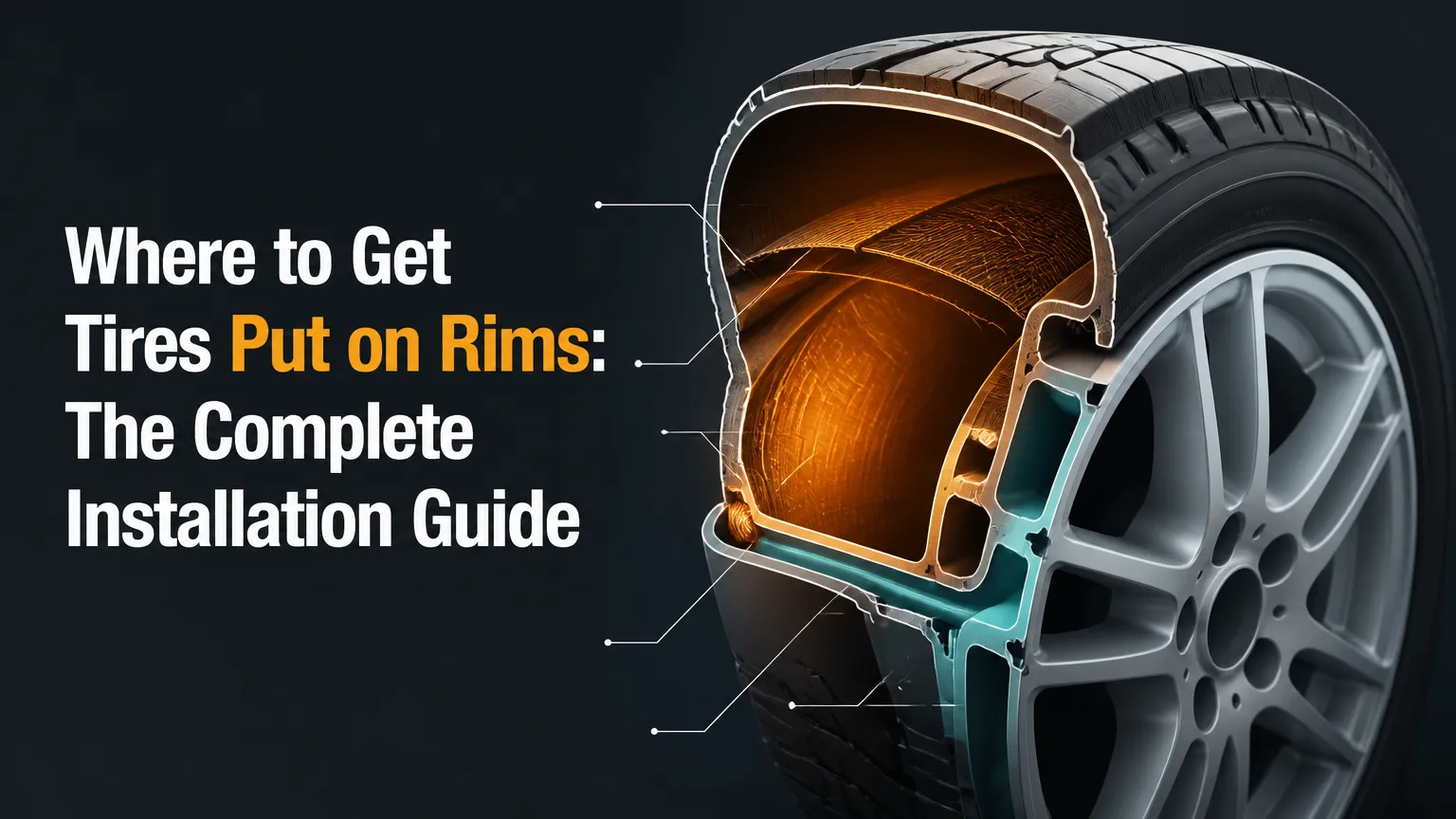
Vehicle owners looking to get tires mounted onto rims generally have four primary options: dedicated tire chains, big-box retail clubs, mobile installation services, and independent mechanic garages. Choosing the right facility depends on your wheel size, tire type, purchase origin, and budget, with professional mounting and balancing typically costing between $15 and $60 per tire.
At a Glance
- Professional mounting and balancing costs $15 to $60 per tire, depending on wheel diameter and tire profile.
- Dedicated tire chains offer specialized high-speed equipment but high upselling pressure.
- Big-box club stores provide the lowest rates but enforce strict vehicle placard specifications and reject outside tires.
- Mobile tire installers bring the equipment directly to your driveway at a premium price of $40 to $70 per tire.
- Specialty rims, such as beadlock, center-lock, and oversized wheels over 22 inches, require specialized shops to prevent structural damage.
Where can I get tires put on rims?
Vehicle owners can get tires mounted onto rims at dedicated tire chains, big-box retail club stores, mobile installation services, and independent automotive repair shops. Each venue utilizes different machinery, sets distinct pricing models, and enforces specific service limitations regarding customer-supplied parts.
Dedicated tire chains like Discount Tire or Firestone Complete Auto Care handle almost all standard and performance setups. Big-box retailers like Costco and Walmart provide lower entry pricing but refuse to install tires purchased from third-party online vendors. Mobile installation vans travel directly to residential or commercial locations for maximum convenience, while independent garages accommodate modified or vintage fitments that corporate chains reject.
How much does it cost to mount and balance tires on rims?
Mounting and balancing a tire typically costs between $15 and $60 per individual tire, totaling $60 to $240 for a standard four-wheel set. The final price varies based on specific mechanical variables, regional labor rates, and additional shop supplies required during the service process.
Wheel diameter is the primary pricing driver, with standard 15-inch to 17-inch wheels costing $15 to $25 each, while ultra-large rims measuring 20 inches or greater demand specialized machinery and cost $35 to $60 or more per wheel. Low-profile tires featuring an aspect ratio under 45 take significantly longer to stretch over wide barrels, adding a $10 to $20 labor premium per tire. Furthermore, shops add environmental disposal fees of $3 to $7 per old tire alongside TPMS service charges for replacing rubber valve stems or electronic sensor service kits.
What is a carry-in fee and when do shops charge it?
A carry-in fee is an extra surcharge added by local tire shops when a customer purchases tires online from a third-party retailer and brings them into the shop for installation. Local service providers charge this fee—typically ranging from $5 to $15 extra per tire—to offset the lost profit margin from not selling the tire hardware directly.
Independent service garages and franchise locations utilize carry-in fees to ensure their labor hours remain profitable when handling customer-supplied merchandise. Before ordering tires from online clearance warehouses, vehicle owners should call local shops or utilize installer network portals to verify whether carry-in surcharges apply to their specific transaction.
What are the pros and cons of dedicated tire chains?
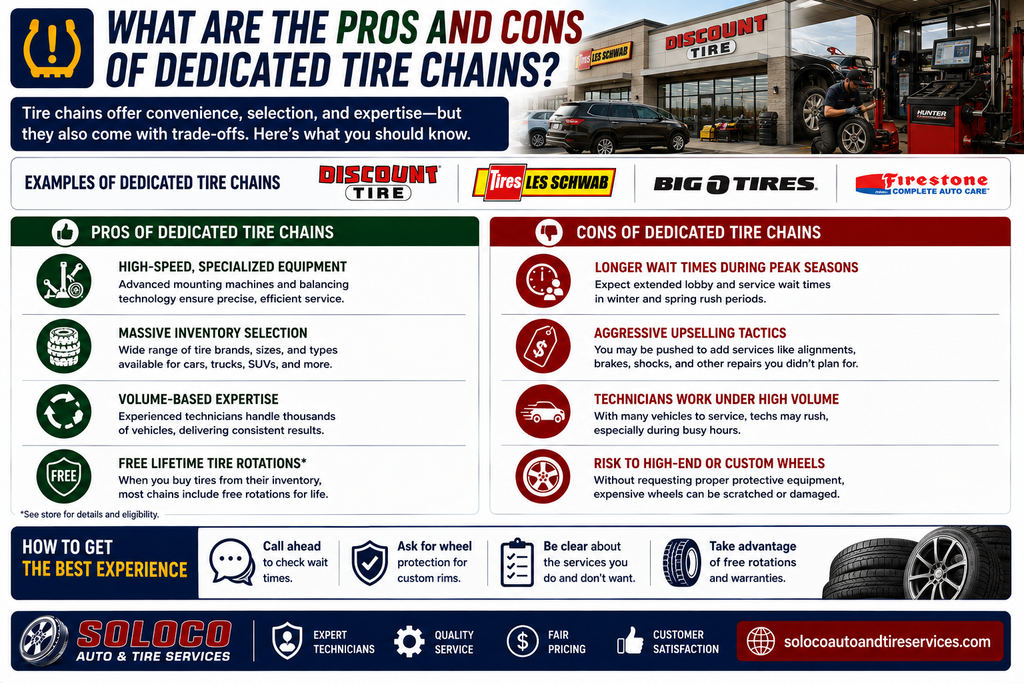
Dedicated tire chains like Discount Tire, Les Schwab, Big O Tires, and Firestone Complete Auto Care offer high-speed specialized mounting equipment and massive inventory selections. The primary advantage of choosing a dedicated chain is their volume-based expertise and the inclusion of free lifetime tire rotations if you purchase the rubber directly from their inventory.
The primary disadvantages of dedicated tire chains include extended lobby wait times during peak seasonal rushes in winter and spring, alongside aggressive upselling tactics for wheel alignments, brake pads, and suspension components. Because these corporate locations process high vehicle volumes, technicians may occasionally rush high-end custom wheels if proper protective equipment is not explicitly requested.
What are the pros and cons of big-box retailers and club stores?
Big-box retail stores such as Costco Wholesale, Sam’s Club, and Walmart Auto Care Centers offer the cheapest mounting rates in the industry, typically ranging from $15 to $20 per tire, alongside frequent promotional installation deals. These facilities maintain rigorous corporate safety standards and utilize calibrated torque tools for every installation.
The severe limitations of big-box club stores include strict refusals to service non-standard wheel sizes, absolute bans on installing tires purchased from outside online sources, and rigid adherence to vehicle manufacturer door placard specifications. If your vehicle requires modified tire sizing, aftermarket offsets, or custom load ratings outside factory parameters, big-box locations will legally turn your vehicle away.
How do mobile tire installers work and what do they cost?
Mobile tire installers operate out of fully equipped service vans containing automated tire changers and computerized balancing spin machines that travel directly to your home or office parking lot. This service eliminates waiting rooms and towing requirements by bringing the garage experience to your driveway.
Mobile installation services typically charge a premium price of $40 to $70 or more per tire to cover travel overhead and equipment amortization. While they handle standard mounting, balancing, and seasonal changeovers with ease, mobile vans cannot perform precise wheel alignments because laser alignment racks require a permanent, level concrete bay floor.
What are the technical exceptions where standard shops won’t mount tires?
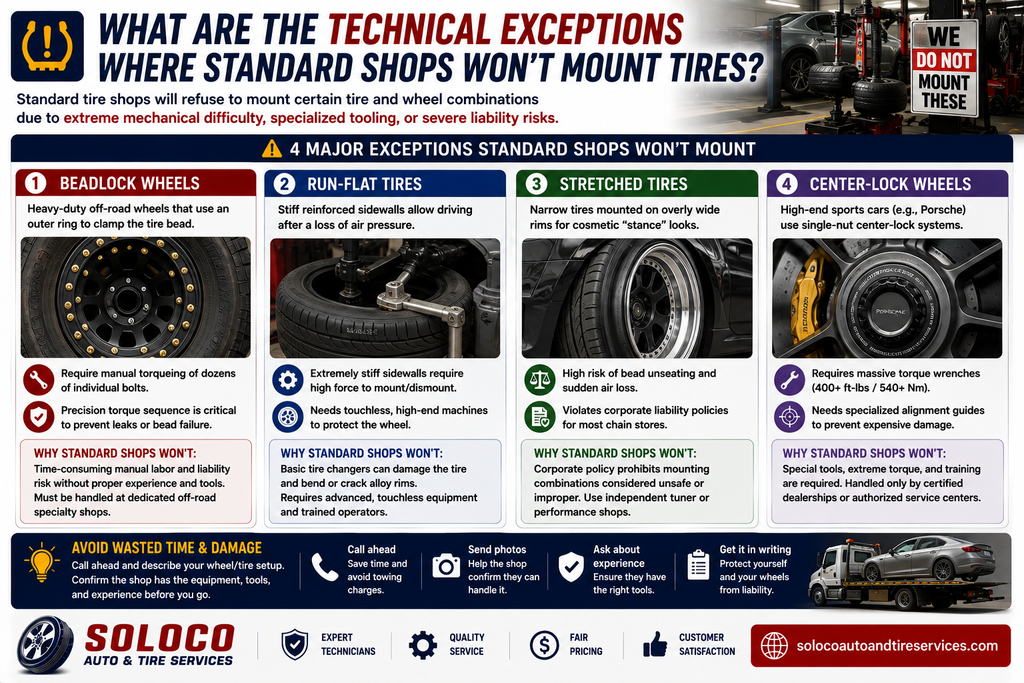
Standard tire shops will refuse to mount specific tire and wheel combinations due to extreme mechanical difficulty, specialized tooling requirements, or severe liability risks. Understanding these exceptions prevents wasted towing trips and damaged wheel assemblies.
- Beadlock Wheels: Heavy-duty off-road wheels utilizing physical outer rings that clamp the tire bead require manual torqueing of dozens of individual bolts, forcing owners to visit dedicated off-road specialty shops.
- Run-Flat Tires: Stiff reinforced sidewalls on run-flat tires require touchless high-end machinery; basic tire changers will physically bend standard alloy rims during the stretching process.
- Stretched Tires: Mounting narrow tires onto overly wide rims for cosmetic stance culture aesthetics violates corporate liability policies, requiring independent tuner shops.
- Center-Lock Wheels: High-end sports cars like Porsche models use single-nut center-locks requiring massive torque wrenches exceeding 400 foot-pounds and specialized alignment guides handled exclusively by certified dealerships.
How do I find a shop that can handle oversized rims (22 inches or larger)?
Vehicle owners with aftermarket rims larger than 22 inches or deep-lipped designs must look specifically for service centers advertising touchless tire changers like the Hunter Revolution machine. Traditional metal duckhead clamp machines grip the outer lip of the rim, causing permanent gouges and scratching expensive custom powder-coated finishes.
Touchless machines utilize plastic rollers and hydraulic arms that lift and stretch the rubber bead without making physical contact with the face or outer edge of the wheel. Before dropping off custom or oversized wheels, call the service manager directly and ask if they utilize a fully automated touchless mounting system.
Why do warehouse clubs reject online-purchased tires?
Warehouse clubs like Costco and Sam’s Club reject online-purchased tires due to strict internal corporate liability policies and inventory revenue structures. These retailers maintain contracts to sell specific tire brands and models tested to exact original equipment manufacturer specifications.
When customers supply unknown third-party budget tires or incorrect speed ratings, warehouse liability insurance refuses to cover potential blowout accidents resulting from improper matching. To bypass this restriction, vehicle owners should use digital installer networks like Tire Rack’s approved installer search to locate independent mechanics who gladly accept shipped-in parcels.
Where should I take vintage or classic car wire wheels with inner tubes?
Vintage classic cars utilizing wire-spoke wheels and inner tubes require specialized restoration mechanics or agricultural and tractor tire service centers. Modern high-volume tire technicians have never encountered inner tubes, and using standard modern tire irons will puncture the rubber tube instantly.
Restoration specialists understand how to properly balance vintage knock-off wire wheels, inspect inner tube flap conditions, and true out spoke tensions without destroying delicate vintage hardware. Always verify vintage experience before letting a local quick-lube technician touch classic vehicle wheels.
How do TPMS sensors impact tire mounting costs and service?
TPMS sensors inside modern wheels require specialized service kits or complete sensor replacements whenever old rubber valve stems are cut away during a tire change. Rebuilding or resetting Tire Pressure Monitoring System sensors adds an extra $5 to $15 per wheel onto your total installation invoice.
Direct-pressure TPMS sensors contain internal lithium batteries that degrade after five to seven years of operation. Mechanics routinely recommend replacing the entire sensor service kit during a tire swap to prevent pressure leaks and avoid paying separate labor fees if a battery fails six months later.
Do I need a wheel alignment right after getting tires put on rims?
Vehicle owners do not need a mandatory wheel alignment immediately after getting new tires mounted onto rims because the simple act of swapping tires does not alter steering or suspension geometry. However, if your old tires exhibit uneven feathering, cupping, or inside shoulder baldness, you should invest in an alignment immediately to protect your new investment from premature destruction.
Suspension components wear out over thousands of miles, changing camber and toe angles regardless of tread health. Inspecting old tread wear patterns before disposal provides an instant diagnostic indicator of whether your suspension requires mechanical correction alongside the fresh tire installation.
Can I mount tires onto rims myself at home?
Physically, you can mount tires onto rims at home using manual tire spoons, bead breakers, and heavy pry bars, but automotive experts strongly discourage DIY home installation. Attempting manual installation risks tearing the delicate inner tire bead, gouging expensive rim lips, and leaving the wheel completely unbalanced.
Unbalanced wheels generate violent high-speed steering vibrations above 55 miles per hour, destroying vehicle wheel bearings and steering components. Professional shops utilize high-speed computerized dynamic balancing machines that calculate precise weight placement down to the quarter-ounce.
What is the difference between tire balancing and wheel alignment?
Tire balancing ensures that the combined weight of the tire and rim assembly is distributed evenly around the central axle rotation point, correcting heavy spots using clip-on or adhesive lead weights applied on a spinning balancer machine. Wheel alignment adjusts the mechanical angles of the vehicle suspension arms, tie rods, and struts so that all four tires hit the road surface at precise geometric angles.
Balancing resolves shaking vibrations felt in the steering wheel or seat pan, whereas alignment resolves pulling to one side, off-center steering wheels, and crooked tracking down straight roadways. Both services address entirely different vehicle dynamics despite being performed during similar maintenance intervals.
Can I put a different size tire on my existing rims?
Vehicle owners can install a slightly different tire size onto existing rims provided the tire width falls safely within the rim’s approved width range compatibility chart. Every wheel barrel width requires a specific safe range of tire cross-sections to maintain proper structural bead seating under cornering loads.
Installing a tire that is too wide onto a narrow rim causes excessive center tread ballooning and dangerous rollover during hard turns, while installing a tire that is too narrow stretches the sidewall dangerously thin. Always consult a professional tire rim width compatibility chart or manufacturer specification guide before altering your factory tire sizing.
The Bottom Line
Getting tires put on rims requires matching your specific wheel type, size, and purchase origin to the appropriate automotive service provider, with total professional costs ranging from $15 to $60 per tire. While big-box retailers offer budget pricing for standard factory sizes, specialty options like oversized rims, run-flats, and vintage wire wheels demand independent mechanics or touchless machinery. Always budget for necessary add-ons like balancing, disposal fees, and TPMS service kits to ensure safe, vibration-free highway performance.