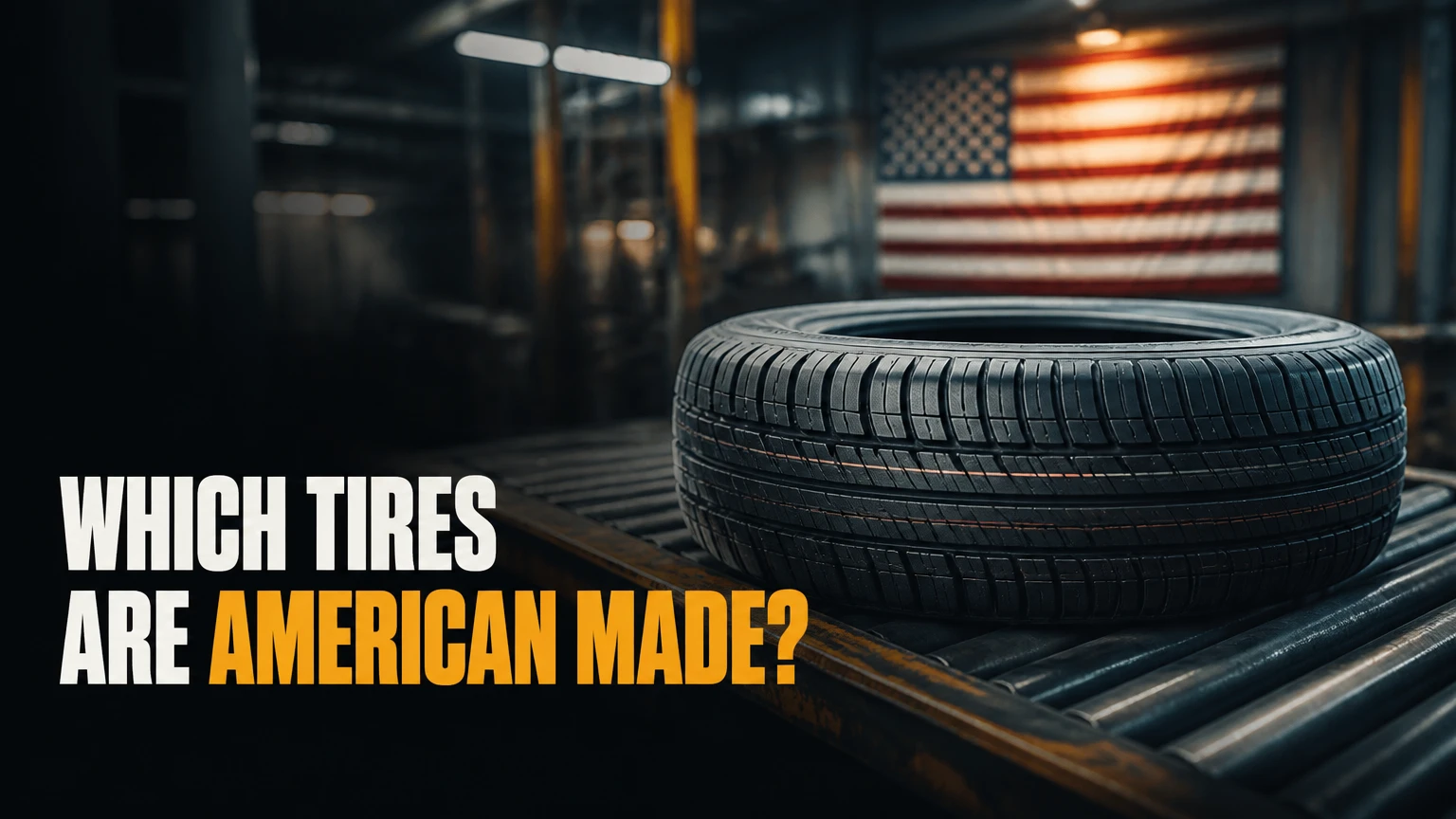
No major tire brand manufactures its entire consumer lineup within the United States. Goodyear and Cooper are the only independent American-headquartered companies remaining, yet both routinely import specific models. Buyers must verify the Department of Transportation plant code stamped on the sidewall to confirm domestic production. Determining which tires are American made requires physical inspection before installation.
At a Glance
- Over 40 individual tire models from 16 global brands are built in United States manufacturing facilities.
- Foreign conglomerates like Michelin, Bridgestone, and Continental produce millions of tires on American soil annually.
- Online retailers cannot guarantee a specific manufacturing origin before shipping inventory from regional warehouses.
- Identical tire models are often sourced globally based on specific rim diameters and low-profile dimensions.
- The United Steelworkers union represents labor at specific domestic Goodyear and Bridgestone plants.
Which US-headquartered companies still manufacture domestically?
Goodyear and Cooper remain the only major American-founded tire corporations operating extensive production lines within the United States. Hoosier Racing Tire also maintains domestic operations exclusively for track-specific and competitive racing applications.
Goodyear operates massive, high-volume production facilities in Lawton, Oklahoma; Topeka, Kansas; Fayetteville, North Carolina; and Danville, Virginia. Cooper Tire, which was acquired by Goodyear, runs heavily localized manufacturing out of Findlay, Ohio, and Texarkana, Arkansas. These facilities support thousands of local jobs and supply original equipment directly to North American automotive assembly plants. A typical industry estimate shows that domestic production capacity for these legacy facilities easily exceeds 45 million units annually.
However, a domestic corporate headquarters does not guarantee local production for every product tier. Both Goodyear and Cooper source their value-tier sub-brands from international plants. Kelly Springfield tires, a budget-friendly Goodyear subsidiary, regularly arrive from Indonesia or Mexico. Buyers looking for domestic production from these legacy names must focus on premium lines like the Goodyear Wrangler or Cooper Discoverer series.
Which foreign tire brands operate factories in the USA?
Michelin, Bridgestone, Continental, Yokohama, Pirelli, and Hankook all operate massive manufacturing complexes inside the United States. These foreign-owned entities produce a significant percentage of the consumer rubber driven on American roads today.
France-based Michelin runs multiple expansive facilities across South Carolina. Japan-based Bridgestone controls large factories in Tennessee, South Carolina, and Iowa. Continental manages heavily automated plants in Illinois and South Carolina. These companies build tires locally to reduce shipping emissions, avoid import tariffs, and supply heavy inventory to regional markets efficiently. Heritage brands like BFGoodrich and Firestone are entirely foreign-owned today. Michelin purchased BFGoodrich, while Bridgestone acquired Firestone. Despite their foreign ownership structures, these subsidiary brands maintain deep manufacturing roots in Alabama and Indiana.
| Parent Company | Corporate Headquarters | Major US Factory Locations | Typical Market Segment |
| Michelin | France | Greenville, SC; Lexington, SC | Premium Passenger / Light Truck |
| Bridgestone | Japan | Morrison, TN; Aiken, SC; Des Moines, IA | Passenger / Commercial |
| Continental | Germany | Mt. Vernon, IL; Sumter, SC | Performance / Touring |
| Yokohama | Japan | Salem, VA; West Point, MS | Commercial / Passenger |
| Pirelli | Italy | Rome, GA | High-Performance Specialty |
| Hankook | South Korea | Clarksville, TN | Passenger / Light Truck |
How can you verify a tire was manufactured in America?
You must inspect the Department of Transportation plant code stamped directly onto the sidewall of the tire. Brand identity, marketing brochures, and historical heritage provide zero guarantee of geographic origin.
The United States government mandates that every street-legal tire display a standardized alphanumeric sequence detailing its exact production facility. This sequence begins with the letters “DOT” followed by a specific two-character or three-character alphanumeric plant code. You will find this code molded into the rubber near the inner rim bead. The sequence typically ends with four numbers indicating the week and year of manufacture.
A standard rule of thumb among alignment technicians is that the sidewall tells the only legally binding story about a tire’s origin. Technicians mount and balance wheels rapidly. You must check the code in the showroom or service bay before the mounting process begins. Once the tire is seated on the rim, exchanging it becomes a difficult logistical process.
What are the specific DOT plant codes for US tire factories?
The most reliable United States plant codes include M6 for Goodyear in Oklahoma, UP for Cooper in Ohio, and BE for BFGoodrich in Alabama. The National Highway Traffic Safety Administration maintains a master registry of these codes.
Manufacturers update these alphanumeric identifiers periodically as new production lines open, but legacy codes remain standard across millions of tires currently in warehouse inventory. Identifying the exact factory requires cross-referencing the first few characters immediately following the DOT stamp. You should memorize the codes for your preferred brands before visiting a retailer. A single brand will utilize different codes for different domestic factories based on the equipment installed at that location.
| DOT Plant Code | Brand / Manufacturer | Factory Location | Status |
| M6 | Goodyear | Lawton, Oklahoma | Active |
| UP | Cooper | Findlay, Ohio | Active |
| UT | Cooper | Texarkana, Arkansas | Active |
| BE | BFGoodrich (Michelin) | Tuscaloosa, Alabama | Active |
| BF | BFGoodrich (Michelin) | Woodburn, Indiana | Active |
| 2C / 4D / 5D | Bridgestone | Morrison, Tennessee | Active |
| CC | Yokohama | Salem, Virginia | Active |
Why do domestic brands import their own tire models?
Tire manufacturers import specific sizes of their own models to maximize global tooling efficiencies and manage production costs. This logistical practice is known throughout the industry as model-specific slicing.
A company might build a 17-inch Goodyear Assurance in Oklahoma while building the exact same model in a 20-inch low-profile variant in Chile. Equipping a single factory to produce every possible rim diameter requires massive capital investment in distinct molding machines. Companies solve this by assigning specific dimension ranges to specialized factories worldwide. Value-tier economics also heavily drive this offshoring strategy. Producing budget-friendly tires in North America often yields unprofitable margins due to local labor and utility costs. Manufacturers push these entry-level lines to facilities in Mexico, Chile, or Southeast Asia to keep retail prices competitive.
Are light truck tires more likely to be domestic than passenger tires?
Yes, light truck tires and rugged all-terrain models are significantly more likely to be manufactured in the United States than standard passenger car tires. The physical weight and dimensional bulk of LT-rated tires make long-distance ocean freight exceptionally expensive.
Shipping a 55-pound mud-terrain tire across the Pacific Ocean cuts heavily into corporate profit margins. Manufacturers prefer to build these large, heavy items on the same continent where they are sold. The North American market consumes a disproportionate share of the global light truck tire supply due to the popularity of full-size pickups and SUVs. Building them locally aligns supply directly with regional demand. You will frequently find that aggressive models like the BFGoodrich All-Terrain T/A KO2 or the Goodyear Wrangler DuraTrac carry American DOT codes. Conversely, standard commuter sizes for compact sedans ship highly efficiently in overseas shipping containers.
| Tire Category | Average Weight | Typical Domestic Production Share | Primary Sourcing Region |
| Standard Passenger (Sedan) | 18-22 lbs | 30-40% | Mixed (Asia, South America, US) |
| Light Truck (LT) / All-Terrain | 45-60 lbs | 70-85% | United States / Canada |
| High-Performance (Track) | 25-30 lbs | 20-35% | Europe / United States |
Do domestic tires cost more than imported alternatives?
Premium tires built in the United States typically cost 15 to 30 percent more than budget-tier imported alternatives, but they align identically in price with premium imports. You are paying for the brand’s engineering standards and compound formulations rather than the specific factory location.
A Michelin Defender manufactured in South Carolina retails for the exact same price as a Michelin Defender manufactured in Canada or France. Retailers do not adjust consumer pricing based on the DOT plant code. However, you will notice a stark price divide between premium domestic brands and generic brands sourced entirely from factories in China or Indonesia. A set of four domestic Cooper Discoverer tires might cost 850 dollars. A similarly sized set from a lesser-known imported brand might cost 500 dollars. The price gap reflects research, development, and stringent quality control tolerances.
Are tires manufactured in the United States higher quality?
No, global tire giants maintain identical machinery, compound formulations, and quality control tolerances worldwide. A Bridgestone tire built in Tennessee uses the exact same engineering parameters as one built in Japan.
Modern tire manufacturing relies heavily on automated robotics and strictly controlled chemical mixing facilities. The geographic location of the factory has no measurable impact on the durability, traction, or lifespan of the final product. The distinct advantage of buying domestic lies entirely in secondary economic factors. Purchasing locally built tires supports North American labor markets, lowers shipping-related carbon emissions, and ensures a more resilient localized supply chain. Independent testing consistently shows that tier-one brands perform equally well regardless of the factory origin code. Quality stems strictly from corporate engineering standards.
How do you ensure you get domestic tires when ordering online?
You cannot guarantee domestic production with complete certainty when ordering tires online. Major e-commerce platforms and distribution networks do not index their active inventory by specific factory DOT codes.
Online tire distributors route orders seamlessly from massive regional warehouses based entirely on proximity to your shipping address. You might order a tire model historically built in Ohio, only to receive a batch manufactured in Malaysia. To guarantee American origin, you must visit a physical tire dealer. You will need to request the specific tire model and size. Once the store pulls the inventory, you must physically inspect the sidewall code before authorizing the installation. Do not pay the final invoice or allow the technicians to mount the rubber onto your wheels until you verify the plant code manually.
Which US tire factories operate under union contracts?
Several domestic tire facilities operate under collective bargaining agreements with the United Steelworkers union, while many others operate as strictly non-union shops. The USW represents workers at specific legacy plants, including Goodyear locations in Topeka, Kansas, and Danville, Virginia.
Bridgestone and Firestone also maintain unionized lines at several of their Midwestern facilities. However, the geographic shift of manufacturing toward the American South has changed the industry labor landscape. Foreign-owned conglomerates operating in states with right-to-work laws generally run non-union facilities. Michelin’s expansive network in South Carolina and Pirelli’s automated plant in Georgia operate without USW contracts. If supporting union labor is your primary purchasing priority, you must verify both the brand and the specific DOT plant code.
Does country of origin affect tire warranties or safety recalls?
No, the country of origin does not alter the manufacturer warranty, mileage guarantee, or safety recall procedures. If a company legally sells a tire within the United States, that company assumes full legal responsibility for its performance and safety compliance.
A Goodyear tire imported from Chile carries the exact same 60,000-mile treadwear warranty as one built in Oklahoma. The federal government holds the corporate entity accountable regardless of where the physical molding occurred. During a safety recall, the manufacturer will instruct consumers to check specific DOT codes to identify affected production batches. Recalls are almost always isolated to a specific factory and timeframe. A domestic plant is just as likely to experience a manufacturing defect requiring a recall as an overseas plant. Your consumer protections remain fully intact.
What happens if your preferred tire size is not built domestically?
If your specific rim diameter or aspect ratio requires overseas production, you must choose between compromising on brand loyalty or accepting the imported product. Many owners of sports cars with staggered, low-profile wheels face this exact dilemma at the tire shop.
A manufacturer may build the 18-inch variant of a performance tire in America but source the 21-inch variant from Europe. You cannot special-order a domestic version if the local factory lacks the tooling for that specific dimension. You can attempt to cross-shop other tier-one brands to see if a competitor builds your required size locally. However, if the entire industry has offshored that specific niche size, you will have to buy the imported version. Prioritize the safety, load rating, and performance characteristics of the tire over its geographic origin.
The Bottom Line
Determining the exact geographic origin of your tires requires looking past brand heritage and inspecting the physical product. Global supply chains mean legacy United States companies import regularly, while foreign conglomerates run massive domestic factories. The sidewall DOT code provides the only verifiable proof of origin. Always check these alphanumeric codes in person before installation to guarantee your purchase supports local manufacturing facilities.