A blinking tire pressure monitoring system light indicates a system malfunction rather than a simple low inflation level. When the light flashes for up to 90 seconds upon vehicle startup before turning solid, the engine control unit has lost digital communication with one or more wheel sensors due to a dead internal battery, physical damage, or radio frequency interference.
At a Glance
- A flashing tire pressure monitoring system light means the monitoring technology itself is broken, whereas a solid light means air pressure has dropped 25% or more below the manufacturer placard specification.
- Internal lithium-ion sensor batteries last between 5 and 10 years or roughly 100,000 miles and cannot be replaced independently from the entire valve stem assembly.
- Aftermarket dashcams, LED headlight conversions, and cheap USB chargers can emit radio frequencies on 315 MHz or 433 MHz that jam the sensor signal.
- Indirect tire pressure monitoring systems found in vehicles like older Hondas and Volkswagens measure wheel speed via ABS sensors rather than internal pressure transmitters, causing false blinks after tire size changes.
- Replacing and programming a single OEM wheel sensor costs between $50 and $150 depending on the vehicle make and dealership labor rates.
What Does a Blinking TPMS Light Mean Versus a Solid One?
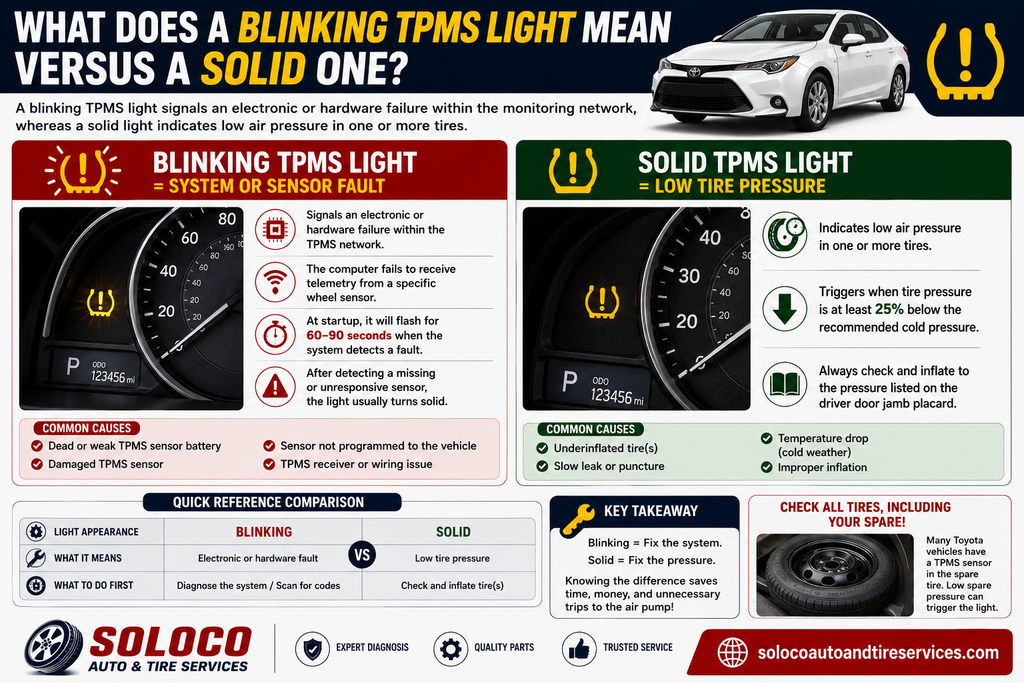
A blinking tire pressure monitoring system light signals an electronic or hardware failure within the monitoring network, whereas a solid light indicates low air pressure in one or more tires. Understanding this visual distinction prevents unnecessary air pump stops when the underlying issue requires electronic diagnosis or sensor replacement rather than inflation.
The vehicle computer initiates a 60 to 90-second flash sequence at ignition startup when it fails to receive telemetry packets from a specific wheel position. Once the computer acknowledges that a sensor is missing or unresponsive, the light usually transitions to a continuous solid state. Conversely, a solid light from the start means the pressure in a tire has dropped at least 25 percent below the recommended cold inflation pressure listed on the driver door jamb placard.
Why Do TPMS Sensors Fail or Lose Communication?
Tire pressure sensors lose communication due to internal battery exhaustion, physical destruction during tire mounting, or environmental degradation of internal circuit boards. Because these electronic components reside inside the harsh tire cavity exposed to moisture, road salt, and centrifugal forces, component degradation is inevitable over time.
Sensor damage frequently happens during seasonal tire changes when a technician’s tire mounting machine accidentally clips the fragile plastic or aluminum housing. Additionally, moisture intrusion through degraded valve stem seals can short-circuit the internal transmitter microchip. When communication drops completely, the vehicle computer triggers the flashing dashboard warning light because it no longer receives periodic pressure updates.
How Long Do TPMS Sensor Batteries Last?
Internal lithium-ion sensor batteries typically last between 5 and 10 years, which translates to roughly 100,000 miles of normal driving conditions. These batteries are permanently encased in epoxy resin to protect them from tire sealant and pressure fluctuations, meaning they cannot be replaced individually.
When an original equipment battery reaches the end of its chemical lifespan, voltage output drops below the threshold required to transmit radio frequency packets to the wheel well receiver. Vehicle owners frequently experience sensor failure on all four wheels around the same time because the factory batteries were manufactured in the same batch and experienced identical thermal cycles.
What Is the 25% Threshold Rule for Tire Pressure?
The 25 percent threshold rule dictates that a standard tire pressure monitoring system will not illuminate a solid warning light until a tire has lost at least one-quarter of its specified pounds per square inch. Drivers often make the mistake of assuming a solid light means tires are only slightly low, when in reality a tire rated for 35 pounds per square inch may drop to 26 pounds per square inch before the dashboard indicator triggers.
This percentage-based activation limit is mandated by federal safety standards to prevent driver annoyance from minor pressure fluctuations while ensuring structural integrity is maintained. Relying on the dashboard light for routine maintenance is risky because driving on a tire that is 20 percent low creates excess sidewall heat and accelerates tread wear without ever turning on the warning indicator.
What Is the 10-Minute Highway Rule for TPMS Reset?
Driving at speeds above 50 miles per hour for 10 continuous minutes can occasionally force the vehicle computer to re-establish communication if the fault was caused by a temporary radio frequency glitch or a minor system desynchronization. This procedure allows the onboard receiver to poll the wheel sensors while they are in active motion mode, which increases transmission frequency compared to when the vehicle is parked.
This remedy only succeeds if the underlying sensors are fully functional and merely asleep or temporarily blocked by localized interference. If the internal battery is dead or the sensor housing is physically broken, highway driving will do nothing, and the flashing light will persist indefinitely until professional service is performed.
How Much Does It Cost to Replace a TPMS Sensor?
Replacing and programming a single original equipment manufacturer tire pressure sensor costs between $50 and $150 at a professional repair shop or dealership. This total price includes the physical hardware component, which typically ranges from $30 to $80, alongside labor charges for dismounting the tire, replacing the valve service kit, and programming the new sensor identification into the vehicle computer.
Independent tire shops often charge lower labor rates than franchise dealerships and can frequently install programmable aftermarket sensors that cost less than factory replacements. However, vehicle owners should verify that aftermarket sensors utilize the correct operating frequency and protocol to prevent compatibility errors with the vehicle body control module.
Can a Flat Spare Tire Trigger the Tire Pressure Light?
Many full-sized spare tires and select compact temporary spares contain a fully active tire pressure monitoring sensor mounted inside the wheel rim. If the pressure inside the spare tire located in the trunk or under the vehicle bed drops below the safety threshold, it will trigger the monitoring system and cause a dashboard warning.
Vehicle owners frequently find themselves baffled by a persistent warning light when all four road tires read the correct pressure on a manual gauge. Mechanics recommend checking the spare tire pressure during routine monthly maintenance checks, especially on SUVs and trucks where exterior-mounted or under-chassis spares are exposed to wide temperature swings.
How Do Radio Frequency and Aftermarket Interference Affect TPMS?
Electronic devices operating on 315 megahertz or 433 megahertz frequencies can emit electromagnetic noise that blocks the weak radio signal sent by tire sensors to the vehicle receiver. Common culprits include cheap aftermarket dashcams wired into constant power ports, poorly shielded USB phone chargers, and low-quality LED headlight bulb conversions.
These electronic accessories generate harmonic frequencies that flood the cabin wiring harness with static, drowning out the brief data packets transmitted by the wheel wells. Disconnecting aftermarket electronic accessories is the fastest way to test whether radio frequency interference is the root cause of an unexplained blinking dashboard light.
Why Do Indirect TPMS Systems Cause False Warning Lights?
Indirect tire pressure monitoring systems used in vehicles like older Hondas, Audis, and Volkswagens do not use physical pressure sensors inside the wheels at all. Instead, these systems utilize anti-lock braking system wheel speed sensors to calculate the rotational speed and rolling diameter of each tire.
When a driver changes tire brands, mixes mismatched tread depths, or alters wheel alignments, the physical rolling circumference changes, which tricks the anti-lock braking computer into registering a pressure differential. The dashboard light will blink or illuminate until the driver manually performs a system recalibration procedure through the infotainment touchscreen or dashboard button menu.
Do Unprogrammed Replacement Sensors Cause the Light to Blink?
Installing new tire pressure sensors purchased online will fail to clear a dashboard warning light unless a technician actively programs the sensor identification codes into the car computer using an OBD-II scan tool. Even if replacement sensors match the correct operating frequency of the vehicle, the engine control unit does not automatically recognize new electronic serial numbers.
Most modern vehicles require a specialized diagnostic tool to either clone the old sensor identification numbers onto the new hardware or execute an OBD-II relearn procedure. Attempting to bypass this step leaves the monitoring system blind, resulting in a persistent flashing light upon startup.
Can I Drive with a Blinking TPMS Light?
Drivers can temporarily operate a vehicle with a blinking tire pressure monitoring system light, provided that the physical air pressure in all four tires has been manually verified with a reliable gauge. The blinking light simply means the automated safety warning system is offline, not that the tires are actively deflating at that exact moment.
However, operating a vehicle with a disabled monitoring system eliminates your primary automated defense against sudden structural failures or slow punctures. Drivers must manually inspect their tire pressures weekly using a handheld gauge until the faulty sensor is professionally diagnosed and replaced.
Do I Need to Replace All Four Sensors at the Same Time?
Vehicle owners do not technically need to replace all four sensors simultaneously when a single unit fails, but replacing only one sensor is often a false economy. Because factory batteries are manufactured in the same production run, the remaining three sensors are usually nearing the end of their operational lifespan.
Replacing a single sensor avoids an upfront bill, but a second sensor battery will likely fail within months, forcing another trip to the repair shop and another round of tire balancing labor charges. Replacing all four sensors as a complete set when one fails provides long-term reliability and minimizes cumulative labor expenses.
Will A Flashing TPMS Light Fail a State Vehicle Inspection?
A flashing tire pressure monitoring system light will cause an automatic inspection failure in states that enforce strict comprehensive safety checks, including Hawaii, West Virginia, and Vermont. Because the monitoring system is a federally mandated safety feature governed by federal motor vehicle safety standards, an active electronic fault code indicates an impaired safety system.
In states with more lenient or emissions-only inspection programs, a dashboard warning light may pass unpenalized as long as the tread depth and actual tire inflation levels meet legal minimums. Checking local Department of Motor Vehicles inspection guidelines before scheduling an appointment prevents unexpected rejection notices.
How Do I Diagnose Whether a Blinking TPMS Light Is Caused by a Dead Battery or Interference?
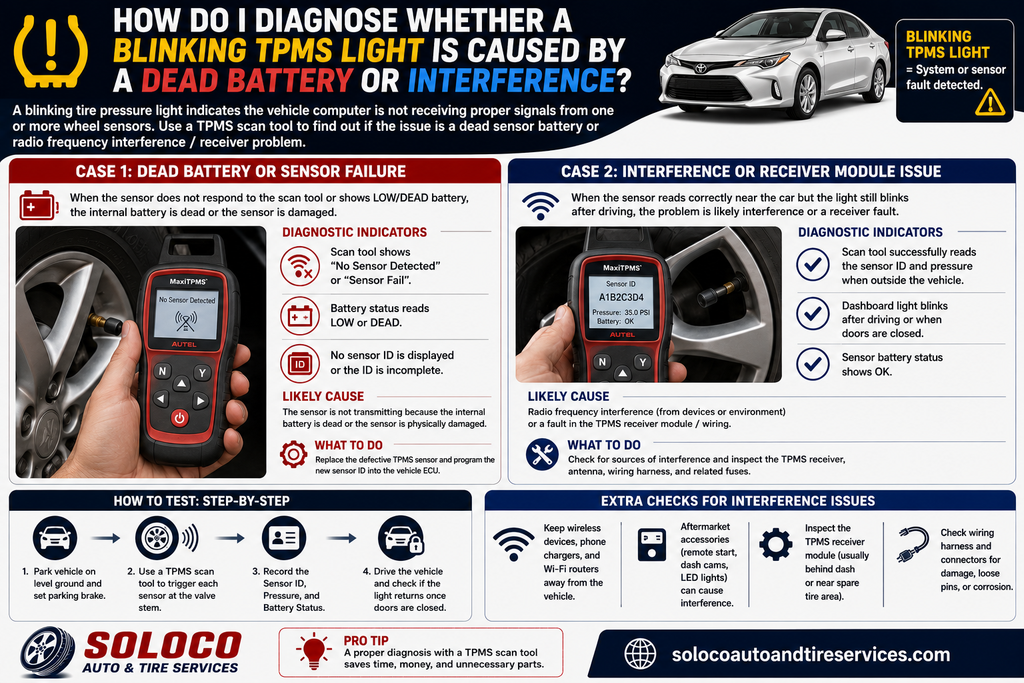
Diagnosing the root cause of a blinking tire pressure light requires a dedicated radio frequency diagnostic scan tool capable of pinging individual wheel sensors. When a technician holds the scan tool next to the valve stem and the sensor fails to respond with a digital ID and battery status, the internal battery is dead or the sensor is broken.
If the scan tool successfully reads the sensor ID while standing outside the car, but the dashboard light continues to blink once the doors are closed, radio frequency interference or a disconnected receiver module is the culprit. This diagnostic differentiation saves vehicle owners from purchasing expensive replacement sensors when the fault actually lies in cabin electronics or wiring harnesses.
How Can I Manually Check If My Tires Are Actually Low When the System Is Malfunctioning?
Drivers can manually verify tire pressure during a system malfunction by using a calibrated stick or digital pressure gauge on each tire valve stem before driving while the tires are completely cold. A tire is considered cold when the vehicle has been parked for at least three hours or driven less than one mile at moderate speeds.
Comparing these physical gauge readings directly against the white and yellow placard sticker located on the driver-side door post confirms whether safety risks exist independent of the dashboard electronics. Maintaining an accurate digital gauge in the glove compartment ensures reliable readings even when electronic dashboard systems experience total failure.
What Specific OBD-II Scan Tools Are Required to Program New Sensors?
Programming new tire pressure sensors requires a bi-directional OBD-II scan tool equipped with a universal TPMS activation module, such as tools manufactured by Autel, Ateq, or Bartec. Basic code readers that only scan engine check lights lack the radio frequency transceiver hardware required to trigger sensors and write new identification numbers to the car computer.
These advanced diagnostic tools cost anywhere from $150 for entry-level consumer models up to $1,200 for professional shop variants. Because of this specialized hardware requirement, most vehicle owners find it more economical to let a professional tire shop handle sensor programming during routine maintenance.
Why Does Extreme Cold Weather Cause Intermittent TPMS Blessing?
Severe cold temperatures, particularly readings dropping below zero degrees Fahrenheit, cause internal lithium-ion battery chemistry to temporarily drop voltage output below operational thresholds. This temporary voltage sag prevents the sensor from transmitting its signal to the vehicle receiver during cold morning startups, triggering a warning blink.
Once the vehicle is driven and friction warms the tire cavity, internal temperatures rise, chemical reactions normalize, and voltage output recovers, causing the warning light to clear on subsequent trips. This weather-induced intermittent blinking is a primary indicator that the sensor battery is heavily aged and nearing total failure.
The Bottom Line
A blinking tire pressure monitoring system light signals an electronic or hardware failure within the sensor network rather than low inflation. While driving temporarily with a disabled monitoring system is safe if verified manually with a handheld gauge, correcting the issue requires identifying whether a dead battery, radio frequency interference, or unprogrammed hardware is at fault. Replacing aging sensors as a complete set prevents recurring dashboard warnings and ensures your vehicle safety systems operate reliably in all weather conditions.