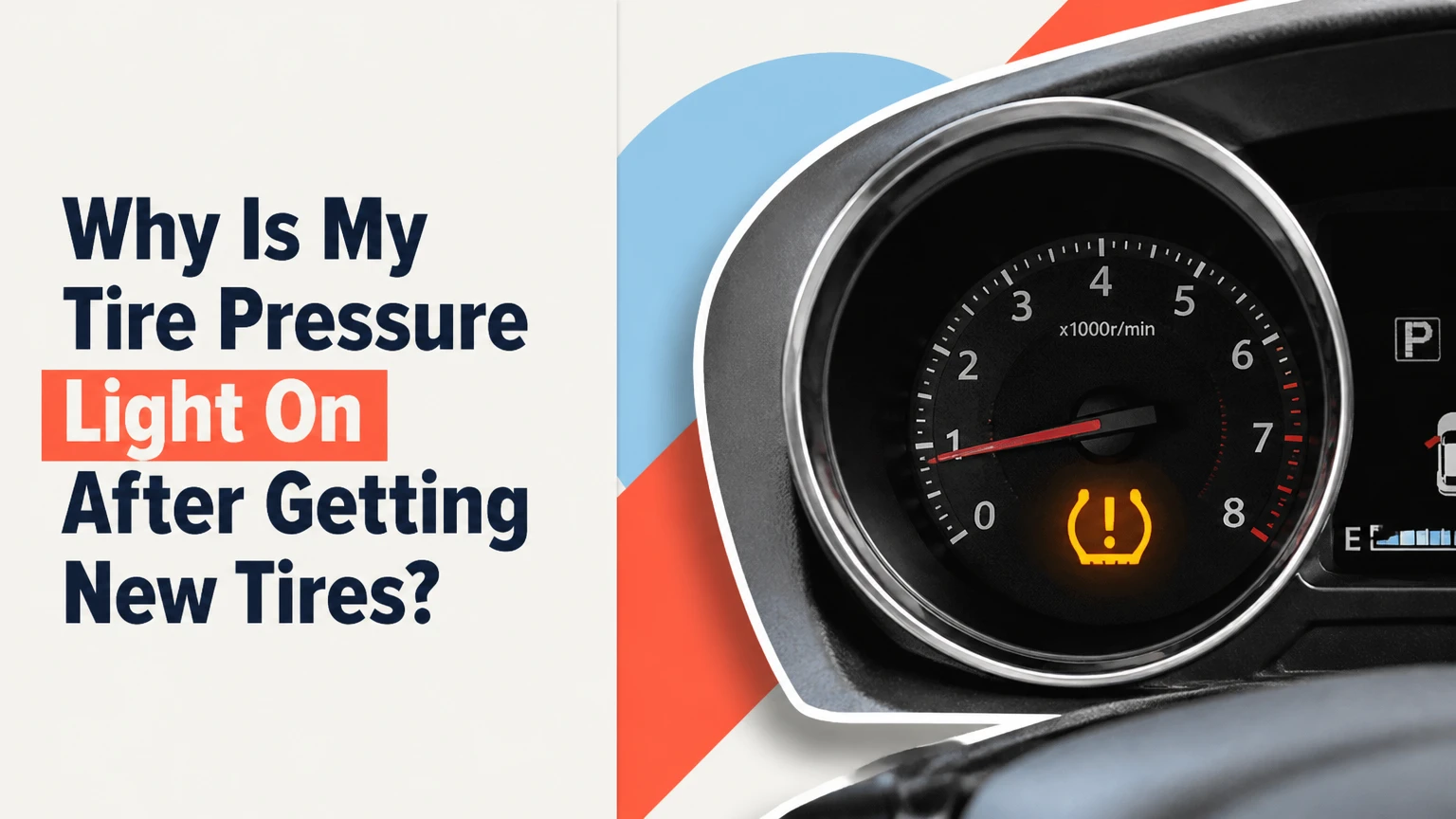
Your tire pressure monitoring system light stays on after getting new tires because the vehicle computer either requires a manual system reset, the technicians inflated the tires incorrectly to the sidewall maximum instead of the door placard PSI, or a delicate valve stem sensor was damaged during the installation process.
At a Glance: Key Facts
- The TPMS light triggers when tire pressure drops 25 percent or more below the recommended placard pressure.
- Vehicle placards typically call for 30 to 35 PSI, whereas tire sidewalls list a maximum pressure of 44 to 51 PSI.
- Ambient temperature swings alter tire pressure by approximately 1 PSI for every 10 degrees Fahrenheit change.
- TPMS sensor batteries last 5 to 10 years and cannot be replaced independently; the entire sensor unit must be swapped.
- Many direct TPMS systems require continuous driving at or above 20 mph for 10 to 20 minutes to register new sensor positions.
How can I tell if the tire pressure light means a low tire or a system malfunction?
A solid tire pressure monitoring light indicates that one or more tires are improperly inflated, while a flashing light for 60 seconds followed by a solid glow denotes an electronic system malfunction. Drivers must evaluate the initial startup sequence of the dashboard icon before taking action. A steady illumination points directly toward incorrect air pressure or a slow leak introduced during the tire mounting process. Conversely, a blinking indicator reveals that the vehicle computer cannot communicate with one or more wheel sensors due to a dead battery, electronic failure, or unprogrammed hardware. Recognizing this distinction prevents motorists from wasting time pumping air into tires when the actual root cause is a broken transmitter inside the wheel assembly.
What is the difference between placard pressure and maximum sidewall pressure?
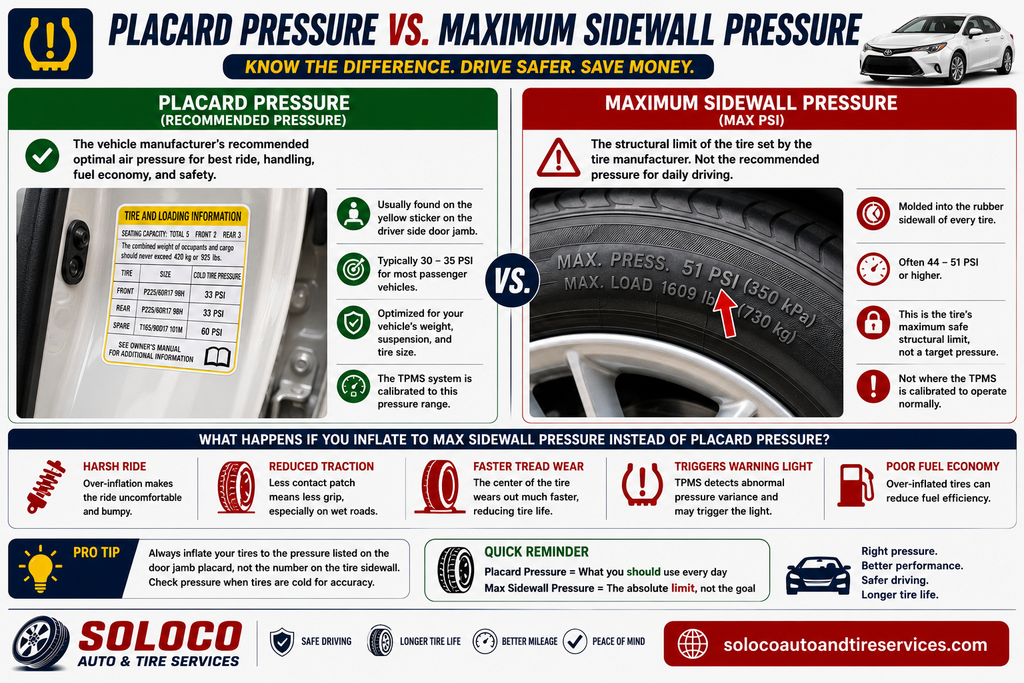
Placard pressure is the vehicle manufacturer’s recommended optimal air pressure for ride comfort and safety, whereas maximum sidewall pressure is the structural limit printed by the tire manufacturer. Technicians commit a frequent error by inflating replacement tires to the higher PSI listed on the rubber sidewall, often 44 to 51 PSI, instead of adhering to the yellow placard sticker located on the driver side door jamb, which usually mandates 30 to 35 PSI. Over-inflating tires beyond the placard specification creates a harsh ride, reduces tire contact patch traction, accelerates center tread wear, and immediately triggers the warning light because the system registers an abnormal pressure variance from factory baselines.
Why did the tire shop inflate my new tires to the wrong PSI?
Tire technicians frequently inflate tires to the wrong PSI because they rely on general assumptions or misread the maximum pressure stamped on the tire sidewall instead of verifying the vehicle specific door jamb placard. When installers mount a universal tire size onto a car, they sometimes default to a generic 35 PSI or pump the rubber up to the maximum load rating limit. This mistake occurs most often when service bays handle high-volume tire swaps without cross-referencing the specific year, make, and model database for the exact load index required by the chassis engineering team. Motorists should always check their tire pressures with a handheld pressure gauge immediately after leaving a service appointment.
How long and how fast do I need to drive to reset my TPMS after new tires?
Many direct TPMS systems require driving at or above 20 mph for at least 10 to 20 minutes continuously for the receiver to recognize new sensor positions. When technicians dismount old tires and install fresh rubber, the wheel rotations and stationary positioning scramble the radio frequency IDs stored in the engine control unit. Continuous driving at moderate speeds wakes up sleeping sensor accelerometers and transmits fresh telemetry data to the onboard computer. If the vehicle sits idling in a service bay, the system cannot calibrate, which explains why the warning light remains illuminated until the automobile is taken out on an open roadway.
Can I manually reset the TPMS light myself without going back to the shop?
Most modern vehicles feature a dedicated TPMS reset button located inside the glove box, underneath the steering column, or accessible through the digital instrument cluster menu. To perform a manual reset, drivers must turn the ignition switch to the ON position without starting the engine, press and hold the reset button until the indicator blinks three times, and then release it. After completing this sequence, the car requires approximately 20 minutes of driving to complete the sensor handshaking protocol. If the vehicle lacks a physical reset button, owners can navigate through the multi-information display settings or disconnect the negative battery terminal for 15 minutes to clear temporary computer memory glitches.
What is an indirect TPMS and why does it trigger when you change tire sizes?
Indirect tire pressure monitoring systems do not use physical pressure sensors inside the wheels; instead, they calculate pressure by monitoring individual wheel rotational speeds via the ABS sensors. When a shop installs brand-new tires with full tread depth, the outer tire diameter is fractionally larger than the bald tires previously removed, causing the wheel to rotate at a different RPM at a given vehicle speed. The car computer interprets this speed delta as a loss of tire pressure and triggers the dashboard warning light. Fixing this issue requires performing a manual system recalibration through the infotainment or dashboard settings menu so the ABS computer learns the rolling circumference of the new rubber.
Does my spare tire have a TPMS sensor that is causing the dashboard light to stay on?
Many mid-size SUVs, trucks, and full-size sedans incorporate an active TPMS sensor inside the full-size spare tire mounted underneath the chassis or inside the trunk well. If the service technician replaced the four road tires but neglected to check or adjust the air pressure in the hidden spare tire, that neglected fifth sensor will broadcast a low-pressure signal to the vehicle receiver. Because the spare is integrated into the vehicle monitoring network, its low air volume or failing battery keeps the dashboard warning light illuminated regardless of how healthy the four newly installed road tires happen to be.
What is a gouged or broken TPMS sensor during a tire installation?
A gouged sensor occurs when an inexperienced technician physically snaps or cracks the electronic valve stem sensor while prying the old tire off the metal rim using heavy mounting machinery. During the bead-breaking process, the inner tire bead must be forced down into the drop center of the wheel, and any misalignment between the tire machine head and the valve stem results in catastrophic shearing forces. No amount of driving, computer resetting, or air inflation will fix a shattered sensor housing or a severed circuit board. When this physical damage happens, the shop must replace the broken component with a brand-new sensor and program it to the vehicle computer.
How do mixed sensor frequencies and incorrect protocols prevent the TPMS from resetting?
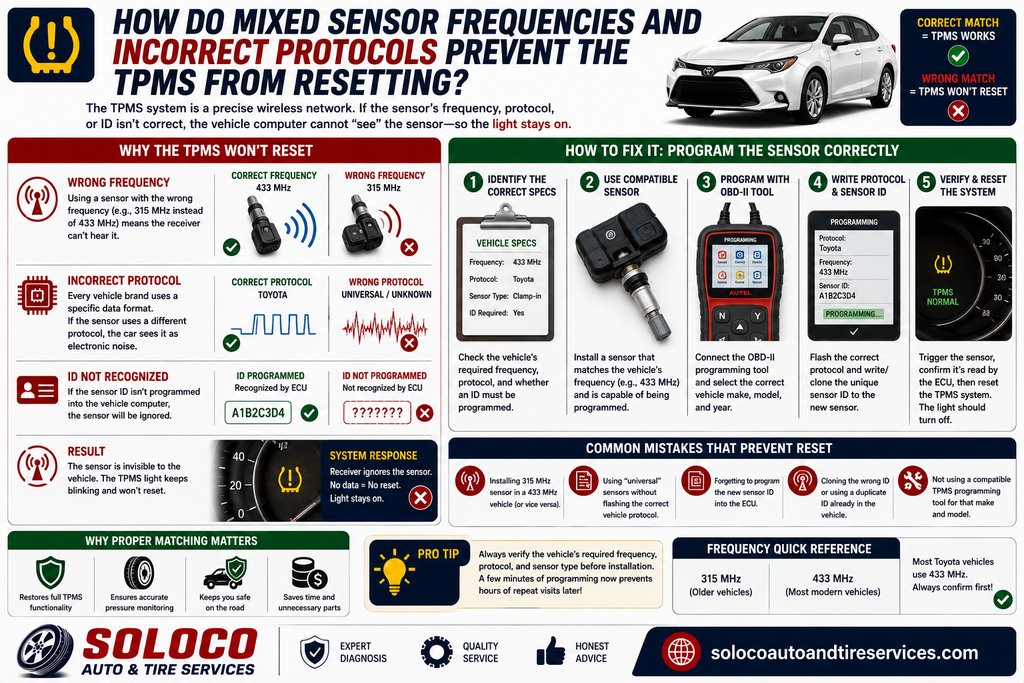
Incorrect sensor programming occurs when a shop replaces a damaged unit with an incompatible universal aftermarket sensor operating on the wrong radio frequency, such as 315 MHz instead of 433 MHz. Vehicle computers are engineered to listen for precise manufacturer protocols and specific serial numbers; if a newly installed sensor transmits using an unrecognized data format, the receiver treats it as electronic noise. This protocol mismatch renders the sensor completely invisible to the car dashboard network. Technicians must use an OBD-II programming tool to flash the correct vehicle protocol directly into the sensor memory chip to restore communication.
Why do aluminum TPMS valve stems corrode and cause slow leaks after a tire swap?
Aluminum TPMS valve stems suffer from galvanic corrosion when they come into contact with incompatible brass valve cores, metal caps, or road salt moisture during daily driving. When a service shop disturbs these corroded components during a standard tire swap, the microscopic oxidation layer cracks, creating a slow, continuous air leak around the valve core or the base washer. This chemical degradation weakens the structural integrity of the stem, causing tire pressure to drop steadily over several days even if the tire bead and rubber compound remain completely undamaged. Technicians should always install fresh service kits containing new rubber grommets, washers, and valve cores whenever tires are replaced.
Will the tire shop fix a TPMS light that came on after getting new tires for free?
Reputable tire shops should diagnose, correct, and reset a TPMS light for free if the warning indicator was completely dark when the vehicle was dropped off for service. If technicians discover that an internal sensor was accidentally broken, sheared off, or stripped during the mounting process, the shop bears full liability and must replace the hardware at no additional charge to the customer. However, if a sensor battery happens to fail coincidentally due to natural age during the tire swap, the shop is not responsible for the pre-existing component wear, and the vehicle owner must pay for the replacement part.
Is it safe to drive with the tire pressure warning light on?
Driving with a solid TPMS light introduces significant risks, including poor vehicle handling, accelerated uneven tread wear, and an increased probability of a dangerous high-speed tire blowout. When a tire is underinflated, the sidewalls flex excessively, generating high internal temperatures that can cause structural separation of the tire belts. If the dashboard light is flashing instead of solid, the car remains mechanically drivable, but the driver loses all automated protection against sudden flats or dangerous pressure drops. Motorists should verify tire pressures manually with a mechanical gauge before operating the vehicle on highways or long trips.
How much does it cost to replace a broken or dead TPMS sensor?
Replacing a broken, damaged, or dead TPMS sensor typically costs between 50 and 150 dollars per wheel, encompassing both the cost of the replacement hardware and professional programming labor. Direct OEM sensors purchased from dealership parts departments generally range from 80 to 200 dollars each, whereas universal programmable aftermarket sensors cost between 30 and 70 dollars plus a 20 to 50 dollar programming fee. Because sensor batteries are sealed inside the electronic housing and cannot be changed independently, the entire unit must be replaced whenever the internal lithium-ion power source reaches the end of its operational lifespan.
What happens if my aftermarket wheels block the TPMS radio frequency signal?
Aftermarket custom wheels constructed from thick cast aluminum, steel, or specialized alloy coatings can sometimes attenuate or shield the low-frequency radio signals transmitted by TPMS sensors. If the radio frequency waves cannot pierce the wheel barrel or structural spokes, the vehicle receiver experiences intermittent communication faults and triggers the dashboard warning light. Resolving this signal interference often requires repositioning the internal sensors, installing signal repeaters, or switching to compatible sensor brackets designed specifically to maintain uninhibited wireless transmission through custom wheel designs.
The Bottom Line
A tire pressure light illuminating after a tire installation typically stems from an unlearned system, improper inflation to sidewall maximums rather than door placard PSI, or physical sensor damage incurred during mounting. Motorists should first verify their actual tire pressures with a handheld gauge against the driver door placard, perform a manual system reset, and drive at moderate speeds for 20 minutes. If the warning light remains illuminated or flashes persistently, the vehicle requires professional diagnostic scanning to identify faulty frequencies, corroded valve stems, or broken internal sensors.


