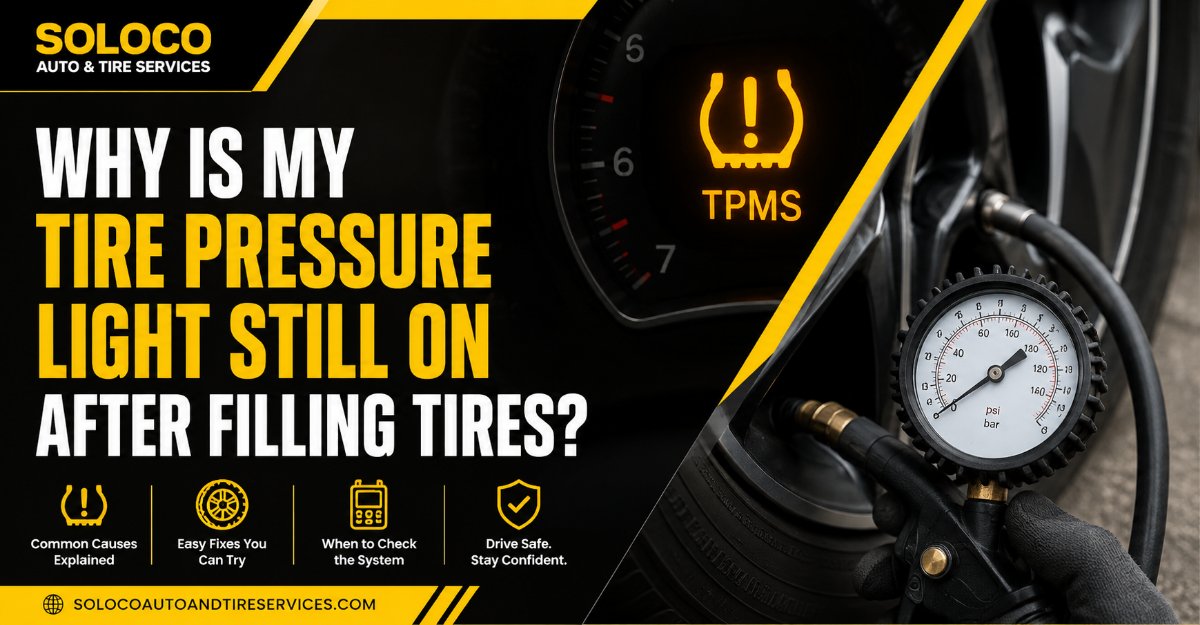
The tire pressure monitoring system light stays on after filling tires because the vehicle computer requires a manual reset, a sensor battery has died, or the spare tire lacks air. Modern vehicles also trigger the warning if tires are overinflated or if the system requires a baseline calibration drive.
At a Glance:
- The tire pressure system requires a continuous drive of 15 to 20 miles to register new air pressures automatically.
- A tire pressure warning light that flashes for 60 to 90 seconds before turning solid indicates a dead sensor battery or broken component.
- Indirect tire pressure systems do not use physical pressure sensors and require a manual button calibration every time a driver adds air.
- Tire pressure drops exactly 1 PSI for every 10 degrees Fahrenheit drop in outside ambient temperature.
- Full size SUVs and pickup trucks often feature an active pressure sensor hidden inside the spare tire.
How long does it take for a TPMS light to turn off?
A tire pressure monitoring system light takes 10 to 15 minutes of continuous driving at speeds above 20 mph to turn off automatically. The vehicle computer needs this specific drive cycle to force the wheel sensors to wake up from sleep mode and transmit updated pressure readings to the main receiver.
City driving with frequent stops often fails to trigger the automatic reset protocol. The sensors require sustained rotational speed to confirm that the new pressure levels are stable. If manual resetting is necessary, mechanics recommend a continuous highway drive of 15 to 20 miles to fully recalibrate the entire network of sensors. A driver who simply fills the tires and parks the car will almost always return to an illuminated warning light, because the system has not recorded any wheel rotation.
What is the difference between direct and indirect TPMS?
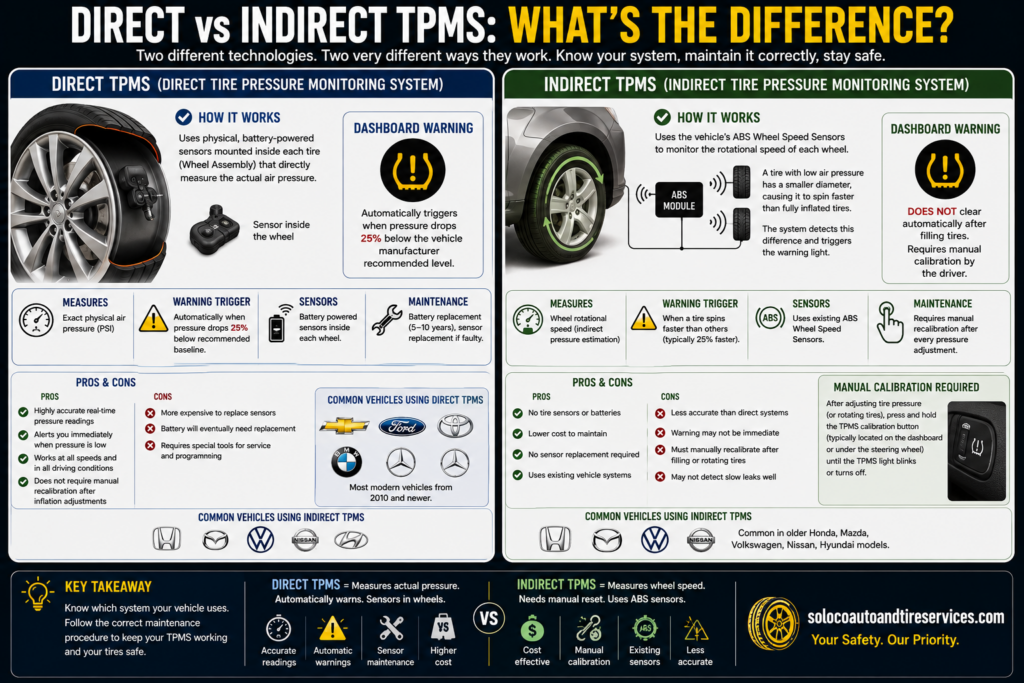
Direct TPMS uses physical battery powered sensors located inside the wheel assembly, whereas indirect TPMS calculates tire pressure using anti-lock braking system wheel speed sensors. The automotive industry utilizes both technologies, but they require entirely different maintenance procedures.
Direct systems measure the exact physical air pressure in pounds per square inch. Direct systems will automatically trigger a dashboard warning when the physical pressure drops 25 percent below the manufacturer recommended baseline.
Indirect systems measure wheel rotational speed. A tire with low air pressure has a slightly smaller diameter, causing that specific wheel to spin faster than the fully inflated tires. Older Honda, Mazda, and Volkswagen models rely heavily on indirect systems. Indirect systems never turn off automatically after filling a tire. The driver must press a physical calibration button to establish a new rotational baseline every time they adjust the air pressure.
How long do TPMS sensor batteries last?
Tire pressure monitoring system sensor batteries last between 5 and 10 years, which correlates to roughly 100,000 miles of regular driving. The lithium ion batteries that power these sensors are permanently sealed inside the plastic sensor housing to protect the electronics from moisture and extreme rotational forces.
Because the batteries are completely encased in protective resin, mechanics cannot simply swap out a dead battery. The entire sensor assembly must be removed from the wheel rim and replaced with a brand new unit. Sensor batteries drain faster in extreme climates. Vehicles parked outdoors in freezing winters or harsh desert heat will experience faster battery degradation than vehicles stored in climate controlled garages.
Does the spare tire trigger the TPMS warning light?
Yes, the spare tire triggers the TPMS warning light on many sport utility vehicles and pickup trucks. Automakers frequently install a fully functioning pressure sensor inside the spare tire to ensure the driver has a safe backup in the event of a blowout.
Popular models like the Toyota RAV4, Jeep Wrangler, and full size pickup trucks are notorious for this specific engineering choice. A driver can easily fill the four main tires to perfect specification, but the dashboard light will remain stubbornly illuminated because the hidden spare tire has slowly lost air over the years. Checking the spare tire with a manual pressure gauge is the first required troubleshooting step when four perfectly inflated main tires fail to turn off the dashboard warning.
Can too much air cause the TPMS light to stay on?
Yes, overinflating tires beyond the recommended factory specification will cause the tire pressure light to remain illuminated. The internal computer flags excessive air pressure as a severe safety hazard due to the increased risk of a high speed tire blowout.
The system operates on a strict bandwidth of acceptable pressures. If the vehicle door placard specifies 32 PSI and the driver accidentally fills the tire to 45 PSI, the sensors immediately detect the dangerous overfilling paradox. The internal tire pressure monitoring system treats severe overinflation with the exact same warning protocol as a severe flat tire. A driver must bleed the excess air out of the valve stem until the pressure matches the factory baseline to resolve the warning light.
Will mismatched tire treads cause a TPMS warning?
Yes, mismatched tire treads will trigger a warning light on vehicles equipped with indirect tire pressure monitoring systems. The anti-lock braking sensors calculate tire pressure by monitoring how fast each individual wheel rotates down the highway.
A brand new tire features extremely thick rubber tread, while an older tire worn down to the wear bars has a physically smaller circumference. If a driver installs a single new tire on the front left wheel and leaves a heavily worn tire on the front right wheel, the worn tire must spin slightly faster to keep up with the vehicle speed. The indirect computer misinterprets this rotational difference as a low tire pressure event. Drivers with indirect systems must replace tires in pairs to prevent false dashboard warnings.
How do temperature changes affect the tire pressure system?
Ambient temperature changes affect the tire pressure system by dropping tire pressure 1 PSI for every 10 degrees Fahrenheit decrease in outside air temperature. Cold weather causes the air molecules inside the rubber tire casing to contract and take up less physical space.
A tire filled perfectly to 32 PSI during a warm September afternoon can easily drop below 28 PSI during a freezing November morning. This cold weather contraction frequently pushes the tire pressure below the 25 percent warning threshold, triggering the dashboard light. As the driver commutes to work, friction between the tire tread and the asphalt generates heat. This heat causes the internal air to expand, which often turns the warning light off by the time the driver reaches their destination.
How do you find the correct tire pressure for your vehicle?
You find the exact correct tire pressure for your vehicle on the driver side door jamb placard. Federal automotive regulations mandate that every modern vehicle display a permanent sticker containing the factory recommended Cold Inflation Pressure.
Drivers should never use the maximum pressure number molded into the rubber sidewall of the tire itself. The sidewall number indicates the absolute physical limit the tire can handle before catastrophic failure, not the comfortable baseline intended by the vehicle engineers. Finding the correct pressure requires opening the driver door, locating the white and yellow sticker on the metal frame, and reading the distinct PSI values assigned to the front and rear axles.
How do you manually reset a tire pressure monitoring system?
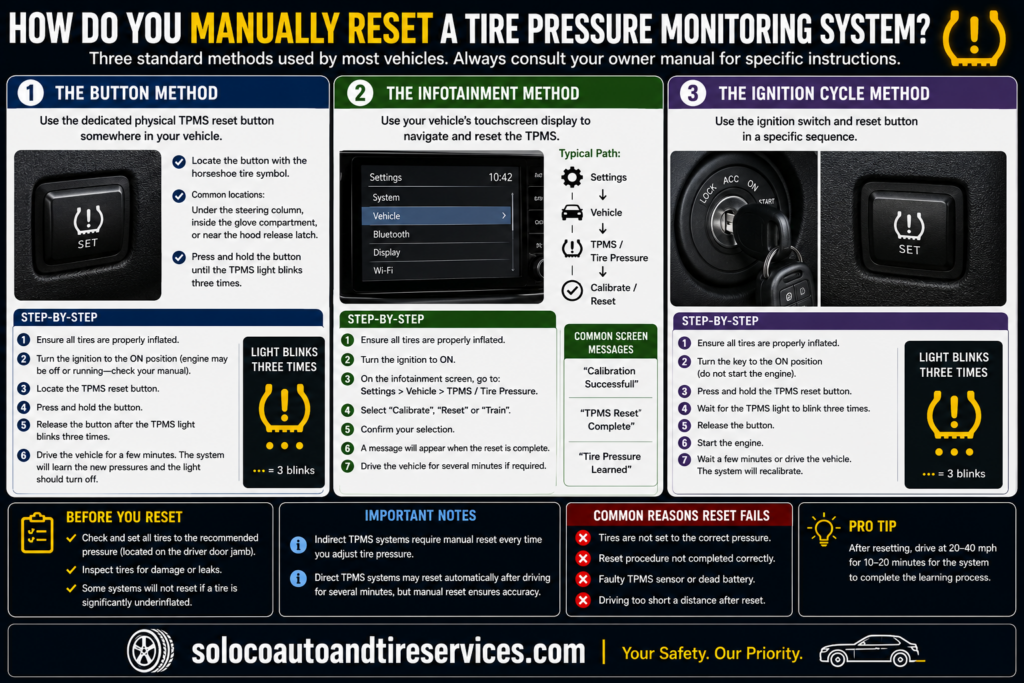
You manually reset a tire pressure monitoring system by holding the dedicated dashboard button, navigating the digital infotainment screen, or performing a precise ignition cycle. Drivers must consult their specific owner manual, but the automotive industry generally utilizes three standard procedures:
- The Button Method: Locate the physical button marked with the horseshoe tire symbol. This button typically lives under the steering column, inside the glove compartment, or lower down near the hood release latch. The driver must press and hold the button until the dashboard light blinks three consecutive times.
- The Infotainment Method: Modern vehicles require the driver to navigate through the central touchscreen display. The path generally follows Settings, then Vehicle, then TPMS or Tire Pressure, and concludes by pressing Calibrate or Reset.
- The Ignition Cycle Method: The driver turns the vehicle key to the “On” position without cranking the engine. The driver then holds the physical reset button until the dashboard light blinks, releases the button, and proceeds to start the engine to complete the internal recalibration.
Do you need to replace all four TPMS sensors at once?
No, you do not have to replace all four TPMS sensors at once, but doing so prevents repeated repair bills and wasted labor costs. A vehicle owner can absolutely replace a single broken sensor without touching the other three wheels.
However, mechanics strongly advise against piecemeal replacements. All four factory sensors were installed on the exact same assembly line and have experienced the exact same number of driving miles. If the battery inside the front left sensor dies today, the batteries inside the remaining three sensors are statistically guaranteed to fail within the next few months. Replacing the entire set simultaneously saves the driver from paying a tire shop for wheel removal, tire dismounting, and tire balancing four separate times.
How much does a TPMS sensor replacement cost?
A single TPMS sensor replacement costs between $50 and $250 total for parts and labor at a professional tire shop. The wide price gap depends entirely on the vehicle make and whether the mechanic uses original equipment manufacturer parts or aftermarket alternatives.
The physical sensor component typically costs between $30 and $100. The remaining expense comes from the manual labor required to access the sensor. A mechanic must jack up the car, remove the wheel, dismount the rubber tire from the metal rim, install the new sensor, remount the tire, rebalance the entire wheel assembly, and finally use a specialized computer tool to program the new sensor to the vehicle mainframe.
What does a flashing tire pressure light indicate?
A flashing tire pressure light that blinks for 60 to 90 seconds upon startup indicates a dead sensor battery or a failed system component. The blinking sequence is the standard automotive SOS signal for hardware failure, separating it from the solid light that simply indicates low air pressure.
After completing the initial 90 second flashing sequence, the light will turn completely solid and remain illuminated for the duration of the drive. Adding air to the tires will never fix a flashing light. A flashing light requires a professional diagnostic scanner to communicate with the vehicle computer, isolate exactly which wheel sensor has stopped transmitting, and replace the dead hardware.
Can Fix-a-Flat or liquid tire sealants ruin a TPMS sensor?
Yes, liquid aerosol tire sealants can permanently ruin a direct TPMS sensor. Emergency repair cans like Fix-a-Flat inject a thick, glue-like chemical compound into the tire casing to plug punctures in the rubber tread.
The direct pressure sensor utilizes a microscopic pinhole to measure the internal air pressure. The thick liquid sealant easily splashes over the sensor housing as the wheel spins, permanently clogging the tiny measurement port. Once the port fills with hardened chemical glue, the sensor goes completely blind and triggers a permanent dashboard warning light. Drivers with direct tire pressure systems should rely on standard rubber tire plugs or a spare tire instead of aerosol chemical sealants.
Does a broken TPMS sensor cause a car inspection failure?
Whether a broken TPMS sensor causes a mandatory state vehicle inspection failure depends strictly on local jurisdiction laws. The federal government mandated the inclusion of tire pressure monitoring systems on all light motor vehicles manufactured after September 2007.
However, the federal government does not enforce vehicle safety inspections. State governments control the inspection criteria. States like Hawaii, North Carolina, Rhode Island, and West Virginia explicitly require a fully functioning tire pressure system to pass the annual safety inspection. If the light is on, the vehicle fails immediately. Other states focus strictly on emissions and basic safety hardware like brakes and headlights, allowing drivers to pass the inspection even with a glowing tire pressure warning light.
Is it safe to drive with the tire pressure light on?
You can safely drive with an illuminated tire pressure light only if you have physically verified the correct pressure with a handheld gauge. A driver must never assume the light is simply a false alarm or a dead battery without checking the actual air levels first.
If a manual tire gauge confirms that all four tires match the factory recommended Cold Inflation Pressure on the door placard, the vehicle is entirely safe to drive. The illuminated light is merely a nuisance caused by a computer glitch or a dead battery. If the driver ignores the light without checking the pressure, they risk driving on a dangerously deflated tire. Driving on a severely underinflated tire generates massive internal friction, which melts the internal rubber structure and frequently results in a catastrophic high speed blowout.
The Bottom Line
The tire pressure monitoring system relies on a delicate balance of physical air volume, battery powered hardware, and internal computer calibration. A persistent warning light after a successful air top off rarely indicates a punctured tire, but rather a failure in the communication loop between the wheel and the dashboard.
Drivers must always verify their physical tire pressure using a reliable handheld gauge as the absolute first step in the troubleshooting process. If the physical air matches the door placard requirements perfectly, drivers can confidently narrow the problem down to a missed manual recalibration sequence, a hidden spare tire sensor, or a dead internal lithium ion battery.
Professional diagnostics will quickly identify any hardware failures, but taking 15 minutes to attempt a manual button reset or a highway calibration drive will solve the vast majority of persistent tire pressure warnings.


